Fluoraday

Key Takeaways
- Fluoraday is used to support enamel strength and lower cavity risk.
- It works best as part of regular dental care, not as a replacement for brushing and flossing.
- Children, people with dry mouth, and those with higher decay risk may benefit more from fluoride treatment.
- A dentist can advise on whether Fluoraday is appropriate and how often it should be used.
- Any unusual mouth irritation or swallowing concerns should be discussed with a dental professional.
Fluoraday is a fluoride-based dental product used to help strengthen enamel and reduce the risk of tooth decay. A dentist may recommend it for children or adults who need extra protection against cavities.
Overview
Fluoraday refers to a fluoride-based approach used in dentistry to help protect teeth from decay. Fluoride is a mineral that supports enamel, the hard outer layer of the tooth, by making it more resistant to acid attacks from food, drinks, and bacteria.
In practical terms, a dentist may use or recommend a fluoride treatment such as Fluoraday for someone whose teeth need extra support. That can include children learning oral hygiene, adults with frequent cavities, patients with exposed root surfaces, or people whose mouth is dry because of medication or medical conditions.
For international patients planning dental care abroad, fluoride treatment is often part of a broader preventive plan. A dentist will usually look at daily habits, diet, past fillings, and gum health before deciding whether Fluoraday is a sensible addition.
Symptoms and When Fluoride Support May Be Considered

Fluoraday is not used for a symptom in the usual sense; it is used when the teeth are considered at higher risk of decay. A person may not feel anything unusual at first, which is why early prevention matters. Many dental problems begin quietly before they become painful or visible.
Signs that fluoride protection may be helpful include repeated cavities, white chalky spots on the teeth, sensitivity around exposed roots, or a history of dental work that suggests ongoing decay risk. Children with new permanent teeth, people wearing braces, and adults with dry mouth are also common candidates for extra preventive care.
Some patients first learn about fluoride during a routine examination rather than through discomfort. That is often a good moment to ask how the treatment fits into daily home care and whether any changes are needed in brushing, toothpaste, or diet.
Causes and Risk Factors for Tooth Decay
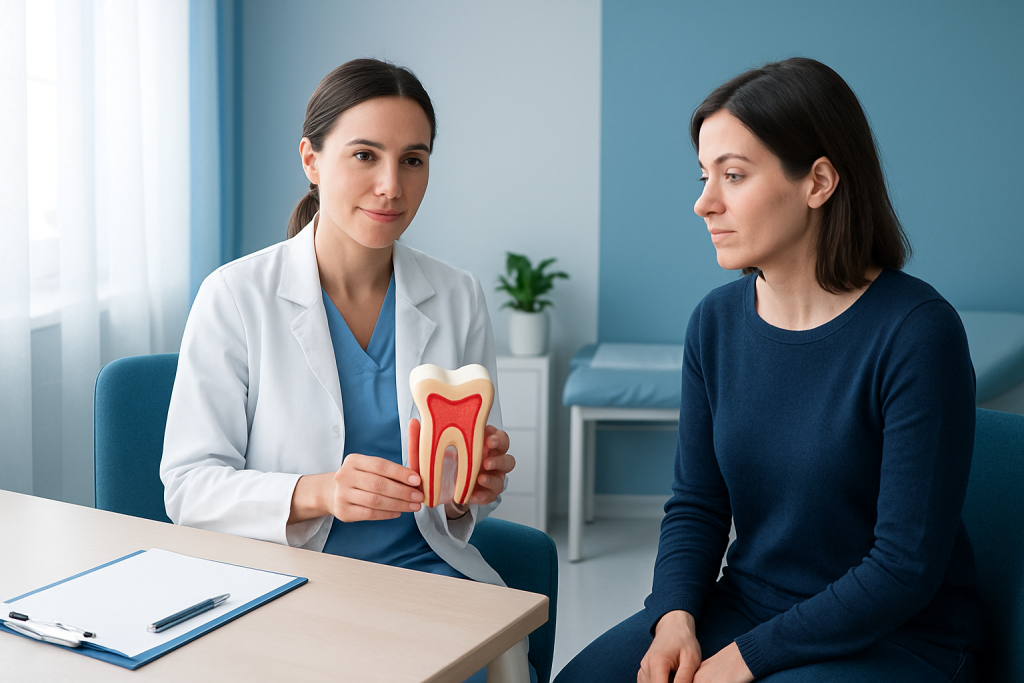
Tooth decay develops when bacteria in dental plaque use sugars and starches to produce acids. Over time, those acids can weaken enamel and create small areas of damage that gradually grow if they are not addressed.
Certain factors make this process more likely. Frequent snacking, sugary drinks, inconsistent brushing, and not cleaning between teeth can all increase risk. Fluoride does not replace these habits, but it can make enamel more resilient and help teeth recover from early acid exposure.
People may also need more support if they have dry mouth, orthodontic appliances, recessed gums, a high cavity history, or limited access to regular preventive dentistry. In some cases, travel, time constraints, or past treatment experiences lead patients to seek a structured plan from a dental team that can review the whole picture carefully.
- Frequent sugar or acid exposure
- Poor plaque control
- Dry mouth
- Braces or other appliances
- Previous cavities or restorative work
- Exposed tooth roots or gum recession
Diagnosis and Dental Assessment
Before recommending Fluoraday, a dentist usually performs a standard oral assessment. This may include looking for early decay, checking gum health, reviewing past dental records, and asking about diet, oral hygiene, and medical conditions that affect saliva or enamel.
Sometimes dental X-rays are used to see areas that are not visible during the exam, especially between teeth where cavities can begin unnoticed. The purpose is not only to identify active decay, but also to estimate future risk and decide how intensive prevention should be.
For patients traveling from another country, this step is especially important because it helps create continuity of care. A dentist can explain whether Fluoraday is a one-time preventive measure, part of repeated visits, or only one part of a longer treatment plan.
Treatment Options and How Fluoride Is Used
Fluoraday is generally used as a fluoride treatment applied in the dental setting or recommended for preventive care, depending on the product form and local practice. The goal is to deliver fluoride directly to the tooth surface so enamel can better resist decay.
In many practices, fluoride care may be paired with other measures such as professional cleaning, sealants, improved home brushing technique, or advice on reducing frequent sugar exposure. When decay risk is high, a dentist may suggest more than one preventive approach rather than relying on a single product.
It is important to use fluoride products exactly as instructed by the dental team. More is not necessarily better, especially for children, and swallowing concerns should always be taken seriously. A dentist can clarify whether the treatment is appropriate for a particular age group and how it should fit into daily routines.
- Professional fluoride application during a dental visit
- Fluoride toothpaste as part of home care
- Fluoride mouth rinses in selected patients
- Dental sealants for certain children and teenagers
- Regular checkups to monitor enamel and cavity risk
Prevention and Self-care
Fluoraday works best when it is part of a steady preventive routine. Brushing twice daily with fluoride toothpaste, cleaning between the teeth, and limiting frequent sugary or acidic snacks are still the foundation of cavity prevention.
Patients with dry mouth can often benefit from practical adjustments such as drinking water regularly, avoiding alcohol-heavy mouthwashes unless advised, and discussing saliva-related issues with a dentist or physician. For children, a parent or caregiver should supervise brushing to help ensure the right amount of toothpaste is used and that it is not swallowed.
When care is planned from abroad, it helps to ask for written aftercare instructions before the visit ends. That makes it easier to continue the same approach at home and to know when the next review should happen.
- Brush twice daily with fluoride toothpaste
- Clean between teeth once a day
- Limit frequent snacking and sipping on sugary drinks
- Follow the dentist’s instructions on fluoride use
- Keep regular dental checkups
When to See a Doctor
A dentist should be consulted if there are repeated cavities, tooth sensitivity, visible spots or changes on the enamel, or concerns about dry mouth and gum recession. These signs do not always mean a major problem, but they do suggest that preventive care may need to be strengthened.
Parents should also seek advice if a child has many new cavities, difficulty with brushing, or a history of swallowing toothpaste. Early guidance can help protect newly erupted teeth and reduce the chance of more involved treatment later.
If a person is traveling for dental care, it is reasonable to ask about follow-up before the first appointment begins. Acibadem Health Point’s multidisciplinary specialists and JCI-accredited hospitals diagnose and treat dental conditions for international patients, with care plans designed to be clear across visits and borders.
Living With a Higher Cavity Risk
Some people are simply more prone to decay than others, even when they brush well. In that setting, fluoride-based care such as Fluoraday can be a practical layer of protection rather than a standalone solution.
Patients often do best when they understand why their teeth are at risk and what can realistically help. That may include improved oral hygiene, dietary changes, management of dry mouth, or more frequent preventive visits. A tailored plan is usually more useful than a generic one.
For international patients, the most reassuring part of care is often knowing the next step before leaving the clinic. Clear instructions, a scheduled review, and simple home routines help make preventive treatment easier to maintain after travel.
Frequently asked questions
What is Fluoraday used for?
Fluoraday is used to help strengthen enamel and lower the risk of tooth decay. A dentist may recommend it for people who need extra cavity prevention. It is usually part of a broader dental care plan.
Is Fluoraday safe for children?
It can be safe when used as directed by a dentist, but the correct amount and form matter more in children because swallowing fluoride should be avoided. Parents should follow the dental team’s instructions carefully. If there is any uncertainty, the dentist can advise on age-appropriate use.
Does Fluoraday replace brushing and flossing?
No. Fluoride supports the teeth, but it does not remove plaque or food debris. Brushing, flossing, and regular dental checkups remain essential.
Who may benefit most from fluoride treatment?
People with frequent cavities, dry mouth, gum recession, braces, or higher decay risk may benefit more. Children with newly erupted teeth may also be good candidates. A dentist can decide based on individual risk rather than age alone.
Can fluoride cause side effects?
Most people tolerate fluoride treatments well, but mild irritation can occasionally occur. Swallowing too much fluoride is not desirable, especially for children, so instructions should be followed closely. Any unusual reaction should be reported to a dental professional.
How often is Fluoraday needed?
That depends on the person’s cavity risk and the dentist’s recommendation. Some patients may need it periodically during checkups, while others may not need it at all. The schedule should be individualized.
References
- American Dental Association
- Mayo Clinic
- National Institute of Dental and Craniofacial Research
- NHS
This article is for general information only and is not a substitute for professional medical advice. Please consult a qualified doctor about your individual situation.