Epstein Pearls

Key Takeaways
- Epstein pearls are common, benign newborn cysts found in the mouth, especially on the palate or gums.
- They usually look like tiny white or yellow bumps and do not cause pain or feeding problems.
- Most cases resolve naturally without treatment within the first weeks of life.
- A doctor should check any mouth lesion that grows, bleeds, causes discomfort, or does not seem typical.
- Good newborn feeding observation and gentle oral care are usually all that is needed.
Epstein pearls are small, harmless cysts that can appear in a newborn’s mouth, usually on the palate or gums. They often disappear on their own and rarely need any treatment, but parents may still want reassurance about what is normal and what is not.
Overview
Epstein pearls are small, pearl-like cysts that can appear in a newborn’s mouth. They are most often seen along the roof of the mouth, especially the midline of the hard palate, and sometimes on the gums. For families seeing them for the first time, the spots can look unexpected, but they are a normal and harmless finding in many babies.
These tiny bumps form when bits of tissue become trapped during early mouth development before birth. They are not an infection, not a sign of poor hygiene, and not something a parent has caused. In most newborns, Epstein pearls fade away on their own as the mouth continues to grow and mature.
Because the term includes the word “cyst,” parents sometimes imagine something serious. In everyday pediatric practice, however, Epstein pearls are usually considered a temporary newborn variation rather than a disease. The main role of the clinician is often simply to confirm that the bumps are typical and to reassure the family.
Symptoms and What They Look Like
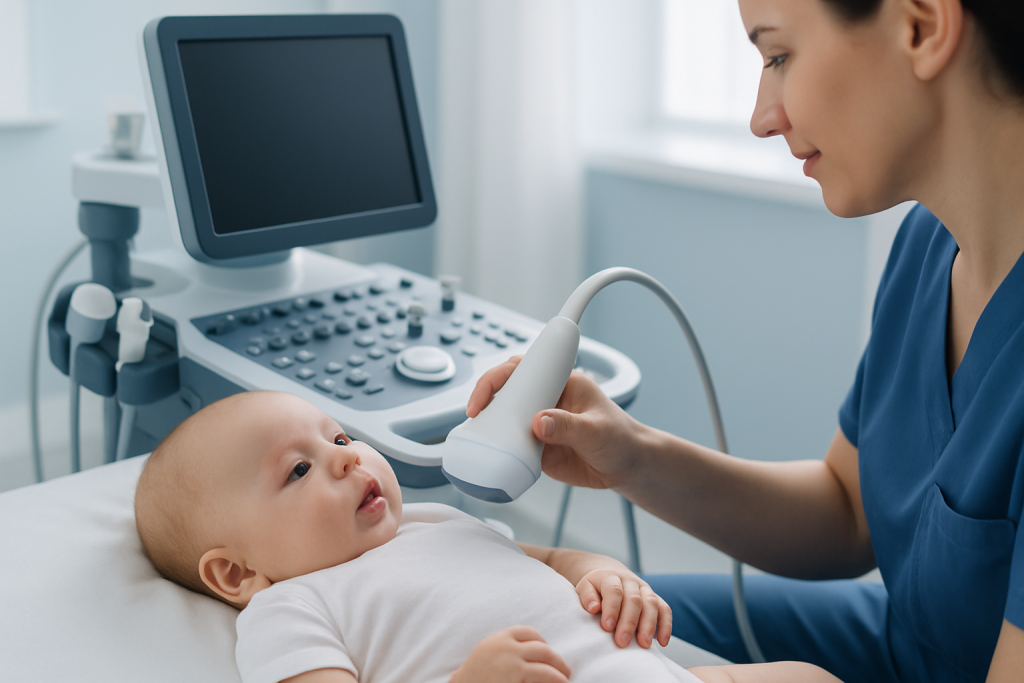
Epstein pearls usually appear as tiny, smooth, white or yellowish nodules. They are often round or oval and may resemble a grain of rice tucked under the surface of the skin lining the mouth. Many babies have only one, while others have several small bumps grouped together.
They are usually found on the roof of the mouth, but similar harmless cysts can also appear on the gums in newborns. Parents may notice them during feeding, while cleaning the baby’s mouth, or during a routine newborn check. In most cases, the baby behaves normally and shows no sign of pain.
Typical features include:
- Small white or cream-colored bumps
- Smooth, firm, and non-tender appearance
- Location on the midline of the palate or the gum ridge
- No fever, swelling, or discharge
- No effect on breathing or feeding in the vast majority of cases
If the bumps look red, inflamed, rapidly changing, or are accompanied by poor feeding, it is sensible to have a clinician take a look, since not every newborn mouth lesion is an Epstein pearl.
Causes & Risk Factors

Epstein pearls are thought to arise from small clusters of epithelial cells trapped during the normal development of the palate and oral tissues before birth. As the baby’s mouth forms, some of these cells can become enclosed beneath the surface and later present as tiny cysts.
They are a developmental finding rather than a condition caused by infection, medication, or diet. There is no known way for parents to prevent them, and having Epstein pearls does not mean anything is wrong with pregnancy care or delivery.
They are common in newborns and can also be seen alongside other benign neonatal oral cysts, such as Bohn nodules or dental lamina cysts. These conditions can look similar to the untrained eye, which is why a pediatrician or pediatric dentist may use the appearance and location of the bumps to tell them apart. Family history is not usually a major factor.
Diagnosis
Diagnosis is usually made by a simple visual examination of the baby’s mouth. A doctor looks at the size, color, number, and location of the bumps and checks whether the newborn is feeding comfortably and otherwise well. In many cases, no tests are needed at all.
Because Epstein pearls have a typical appearance, they can often be identified during a routine newborn exam or postnatal follow-up. The clinician may also distinguish them from other common newborn findings, such as milia on the skin, thrush in the mouth, or less common oral lesions that need more attention.
If the appearance is unusual, or if the lesion does not fit the expected pattern, the doctor may ask about feeding, bleeding, fever, or recent changes. Rarely, additional evaluation is needed, but for a classic Epstein pearl, observation is usually enough.
Treatment Options
Epstein pearls usually do not require treatment. They are self-limiting, which means they gradually go away on their own as the baby grows. Most families only need reassurance and a clear explanation of what they are seeing.
It is best not to squeeze, puncture, scrape, or try to remove the bumps at home. The oral tissues of a newborn are delicate, and unnecessary manipulation can cause irritation or introduce infection. Gentle routine care is sufficient.
When a baby is feeding and gaining weight normally, no active intervention is generally needed. If a clinician ever suspects a different diagnosis, management would be based on that condition rather than on Epstein pearls themselves. In that sense, the key “treatment” is often careful confirmation and watchful waiting.
Prevention & Self-care
There is no specific prevention for Epstein pearls because they are part of normal newborn development. Parents do not need to change feeding plans, oral hygiene routines, or pregnancy-related habits to avoid them.
Helpful self-care is mainly about observation and gentle handling. During feeding, parents can simply notice whether the baby latches comfortably and swallows well. If a clinician has already confirmed that the bumps are Epstein pearls, families can feel comfortable letting nature take its course.
Practical tips for home care include:
- Keep the mouth clean through normal feeding and gentle wiping of excess milk if advised by the baby’s care team
- Avoid applying creams, powders, or home remedies inside the mouth
- Monitor for changes in feeding, weight gain, or comfort
- Bring up any new or enlarging mouth lesion at the next pediatric visit
For international families traveling for childbirth or newborn follow-up, it can help to photograph the bumps for comparison before a clinic visit. A clear image may help the doctor recognize a typical pattern quickly, especially if the baby is seen by a new care team after travel.
When to See a Doctor
Epstein pearls themselves are usually harmless, but a doctor should evaluate any newborn mouth finding that does not seem typical. This is especially important if the baby seems uncomfortable, feeds poorly, or the lesion is changing in a way that does not match a benign newborn cyst.
Seek medical advice if the bump or bumps are associated with:
- Difficulty feeding or poor weight gain
- Bleeding, redness, warmth, or drainage
- Rapid growth or an unusual shape
- Fever or signs of illness
- Breathing problems or trouble opening the mouth normally
Parents who are unsure whether the lesion is Epstein pearls, thrush, a gum cyst, or something else should not hesitate to ask for a pediatric assessment. For families coordinating care across countries, a pediatrician, pediatric dentist, or newborn specialist can help confirm the diagnosis and advise whether any follow-up is needed. Acibadem Health Point’s multidisciplinary specialists and JCI-accredited hospitals diagnose and treat newborn oral conditions for international patients with coordinated, family-centered care.
Outlook and What Families Can Expect
The outlook for Epstein pearls is excellent. They usually resolve without leaving any trace and do not affect speech, teeth, or long-term oral development. Once they disappear, there is typically no need for further treatment or monitoring.
For parents, the most useful step is often understanding that a visible mouth bump in a newborn is not always a problem. Many benign neonatal findings look dramatic at first glance but settle quietly on their own. A calm review by a clinician can prevent unnecessary worry and help families focus on feeding, bonding, and routine newborn care.
If a baby has other oral findings later in infancy or childhood, those are separate questions and should be assessed on their own merits. Epstein pearls are a newborn phenomenon, and their presence does not usually predict future oral disease.
Frequently asked questions
Are Epstein pearls common in newborns?
Yes, they are a common and benign finding in many newborns. They are part of normal early oral development and usually disappear on their own.
Do Epstein pearls hurt the baby?
They are usually painless and do not bother the baby. Most newborns feed normally and show no discomfort from them.
Can Epstein pearls be removed?
They normally do not need to be removed. Trying to pop or scrape them can irritate the mouth, so observation is the safest approach.
How are Epstein pearls different from thrush?
Epstein pearls are small, firm, isolated bumps that are usually present from birth and fade naturally. Thrush is a fungal infection that often causes white patches that may look more like coating and can be associated with feeding discomfort.
How long do Epstein pearls last?
They usually disappear over the first weeks of life, sometimes a little later. If a mouth lesion persists, grows, or changes, a doctor should reassess it.
Should parents worry if they notice more than one bump?
Not necessarily, because multiple Epstein pearls can still be normal. The main concern is whether the lesions look typical and whether the baby is otherwise feeding and thriving.
References
- American Academy of Pediatrics
- Merck Manual Professional Edition
- Cleveland Clinic
- MedlinePlus
This article is for general information only and is not a substitute for professional medical advice. Please consult a qualified doctor about your individual situation.