Endoscopy Procedure
Key Takeaways
- Endoscopy uses a flexible camera to view the digestive tract and identify problems directly.
- It may be recommended for persistent reflux, abdominal pain, swallowing difficulty, bleeding, anemia, or unexplained symptoms.
- Preparation usually involves fasting and reviewing medicines, especially blood thinners or diabetes treatments.
- Most people go home the same day, though throat discomfort, bloating, or mild sleepiness can occur briefly.
- Results help guide next steps, which may include medication, biopsies, follow-up testing, or endoscopic treatment.
An endoscopy procedure lets doctors look inside the digestive tract with a thin, flexible camera and may help explain symptoms such as pain, reflux, bleeding, or swallowing difficulty. It is commonly used for diagnosis, and sometimes treatment, with careful preparation and short recovery time.
Overview
An endoscopy procedure gives doctors a close view of the inside of the body, most often the upper digestive tract or the large bowel, using a thin tube with a light and camera at its tip. In everyday practice, people usually mean either upper endoscopy, which examines the esophagus, stomach, and the first part of the small intestine, or colonoscopy, which examines the colon. Both are designed to answer a practical question: what is causing symptoms that cannot be fully understood from the outside?
For many patients, the idea of an endoscopy feels more intimidating than the procedure itself. In reality, it is a routine medical test performed with careful monitoring and clear preparation instructions. Depending on the reason for the test, a doctor may also take a small tissue sample, remove a polyp, or treat a bleeding area during the same session.
People often choose to have an endoscopy when symptoms persist, test results are unclear, or a more direct look is needed before deciding on treatment. For international patients, it can be especially helpful to have assessment, procedure, and follow-up planned in one coordinated care pathway, so the next steps are not left uncertain after travel.
Symptoms That May Lead to an Endoscopy
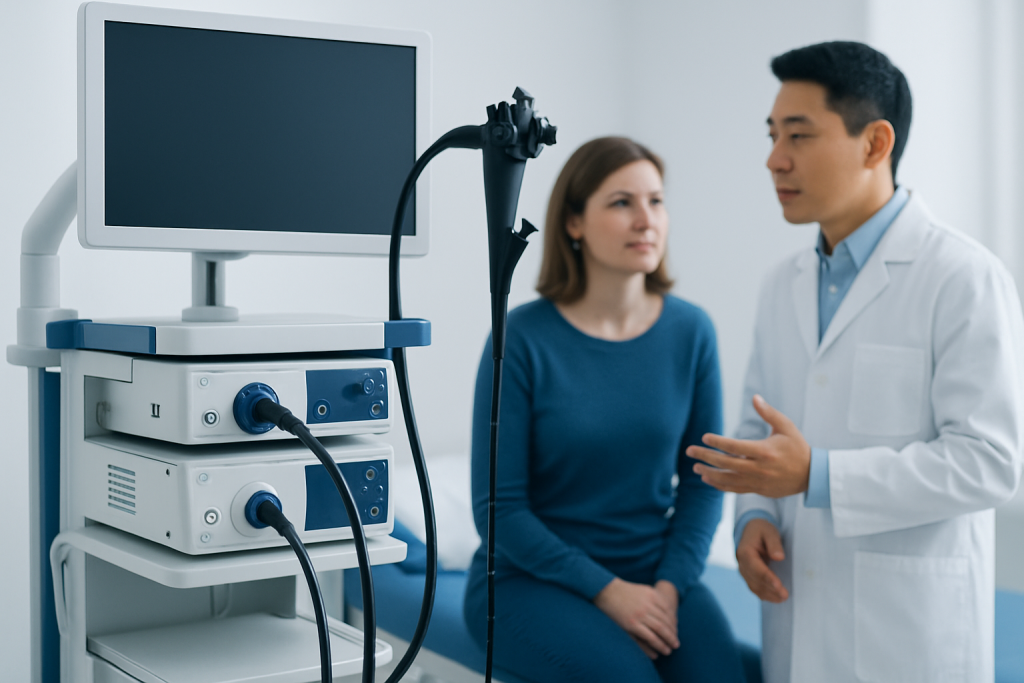
An endoscopy is usually recommended because of symptoms, not because of the test itself. Common reasons include ongoing heartburn or reflux that does not improve as expected, trouble swallowing, upper abdominal pain, nausea, unexplained vomiting, black stools, blood in vomit or stool, and iron-deficiency anemia without a clear explanation.
In bowel evaluation, a doctor may advise endoscopy if there is persistent change in bowel habits, rectal bleeding, unexplained weight loss, or a family history that suggests closer assessment is needed. Sometimes the test is ordered even when symptoms are mild, because the pattern of findings can help rule out more serious causes early.
It is also important to remember that symptoms do not always point to one single disease. Reflux, ulcers, inflammation, polyps, infections, and some cancers can overlap in how they appear, which is one reason direct visualization can be so valuable.
Causes & Risk Factors

Endoscopy itself does not have “causes,” but the procedure is used to investigate conditions that may be more likely in certain situations. Risk factors vary depending on the part of the digestive tract being examined. For upper endoscopy, common contributors include chronic acid reflux, long-term use of nonsteroidal anti-inflammatory drugs, Helicobacter pylori infection, smoking, heavy alcohol use, and a history of ulcers.
For colon evaluation, age, personal or family history of polyps or colorectal cancer, inflammatory bowel disease, and certain inherited conditions can increase the chance that a doctor will suggest endoscopic assessment. Some people also need endoscopy because of abnormal laboratory results, such as anemia or signs of bleeding, even if they feel relatively well.
The test is not limited to high-risk patients. A doctor may recommend it to better understand symptoms in someone with no major risk factors when the clinical picture remains unclear. That is part of what makes the procedure useful: it helps turn possibilities into a clearer medical plan.
Diagnosis: What the Procedure Helps Doctors Find
Endoscopy is both a diagnostic tool and, in some cases, a treatment platform. During the exam, the doctor can look for inflammation, ulcers, narrowing, tears, growths, bleeding sources, polyps, and visible changes in the lining of the digestive tract. The camera provides real-time detail that imaging tests alone may not always show.
If needed, the doctor can pass tiny instruments through the endoscope to collect biopsies. These small samples are sent to a laboratory and can help confirm inflammation, infection, precancerous change, or cancer. Biopsies are commonly taken when tissue looks abnormal, but they are also sometimes used to understand symptoms when the lining appears nearly normal.
Because the findings are seen directly, endoscopy often shortens the path to an answer. That can be especially helpful for patients traveling for care, since a single visit may combine consultation, procedure, and pathology review more efficiently than a series of separate appointments.
Treatment Options
Not every endoscopy is done only to diagnose a problem. In many cases, doctors can treat what they find during the same procedure. Common examples include stopping a bleed, widening a narrowed area, removing polyps, or treating certain abnormal growths using specialized endoscopic tools.
The procedure itself usually begins with review of medical history, fasting instructions, and a discussion about sedation or anesthesia. During the exam, the patient is monitored closely for comfort and safety. Afterward, recovery is generally brief, though the exact experience depends on the type of endoscopy and any treatment performed.
When a treatment is not possible during the first session, endoscopy still gives the care team a roadmap. The results may guide medication, further imaging, surgical consultation, or a repeat endoscopic procedure at a later date. For people arriving from abroad, this step-by-step planning matters because it helps align medical decisions with travel timing and follow-up needs.
How to Prepare and What Recovery Feels Like
Preparation depends on the type of endoscopy, but fasting is common because the stomach or bowel needs to be clear enough for safe viewing. The doctor may also give specific instructions about adjusting medicines, especially blood thinners, diabetes medications, iron supplements, or drugs that affect the stomach or bowel. These decisions should always be individualized rather than guessed at.
On the day of the procedure, patients are usually asked to bring a companion if sedation is planned, since alertness can be temporarily reduced afterward. The procedure itself is usually short. Many people remember little or nothing if sedation is used, which can make the experience easier than expected.
Recovery is often straightforward. A sore throat, mild bloating, or a sense of drowsiness can happen for a short time, depending on the type of endoscopy. Normal eating and daily activities typically resume once the doctor confirms it is safe, although a few people may need a slightly longer rest period if treatment was done during the exam.
- Follow fasting instructions exactly as provided.
- Tell the care team about all medicines and supplements.
- Arrange transport if sedation will be used.
- Ask when to restart usual medicines after the procedure.
Prevention & Self-care
An endoscopy is not something a person “prevents,” but many of the conditions that lead to it can be influenced by daily habits. Gentle reflux care, balanced eating, avoiding smoking, limiting alcohol, and using pain medicines carefully can reduce irritation in the digestive tract. Staying up to date with recommended screening tests is also an important form of prevention.
Self-care after the procedure is usually simple. Rest for the remainder of the day if sedation was used, drink fluids as advised, and begin with food only when the care team says it is safe. If biopsies or treatment were performed, the doctor may give extra guidance about activity, diet, or medicine use for the next few days.
For patients planning care from another country, self-care also includes practical follow-up: keeping discharge papers, pathology reports, and medication instructions in one place, and knowing who to contact once home. Clear documentation helps local doctors continue care smoothly if follow-up is needed after travel.
When to See a Doctor
A medical evaluation is important when digestive symptoms keep returning, interfere with eating, or are accompanied by bleeding, unexplained weight loss, persistent vomiting, black stools, or worsening anemia. These signs do not always mean a serious condition, but they do deserve timely attention so the cause can be identified.
After an endoscopy, a doctor should be contacted if there is severe abdominal pain, chest pain, trouble breathing, fever, heavy bleeding, repeated vomiting, or symptoms that seem to be getting worse instead of better. Mild throat soreness or temporary bloating is more common and usually settles, but any symptom that feels out of proportion should be discussed.
For people considering treatment abroad, it is wise to ask how urgent the test is, whether sedation will be used, what recovery support is available, and how results will be shared after returning home. Acibadem Health Point’s multidisciplinary specialists and JCI-accredited hospitals can diagnose and treat this condition for international patients in a coordinated way.
Frequently asked questions
Is an endoscopy procedure painful?
Most people do not describe it as painful. If sedation is used, the procedure is usually easier to tolerate and many patients remember little of it. Some temporary discomfort, such as a sore throat or bloating, can happen afterward.
How long does recovery take after endoscopy?
Recovery is often short, especially when the procedure is diagnostic only. Sedation can make a person tired for the rest of the day, so rest is usually advised. If treatment or biopsies were performed, the doctor may suggest a longer period of observation or modified activity.
Do I need anesthesia for an endoscopy?
Not always. Some endoscopies are done with local numbing and light sedation, while others use deeper sedation or anesthesia depending on the procedure and the patient’s needs. The team will explain the safest option in advance.
Can endoscopy find cancer?
Yes, endoscopy can help doctors spot suspicious changes and take biopsies for laboratory testing. It does not diagnose cancer by appearance alone, but it can provide the tissue evidence needed for a definite answer.
What should a patient avoid before endoscopy?
Patients are usually told not to eat or drink for a period before the test, but the exact timing depends on the procedure. They should also avoid changing or stopping medicines on their own and should follow the doctor’s written instructions carefully.
When will the results be available?
Some findings are discussed right after the procedure, especially visible changes or treatments that were completed during the exam. If biopsies were taken, the final report may take longer because it depends on laboratory analysis. The care team will explain when and how results will be shared.
References
- National Institute of Diabetes and Digestive and Kidney Diseases
- American Society for Gastrointestinal Endoscopy
- Mayo Clinic
- World Gastroenterology Organisation
- NHS
This article is for general information only and is not a substitute for professional medical advice. Please consult a qualified doctor about your individual situation.