EMG Test: Purpose, Procedure and Results

Key Takeaways
- An EMG test checks the electrical activity of muscles and, in many cases, the nerves that supply them.
- It can help identify conditions affecting the nerves, muscles, spinal roots, or the connection between nerves and muscles.
- The test is usually done in an outpatient setting and does not require a long recovery.
- Mild discomfort can happen, but the procedure is generally well tolerated and considered safe.
- Results are interpreted together with the person’s symptoms, physical examination, and other tests.
Medically reviewed by the Acıbadem clinical team — August 19, 2026
An EMG test, also called electromyography, helps doctors assess how muscles and the nerves that control them are working. It is often used when symptoms such as weakness, numbness, cramps, or unexplained pain suggest a nerve or muscle problem.
Overview
An EMG test is a specialist examination that looks at how well muscles respond to electrical signals from the nerves. The term is often used alongside nerve conduction studies, because the two tests are commonly performed together to create a clearer picture of what may be affecting the body.
For someone trying to make sense of new weakness, tingling, or pain, the test can feel more technical than the symptoms themselves. In practice, it is a practical tool that helps a neurologist or other clinician distinguish between a problem in the nerve, the muscle, the spinal cord pathway, or the nerve-muscle connection.
International patients often seek an EMG test when they want answers that are not settling with routine scans or blood tests. In those situations, the value of the test is not just the measurement itself, but how it guides the next step in care, whether that means treatment, rehabilitation, or a different diagnostic path.
Symptoms That May Lead to an EMG Test
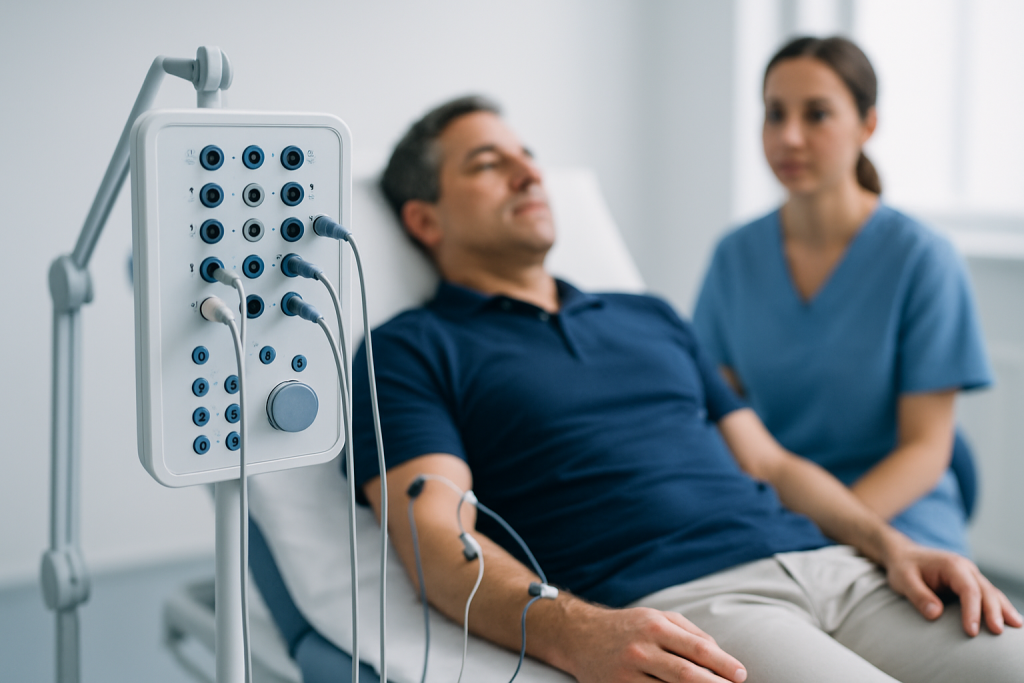
Doctors may recommend an EMG test when symptoms suggest that the electrical communication between nerves and muscles is not functioning normally. Common reasons include muscle weakness, difficulty gripping objects, foot drop, cramps, twitching, numbness, burning sensations, or pain that follows a nerve pattern.
The test may also be helpful when symptoms are vague or when the physical examination suggests more than one possible cause. For example, pain in the arm or leg can come from a compressed nerve in the spine, a peripheral nerve problem, a muscle disorder, or a combination of factors.
In some people, the test is used to assess how severe a known condition has become or whether it is improving. That can be useful for planning treatment and for deciding whether rehabilitation, medication, or surgery may be appropriate.
Causes & Risk Factors

An EMG test does not diagnose a single disease. Instead, it helps uncover patterns that may point toward a range of conditions. These can include peripheral neuropathy, radiculopathy, carpal tunnel syndrome, myopathy, motor neuron disorders, nerve injury, and certain neuromuscular junction disorders.
Risk factors for needing the test are usually linked to symptoms rather than a specific lifestyle factor. People with diabetes, thyroid disease, autoimmune conditions, repetitive strain injuries, spine problems, or a history of trauma may be more likely to develop nerve or muscle symptoms that warrant evaluation.
Age can also play a role because some nerve and muscle conditions become more common over time. Still, the test is not reserved for older adults; it may be ordered for younger people when symptoms are persistent, unexplained, or interfering with daily function.
- Diabetes or other metabolic conditions
- Neck or lower back disc problems
- Repetitive hand or wrist strain
- Prior injury or surgery affecting nerves
- Inflammatory or autoimmune disease
Diagnosis and How the Test Is Performed
An EMG test is usually performed after a doctor reviews the person’s history and performs a neurological examination. The examination may include testing strength, reflexes, sensation, coordination, and muscle bulk to help decide which muscles or nerves should be studied.
During the test, small sensors are placed on the skin for nerve conduction studies, and a very fine needle electrode may be inserted into selected muscles for the electromyography part. The clinician looks at how quickly signals travel along nerves and how muscles react when at rest and when gently contracted.
The procedure is typically done in an outpatient setting and usually takes less than a day. Results are not interpreted in isolation; they are matched with the person’s symptoms and examination findings, which is why having the study done by an experienced specialist matters.
For patients traveling from another country, the appointment may also be coordinated with prior imaging, blood work, or specialist consultation so that the test is targeted and efficient. That can reduce unnecessary repeat visits and make follow-up planning much smoother.
Treatment Options After the Results
An EMG test itself is diagnostic, not treatment. What happens next depends on what the results suggest. If the findings point to a compressed nerve, treatment may include physical therapy, posture changes, pain management, or in some cases surgical evaluation.
If the test suggests a muscle disorder, a metabolic issue, or a nerve disease, the next steps may include additional blood tests, imaging, medication review, or referral to a neurologist, endocrinologist, rheumatologist, or rehabilitation specialist. The goal is to address the underlying cause rather than the symptom alone.
Sometimes the test reassures both patient and doctor by ruling out more serious nerve or muscle involvement. Even when that happens, the symptoms still deserve attention, and treatment may focus on rehabilitation, activity modification, or managing pain and function over time.
What to Expect Before, During, and After the Test
Preparation is usually simple. Patients are often advised to avoid lotions or creams on the skin before the test and to tell the clinician about blood thinners, implanted devices, bleeding disorders, or medications that affect nerve and muscle function.
During the procedure, most people feel a brief tapping sensation from the nerve conduction part and a quick, small sting or pressure from the needle portion. The experience can be uncomfortable for a moment, but it is usually short-lived and well tolerated.
After the test, normal activities can usually resume right away. A little soreness or minor bruising at needle sites may happen and usually settles on its own. If a person has unusual swelling, severe pain, or persistent symptoms after the test, the clinic should be informed.
For many patients, especially those coordinating care from abroad, it is helpful to ask in advance how results will be delivered and whether a same-day consultation is possible. That can make the diagnostic process feel more organized and less fragmented.
Prevention & Self-care
There is no way to “prevent” the need for an EMG test, since it is used to investigate symptoms rather than as a screening exam. Self-care is better focused on lowering the chance of nerve and muscle irritation and on seeking assessment early when symptoms begin.
Good glucose control in diabetes, ergonomic adjustments for repetitive work, regular movement, and timely treatment of neck or back problems may reduce strain on nerves and muscles. For people with known conditions, following the treatment plan and attending rehabilitation appointments can also support recovery.
If symptoms are mild, keeping track of when they started, what makes them better or worse, and whether they are changing over time can be very helpful. This information often makes the specialist’s assessment more precise and can lead to a more focused test plan.
- Seek evaluation early for persistent numbness or weakness
- Use ergonomic supports for computer or manual work
- Manage chronic conditions such as diabetes and thyroid disease
- Follow physical therapy or home exercise guidance when prescribed
- Report new medication side effects if symptoms begin after a drug change
When to See a Doctor
A doctor should be consulted if weakness, numbness, tingling, muscle wasting, repeated falls, or persistent pain is interfering with daily life or is not improving. These symptoms do not always mean a serious condition, but they do deserve proper evaluation.
Urgent medical attention is needed if weakness appears suddenly, symptoms spread quickly, or numbness is accompanied by trouble speaking, facial drooping, severe back pain with bladder or bowel changes, or breathing difficulty. Those signs may indicate a more serious neurological problem that should not wait for routine testing.
For patients arranging care across borders, the timing of the EMG test can be especially important because it helps shape the rest of the stay, from consultation to treatment planning. Acibadem Health Point’s multidisciplinary specialists and JCI-accredited hospitals diagnose and treat conditions requiring EMG testing for international patients with coordinated, patient-centered care.
When symptoms are unclear, an EMG test can bring structure to the next step. It helps clinicians move from guessing to a more exact understanding of what the nerves and muscles are doing.
References
Not applicable in body section.
Frequently asked questions
What is an EMG test used for?
An EMG test is used to evaluate how muscles and the nerves controlling them are working. It helps doctors look for signs of nerve injury, muscle disease, or disorders affecting the nerve-muscle connection.
Is an EMG test painful?
Most people describe the test as briefly uncomfortable rather than painful. The nerve study may feel like a quick pulse, and the needle portion can cause a short sting or pressure.
Do I need to prepare for an EMG test?
Preparation is usually minimal, but patients may be asked to avoid creams or lotions on the skin. It is also important to tell the clinic about blood thinners, implanted devices, or any bleeding concerns.
How long does an EMG test take?
The length varies depending on how many nerves and muscles need to be checked. Many tests are completed in one outpatient visit and do not require recovery time afterward.
What can an EMG test diagnose?
It can help identify patterns seen in conditions such as nerve compression, peripheral neuropathy, radiculopathy, muscle disorders, or some neuromuscular junction problems. The final diagnosis comes from combining the test results with the medical history and examination.
Can I go back to normal activities after the test?
Yes, most people can return to usual activities right away. Mild soreness or bruising may happen at the needle sites, but it typically fades quickly.
References
- National Institute of Neurological Disorders and Stroke
- Mayo Clinic
- Cleveland Clinic
- American Academy of Neurology
- MedlinePlus
This article is for general information only and is not a substitute for professional medical advice. Please consult a qualified doctor about your individual situation.
Joint and spine care in Turkey — expert assessment & treatment
JCI-accredited · board-certified surgeons · reply within 24h
Add us as a Preferred Source to see more of our trusted health content across Google Search, AI Overviews and Discover.