Dry Needling: Uses, Benefits and Risks

Key Takeaways
- Dry needling targets sensitive points in muscles that may contribute to pain and movement restriction.
- It is commonly used in rehabilitation for neck, shoulder, back, and sports-related muscle pain.
- A qualified clinician should decide whether dry needling is appropriate, especially if symptoms are persistent or complex.
- Mild soreness after treatment can happen, but serious side effects are uncommon when the procedure is performed correctly.
- Results are often best when dry needling is combined with movement-based rehabilitation and self-care.
Medically reviewed by the Acıbadem clinical team — August 19, 2026
Dry needling is a treatment used by trained clinicians to address muscle tightness and myofascial pain by inserting very thin needles into specific trigger points. It is often part of a broader rehabilitation plan that may include exercise, posture work, and other therapies.
Overview
Dry needling is a technique used by trained healthcare professionals to treat muscle pain and tightness. It involves inserting a very thin, solid needle into specific points in a muscle, often called trigger points, to help reduce discomfort and improve movement.
Despite the name, dry needling is not the same as a “dry” procedure in the sense of being without effect; the term simply means that no medication is injected through the needle. In rehabilitation settings, it is usually one part of a wider plan that may also include stretching, strengthening, manual therapy, and education about posture or activity habits.
For people deciding about care from another country, dry needling is often considered when pain has not improved with simpler measures. It is typically recommended after a clinician has examined the problem and confirmed that the source of symptoms is appropriate for this type of treatment.
Symptoms and Conditions It May Help
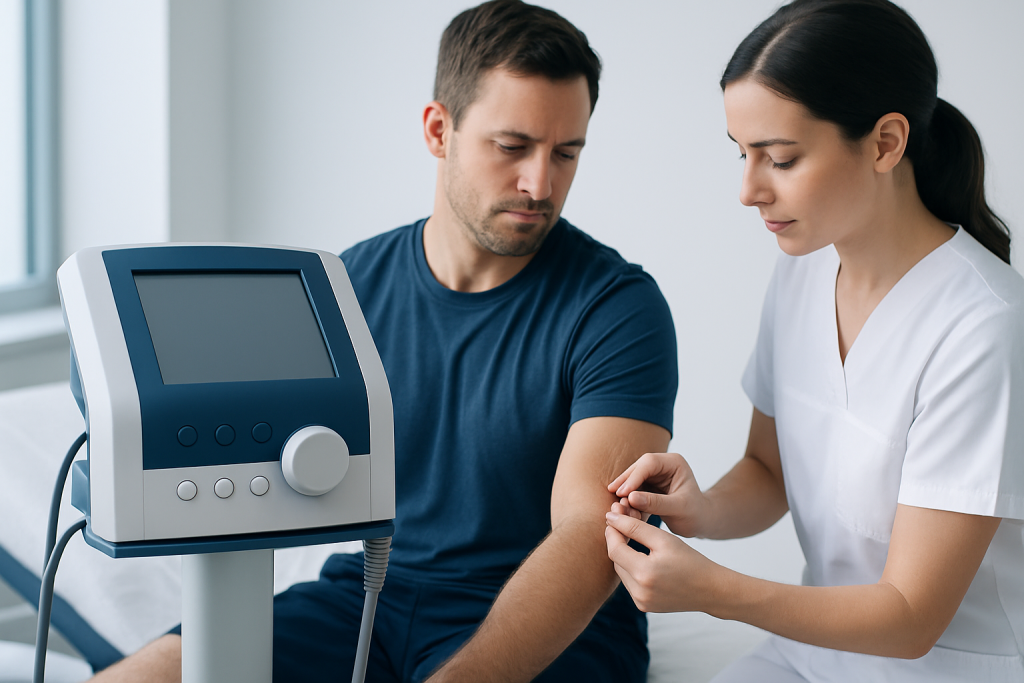
Dry needling is generally used for musculoskeletal problems linked to muscle tension, trigger points, or movement limitations. People may describe a deep ache, a tight band in a muscle, local tenderness, or pain that seems to refer to another area, such as a shoulder blade, neck, or lower back.
It may be considered in conditions such as neck pain, tension-related headaches, shoulder pain, back pain, tennis elbow, hip muscle pain, and some sports injuries. In some cases, it is used when a muscle remains guarded or overactive after an injury, surgery, or prolonged poor posture.
Common reasons clinicians may suggest it include:
- Persistent muscle tightness that limits daily activities
- Trigger points that reproduce the person’s familiar pain
- Stiffness that is not improving with home stretching alone
- Pain patterns that seem tied to overuse or compensation
Not every pain syndrome responds to dry needling, and it is not intended to replace a full medical evaluation when symptoms are unusual, severe, or spreading.
Causes and Risk Factors

Trigger points and muscle pain can develop when a muscle is repeatedly stressed, overused, or held in a shortened position for long periods. Poor ergonomics, repetitive work, training errors, stress-related clenching, and reduced movement after injury can all contribute.
Some people are more likely to have muscle pain patterns that a clinician may consider for dry needling. These include athletes with overworked muscle groups, office workers with neck and shoulder tension, people recovering from orthopedic injury, and individuals whose pain persists because surrounding muscles have become protective or deconditioned.
Dry needling is chosen based on the whole clinical picture, not only the presence of pain. A clinician will usually consider the person’s history, medication use, skin condition, bleeding risk, infection risk, and whether another diagnosis may better explain the symptoms.
Diagnosis and Assessment
Before dry needling is offered, a qualified clinician should assess the affected area and ask about symptom history, activities, previous treatments, and any red-flag symptoms. This evaluation helps determine whether the pain is likely muscular or whether imaging, laboratory tests, or another specialist assessment may be needed first.
The assessment often includes observation of posture, range of motion, muscle strength, tenderness, and how pain behaves during movement. The clinician may also try to identify trigger points by feeling for tight bands or areas that reproduce the person’s familiar discomfort.
For international patients, this stage is particularly important because it sets expectations before travel or treatment planning. A clear diagnosis helps determine whether dry needling should be done alone, combined with physical therapy, or replaced by another approach entirely.
Treatment Options
During dry needling, a clinician places a fine needle into a targeted muscle point. Some people feel a brief twitch, pressure, heaviness, or a quick cramping sensation as the needle reaches the trigger point. Others feel only minimal discomfort, and the session is usually short.
Dry needling is often paired with rehabilitation exercises because the needle treatment may help calm a tight muscle, while exercise and movement retraining help maintain the benefit. Depending on the condition, the care plan may also include manual therapy, heat or cold application, ergonomic advice, or modifications to sport and work activities.
It is helpful to understand that dry needling is not a stand-alone cure for every pain problem. When it works well, it usually does so by supporting broader recovery rather than replacing the need to address posture, strength, sleep, stress, or biomechanics.
Potential short-term effects can include local soreness, tiredness, or minor bruising. Less commonly, dizziness or a brief feeling of faintness may occur. Serious complications are uncommon when the procedure is performed by properly trained professionals using appropriate precautions.
What Recovery Usually Looks Like
After treatment, some people notice that the treated area feels loose or easier to move, while others experience temporary soreness similar to post-exercise muscle ache. This reaction usually settles within a short period, although the exact timeline can vary based on the muscle treated and the underlying problem.
Simple aftercare often focuses on gentle movement, hydration, and following the clinician’s advice about exercise or activity for the rest of the day. In many rehabilitation plans, patients are encouraged to continue prescribed stretches or strengthening exercises so the muscle can adapt rather than reverting to its prior pattern of tension.
For people traveling for treatment, it is sensible to plan follow-up before returning home if a series of sessions is expected. A clinician can explain what changes are normal, how to monitor progress, and when a remote follow-up or local continuation of therapy may be the best next step.
Prevention and Self-care
Dry needling may help with current symptoms, but long-term improvement often depends on reducing the factors that keep muscles irritated. Regular movement, good desk and travel posture, gradual training progression, and recovery time between intense activities can all make a meaningful difference.
Useful self-care habits may include:
- Changing position regularly during long sitting periods
- Using exercise plans that build strength gradually
- Paying attention to sleep quality and stress management
- Keeping up with stretching or mobility routines recommended by a clinician
- Seeking early care for pain that keeps returning in the same area
If symptoms are linked to a workplace setup, sports technique, or repetitive daily task, addressing the source is often more effective than repeatedly treating the tight muscle alone.
When to See a Doctor
A doctor or rehabilitation specialist should evaluate pain that lasts more than a short period, keeps returning, limits movement, or affects sleep and daily function. Medical advice is especially important if pain follows an injury, if there is swelling or weakness, or if the person is unsure whether the pain is truly muscular.
Dry needling should not be used as a substitute for medical evaluation when symptoms include fever, unexplained weight loss, numbness, radiating weakness, severe worsening pain, breathing difficulty, chest pain, or changes in bladder or bowel control. These signs need prompt assessment because they may point to a condition that requires different treatment.
In an international care setting, patients often benefit from a coordinated review by rehabilitation specialists who can confirm the diagnosis, explain whether dry needling fits the plan, and arrange safe follow-up after travel. At Acibadem Health Point, multidisciplinary specialists and JCI-accredited hospitals diagnose and treat this condition for international patients.
Frequently asked questions
What is dry needling used for?
Dry needling is used to treat muscle trigger points and myofascial pain that may limit movement or cause local, referred, or tension-related discomfort. It is commonly included in rehabilitation plans for neck, shoulder, back, and sports-related muscle problems.
Is dry needling the same as acupuncture?
No, dry needling and acupuncture are different approaches with different clinical traditions and treatment goals. Dry needling is based on musculoskeletal assessment and is usually used to address muscle pain and movement restrictions.
Does dry needling hurt?
Many people feel only brief discomfort, pressure, or a twitch when the needle reaches a trigger point. Mild soreness after the session is common and usually settles fairly quickly.
How many dry needling sessions are needed?
The number of sessions depends on the diagnosis, the severity of symptoms, and how the person responds to treatment. Some people improve after a small number of visits, while others need it as part of a longer rehabilitation plan.
Is dry needling safe?
Dry needling is generally safe when performed by a properly trained clinician using clean technique and appropriate screening. As with any procedure, minor soreness or bruising can occur, and the clinician should review any personal risk factors before treatment.
Can dry needling cure chronic pain?
Dry needling can help reduce muscle-related pain in some people, but it is not a cure for every cause of chronic pain. Best results usually come when it is combined with exercise, education, and treatment of the underlying reason the muscles became irritated.
References
- World Health Organization
- American Physical Therapy Association
- Mayo Clinic
- Cleveland Clinic
- National Institute of Neurological Disorders and Stroke
This article is for general information only and is not a substitute for professional medical advice. Please consult a qualified doctor about your individual situation.
Joint and spine care in Turkey — expert assessment & treatment
JCI-accredited · board-certified surgeons · reply within 24h
Add us as a Preferred Source to see more of our trusted health content across Google Search, AI Overviews and Discover.
More from the Health Library



Related Specialists

Fzt. Elif Tokgöz Nizam
Physical Medicine & Rehabilitation
Fzt. Gizem Aydın
Physical Medicine & Rehabilitation
Dr. Safiye Sayilir
Physical Medicine & Rehabilitation
Dr. Özgün Barış Çolak
Physical Medicine & Rehabilitation