

Doula: What It Is and How It Helps

Key Takeaways
- A doula provides non-medical support during pregnancy, labor, birth, and sometimes postpartum.
- Doula care may help families feel more informed, supported, and calm during the birth process.
- A doula does not replace an obstetrician, midwife, anesthesiologist, or neonatal specialist.
- Support can be personalized to cultural preferences, birth plans, and travel needs for international patients.
- Choosing a doula is often about trust, communication style, and comfort, not just credentials.
Medically reviewed by the Acıbadem clinical team — August 19, 2026
A doula offers continuous emotional, physical, and practical support before, during, and after birth. This article explains how doulas help, what they do not replace, and how families can decide whether doula care fits their birth plan.
Overview
For many families, a doula is the person who helps the birth experience feel more steady, human, and easier to navigate. Unlike a clinician, a doula does not perform medical procedures or make medical decisions. Instead, the doula offers continuous emotional reassurance, hands-on comfort measures, and practical guidance for the pregnant person and, when appropriate, the partner or support person.
The word “doula” is often used to describe several different roles. A birth doula stays with a family through labor and delivery. A postpartum doula focuses on the first days or weeks after birth, helping with recovery support, feeding routines, rest, and household adjustment. Some families also work with antepartum doulas when pregnancy involves bed rest, complications, or a need for extra support before birth.
In modern maternity care, doula support can fit alongside hospital-based obstetric care, midwifery, anesthesia, and newborn care. That makes the role especially relevant for families who want a calm, consistent presence while still receiving medical monitoring and treatment when needed.
What a doula actually does
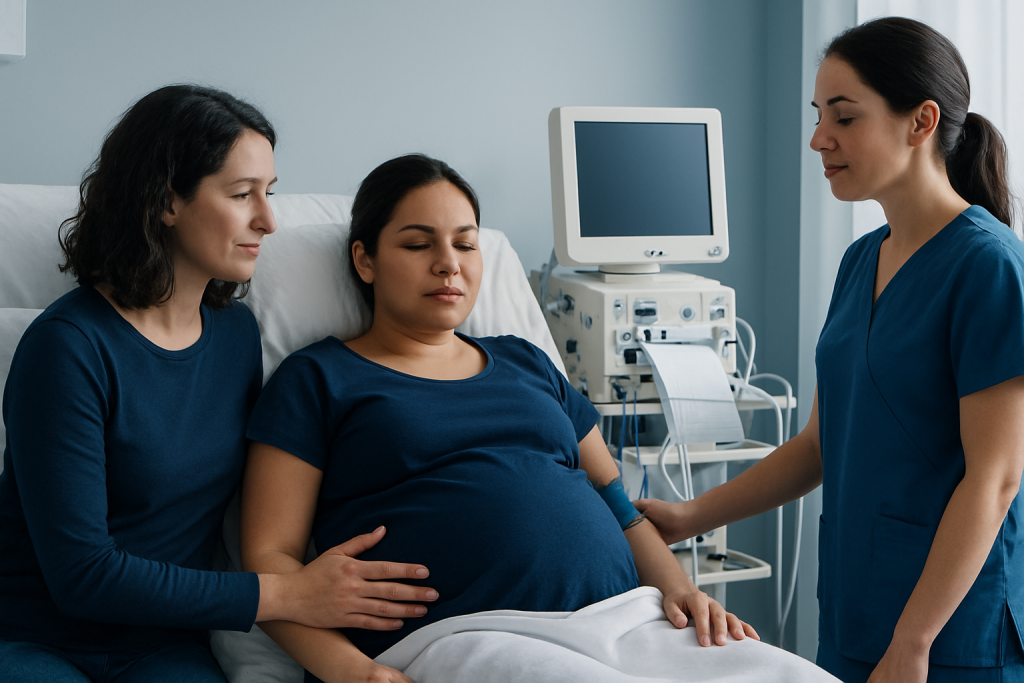
A doula’s work is centered on support. During labor, that may include staying close, explaining what is happening in everyday language, suggesting position changes, encouraging breathing patterns, or helping the birthing person feel grounded through touch, movement, music, or quiet reassurance. Some doulas also help create a birth plan and talk through preferences before labor begins.
After birth, a doula may help the family settle into the early recovery period. That can mean supporting rest, normalizing the emotional ups and downs of the postpartum weeks, helping with infant soothing, and offering simple strategies for feeding or sleep routines. A postpartum doula can be especially valuable when a family is recovering away from their usual home network or adjusting to a new city or country after delivery.
Common doula tasks may include:
- Providing continuous presence during labor
- Helping the family communicate questions to the medical team
- Offering non-medical comfort methods such as massage, counterpressure, or positioning support
- Supporting the partner or another caregiver so they can rest and participate
- Helping the family plan for postpartum recovery and newborn care
What a doula does not do is equally important. Doulas do not diagnose conditions, monitor fetal heart tones as a primary clinical provider, prescribe medication, or replace emergency medical care. Their role works best when it complements, rather than competes with, clinical maternity care.
Symptoms and situations that may lead families to seek doula care

People usually do not search for a doula because of a symptom in the medical sense. They seek one because the pregnancy or birth journey feels uncertain, intense, or easier to face with continuous support. Some want help managing pain and labor anxiety. Others are preparing for a planned cesarean birth, a vaginal birth after cesarean, a high-anxiety pregnancy, or a birth in a setting far from home.
Families often consider doula support when they want a more guided experience, especially if they are first-time parents or have had a previous birth that felt rushed or emotionally difficult. A doula can also be helpful when a support person cannot be present for the entire labor, or when the family wants someone who can stay consistently through long hours of contractions and hospital transitions.
In postpartum care, the “symptoms” are often practical or emotional concerns rather than illness: exhaustion, feeding uncertainty, difficulty settling the baby, feeling overwhelmed by visitors, or struggling to find a routine. A postpartum doula can offer structure and reassurance during that fragile, sleep-deprived stage.
Causes and risk factors: who may benefit most
There is no single reason to use a doula. The need is usually shaped by the family’s preferences, birth setting, and support system. Some people feel confident and simply want an additional calm presence. Others may have specific reasons for wanting extra support, such as language differences, cultural preferences, fear of medical interventions, or a desire for a more personalized birth journey.
Myomectomy Recovery for International Patients: The Usual Travel Timeline" class="ahp-ilk">International patients often find doula support helpful when delivering in another country. The combination of unfamiliar hospital routines, travel logistics, and language or cultural differences can make labor feel more complicated than expected. A doula may help the family prepare questions, understand common processes, and feel less alone in a new environment.
Factors that may make doula support appealing include:
- First pregnancy and a desire for extra guidance
- A previous birth experience that left the family feeling unsupported
- Need for non-medical comfort and advocacy during labor
- Limited family or friend support nearby
- Postpartum recovery after a complicated delivery or cesarean birth
- Birth in a different language or healthcare culture
It is also important to note that a doula is not required for a healthy birth, and many families have satisfying experiences without one. The choice depends on comfort, resources, and the kind of support a person wants around birth.
Diagnosis and planning: how doula care is arranged
Because doula care is not a medical diagnosis, the process is more about matching needs with the right kind of support. Many families begin with an interview or consultation to discuss background, philosophy, birth preferences, postpartum needs, and what kinds of support the doula actually offers. This early conversation helps clarify whether the doula’s style feels reassuring and practical.
Families may want to ask about training, certification, experience with hospital births or cesarean support, language ability, and availability during the due date window. It is also sensible to discuss backup coverage, especially if the doula will be on call for labor. For international patients, it can help to ask how the doula coordinates with hospital staff, interpreters, and the obstetric team.
A thoughtful plan often includes the medical team as well. The doula should know who the obstetrician, midwife, or nurse is, and the family should understand when to call the hospital, when to seek urgent care, and how the doula fits into the plan if labor changes course. Good doula support is flexible enough to adapt when the birth does not go exactly as expected.
Treatment options: support styles and what families can expect
Because doula care is support rather than treatment, the “options” are really different styles of care. Birth doulas may focus on labor comfort, advocacy, and communication. Antepartum doulas may help with practical preparation if pregnancy is physically demanding or emotionally stressful. Postpartum doulas often focus on recovery, infant care education, and helping the family rest.
During labor, support may include continuous presence, massage, counterpressure, position changes, walking, use of a birthing ball, hydration reminders, and quiet coaching. In some births, the most useful support is simply having someone who understands the rhythm of labor and can help the birthing person feel less isolated.
After delivery, a doula may help with common early challenges such as feeding positions, soothing a fussy newborn, planning short rest periods, and recognizing when the family needs clinical follow-up. If the birthing person shows signs of a medical issue such as heavy bleeding, fever, severe pain, or mood changes that feel intense or persistent, the doula should encourage prompt medical evaluation rather than trying to manage it alone.
Some families also pair doula support with other services such as lactation consultation, pelvic floor rehabilitation, mental health counseling, or home nursing, depending on the situation. The most effective care is often the care team that speaks clearly with one another.
Prevention and self-care during pregnancy and postpartum
A doula cannot prevent every difficult moment in birth, but good preparation can reduce stress and help families feel more ready. Before labor, it helps to learn the signs of labor, understand when to go to the hospital, and think about comfort measures that feel manageable. A doula can help turn broad wishes into realistic plans without creating pressure for a “perfect” birth.
Self-care during pregnancy is also about protecting energy. Adequate rest, hydration, gentle movement if approved by the clinician, and attending prenatal visits are all useful habits. For international patients, it is wise to keep travel documents, medical records, and hospital contacts organized in one place so the journey to care is smoother if labor starts unexpectedly.
During postpartum recovery, self-care should be simple and practical. Rest when possible, accept help with meals and chores, and watch for signs that medical follow-up is needed. Emotional care matters too; many parents benefit from a calm check-in, honest conversation about mood, and reassurance that learning to care for a newborn takes time.
When to see a doctor
A doula can be a valuable guide, but medical symptoms should always be assessed by a qualified clinician. Pregnant people should contact their obstetric team urgently for heavy bleeding, severe abdominal pain, reduced fetal movement, signs of labor before term, fever, fluid leakage, severe headache, vision changes, or swelling that appears suddenly. In the postpartum period, urgent evaluation is needed for heavy bleeding, chest pain, shortness of breath, leg swelling on one side, or signs of infection.
It is also important to reach out for emotional support if sadness, anxiety, panic, intrusive thoughts, or sleep disruption become persistent or overwhelming. A doula may notice when a family seems overwhelmed, but only a healthcare professional can assess whether depression, anxiety, or another postpartum condition is present.
Families should remember that choosing a doula does not replace regular prenatal and postnatal care. The best outcomes usually come from combining compassionate support with timely medical attention when needed.
For families traveling for birth or postpartum care, Acibadem Health Point’s multidisciplinary specialists and JCI-accredited hospitals can help diagnose and treat pregnancy-related and postpartum conditions for international patients in a coordinated setting.
Living with doula support: making the experience work well
The most helpful doula relationships are built on clarity. Families do best when they explain their priorities early, whether that means emotional reassurance, help with hospital navigation, postpartum feeding support, or simply having someone who stays calm under pressure. The doula, in turn, should be clear about boundaries and communicate when a medical question needs clinical input.
It can also help to think beyond labor itself. Recovery, newborn care, sleep, and the return to daily life often matter just as much as the birth plan. A doula who understands the family’s language, culture, and travel situation can make those transitions feel more manageable and less rushed.
In the end, doula care is not about replacing medical expertise. It is about adding steady, compassionate support to one of the most intense and meaningful periods in family life.
Frequently asked questions
What is the main role of a doula?
A doula provides non-medical support during pregnancy, labor, birth, and sometimes postpartum recovery. The role focuses on comfort, reassurance, communication, and helping the family feel more prepared and supported.
How is a doula different from a midwife or doctor?
A doula does not provide medical diagnosis, procedures, or prescriptions. Midwives and doctors handle clinical care, while the doula focuses on emotional and practical support that complements that care.
Can a doula stay with someone throughout labor?
In many cases, yes. Continuous presence is one of the most valued parts of doula care, although exact availability depends on the doula’s practice, the hospital’s policies, and the birth timing.
Is a doula only helpful for natural birth?
No. Doulas can support many birth plans, including medicated births, inductions, cesarean births, and VBAC plans. Their support is about the experience and communication, not one specific delivery method.
Can a postpartum doula help after a cesarean birth?
Yes, many families use postpartum doulas after a cesarean birth to help with recovery routines, rest, newborn care, and household adjustment. They do not replace medical follow-up, but they can make the early weeks easier to manage.
How does someone choose the right doula?
It usually comes down to trust, communication style, and compatibility. Families may want to ask about experience, training, availability, language support, and how the doula works with the medical team.
References
- American College of Obstetricians and Gynecologists
- World Health Organization
- Mayo Clinic
- Cleveland Clinic
- Childbirth and Postpartum Professional Association
This article is for general information only and is not a substitute for professional medical advice. Please consult a qualified doctor about your individual situation.
Explore treatments in Turkey — costs, top hospitals & a free quote
JCI-accredited · board-certified surgeons · reply within 24h
Add us as a Preferred Source to see more of our trusted health content across Google Search, AI Overviews and Discover.
More from the Health Library


Related Specialists
Dr. Gamze Karababa
Gynecology & Obstetrics
Dr. Onur Özdenoğlu
Gynecology & Obstetrics
Dr. Selcen Bahadır
Gynecology & Obstetrics
Prof. Dr. A. Taner Usta
Gynecology & Obstetrics