Dermatofibroma: Symptoms, Causes and Treatment

Key Takeaways
- Dermatofibroma is typically benign and often needs no treatment unless it is bothersome or uncertain in appearance.
- It usually feels firm, may be brownish, pink, or red, and can dimple inward when pinched.
- A clinician may diagnose it by appearance, but a biopsy is sometimes used if the lesion is unusual.
- Treatment is often optional and may include observation, removal for symptoms, or reassurance after evaluation.
- New, changing, painful, bleeding, or rapidly growing skin spots should be checked by a doctor.
Medically reviewed by the Acıbadem clinical team — August 19, 2026
Dermatofibroma is a common, usually harmless skin growth that often appears as a firm small nodule on the legs or arms. It can resemble other skin lesions, so a careful clinical exam is important when the diagnosis is uncertain or the spot changes.
Overview
Dermatofibroma is a common skin lesion that is usually harmless and slow-growing. It most often appears as a small, firm bump on the legs, although it can develop on the arms, trunk, or other areas of the body. Many people first notice it because it catches light differently from the surrounding skin or becomes easier to feel than to see.
From a medical perspective, dermatofibroma is made up of fibrous tissue and skin cells in the deeper layers of the skin. It is not the same as skin cancer, and in many people it stays unchanged for years. Even so, it can be confusing to spot on your own because several other skin conditions can look similar at first glance.
For patients who live abroad or are planning care while traveling, the main challenge is often not treatment itself but getting a clear diagnosis. A dermatology visit can help determine whether the lesion is truly a dermatofibroma or whether it deserves closer evaluation. That reassurance is often the most important step.
Symptoms and How It Typically Looks
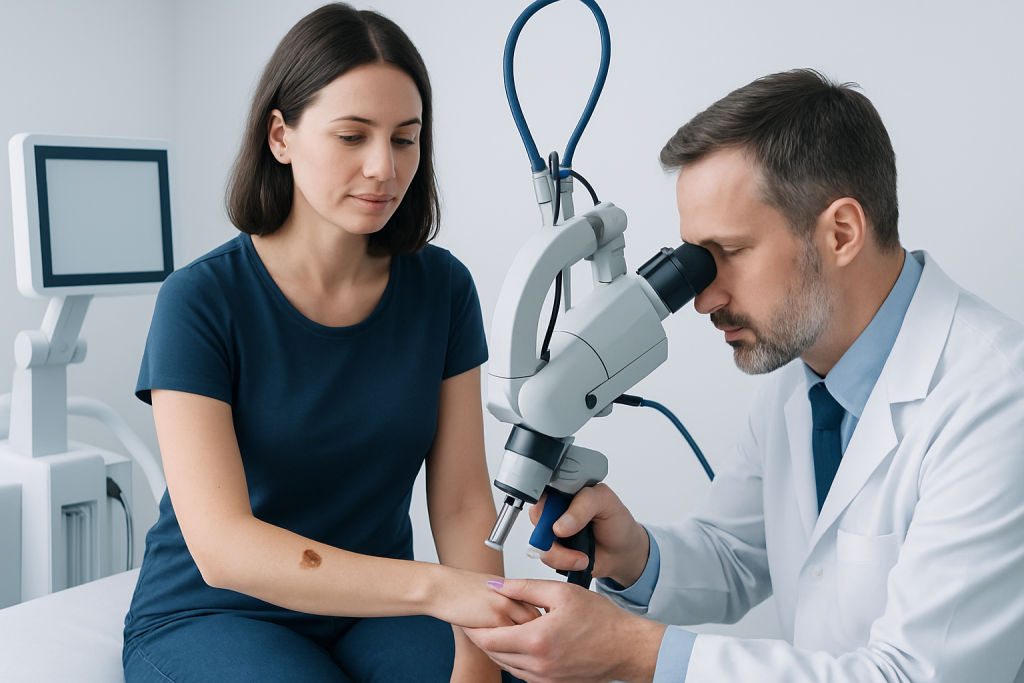
Dermatofibromas are usually small, round or oval, and firm to the touch. Their color may range from pink or red to brown, tan, or grayish, depending on skin tone and the lesion’s age. Many people notice that the center seems slightly lighter or that the bump sits just below the skin surface rather than forming a soft, fleshy growth.
A classic clue is the so-called dimple sign: when the surrounding skin is pinched, the lesion may pull inward in the middle. This feature can help a clinician recognize the growth during an exam, although not every dermatofibroma shows it clearly. Some lesions are itchy or mildly tender, especially if rubbed by clothing or irritated after shaving.
Most dermatofibromas remain stable. A change in size, color, shape, or symptoms does not automatically mean something serious, but it does justify a medical review. This is especially true if the spot bleeds, ulcerates, or starts to look very different from the rest of the skin.
Causes and Risk Factors

The exact reason dermatofibromas form is not fully understood. In many cases, they seem to develop after a minor injury to the skin, such as a small cut, insect bite, follicle irritation, or another local inflammatory event. The skin may respond by forming a compact area of fibrous tissue that remains as a lasting bump.
Dermatofibromas are seen more often in adults than in children, and they appear somewhat more commonly in women. Some people develop only one lesion, while others develop several over time. There is usually no single lifestyle habit that clearly causes them, and they are not considered contagious.
Because many harmless and serious skin conditions can look alike, risk assessment is not based only on age or appearance. A history of prior skin trauma, a personal tendency toward skin nodules, and the lesion’s behavior over time all help guide the evaluation. The goal is not to label every bump quickly, but to make sure the diagnosis is sound.
Diagnosis
Diagnosis often begins with a careful skin examination and a discussion of when the lesion first appeared, whether it has changed, and whether it causes symptoms. Dermatologists may recognize a typical dermatofibroma from its size, firmness, color, and dimple sign. In many straightforward cases, that clinical assessment is enough.
If the lesion is atypical, growing, unusually painful, bleeding, or difficult to distinguish from another condition, a biopsy may be recommended. This means removing all or part of the spot and examining it under a microscope. A biopsy can help rule out conditions that need different treatment and can provide peace of mind when the appearance is not classic.
For international patients, it can be useful to bring photographs of the lesion over time, especially if appointments are spread out or care is being coordinated across borders. Clear records help clinicians compare change accurately, which is often more informative than a single snapshot in time.
Treatment Options
Many dermatofibromas do not require treatment. If the lesion is not painful, irritating, or cosmetically concerning, observation is a reasonable option. Once a dermatologist is confident about the diagnosis, the patient may simply monitor the spot and return if anything changes.
When treatment is desired, surgical removal is the most definitive option. This may be considered if the lesion is bothersome, repeatedly traumatized, or uncertain in diagnosis. It is important to understand that removal usually leaves a scar, so the decision balances the bump itself against the expected result of surgery.
Other approaches are less commonly used and may not be suitable for every lesion. A clinician may discuss the likely benefits and limits of each option, including whether treatment is worthwhile at all. The best plan depends on symptoms, location, skin type, and the patient’s personal goals.
In some cases, the most appropriate “treatment” is simply confirmation that the lesion is benign. For many people, knowing that the spot is not dangerous is enough to avoid unnecessary procedures and focus on routine skin care instead.
Prevention and Self-care
There is no guaranteed way to prevent dermatofibroma, since the exact cause is not fully known. Still, basic skin care may reduce irritation in areas prone to friction or minor injury. Gentle shaving, protective clothing, and prompt care for cuts or bites can help keep the skin calm, even though they do not eliminate the possibility of a lesion forming.
Self-care is mostly about observation. Patients can check their skin periodically and note whether a spot has changed in size, color, tenderness, or texture. Taking a clear photo every few months can be useful, especially for lesions in hard-to-see places or when follow-up is happening from another country.
- Avoid picking, squeezing, or repeatedly rubbing the lesion.
- Use sun protection for overall skin health, especially on exposed areas.
- Track any new symptoms, such as pain, itching, or bleeding.
- Seek medical advice if a spot looks unusual or begins to evolve.
These steps do not treat the lesion itself, but they can make it easier to notice meaningful change and discuss it clearly with a clinician.
When to See a Doctor
A doctor should evaluate any skin bump that is new, changing, painful, bleeding, or not clearly identified. This is especially important if the lesion grows quickly, becomes ulcerated, has irregular borders, or looks very different from nearby skin. A clinical review is also sensible when a person is unsure whether the lesion is truly benign.
Medical attention is also worth seeking if the spot is repeatedly irritated by clothing, shaving, or movement, or if cosmetic concerns are affecting comfort and confidence. In some situations, the patient may already be traveling for other medical care and want the lesion checked at the same visit; combining assessments can be efficient and reassuring.
Acibadem Health Point supports international patients with multidisciplinary specialists and JCI-accredited hospitals that diagnose and treat dermatologic conditions, including lesions that need careful assessment. The aim is a clear, measured plan rather than rushed procedures, with attention to follow-up needs after the patient returns home.
Living With a Dermatofibroma
Once a dermatofibroma has been confirmed, most people can go back to everyday life without special restrictions. The lesion is generally stable and does not need constant monitoring unless it changes or becomes symptomatic. For many patients, the main task is simply knowing what it is and when to have it rechecked.
If removal is chosen, follow-up care matters because the skin needs time to heal and the scar should be watched for normal recovery. Patients who are traveling may want to arrange a remote follow-up plan or know where to seek local review if questions come up after returning home. Clear instructions make the process feel much less disruptive.
Dermatofibroma can be a small lesion with a surprisingly large effect on reassurance. A careful dermatology assessment helps separate harmless findings from those that deserve closer attention, which is often the most useful outcome for patients and families alike.
Frequently asked questions
Is a dermatofibroma cancerous?
Dermatofibroma is typically benign and not considered cancerous. Because several skin conditions can look similar, a clinician should evaluate any lesion that is changing or atypical.
Does a dermatofibroma go away on its own?
It usually remains in place for a long time and may not disappear completely. Some lesions stay the same for years, and others become less noticeable but still persist.
Can a dermatofibroma be removed?
Yes, it can be removed surgically if it is painful, irritated, or cosmetically bothersome. Removal may leave a scar, so the choice is often based on whether the benefit outweighs that trade-off.
How do doctors know it is a dermatofibroma?
Doctors often recognize it by its firm feel, common location, and dimple sign. If the appearance is not classic, a biopsy may be used to confirm the diagnosis.
Should every skin bump be checked?
Not every bump is urgent, but any new, changing, bleeding, or painful spot should be examined. A professional review is the safest way to tell a harmless dermatofibroma from another type of lesion.
Can I travel if I have a dermatofibroma?
In most cases, yes, especially if the lesion has already been confirmed as benign. If it is changing or awaiting diagnosis, it is better to arrange assessment before travel or to plan follow-up in advance.
References
- American Academy of Dermatology
- Mayo Clinic
- DermNet NZ
- British Association of Dermatologists
This article is for general information only and is not a substitute for professional medical advice. Please consult a qualified doctor about your individual situation.
Explore treatments in Turkey — costs, top hospitals & a free quote
JCI-accredited · board-certified surgeons · reply within 24h
Add us as a Preferred Source to see more of our trusted health content across Google Search, AI Overviews and Discover.