Cornea: Function, Anatomy and Common Conditions

Key Takeaways
- The cornea helps focus light and protects the eye from dust, germs, and minor injury.
- Blurred vision, pain, light sensitivity, and redness can all point to corneal problems.
- Corneal conditions may come from infection, injury, dryness, inherited disorders, or inflammation.
- Diagnosis usually includes a detailed eye exam and specialized imaging or staining tests.
- Treatment may involve eye drops, protective care, contact lens changes, or surgery such as corneal transplant.
- Prompt eye evaluation is especially important after injury, chemical exposure, or sudden vision change.
Medically reviewed by the Acıbadem clinical team — August 19, 2026
The cornea is the clear front window of the eye, and even small changes in its shape or clarity can affect vision. Understanding corneal problems early can help people protect sight and choose the right care with confidence.
Overview
The cornea is the eye’s clear, dome-shaped front surface. It covers the iris and pupil and plays a major role in focusing light so vision stays sharp. Because it is transparent and highly sensitive, the cornea can reveal problems quickly through symptoms such as discomfort, haze, or blurred sight.
A healthy cornea has several layers that work together like a finely polished lens. The outer surface protects against the environment, while deeper layers keep the cornea smooth, strong, and properly hydrated. When one part of this structure is disturbed, the change can affect the way the eye sees and feels.
Corneal conditions are common reasons people seek eye care, and they range from short-lived irritation to more serious disorders that need specialist treatment. For international patients, understanding what the cornea does can make it easier to plan care, ask focused questions, and make sense of recommended tests or procedures.
Symptoms
Corneal problems often announce themselves through symptoms that are difficult to ignore. Some people notice vision that becomes blurry, cloudy, or distorted. Others feel pain, a gritty sensation, or a strong reaction to light that makes everyday tasks uncomfortable.
Redness, tearing, and the feeling that something is stuck in the eye are also common. In some cases, a person may blink more often, squint in bright settings, or avoid contact lenses because they no longer feel comfortable.
- Blurred, hazy, or distorted vision
- Eye pain or foreign-body sensation
- Light sensitivity
- Redness and tearing
- Reduced contact lens tolerance
- Halos around lights in some corneal disorders
Symptoms can develop suddenly after an injury or gradually with conditions such as keratoconus or corneal dystrophies. Even mild symptoms deserve attention if they do not improve, because the cornea is central to clear vision.
Causes & Risk Factors

Corneal problems have many possible causes. Infection can occur from bacteria, viruses, fungi, or parasites, especially when the eye is exposed to contaminated water, contact lens misuse, or trauma. Dry eye disease may also damage the corneal surface over time by reducing the quality of the tear film.
Physical injury is another important cause. A scratch from a fingernail, plant material, dust, or a chemical splash can disturb the cornea’s surface and create pain or inflammation. Inherited conditions and structural disorders, such as keratoconus or some corneal dystrophies, can change the cornea’s shape or clarity even without an obvious trigger.
Risk is higher in people who wear contact lenses for long periods, sleep in lenses that are not intended for overnight wear, rub their eyes frequently, have allergies, or live with autoimmune disease. Previous eye surgery, family history of corneal disease, and repeated eye infections may also increase the likelihood of corneal problems.
Diagnosis
Diagnosis begins with a careful eye history and a detailed examination. An eye specialist will usually ask about the onset of symptoms, contact lens use, recent injury, exposure to chemicals, and any previous eye conditions or surgery. This context helps narrow the likely cause before testing begins.
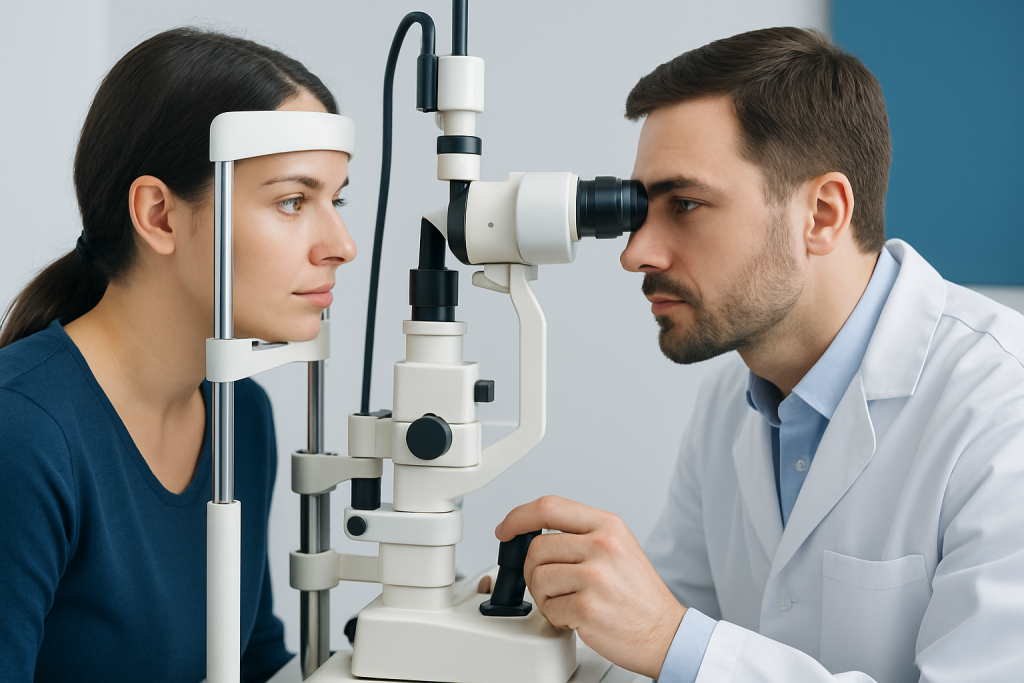
A slit-lamp examination lets the clinician look at the cornea under magnification. Fluorescein staining may be used to highlight scratches, ulcers, or areas of surface damage. Depending on the concern, the doctor may measure corneal thickness, map its shape, or inspect the tear film and eye pressure.
For suspected infection, a sample from the eye surface may be taken to identify the organism and guide treatment. Imaging tests such as corneal topography or tomography can be especially useful for disorders that affect corneal shape. In some cases, repeat examinations are needed to follow healing or confirm that treatment is working.
Treatment Options
Treatment depends entirely on the cause and depth of the problem. A small abrasion may heal with protective care, lubricating drops, and close follow-up, while an infection often needs targeted antimicrobial eye drops or other specialist medicines. For inflammatory conditions, doctors may use anti-inflammatory treatment after carefully weighing the risks and benefits.
When corneal shape is the issue, contact lenses designed for corneal irregularity or procedures such as corneal collagen cross-linking may help slow progression in selected patients. Keratoconus and certain scars may be managed with specialty lenses, while advanced damage may require surgical treatment.
Corneal surgery can include procedures such as partial-thickness or full-thickness corneal transplant, depending on how much of the cornea is affected. The recovery plan often includes follow-up visits, drops, and activity restrictions, which are important for people traveling from another country so healing can be monitored safely after returning home.
Some common treatment approaches include:
- Lubricating drops and surface protection
- Prescription antimicrobial or anti-inflammatory eye drops
- Specialty contact lenses for irregular corneas
- Corneal cross-linking in selected cases
- Corneal transplant or other surgical repair
Prevention & Self-care
Many corneal problems can be reduced with practical daily habits. Contact lens hygiene is especially important: lenses should be cleaned and replaced as directed, and they should not be worn longer than recommended. Water exposure with lenses, including swimming or showering, should be avoided unless an eye doctor says otherwise.
Eye protection matters in places where dust, tools, chemicals, or sports injuries are possible. Sunglasses can help with light sensitivity, and lubricating drops may relieve mild dryness when recommended by a clinician. People with allergies may do better when they resist rubbing their eyes, since rubbing can worsen irritation and may contribute to corneal strain in susceptible eyes.
For patients preparing to travel for eye care, it is wise to carry a medication list, follow post-treatment instructions exactly, and confirm the timing of follow-up appointments before departure. If a corneal disorder is chronic, keeping records of imaging, prescriptions, and surgical notes can make ongoing care easier at home.
When to See a Doctor
Any sudden change in vision, significant eye pain, or light sensitivity should be assessed promptly. The same is true after a chemical splash, a penetrating injury, or a scratch that still feels painful after the initial flush or first aid. These situations may need urgent eye evaluation rather than watchful waiting.
People who wear contact lenses should seek medical advice if redness, pain, discharge, or blurred vision develops, especially if symptoms worsen quickly. A red eye that does not improve, or a feeling that vision is being shadowed by haze or distortion, should also be reviewed by an eye specialist.
For patients with known corneal disease, follow-up matters even when symptoms seem mild. A clinician can check whether the condition is stable, determine whether vision correction needs to change, and identify the right moment for more advanced treatment if needed. Acibadem Health Point’s multidisciplinary specialists and JCI-accredited hospitals diagnose and treat corneal conditions for international patients with coordinated care and follow-up planning.
Frequently asked questions
What does the cornea do?
The cornea is the clear front layer of the eye that helps focus light and protect the inner eye. Because it is so important for vision, even small corneal changes can cause noticeable symptoms.
Can a corneal scratch heal on its own?
Some minor corneal scratches heal with protective care and close monitoring. However, pain, redness, or blurred vision should still be checked, because deeper injury or infection may need treatment.
Is corneal disease always serious?
Not always. Some corneal problems are short-term and treatable, while others are chronic and may affect vision over time, so early assessment helps determine the right level of care.
Why are contact lenses a risk for corneal infection?
Contact lenses can trap germs against the eye surface if they are not cleaned, replaced, or worn as instructed. Sleeping in lenses or exposing them to water can raise the risk further.
What is keratoconus?
Keratoconus is a condition in which the cornea gradually thins and bulges into a more cone-like shape. This can cause distorted vision and may be managed with specialty lenses, cross-linking, or other treatments depending on severity.
When is a corneal transplant considered?
A corneal transplant may be considered when scarring, thinning, or loss of clarity cannot be managed well with other treatments. The exact procedure depends on which layers of the cornea are affected.
References
- American Academy of Ophthalmology
- National Eye Institute
- World Health Organization
- Mayo Clinic
This article is for general information only and is not a substitute for professional medical advice. Please consult a qualified doctor about your individual situation.
Explore treatments in Turkey — costs, top hospitals & a free quote
JCI-accredited · board-certified surgeons · reply within 24h
Add us as a Preferred Source to see more of our trusted health content across Google Search, AI Overviews and Discover.