Colon Cancer Symptoms

Key Takeaways
- Colon cancer may cause no symptoms early on, which is why screening matters even when someone feels well.
- Common warning signs include blood in the stool, persistent bowel habit changes, abdominal discomfort, and unexplained weight loss.
- Many colon cancer symptoms can also be caused by less serious conditions, but persistent or unusual changes should still be checked.
- A doctor may use stool tests, colonoscopy, and imaging to identify the cause and guide treatment.
- People with a family history, inflammatory bowel disease, or certain genetic conditions may need earlier or more frequent screening.
Colon cancer symptoms can be subtle at first, and some people notice nothing until the disease is more advanced. Understanding the warning signs can help people seek timely medical evaluation and make informed decisions about screening and treatment.
Overview
Colon cancer begins in the large intestine, where it may develop slowly over time and, in the early stages, create very few clues. That is why many people do not realize anything is wrong until the disease has already grown or begun to affect bowel function.
When symptoms do appear, they often resemble common digestive complaints. A person may assume the change is due to diet, stress, hemorrhoids, or a temporary stomach issue. The challenge is not to panic over every symptom, but to recognize which patterns deserve medical attention and not to ignore them for too long.
For international patients, this question often comes up during travel planning: should they seek care at home first, or arrange evaluation abroad where diagnostic tests may be available quickly and in one place? The most practical answer is to have persistent symptoms assessed without delay, regardless of where the evaluation happens.
Symptoms
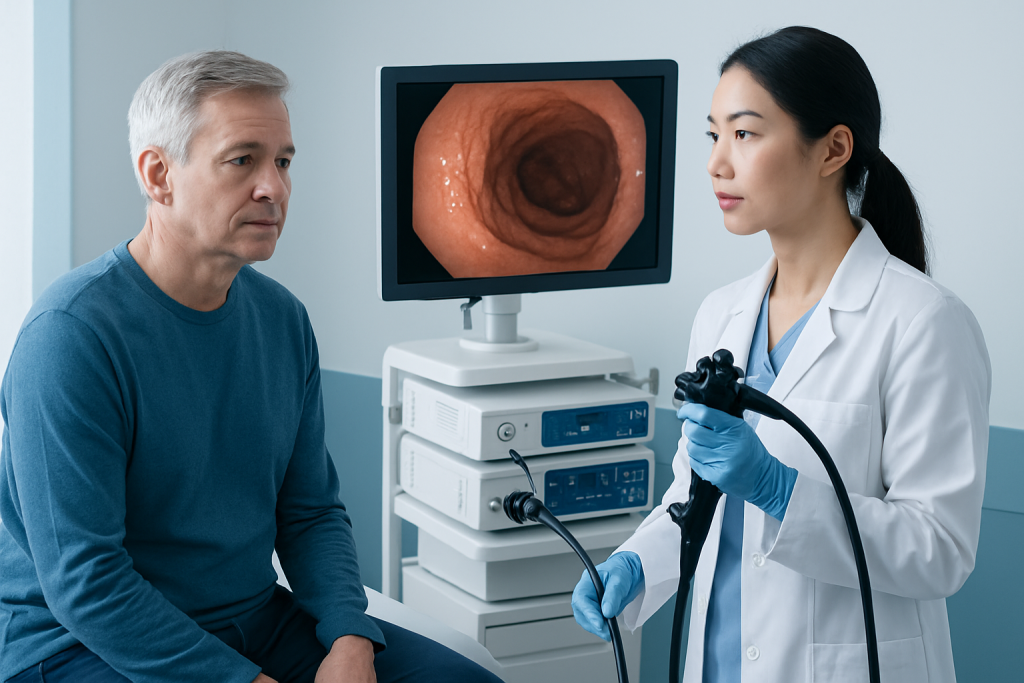
Colon cancer symptoms can vary depending on the tumor’s location and size. Some changes involve the stool itself, while others reflect irritation, partial blockage, or slow blood loss over time.
Common symptoms may include:
- Blood in the stool, which may look bright red or darker and mixed into the stool
- A persistent change in bowel habits, such as diarrhea, constipation, or narrower stools
- Feeling that the bowel does not empty completely
- Abdominal pain, cramping, bloating, or a sense of fullness
- Unexplained fatigue, which can happen if the cancer causes slow bleeding and anemia
- Unintentional weight loss or reduced appetite
Some people notice only one symptom, while others have several at the same time. Symptoms that keep returning, last for more than a short period, or gradually become more noticeable should be reviewed by a doctor.
It is also important to remember that rectal bleeding, bowel changes, and abdominal discomfort are not specific to colon cancer. Hemorrhoids, infections, inflammatory bowel disease, and dietary factors can produce similar complaints, which is why proper evaluation is the safest way to understand the cause.
Causes & Risk Factors

Colon cancer develops when cells in the lining of the colon acquire changes that allow them to grow and divide in an uncontrolled way. These changes usually accumulate over time, often beginning as benign growths called polyps that may later become cancerous.
Certain factors raise the chance of developing colon cancer, including older age, a personal or family history of colon polyps or colorectal cancer, and inherited conditions such as Lynch syndrome or familial adenomatous polyposis. Long-standing inflammatory bowel disease, including ulcerative colitis and Crohn’s disease involving the colon, can also increase risk.
Lifestyle factors may play a role as well. A diet low in fiber and high in processed meats, regular heavy alcohol use, smoking, obesity, and low physical activity are associated with a higher risk. These factors do not mean a person will definitely develop colon cancer, but they do help doctors decide who may benefit from earlier screening or closer follow-up.
People who travel for care often want a clear picture of what may have contributed to their symptoms. A specialist can review personal history, family history, medication use, and prior test results to help separate risk factors from more immediate causes of symptoms.
Diagnosis
Because symptoms alone cannot confirm colon cancer, diagnosis usually begins with a detailed conversation and physical examination. The doctor may ask how long the symptoms have been present, whether blood is visible, whether the bowel pattern has changed, and whether there is a family history of cancer or polyps.
Tests commonly used to evaluate possible colon cancer include stool-based tests, blood tests, and colonoscopy. Stool tests can sometimes detect hidden blood or markers of abnormal cells, while blood tests may show anemia or other clues that suggest further investigation is needed.
Colonoscopy is the most direct way to examine the colon. During this procedure, the doctor can look for polyps, suspicious areas, or bleeding, and may remove tissue samples for biopsy. If cancer is found or strongly suspected, imaging studies such as CT scans may be used to determine whether it has spread and to help plan treatment.
For people arriving from another country, a coordinated evaluation can be especially helpful because it reduces delays between testing steps. Having laboratory work, endoscopy, pathology review, and imaging organized within one system can make the diagnostic process easier to follow and less stressful.
Treatment Options
Treatment depends on the stage of the cancer, its exact location, and the person’s overall health. Early-stage disease may be treated primarily with surgery, while more advanced cases may involve combinations of surgery, chemotherapy, targeted therapy, or immunotherapy.
Surgery aims to remove the cancer and nearby lymph nodes when possible. Chemotherapy may be used before surgery, after surgery, or to treat cancer that has spread. Targeted therapy and immunotherapy are considered in selected cases, often based on the tumor’s biological features and test results.
Supportive care is also important. Managing nutrition, bowel symptoms, pain, anemia, and emotional stress can improve day-to-day functioning during treatment. Patients who are receiving care away from home may also need follow-up planning for wound care, medication review, pathology discussion, and coordination with their local doctor after they return.
Treatment choices are best made with a multidisciplinary team. That team may include a gastroenterologist, medical oncologist, surgeon, radiologist, pathologist, and dietitian, each contributing to a plan that fits the individual rather than the diagnosis alone.
Prevention & Self-care
Not every case of colon cancer can be prevented, but several steps can lower risk and support early detection. Regular screening is one of the most effective tools, especially for people at average risk who are old enough to begin routine testing or for those who need earlier screening because of family history or other risk factors.
Daily habits also matter. A balanced diet rich in fiber, regular physical activity, limiting alcohol, avoiding tobacco, and maintaining a healthy body weight can all support colon health. These measures are not substitutes for screening, but they can be part of a sensible long-term prevention plan.
Self-care is equally important when symptoms are being evaluated. Keeping a simple record of bowel changes, any visible blood, abdominal pain, weight changes, and fatigue can help the doctor see patterns more clearly. If a person is traveling for evaluation, bringing prior reports, medication lists, and imaging on a digital or printed record can make the consultation more efficient.
- Do not wait for symptoms to become severe before seeking advice.
- Follow screening recommendations based on age and risk.
- Report persistent bowel changes, even if they seem minor.
- Keep track of family history and previous polyp findings.
When to See a Doctor
A doctor should be consulted if blood appears in the stool, bowel habits change for more than a short time, abdominal pain keeps returning, or unexplained fatigue and weight loss develop. These symptoms do not automatically mean colon cancer, but they do deserve a clear explanation.
Immediate medical attention is important if there is significant rectal bleeding, severe abdominal pain, vomiting with abdominal swelling, or signs of dehydration or weakness. Those situations can suggest a bowel obstruction, significant blood loss, or another urgent problem that should not wait.
People with a family history of colorectal cancer, a known genetic syndrome, or long-standing inflammatory bowel disease should speak with a doctor about screening plans even before symptoms appear. In some cases, evaluation by specialists in a center experienced with international patients can streamline testing and next steps; Acibadem Health Point offers multidisciplinary specialists and JCI-accredited hospitals that diagnose and treat this condition for international patients.
When symptoms are uncertain, the safest approach is steady, timely evaluation rather than self-diagnosis. A doctor can help determine whether the issue is benign, whether further testing is needed, and how quickly any follow-up should happen.
Living With the Diagnosis and Planning Follow-Up
Hearing the words “colon cancer” can be unsettling, but the next steps are usually structured and practical. Patients often move from diagnosis to staging, treatment planning, and recovery support in a sequence that becomes clearer once the care team explains it.
Follow-up is not only about checking whether treatment worked. It also includes monitoring for side effects, watching for recurrence, supporting nutrition and bowel function, and adjusting care as recovery progresses. For international patients, that follow-up may involve a written plan for local care at home, timing of repeat scans or colonoscopy, and guidance on which symptoms should prompt a return visit.
People often feel more in control when they know what information to keep: pathology reports, procedure notes, imaging results, and a medication list. These records help the next doctor continue care smoothly, whether the person is staying locally or transitioning back to their home country.
FAQs
Q: Is blood in the stool always a sign of colon cancer?
A: No. Blood in the stool can be caused by hemorrhoids, fissures, inflammation, infections, or other bowel conditions. Still, any new or recurring bleeding should be assessed by a doctor so the cause can be identified correctly.
Q: Can colon cancer cause constipation or diarrhea?
A: Yes, a persistent change in bowel habits is one of the common warning signs. Some people notice constipation, others diarrhea, and some alternate between both. A change that does not settle should be discussed with a clinician.
Q: Does colon cancer always cause pain?
A: No, early colon cancer may cause no pain at all. When pain does occur, it may be vague cramping, bloating, or discomfort rather than sharp pain.
Q: What test is best if colon cancer is suspected?
A: Colonoscopy is usually the most direct and informative test because it allows the doctor to see the colon and take biopsies if needed. Stool tests and imaging may also be part of the evaluation depending on the situation.
Q: Who should consider earlier screening?
A: People with a strong family history, inherited cancer syndromes, or a history of inflammatory bowel disease may need earlier or more frequent screening. A doctor can help determine the right schedule based on individual risk.
Q: Can symptoms improve even if cancer is present?
A: Yes, symptoms can come and go, which is one reason colon cancer can be missed at first. Improvement does not always mean the problem is gone, especially if warning signs return later.
References
- World Health Organization
- American Cancer Society
- National Cancer Institute
- American Gastroenterological Association
- NHS
This article is for general information only and is not a substitute for professional medical advice. Please consult a qualified doctor about your individual situation.
More from the Health Library



Related Specialists

Dr. Nadire Sevda İdil
Gynecology & Obstetrics
Dr. Nargiz Ibrahimli
Aesthetic Plastic & Reconstructive Surgery
Prof. Dr. Özgür Fırat
General Surgery
Prof. Dr. Özlem Er
Medical Oncology