Freckle

Key Takeaways
- Freckles are common pigment spots, usually linked to genetics and sun exposure.
- They are typically harmless, but any changing or unusual spot should be checked by a clinician.
- Sun protection can help prevent freckles from becoming darker or more prominent.
- Treatment is usually optional and cosmetic; protection and monitoring are the main steps for most people.
Freckles are small, usually harmless spots that often become more noticeable with sun exposure. Understanding what they are, how they differ from other pigment changes, and when to have them checked can help people care for their skin with confidence.
Overview
Freckles are small, flat areas of increased pigment that often appear on sun-exposed skin such as the face, shoulders, and arms. They are especially common in people with lighter skin tones, but they can appear in anyone. For many families, freckles are simply part of a person’s natural skin pattern rather than a sign of disease.
These spots usually become more noticeable after time outdoors because ultraviolet light encourages pigment-producing cells to make more melanin. In practical terms, that means a spring or summer holiday, even a short one, may make freckles look darker or more numerous. When a person is planning travel and wants to keep skin changes predictable, sun protection becomes the most useful everyday tool.
Freckles are often discussed alongside other pigmentation changes, such as sun spots, moles, and lentigines. They may look similar at a glance, which is why a professional skin check can be helpful if a spot looks different from the rest. The reassuring point is that freckles themselves are generally harmless.
Symptoms
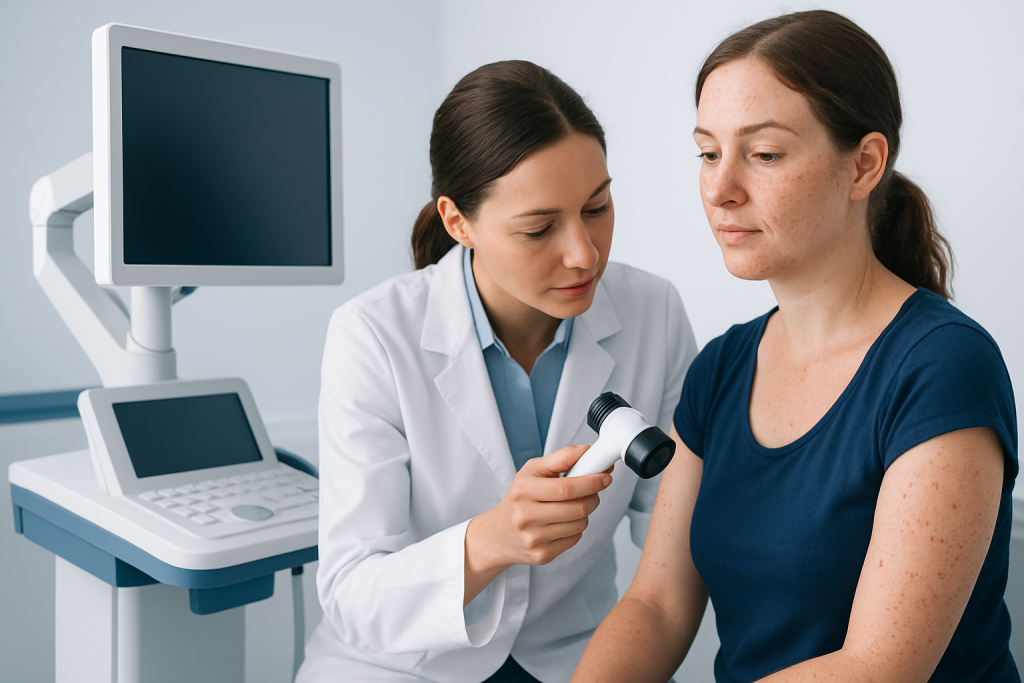
Freckles usually appear as small, round or oval spots that are light brown, tan, or darker brown. They are typically flat, do not itch, and do not hurt. Their color may lighten in winter and deepen after sun exposure.
Most freckles develop on skin that receives regular sunlight. Common locations include the bridge of the nose, cheeks, forehead, shoulders, forearms, and the back of the hands. People often notice them first in childhood or the teenage years, although they can become more visible later in life with cumulative sun exposure.
Because freckles are so familiar, it can be easy to overlook changes. A spot that becomes raised, irregular in shape, unusually dark, uneven in color, or different from nearby freckles deserves attention. Those features are not typical of ordinary freckles and should be assessed.
Causes & Risk Factors

Freckles form because of how the skin responds to sunlight, especially in people with certain inherited traits. Genetics plays an important role: some people’s skin naturally makes pigment more readily in small clusters rather than evenly across larger areas. This tendency is often seen in families.
Sun exposure is the main trigger that makes freckles appear or intensify. Ultraviolet radiation stimulates melanin production, and in people who are prone to freckling, that pigment may gather as visible spots. This is why freckles often become more obvious during summer, at higher altitudes, or after travel to sunny climates.
Risk factors include:
- Lighter skin tones that sunburn easily
- Family history of freckles
- Frequent sun exposure or tanning
- Use of tanning beds
- Having red or blond hair and light eyes, which may be associated with a greater tendency to freckle
Freckles are not caused by poor hygiene and are not a sign that the skin is unhealthy. They are a visible reflection of pigment distribution and sun response.
Diagnosis
Freckles are usually identified by a visual skin examination. In many cases, an experienced clinician can recognize them immediately based on their size, color, flat shape, and location on sun-exposed skin. No special testing is needed when the pattern is typical.
If a spot does not fit the usual appearance of a freckle, a dermatologist may examine it more closely with a dermatoscope, a handheld device that magnifies skin details. This helps distinguish freckles from moles, sun spots, or lesions that need closer observation.
When international patients are arranging care from abroad, it can be helpful to bring clear photographs of spots that have changed over time, especially if the change happened before travel. A brief history of sun exposure, previous skin checks, and any personal or family history of skin cancer also helps the clinician decide whether follow-up is needed.
Treatment Options
Freckles usually do not need medical treatment. For most people, the goal is not to remove them but to prevent them from darkening and to monitor the skin for any changes. This approach is especially sensible because ordinary freckles are harmless.
When someone wants to reduce the appearance of freckles for cosmetic reasons, a dermatologist may discuss topical treatments or procedures that lighten pigment. Options can include prescription skin-lightening creams, chemical peels, laser-based treatments, or intense pulsed light in selected cases. These should only be considered after a professional assessment, because results vary and not every pigment spot is a good candidate for treatment.
It is important to understand that no cosmetic treatment can permanently stop new freckles from forming if the skin continues to receive ultraviolet exposure. For travelers, this means that after any procedure, strict sun protection remains part of the long-term plan. A clinician can help balance appearance goals with skin safety and realistic expectations.
Prevention & Self-care
Sun protection is the most practical way to limit new freckles and keep existing ones from becoming more noticeable. A broad-spectrum sunscreen, protective clothing, a wide-brimmed hat, and seeking shade during strong sunlight all help reduce ultraviolet stimulation of the skin. These habits matter whether someone is at home or managing sightseeing, beach time, or business travel abroad.
Daily self-care can also include a simple skin routine. Gentle cleansing, moisturizing, and avoiding harsh scrubs can support the skin barrier, especially if it has been treated with lightening products or procedures. People should avoid trying to remove freckles with unverified home remedies, which can irritate the skin and sometimes make pigmentation worse.
Helpful habits include:
- Checking the skin regularly in good light
- Photographing spots that are being watched over time
- Using sunscreen even on cloudy days
- Avoiding tanning beds and intentional tanning
- Reapplying sun protection during long outdoor periods
For people recovering after cosmetic skin treatment, following the clinician’s aftercare instructions is especially important. Healing skin may be more sensitive to sun and irritation, and careful protection supports a more even result.
When to See a Doctor
A doctor or dermatologist should assess any spot that changes in size, shape, color, or texture, even if it was once thought to be a freckle. New symptoms such as itching, bleeding, crusting, or tenderness are also reasons to seek evaluation. The aim is not to create alarm, but to make sure a changing spot is properly identified.
It is also wise to book an appointment if there are many new pigment spots appearing quickly, if a person has a personal or family history of skin cancer, or if the skin has been heavily sun-exposed over many years. People who are unsure whether a spot is a freckle, mole, or sun-related lesion can benefit from a professional opinion rather than guessing.
International patients who are considering assessment or cosmetic treatment can often plan the visit to include both diagnosis and follow-up guidance before returning home. At Acibadem Health Point, multidisciplinary specialists and JCI-accredited hospitals diagnose and treat skin concerns for international patients in a coordinated way, which can make cross-border care easier to organize.
Living With Freckles
For many people, freckles are a permanent but harmless part of their appearance. Some choose to leave them untouched, while others prefer to minimize them for cosmetic reasons. Either approach is reasonable as long as the skin is monitored and protected from the sun.
It can help to think of freckles as a reminder that skin responds to its environment. That perspective can make sun protection feel less like a restriction and more like a practical part of skin health, especially for people who travel frequently or spend time outdoors for work, leisure, or family life.
When concerns are handled calmly and checked early, freckles rarely become a major medical issue. The focus is usually on protection, observation, and professional advice when a spot behaves differently from the rest.
Frequently asked questions
Are freckles the same as moles?
No. Freckles are usually small, flat pigment spots that tend to become darker with sun exposure. Moles are different skin growths and may be raised or more varied in appearance. If a spot does not look typical, it should be checked by a dermatologist.
Can freckles be removed permanently?
Some cosmetic treatments can lighten freckles, but new ones may still appear if the skin is exposed to ultraviolet light. Sun protection remains important even after treatment. A dermatologist can explain which options are suitable and what results are realistic.
Do freckles mean someone has skin cancer?
No, freckles themselves are not skin cancer. However, any spot that changes, bleeds, or looks unusual should be examined because not all pigment spots are freckles. Regular skin awareness is a sensible habit for everyone.
Why do freckles get darker in summer?
Sunlight stimulates pigment production in the skin, which can make freckles more visible. This is especially common on sun-exposed areas such as the face and shoulders. Using sunscreen and protective clothing can help reduce that effect.
Should children with freckles see a doctor?
Most children with freckles do not need treatment if the spots look typical. A doctor should be consulted if a spot changes, grows quickly, or appears different from the rest. Parents can also ask for advice on child-friendly sun protection.
Can makeup cover freckles safely?
Yes, makeup can be used if the skin is healthy and not irritated. It is best to apply makeup over clean, moisturized skin and remove it gently at the end of the day. If a treatment has been performed, the clinician’s aftercare advice should be followed first.
References
- American Academy of Dermatology
- Mayo Clinic
- DermNet NZ
- National Cancer Institute
- British Association of Dermatologists
This article is for general information only and is not a substitute for professional medical advice. Please consult a qualified doctor about your individual situation.