Clear Braces

Key Takeaways
- Clear braces use tooth-colored or transparent brackets to make orthodontic treatment less noticeable.
- They can address many common alignment and bite concerns, though suitability depends on the complexity of the case.
- Good cleaning habits are important because brackets and wires can trap food around the teeth.
- Treatment time varies based on the starting position of the teeth and how closely instructions are followed.
- A dentist or orthodontist can help compare clear braces with aligners and metal braces.
Clear braces are a tooth-straightening option designed to blend in with natural teeth while correcting bite and alignment concerns. This guide explains how they work, who they suit, and what patients can expect before, during, and after treatment.
Overview
Clear braces are a discreet orthodontic option used to guide teeth into a healthier position over time. They work in a similar way to traditional braces, but the brackets are made from materials that are designed to blend with the natural color of the teeth, making them less conspicuous in everyday life.
For many people, the appeal of clear braces is practical as much as aesthetic. They may want straighter teeth, improved bite function, and easier long-term oral hygiene, while still feeling comfortable with the look of treatment during work, travel, or social situations. Clear braces are often discussed by patients who want visible results without the more noticeable appearance of metal braces.
Although they are commonly chosen for cosmetic reasons, clear braces are also a functional treatment. Crowding, spacing, rotated teeth, and certain bite problems can all affect chewing, speech, and cleaning. A qualified dentist or orthodontist can evaluate whether clear braces are suitable or whether another approach would be better for the individual case.
How Clear Braces Work
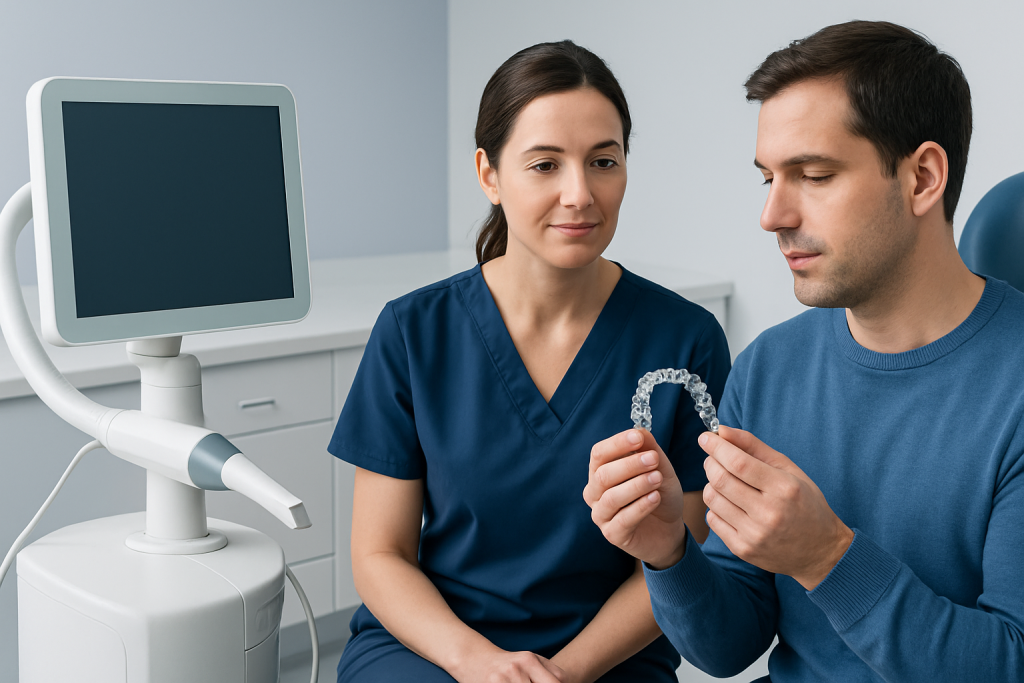
Clear braces use small brackets attached to the front surface of each tooth, connected by a thin archwire. The wire applies gentle, steady pressure that gradually moves teeth into a planned position. Over time, the orthodontist adjusts the wire or parts of the system to keep the movement progressing in a controlled way.
The treatment process is carefully staged. Early visits focus on creating space and correcting obvious crowding or spacing, while later adjustments refine the bite and final alignment. Because the movement happens gradually, the teeth and surrounding tissues can adapt in a way that is generally predictable and monitored.
Clear braces are not all identical. Some systems use ceramic brackets, while others may use brackets made from sapphire-like or other translucent materials. The exact design can influence how noticeable the braces are, how they feel, and how they are maintained. A specialist can explain the options that best match the patient’s goals and oral health needs.
Signs a Person May Be a Good Candidate

Clear braces may be appropriate for people who want a less visible orthodontic treatment and have alignment concerns that can be managed with bracket-and-wire systems. Common reasons include crowded teeth, gaps between teeth, mild to moderate bite issues, and teeth that have shifted after earlier orthodontic treatment.
They may also suit patients who prefer a fixed appliance rather than a removable aligner. Some people find that a fixed system is easier to keep on track because it does not rely on remembering to wear it for many hours each day. That can be useful for students, frequent travelers, and busy professionals.
Not every case is a good fit. Severe bite discrepancies, extensive tooth movement needs, or certain enamel and gum concerns may call for a different plan. The best way to decide is through an in-person orthodontic assessment, where the teeth, bite, jaw position, and gum health are reviewed together.
Common Benefits and Limitations
One of the biggest advantages of clear braces is appearance. Because the brackets are designed to be less noticeable, patients often feel more comfortable speaking, smiling, and attending day-to-day activities during treatment. For some, that makes the orthodontic process feel easier to accept and sustain.
Clear braces can also be effective for a broad range of alignment issues. They provide the precise control that orthodontists often value when teeth need careful rotation, leveling, or bite correction. This can make them a practical choice when a patient wants a subtle look without giving up the stability of a fixed appliance.
There are also trade-offs to understand. Clear brackets can be more prone to visible staining if oral hygiene is not maintained well, and they may be slightly more fragile than metal braces. They can also be more noticeable than aligners in close-up settings, and some people experience mild rubbing or tenderness during the early stages of treatment.
What to Expect During Treatment
Treatment usually begins with a consultation and diagnostic records, which may include photographs, scans, impressions, and X-rays. These records help the orthodontist map the current bite and plan the sequence of tooth movements. For patients arranging care from another country, this planning stage is especially important because it helps define the number of visits and the likely timing of follow-up appointments.
When the braces are placed, the procedure is generally straightforward and does not require surgery. The teeth are cleaned, brackets are bonded in place, and the archwire is inserted. The first few days may bring mild pressure, sensitivity, or a sense that the teeth are “aware” of the appliance, which is a normal part of adaptation.
Regular review appointments allow the orthodontist to make small adjustments and check oral health. Patients usually receive advice on food choices, cleaning routines, and what to do if a bracket loosens or a wire feels irritating. Those traveling for treatment may also discuss a return schedule that fits both the orthodontic plan and their travel logistics.
Diagnosis and Treatment Planning
A successful clear braces plan starts with a detailed examination rather than a quick cosmetic decision. The orthodontist looks at tooth position, the way the upper and lower teeth meet, gum health, jaw relationships, and any signs of wear or strain from the bite. This broader view helps ensure the treatment addresses function as well as appearance.
Digital scans and imaging may be used to build a precise picture of the mouth. These records can help estimate how much movement is needed and whether any extra steps, such as space creation or tooth reshaping, should be considered. For international patients, digital planning can be especially helpful because it supports clear communication before arrival and allows the care team to structure visits efficiently.
Planning also includes discussing expectations. Clear braces require cooperation with oral hygiene, appointment attendance, and dietary guidance. Patients who understand the full process tend to feel more confident about the pace and purpose of treatment, especially when they are balancing care with work, family, or travel commitments.
Daily Care, Food Choices, and Self-care
Keeping braces clean is one of the most important parts of treatment. Food and plaque can collect around brackets and wires, so brushing carefully after meals and using floss or interdental cleaning tools can help protect the teeth and gums. An orthodontist may also suggest a fluoride toothpaste or other preventive measures depending on the individual’s risk of decay.
Food choices matter as well. Hard, sticky, or very chewy foods can damage brackets or make cleaning more difficult. Softer foods are often easier during the first few days after placement or an adjustment, when the teeth may feel more sensitive than usual. Small, sensible changes in eating habits can make daily life with clear braces easier and reduce unexpected repair visits.
Patients traveling abroad for treatment should carry a basic oral care kit, including a soft toothbrush, flossing aids, and any recommended cleaning tools. It is also useful to know where to get local support if a wire becomes uncomfortable or a bracket loosens while away from home. Good self-care keeps the treatment plan on track and supports healthier results at the end.
When to See a Dentist or Orthodontist
A dentist or orthodontist should be consulted if teeth are crowded, spaced, or misaligned and the person wants to explore discreet treatment options. A professional assessment can clarify whether clear braces are suitable, how long treatment may take, and whether another approach might be more efficient.
During treatment, it is wise to seek advice if a bracket comes loose, a wire is poking the cheek, there is persistent pain, swelling develops, or cleaning becomes unusually difficult. These issues are often manageable, but they should be checked so the appliance can be adjusted properly and the teeth and gums remain healthy.
It is also sensible to ask for review if the bite feels uneven, speech changes do not settle, or the patient is worried that progress has slowed. At Acibadem Health Point, multidisciplinary specialists and JCI-accredited hospitals can diagnose and treat orthodontic concerns for international patients in a coordinated way, helping them plan care with confidence before, during, and after travel.
Frequently asked questions
What are clear braces made of?
Clear braces usually use ceramic or other tooth-colored bracket materials combined with a metal archwire. The design helps them blend in better than traditional metal braces, while still providing the force needed to move teeth. Exact materials can vary by system and provider.
How do clear braces differ from aligners?
Clear braces are fixed to the teeth, while aligners are removable trays that need to be worn consistently to work well. Clear braces may be a better fit for some complex movements because they give the orthodontist more direct control. Aligners can be easier to remove for eating and cleaning, but they are not ideal for every case.
Do clear braces hurt?
They can cause mild pressure or tenderness, especially after they are first placed or adjusted. This discomfort is usually temporary and often settles as the mouth adapts. If pain is strong or persistent, the patient should contact the dental team.
Can clear braces stain?
The brackets themselves are designed to resist visible color change better than many people expect, but poor cleaning habits can still make them look less clear. Foods and drinks with strong pigments may also affect the appearance of elastic parts if they are used. Careful brushing and regular checkups help reduce this risk.
How long does treatment take?
Treatment time depends on the complexity of the tooth movement and how closely the care plan is followed. Some cases are relatively straightforward, while others need a longer period of adjustment and monitoring. An orthodontist can give a more personalized estimate after examining the teeth and bite.
Can adults choose clear braces?
Yes, many adults choose clear braces because they want orthodontic treatment with a more subtle appearance. Age alone does not prevent treatment; the key factors are oral health, bone support, and the type of movement needed. A professional evaluation helps confirm whether the teeth and gums are ready.
References
- American Association of Orthodontists
- American Dental Association
- NHS
- Mayo Clinic
- Cleveland Clinic
This article is for general information only and is not a substitute for professional medical advice. Please consult a qualified doctor about your individual situation.