Chest Pain Workup: Which Tests Usually Come First and Why

Key Takeaways
- The first chest pain tests often include a medical history, physical exam, ECG, and blood tests such as troponin.
- A chest X-ray, echocardiogram, stress test, CT scan, or coronary angiography may be added depending on the suspected cause.
- Not all chest pain is from the heart, but new, severe, or unexplained pain should be evaluated promptly.
- The order of testing depends on symptoms, age, risk factors, and whether the pain is happening now or happened earlier.
- Patients traveling for care may need records, medication lists, and a clear plan for follow-up after returning home.
Medically reviewed by the Acıbadem clinical team — June 13, 2026
A chest pain workup is designed to quickly sort out whether symptoms may be heart-related, lung-related, digestive, musculoskeletal, or caused by another condition. The first tests are usually chosen to rule out urgent problems early while guiding the next steps in care.
Overview
When someone arrives with chest pain, the first goal is not to name the cause immediately; it is to make sure nothing dangerous is being missed. Clinicians usually start with tests that can quickly show whether the heart muscle is under strain, whether the rhythm is abnormal, and whether there is evidence of another urgent problem.
The phrase chest pain workup covers several possible pathways. A person who has pain right now, especially with shortness of breath, sweating, nausea, fainting, or pain that spreads to the arm, jaw, or back, may need a faster and more intensive evaluation than someone whose discomfort has already passed and seems less urgent.
For international patients, the first few hours often matter most because they shape the rest of the journey: which specialist should lead the case, whether hospital observation is needed, and what testing can be done before travel plans or treatment decisions are made. A thoughtful workup aims to be efficient without being rushed.
Symptoms and red flags that shape the workup
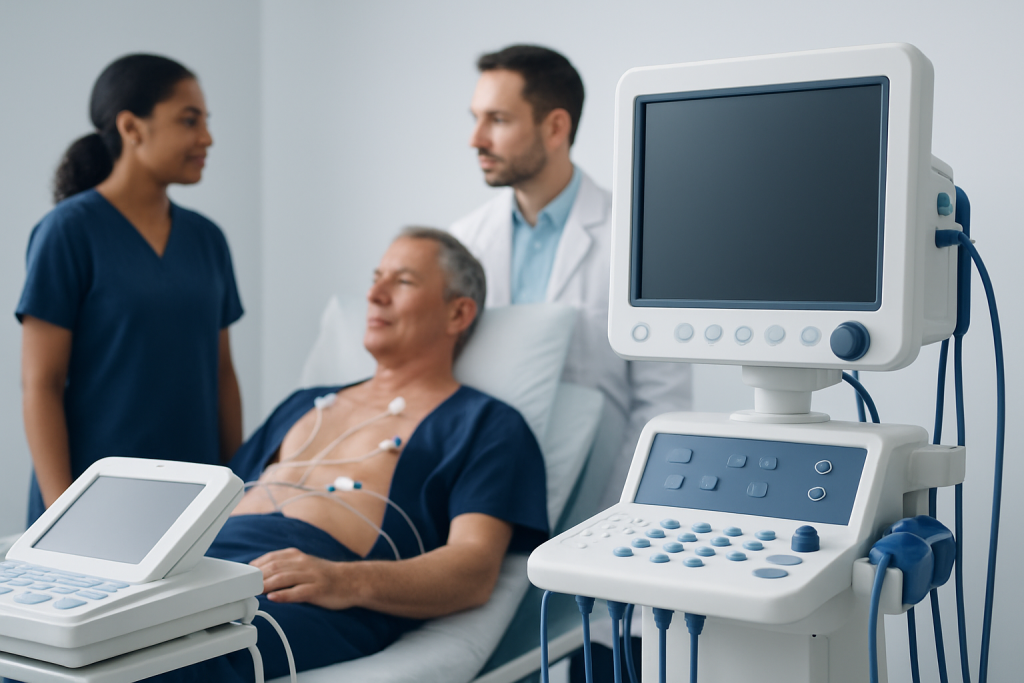
Chest pain is not one symptom. It can feel like pressure, tightness, burning, stabbing, heaviness, or a vague discomfort. Clinicians pay attention to the character of the pain, how long it lasts, where it is felt, what triggers it, and whether anything relieves it.
Some features raise concern for a heart or blood vessel problem. These include pain brought on by exertion, pain that moves to the arm or jaw, pain with sweating or shortness of breath, or pain that starts suddenly and is intense. Other clues, such as pain that worsens with movement or pressing on the chest wall, can point toward a muscle or rib-related cause, though this is not confirmed until more serious conditions are considered.
Important accompanying symptoms include:
- Shortness of breath
- Palpitations or an irregular heartbeat
- Dizziness or fainting
- Nausea or vomiting
- Fever or cough
- Back, shoulder, arm, neck, or jaw pain
The symptom pattern helps determine which tests come first. For example, pleuritic pain with cough may lead to lung-focused tests, while pressure-like pain with risk factors for coronary disease usually leads to heart-focused testing right away.
Causes & risk factors doctors consider first

Chest pain can originate from the heart, lungs, blood vessels, esophagus, stomach, muscles, bones, or even anxiety-related breathing changes. Because some causes are time-sensitive, clinicians begin by asking which possibilities must be excluded first rather than assuming the most common explanation.
Heart-related causes may include reduced blood flow to the heart muscle, inflammation of the heart lining or muscle, aortic disease, or an abnormal heart rhythm. Lung-related causes may include a pulmonary embolism, pneumonia, or a collapsed lung. Digestive causes such as reflux or esophageal spasm can mimic cardiac pain, and chest wall strain is also common.
Risk factors influence the order of testing. A person with diabetes, high blood pressure, high cholesterol, smoking history, kidney disease, prior heart disease, or a strong family history of early cardiac disease will often undergo a more urgent cardiac evaluation. Age, pregnancy, recent surgery, long travel, and blood clot history can also steer the workup toward specific causes.
Diagnosis: which tests usually come first and why
The first step is usually a careful history and physical examination. This is not simply a conversation; it helps the clinician decide whether the pain sounds more like reduced blood flow to the heart, a lung problem, reflux, or a musculoskeletal issue. Blood pressure, oxygen level, pulse, temperature, and the pattern of the pain are all checked early.
An electrocardiogram (ECG or EKG) is commonly among the first tests because it can be done quickly and may show signs of heart ischemia, an arrhythmia, pericarditis, or previous heart damage. A normal ECG does not always rule out a serious problem, but it can immediately guide the next steps.
Blood tests often come next, especially troponin, a marker of heart muscle injury. Troponin is often repeated over time because a single normal result may not be enough early on. Depending on the case, clinicians may also check complete blood count, kidney function, electrolytes, inflammatory markers, D-dimer, or other labs to assess clotting risk, infection, anemia, or metabolic stress.
A chest X-ray is frequently used early when lung or chest wall causes are possible, or when doctors want to look for pneumonia, fluid around the lungs, or signs of a widened mediastinum. If symptoms suggest structural heart problems, a transthoracic echocardiogram may be ordered to assess pumping function, valve disease, fluid around the heart, or wall-motion abnormalities.
When the initial tests are not enough, the next step depends on the suspected cause. A stress test may be used if stable coronary disease is being considered and the person can exercise or receive a medication that simulates exertion. A coronary CT angiography may help evaluate the coronary arteries in selected patients, while a CT pulmonary angiogram is used when a pulmonary embolism is a concern. In more urgent or high-risk situations, cardiac catheterization may be needed to view the coronary arteries directly and treat blockages if present.
In practice, the sequence is often: history and exam, ECG, troponin, and targeted imaging or additional labs. The order changes based on whether the person is stable, how long the pain has lasted, and what the clinician suspects most strongly.
Treatment options: what happens after the first tests
Testing and treatment often begin at the same time. If the early workup suggests a heart attack or another urgent cardiac problem, treatment may start immediately with monitoring, oxygen if needed, medications, and possibly a procedure to restore blood flow. If a clot in the lungs is suspected, the plan shifts toward confirming the diagnosis and starting appropriate clot-directed care.
For less urgent causes, the results help avoid unnecessary treatment and support a more precise plan. Reflux-related pain may be managed with digestive treatment, chest wall pain may improve with rest and anti-inflammatory measures when appropriate, and anxiety-related symptoms may benefit from reassurance, breathing strategies, and further assessment if needed.
People traveling for evaluation sometimes benefit from a staged plan: rapid inpatient testing first, a clear explanation of what was ruled out, and a written follow-up list for their home cardiologist or primary doctor. When surgery, catheter-based treatment, or longer monitoring is needed, the team should explain how recovery will work both locally and after returning home.
Prevention & self-care while awaiting evaluation or results
Until a clinician has assessed the pain, it is safest to avoid strenuous exercise and to note what seems to trigger or worsen symptoms. Keeping a short record of when the pain started, how long it lasts, and whether it changes with movement, breathing, eating, or rest can make the workup more efficient.
People should bring or prepare a list of current medicines, allergies, prior heart or lung conditions, and any recent long-haul travel, surgery, or immobilization. For international patients, digital copies of prior ECGs, imaging reports, stent cards, and discharge summaries can be especially helpful because they reduce guesswork and save time.
General self-care may include staying hydrated if advised, resting in a comfortable position, and following instructions about fasting before certain tests. However, self-care should never replace medical assessment when symptoms are new, severe, or unexplained. Chest pain is one symptom where caution and timely evaluation are more useful than trying to “wait it out.”
When to see a doctor
Immediate medical attention is appropriate for chest pain that is severe, sudden, persistent, or accompanied by shortness of breath, fainting, sweating, marked weakness, or pain spreading to the arm, back, neck, or jaw. New chest pain in someone with known heart disease, recent surgery, a clotting history, or major cardiovascular risk factors also deserves prompt assessment.
Even when the pain seems mild, a doctor should evaluate it if it is recurrent, unexplained, exercise-related, or different from a previously diagnosed condition. It is especially important not to assume reflux, anxiety, or muscle strain until a clinician has ruled out more serious causes.
If evaluation occurs away from home, the patient should leave with a clear summary of the tests performed, the key findings, and the next recommended step. Acibadem Health Point’s multidisciplinary specialists and JCI-accredited hospitals diagnose and treat chest pain for international patients with coordinated care and communication that supports follow-up after travel.
What the test results can mean
Chest pain testing is often more about pattern recognition than a single answer. An abnormal ECG with elevated troponin may point toward a heart attack, while a normal ECG and normal repeated troponins can make a major cardiac event less likely, depending on timing and clinical context.
Imaging adds another layer. A chest X-ray may support a lung infection or fluid problem, an echocardiogram can show heart pumping issues or valve disease, and CT-based imaging can identify artery narrowing or clots when those are suspected. Results are interpreted together, not in isolation.
That is why the first tests are selected carefully. They are chosen to quickly identify emergencies, narrow the list of likely causes, and prevent both under-treatment and unnecessary procedures. A good workup is thorough, but it should also be tailored to the person in front of the doctor.
Living with the uncertainty while testing is underway
Waiting for answers can be stressful, especially when chest pain is unfamiliar or the person is far from home. A calm, stepwise evaluation helps reduce that uncertainty by explaining what has already been ruled out and what is still being checked.
Patients can help by asking which diagnoses are being considered, what each test is meant to exclude, and when results are expected. If discharge happens before all possibilities are fully settled, they should ask what symptoms would require returning for care and what follow-up testing is planned.
Chest pain workups are designed to protect the patient first and label the condition second. That approach is especially valuable when care crosses borders, because it creates a clearer path from the first hospital visit to recovery, follow-up, and long-term heart health.
Frequently asked questions
What tests are usually done first for chest pain?
The first tests usually include a medical history, physical exam, ECG, and blood tests such as troponin. Depending on the symptoms, a chest X-ray or other imaging may be added early as well.
Why is an ECG one of the first tests?
An ECG can be done quickly and may show signs of reduced blood flow to the heart, an abnormal rhythm, or inflammation around the heart. It helps doctors decide whether the situation needs urgent treatment.
Does a normal troponin mean the chest pain is not serious?
Not always. Troponin is often repeated because early values can still be normal even when a heart problem is developing, so doctors interpret it together with symptoms and ECG findings.
Can chest pain come from something other than the heart?
Yes. Chest pain can also come from the lungs, esophagus, stomach, muscles, ribs, or other structures. The workup is designed to sort these causes out safely.
When is a stress test used?
A stress test is usually considered when the person is stable and doctors want to see whether blood flow to the heart becomes limited with exertion. It is not typically the first test in someone with active or high-risk symptoms.
What should an international patient bring to a chest pain appointment?
A medication list, allergy list, prior ECGs or imaging, discharge summaries, and recent test results are very helpful. These records make it easier for the team to avoid repeating tests and to plan follow-up after travel.
References
- American Heart Association
- National Heart, Lung, and Blood Institute
- Mayo Clinic
- European Society of Cardiology
- NICE Guidelines
This article is for general information only and is not a substitute for professional medical advice. Please consult a qualified doctor about your individual situation.