Cherry Angioma: Symptoms, Causes and Treatment

Key Takeaways
- Cherry angiomas are benign and usually do not need treatment.
- They often appear as small, round, red or purple bumps on the skin.
- Diagnosis is usually based on a skin exam; a biopsy is only needed if the lesion looks unusual.
- Removal is optional and may be done for bleeding, irritation, or cosmetic reasons.
- Any spot that changes quickly, bleeds repeatedly, or looks different from nearby lesions should be assessed by a clinician.
Medically reviewed by the Acıbadem clinical team — August 19, 2026
Cherry angioma is a common, noncancerous skin growth made up of small blood vessels. It usually appears as a bright red or purple spot and is often harmless, though it can be checked or removed if it changes, bleeds, or causes concern.
Overview
A cherry angioma is a small, benign growth formed by clusters of tiny blood vessels near the skin’s surface. It is one of the most common vascular skin lesions seen in adults and is usually easy to recognize: a smooth, bright red to deep purple spot that may be flat or slightly raised.
Most people notice cherry angiomas on the trunk, arms, shoulders, or legs. They tend to appear gradually over time, especially with age, and many people have several. Because they are harmless, they often do not need treatment unless they bleed, become irritated, or are removed for cosmetic reasons.
For someone planning care abroad, a dermatologist can usually confirm the diagnosis during a straightforward clinic visit. That assessment may be especially helpful if the spot is new, changing, or not matching the classic appearance of a cherry angioma.
Symptoms
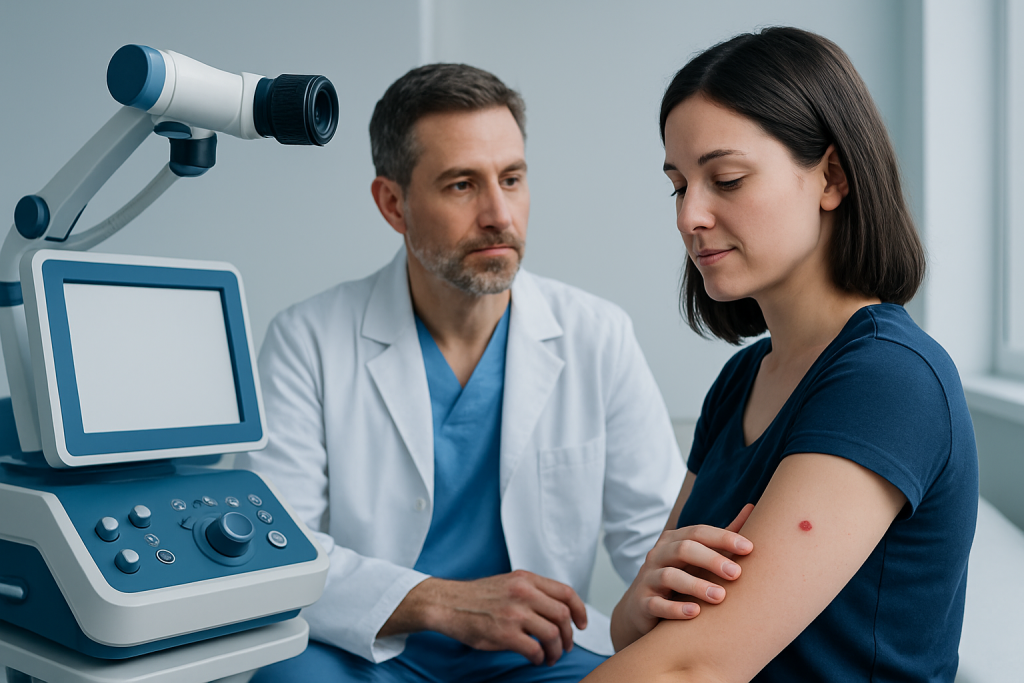
Cherry angiomas usually have a very typical look. They are often small, round, and well-defined, with a red, cherry-red, or sometimes purple color. Some are flat, while others sit slightly above the skin and feel smooth or dome-shaped.
They usually do not hurt or itch. The main concern is often appearance, although they can bleed if scratched, shaved over, or rubbed by clothing. In some people, a cherry angioma may slowly become a bit larger or darker over time, but this change is generally gradual.
It is worth noting that different skin findings can look similar at first glance. A clinician may take a closer look if a lesion is irregular in shape, very dark, scaly, rapidly changing, painful, or associated with other symptoms.
Causes & Risk Factors

The exact cause of cherry angiomas is not fully understood. They are thought to arise from localized growth of small blood vessels in the skin, and they seem to become more common as people age.
Several factors are associated with a greater likelihood of having them. These include family tendency, increasing age, and possibly hormonal or environmental influences, although no single cause explains every case. They are not caused by poor hygiene and are not contagious.
Some people develop them in greater numbers over time. While this can be noticeable, multiple cherry angiomas still most often remain benign and do not signal a serious illness. A doctor may consider the wider skin picture and medical history if the pattern seems unusual.
Diagnosis
In most cases, cherry angioma is diagnosed by a visual skin examination. Dermatologists are often able to identify it based on its color, shape, and location, especially when the lesion has the classic appearance.
When a spot does not look typical, the clinician may suggest additional evaluation. Dermoscopy, which uses a magnified lighted device, can help assess the lesion more closely. If there is uncertainty about the diagnosis, a biopsy may be recommended to rule out other skin conditions.
For international patients, bringing clear photos of the lesion and noting when it first appeared can be useful, particularly if the skin changes during travel or if an earlier image shows a different appearance. This can help the medical team compare the lesion over time.
Treatment Options
Treatment is usually not necessary for a cherry angioma unless it is bothersome. Many people choose to leave it alone once it has been identified as benign.
When removal is desired, a dermatologist may use procedures such as electrocautery, laser treatment, cryotherapy, or shave excision, depending on the lesion and the patient’s skin type. The goal is to remove or reduce the spot while minimizing scarring and allowing the skin to heal predictably.
If a cherry angioma bleeds repeatedly, the clinician may recommend treatment for comfort and convenience. After any procedure, aftercare instructions are important, especially for patients returning home or continuing follow-up in another country. A planned check-in with the treating team can help confirm that healing is on track.
Prevention & Self-care
Cherry angiomas cannot always be prevented, because age and inherited tendencies play a role. Still, simple skin-care habits can reduce irritation and make them less likely to bleed.
Gentle daily care is usually enough: avoid picking at spots, use a soft towel after bathing, and be careful with shaving or friction from clothing in areas where the lesions are present. Sun protection supports overall skin health, even though it does not specifically prevent cherry angiomas.
For people receiving treatment abroad, it helps to ask for written aftercare guidance before leaving the clinic. Knowing how to clean the area, what changes are expected during healing, and when to seek help can make recovery easier once the person is back home.
When to See a Doctor
A medical review is sensible if a skin spot is new and the person is not sure what it is, or if a known cherry angioma starts changing in a way that seems unusual. Rapid growth, repeated bleeding, pain, crusting, or a very different color pattern are all reasons to have it checked.
It is also wise to seek assessment if the lesion has an irregular border, looks unlike other similar spots, or is accompanied by other skin symptoms. A clinician can distinguish a harmless cherry angioma from other conditions that may need different care.
Patients who are considering removal should discuss the expected healing time, the likelihood of a visible mark, and whether a procedure is appropriate while traveling. Acibadem Health Point’s multidisciplinary specialists and JCI-accredited hospitals can diagnose and treat cherry angioma for international patients in a coordinated, patient-centered setting.
Frequently asked questions
Are cherry angiomas cancerous?
No. Cherry angiomas are benign blood-vessel growths and are not considered cancerous. A doctor may still examine a spot that looks atypical to make sure it is correctly identified.
Do cherry angiomas go away on their own?
They usually do not disappear on their own. Many remain stable for years, and some may slowly increase in number with age.
Can cherry angiomas bleed easily?
They can bleed if scratched, shaved over, or irritated by friction. If a spot bleeds more than once or seems to be changing, it should be assessed.
How are cherry angiomas removed?
A dermatologist may use methods such as laser treatment, electrocautery, cryotherapy, or shave removal. The best choice depends on the size, location, and appearance of the lesion.
Should someone worry if many cherry angiomas appear at once?
Having multiple cherry angiomas is common and often harmless, especially with age. A clinician may review the skin to confirm that the lesions are typical and not part of another condition.
Can a person travel after cherry angioma treatment?
Often yes, but timing depends on the procedure and how the skin is healing. It is helpful to ask for clear aftercare instructions and a follow-up plan before traveling home.
References
- American Academy of Dermatology
- DermNet
- Mayo Clinic
- Cleveland Clinic
- National Health Service
This article is for general information only and is not a substitute for professional medical advice. Please consult a qualified doctor about your individual situation.
Joint and spine care in Turkey — expert assessment & treatment
JCI-accredited · board-certified surgeons · reply within 24h
Add us as a Preferred Source to see more of our trusted health content across Google Search, AI Overviews and Discover.