Brachialis

Key Takeaways
- The brachialis sits deep in the upper arm and is one of the main muscles used to flex the elbow.
- Pain can come from overuse, strain, direct injury, or problems in nearby structures such as the elbow joint or biceps.
- Diagnosis is usually based on a physical examination, movement testing, and sometimes imaging if the cause is unclear.
- Most brachialis problems are treated without surgery using activity modification, pain control, and rehabilitation.
- Persistent pain, marked weakness, or swelling after an injury should be assessed by a doctor.
The brachialis is a key upper-arm muscle that helps bend the elbow and supports everyday lifting, carrying, and pulling. When it becomes strained or irritated, pain and weakness may appear during simple movements, but most cases improve with appropriate rest, rehabilitation, and medical guidance.
Overview
The brachialis is one of the main muscles that makes elbow bending possible. It lies deep in the front of the upper arm, beneath the biceps, and works quietly in many daily tasks such as lifting a bag, opening a heavy door, or drawing an object toward the body.
Because it is not as visible as the biceps, the brachialis is easy to overlook until it starts to hurt. People may notice discomfort when they flex the elbow, lift with the palm facing down, or resume exercise after a break. In many cases, the issue is a strain or overuse injury that settles with time and careful management.
For international patients, understanding whether the pain is truly muscular or related to the elbow joint, tendon, or nerve can save time and reduce uncertainty. A clear diagnosis helps guide treatment and, when needed, supports planning care before, during, and after travel.
Symptoms
Brachialis problems often cause a deep ache in the front of the upper arm or near the elbow crease. The discomfort may become more noticeable during elbow bending, pulling motions, or lifting objects that feel heavier than usual.
Some people describe stiffness after activity, a tender spot when the area is pressed, or weakness when trying to use the arm forcefully. The pain may be sharp during a specific movement or more of a dull soreness that lingers afterward.
- Pain in the front of the upper arm or just above the elbow
- Difficulty bending the elbow against resistance
- Tenderness when the muscle is touched
- Reduced strength during lifting or carrying
- Occasional swelling or tightness after a strain
Symptoms that spread into the shoulder, forearm, neck, or hand may suggest another cause, such as tendon irritation or a nerve issue. That is one reason a clinician will usually look beyond the brachialis itself and examine the whole arm.
Causes & Risk Factors

The most common brachialis problems develop when the muscle is asked to do more than it can comfortably handle. Repeated gripping, pulling, climbing, weight training, manual work, or sudden increases in activity may overload the muscle and trigger pain.
A direct blow to the arm, a sudden forceful lift, or an awkward movement can also cause a strain. In some people, the brachialis becomes irritated because nearby structures are stressed, including the biceps tendon, elbow joint, or surrounding soft tissues.
Risk tends to be higher when movement patterns are repetitive or when the arm is used intensely without adequate recovery. Muscle imbalance, poor technique during exercise, reduced flexibility, and returning too quickly after a previous injury can all make symptoms more likely.
Occasionally, pain in the area is not a primary muscle problem at all. Conditions such as tendonitis, joint inflammation, or nerve compression may mimic brachialis pain, which is why a careful evaluation matters.
Diagnosis
Diagnosis usually begins with a discussion of how the pain started, which movements aggravate it, and whether there was a specific injury. The clinician will then examine the arm, shoulder, and elbow to compare strength, flexibility, tenderness, and range of motion.
During the physical examination, the doctor may ask the person to bend the elbow against resistance or rotate the forearm in certain positions. These maneuvers help identify whether the brachialis, the biceps, the tendon, or the joint is the main source of symptoms.
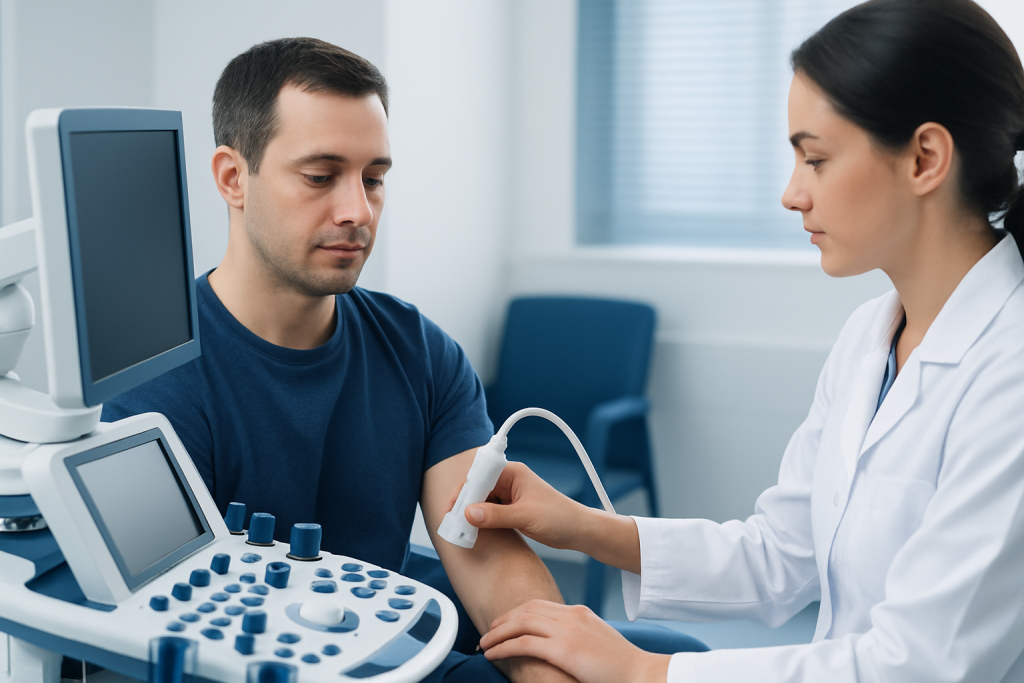
If the diagnosis is uncertain, imaging may be useful. Ultrasound can sometimes help evaluate soft tissues, while MRI may be ordered when a deeper look is needed, especially after trauma or when pain does not improve as expected.
Tests are chosen based on the person’s story and exam findings rather than used automatically. For someone traveling from another country, bringing prior reports, scan images, and a list of current medicines can make the assessment faster and more accurate.
Treatment Options
Most brachialis injuries are treated without surgery. The first step is usually to reduce the activity that triggered the pain, while keeping the arm moving gently enough to avoid stiffness. A temporary change in exercise, work tasks, or lifting habits may be enough for symptoms to calm down.
Pain relief strategies often include rest, ice in the early stage, and doctor-recommended medication if needed. The exact approach depends on the cause of pain, the person’s health history, and whether there is swelling or another injury nearby.
Rehabilitation plays an important role. A physiotherapist may guide stretching, gradual strengthening, and movement retraining so the upper arm can tolerate load again without provoking a flare-up.
- Activity modification and relative rest
- Ice or other comfort measures in the early phase
- Physiotherapy for mobility, strength, and load management
- Treatment of associated tendon or elbow problems if present
- Surgery only in uncommon cases, usually when another structure is significantly injured
If the pain is actually coming from a tendon tear, fracture, or nerve compression, treatment changes accordingly. That is why the best plan is individualized rather than based only on the word “muscle pain.”
Prevention & Self-care
Many brachialis problems can be reduced by using the arm in a more balanced way. A warm-up before sports or lifting, a gradual increase in training volume, and attention to technique all help the muscle tolerate effort more safely.
It is also useful to vary repetitive tasks when possible. Long sessions of pulling, carrying, or weight training without recovery can irritate the front of the upper arm, especially if the elbow is frequently bent under load.
At home, people often do best when they avoid forceful movements that reproduce pain, while continuing gentle, pain-limited use of the arm. If symptoms follow a workout or minor strain, short-term rest and a gradual return are usually preferable to either complete immobilization or a rushed comeback.
Simple habits can support recovery and reduce recurrence:
- Use proper lifting mechanics and avoid sudden jerking motions
- Balance upper-body training with rest days
- Address shoulder, forearm, and grip weakness that may overload the arm
- Follow rehabilitation exercises consistently if prescribed
- Seek review if pain returns each time activity resumes
When to See a Doctor
Medical assessment is sensible if arm pain lasts more than a short period, keeps returning, or interferes with daily activities. A clinician can determine whether the brachialis is involved or whether another structure needs attention.
Prompt evaluation is especially important after a sudden injury, a pop at the time of pain, visible bruising, marked swelling, weakness, or inability to bend the elbow normally. These findings may point to a more significant soft tissue injury or a bone-related problem.
It is also wise to seek care if numbness, tingling, fever, or pain that spreads down the arm appears, because these features are less typical of a simple muscle strain. Early assessment can prevent prolonged discomfort and help the person return to activity with more confidence.
For patients arranging care from abroad, coordination matters. Acibadem Health Point’s multidisciplinary specialists and JCI-accredited hospitals can help diagnose and treat brachialis-related problems for international patients, with follow-up planning that supports recovery after returning home.
Recovery and Outlook
Recovery depends on what is actually causing the pain and how quickly the arm is allowed to settle. A mild strain may improve with conservative care, while a more complex injury can require a longer period of rehabilitation and activity adjustment.
Most people regain comfort and function steadily when they follow a structured plan. Progress usually comes from small, consistent steps rather than sudden increases in exercise or heavy use. If symptoms fade but return with every attempt to resume activity, the recovery plan may need to be adjusted.
The outlook is generally good when the cause is identified early and the arm is not repeatedly overloaded. Ongoing communication with a doctor or physiotherapist can be especially helpful for patients who need to continue treatment across borders or coordinate follow-up once they are back home.
Related Conditions to Keep in Mind
Not every pain in the front of the upper arm is a brachialis problem. The biceps tendon, elbow joint, forearm muscles, and even the cervical spine can create symptoms that feel similar at first glance.
Because several structures work closely together, one sore area may reflect a movement pattern problem rather than a single injured muscle. This is why the evaluation often includes the shoulder, elbow, and sometimes the neck, even when the pain seems localized.
When the source is unclear, a broader orthopedic or rehabilitation assessment can help narrow the possibilities. That approach reduces the chance of treating the wrong structure and improves the odds of a steady return to normal function.
Frequently asked questions
What does the brachialis muscle do?
The brachialis helps bend the elbow, especially during lifting and pulling movements. It works underneath the biceps and is one of the main muscles responsible for elbow flexion.
How can brachialis pain be different from biceps pain?
Brachialis pain is often felt deeper in the front of the upper arm and may show up during elbow bending with the forearm in certain positions. Biceps pain may be more noticeable near the shoulder or along the front of the arm, but the two can overlap, so an exam is helpful.
Can a brachialis strain heal on its own?
Many mild strains improve with rest, activity modification, and a gradual return to movement. If pain persists, keeps recurring, or follows a clear injury, medical assessment is recommended to rule out other causes.
What kind of doctor treats brachialis problems?
Orthopedic specialists, sports medicine doctors, and rehabilitation physicians commonly evaluate brachialis-related pain. Physiotherapists are also important in recovery because they guide safe strengthening and movement retraining.
Is imaging always needed for brachialis pain?
No, many cases can be diagnosed with a history and physical examination alone. Imaging is usually reserved for uncertain cases, significant injuries, or pain that does not improve as expected.
When should exercise be stopped completely?
Exercise should be paused if it causes sharp pain, swelling, worsening weakness, or a feeling that something has torn. A clinician or physiotherapist can then help determine which movements are safe and when to resume activity.
References
- American Academy of Orthopaedic Surgeons
- Mayo Clinic
- Cleveland Clinic
- Merck Manual Professional Edition
- National Institute of Arthritis and Musculoskeletal and Skin Diseases
This article is for general information only and is not a substitute for professional medical advice. Please consult a qualified doctor about your individual situation.