Bug Bites: Symptoms, Causes and Treatment

Key Takeaways
- Most bug bites cause local itching, redness, and mild swelling that improve with simple care.
- A worsening rash, spreading redness, fever, or trouble breathing can signal a more serious reaction.
- Cleaning the skin and avoiding scratching are two of the most useful first steps after a bite.
- Prevention focuses on reducing exposure with protective clothing, repellents, and careful checks after outdoor activities.
- Travelers should pay attention to bites acquired abroad, especially if symptoms spread or do not settle as expected.
Medically reviewed by the Acıbadem clinical team — August 19, 2026
Bug bites are common and usually harmless, but they can cause itching, swelling, or an allergic reaction, and sometimes lead to infection. Knowing how to identify the bite, calm the skin, and watch for warning signs helps people respond confidently at home or with medical support when needed.
Overview
Bug bites are part of everyday life, especially for people who spend time outdoors, travel to warmer climates, or sleep in places where insects are active. Most bites are small, self-limited skin reactions. The body notices the insect’s saliva or venom, and the skin responds with itching, redness, and a little swelling.
Even when a bite looks minor, it can still be uncomfortable and distracting. Some people react more strongly than others, and the appearance of the bite can vary depending on the insect, the person’s sensitivity, and whether the skin was scratched. For international travelers, it is also important to remember that not all bites are the same; a mosquito bite in one region may be very different from a bite acquired in another climate or setting.
Most bug bites improve with basic home care. The main goals are to clean the area, reduce irritation, and watch for signs that the skin is becoming infected or that the body is having a larger allergic response. When symptoms do not follow the usual pattern, medical advice is sensible and reassuring, not an overreaction.
Symptoms
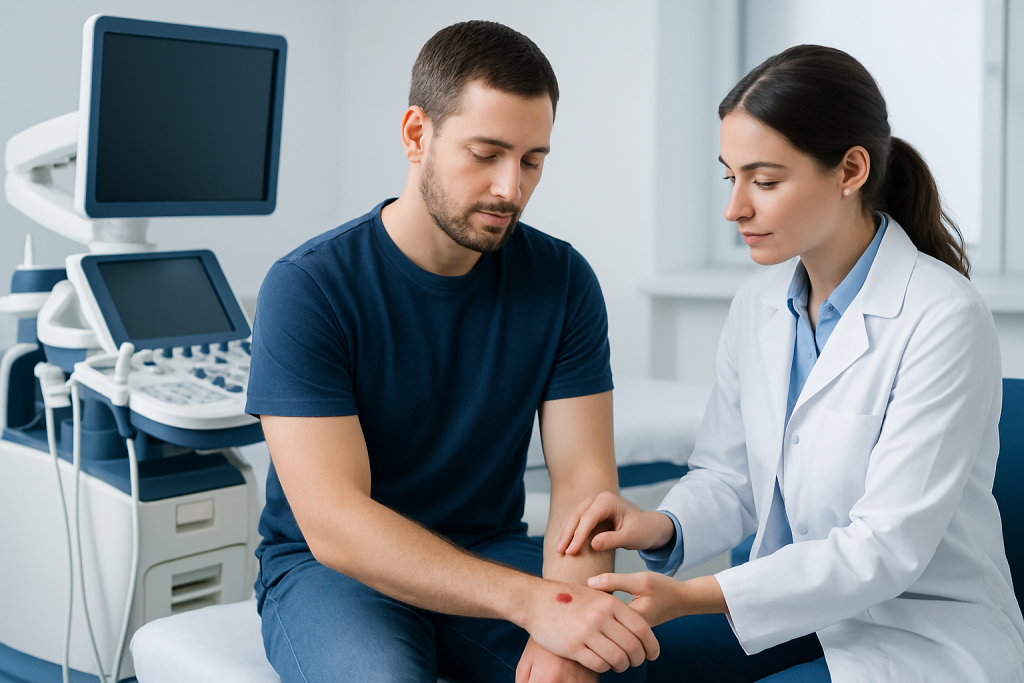
Typical bug bite symptoms are local and relatively mild. The skin often becomes red, itchy, and slightly raised soon after the bite. Some people notice a small central puncture mark, while others only see a patch of inflamed skin.
Depending on the insect and the person’s sensitivity, symptoms may include a burning or stinging feeling, a firm bump, or swelling around the bite. Scratching can make the area look larger than it really is and may create tiny breaks in the skin that invite infection.
More concerning symptoms suggest that the reaction is no longer a simple bite. These include:
- Rapidly increasing swelling or redness
- Widespread hives or itching beyond the bite site
- Pus, warmth, or worsening pain at the skin
- Fever or feeling unwell
- Lip, tongue, or facial swelling
- Wheezing, chest tightness, or trouble breathing
Some insects can also transmit infections or trigger delayed skin reactions, so a bite that looks different from the usual itchy bump deserves attention, especially after travel, camping, or exposure in unfamiliar environments.
Causes & Risk Factors
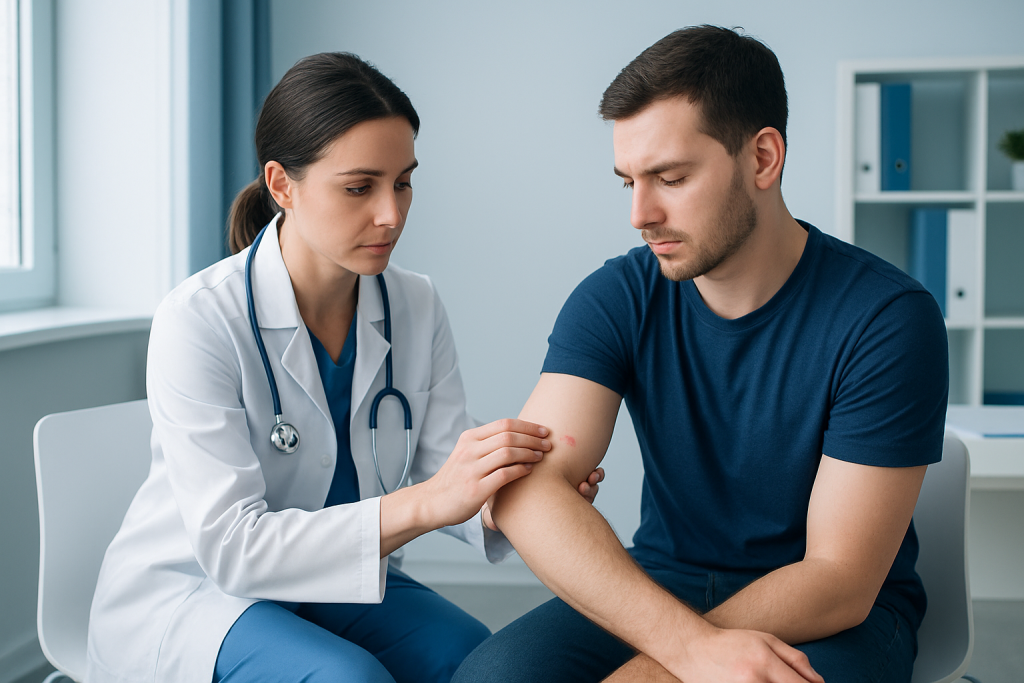
Bug bites happen when an insect feeds, defends itself, or comes into contact with the skin. Mosquitoes, fleas, bedbugs, biting midges, ants, and some spiders are common culprits, although the exact source is not always obvious. The skin reaction comes from the body’s response to the insect’s saliva, venom, or other substances.
Several factors make bites more likely. People who spend time in wooded areas, near standing water, in warm and humid climates, or in places with crowded sleeping arrangements may face more exposure. Light-colored clothing, uncovered skin, and strong scents such as perfumed products can also attract certain insects.
The chance of a stronger reaction can be higher in children, people with sensitive skin, and those with a history of allergies. Travel can add another layer of risk because unfamiliar insects, bedding, and environmental conditions may lead to bites that are harder to identify. This is why a travel history is often useful if the bite becomes widespread, painful, or slow to settle.
Diagnosis
Many bug bites are diagnosed by appearance and by the story around them. A clinician will usually ask when the skin change started, whether the person was outdoors or traveling, and whether anyone else in the same place has similar symptoms. The shape, size, and distribution of the lesions can offer useful clues.
Sometimes the main task is not to name the insect exactly, but to decide whether the reaction is uncomplicated or whether it may be infected, allergic, or related to another skin condition. Bites can resemble eczema flares, contact dermatitis, hives, or other rashes, so a careful skin examination matters.
In selected cases, additional evaluation may be needed. If there is fever, significant swelling, pus, or an unusual pattern after travel, a doctor may consider tests or further assessment to rule out infection or another cause. For most simple bites, however, the diagnosis is clinical and does not require elaborate testing.
Treatment Options
For ordinary bug bites, treatment focuses on comfort and skin protection. Washing the area with soap and water is a sensible first step. A cool compress can ease itching and calm swelling, while avoiding scratching helps reduce the risk of broken skin and infection.
Depending on the symptom pattern, a clinician may suggest topical options to soothe inflammation or itching, and in some cases an oral antihistamine may be appropriate. If the skin has become infected, medical treatment may be needed. The exact approach depends on whether the bite is simply irritated, heavily scratched, or showing signs of bacterial involvement.
Emergency care is important when the bite is part of a severe allergic reaction. Difficulty breathing, throat tightness, faintness, or swelling of the face or tongue should be treated urgently. For travelers, it can be helpful to keep a record of when the bite appeared, how it changed, and whether other symptoms developed, because that timeline can guide follow-up care after returning home.
Prevention & Self-care
Preventing bug bites is usually easier than treating them after the fact. Practical habits make a meaningful difference: wearing long sleeves and long trousers in high-risk areas, using insect repellent as directed, and checking skin and clothing after time outdoors. Window screens, bed nets, and sleeping in well-maintained accommodations can also reduce exposure.
At home and while traveling, it helps to inspect bedding, avoid leaving food exposed, and manage standing water where insects breed. People who stay in unfamiliar accommodations should look for signs of bedbugs or fleas, especially if bites appear in clusters or in a pattern after sleep.
Once a bite has occurred, self-care is straightforward. Keep the skin clean, use a cool compress, and resist the urge to scratch. Trim nails if itching is intense, and consider covering the area lightly if accidental rubbing is making it worse. When someone is traveling internationally, it is reasonable to seek medical advice sooner if the bite is spreading, painful, or not improving within a few days.
When to See a Doctor
Most bug bites do not require a doctor, but some symptoms deserve assessment. A medical visit is wise if redness keeps expanding, the area becomes increasingly warm or painful, or pus develops. Fever, Lymph Nodes: Symptoms, Causes and Treatment" class="ahp-ilk">swollen lymph nodes, or a rash that seems to move beyond the original bite also suggest that evaluation is appropriate.
People with diabetes, immune system concerns, or a history of severe allergies may want earlier review, since skin infections and strong reactions can progress differently in these groups. Parents should seek guidance if a child is very uncomfortable, has many bites, or appears unwell rather than simply itchy.
Urgent care is needed for breathing problems, dizziness, facial swelling, or any sudden whole-body reaction. International patients who have acquired a bite during travel may benefit from a specialist review if they are unsure which insect was involved or if symptoms continue after they return home. Acibadem Health Point’s multidisciplinary specialists and JCI-accredited hospitals can diagnose and treat this condition for international patients when a more detailed evaluation is needed.
Living Well After a Bite
After the skin calms down, it is worth thinking about what happened and how to reduce the chance of repeat bites. That can mean changing sleeping arrangements, improving mosquito protection, or choosing different outdoor clothing on future trips. For many people, the lesson is practical rather than dramatic: small preventive steps often stop a minor nuisance from becoming a repeated problem.
If a bite leaves a lingering mark, that does not always mean something is wrong. Some skin reactions fade slowly, especially in people who are prone to inflammation or who scratched the area repeatedly. The key is steady observation and sensible follow-up if the area becomes more painful, spreads, or changes character.
For patients managing care across borders, clear photos, dates, and a simple symptom timeline can make follow-up easier with a doctor at home or abroad. That record helps separate a normal healing bite from one that needs a second look.
Frequently asked questions
How can a person tell whether a bug bite is normal or infected?
A normal bite usually itches and settles gradually. Infection is more likely if the area becomes increasingly warm, painful, swollen, or starts draining pus. Fever or spreading redness should also prompt medical advice.
Should bug bites be scratched if they are very itchy?
It is better not to scratch, even when the itch is strong. Scratching can break the skin and raise the chance of infection. A cool compress and keeping the area clean are safer ways to ease discomfort.
Do all bug bites need treatment?
No, many heal on their own with simple home care. Washing the skin, reducing swelling, and avoiding scratching are often enough. Treatment becomes more important if the reaction is large, painful, or not improving.
Can bug bites cause allergic reactions?
Yes, some people react more strongly than others. Mild swelling and itching are common, but hives, facial swelling, or breathing trouble can signal a serious allergic response. Those symptoms need urgent medical attention.
Why do bug bites sometimes appear in clusters?
Clusters can happen when an insect bites more than once or when several insects are present in the same place, such as bedding, carpet, or outdoor sleeping areas. Bedbugs and fleas are common examples. A cluster pattern can help a doctor think about the likely source.
What should travelers do if they get a strange bug bite abroad?
They should clean the area, avoid scratching, and monitor how the skin changes over the next few days. If the bite becomes painful, spreads, or comes with fever or other symptoms, a doctor should evaluate it. Keeping a photo and travel details can help with follow-up care.
References
- Centers for Disease Control and Prevention
- World Health Organization
- American Academy of Dermatology
- National Health Service
- Mayo Clinic
This article is for general information only and is not a substitute for professional medical advice. Please consult a qualified doctor about your individual situation.
Explore treatments in Turkey — costs, top hospitals & a free quote
JCI-accredited · board-certified surgeons · reply within 24h
Add us as a Preferred Source to see more of our trusted health content across Google Search, AI Overviews and Discover.