Bone Density Testing: Who Should Plan It Before Osteoporosis Becomes a Problem
Key Takeaways
- Bone density testing helps identify low bone mass before osteoporosis causes fractures.
- Postmenopausal women, older adults, and people with specific risk factors may benefit most from screening.
- DEXA is the most common test used to measure bone density and estimate fracture risk.
- Results are interpreted together with age, medical history, and other risk factors.
- Healthy lifestyle habits and appropriate medical care can help slow further bone loss.
Bone density testing can reveal thinning bones before a fracture brings the problem to light. This article explains who should plan the test, what the results mean, and how early action can protect long-term mobility and independence.
Overview
Bone density testing is one of the quietest ways to prevent a loud problem. It checks how strong and mineral-rich the bones are, often before any pain, height loss, or fracture makes low bone mass visible. For many people, the test becomes useful long before osteoporosis is diagnosed.
The most commonly used study is a DEXA scan, also called DXA. It is quick, noninvasive, and designed to measure bone density in areas where fractures matter most, usually the hip and spine. The result helps a clinician estimate how fragile the bones may be and whether closer monitoring, lifestyle changes, or treatment should be considered.
For international patients, bone density testing can also be part of a practical care plan: one visit may include assessment, imaging, and a discussion of next steps, which can be especially helpful when time abroad is limited. A clear result can reduce uncertainty and guide follow-up care once the patient returns home.
Symptoms
Low bone density often develops without obvious symptoms. Many people feel completely well until a minor fall, a cough, or an awkward twist leads to a wrist, spine, or hip fracture. That is why screening matters: it aims to detect risk before the first break occurs.
When symptoms do appear, they may be subtle. Back pain from a compression fracture, loss of height over time, or a stooped posture can suggest that bone strength has declined. Some people also notice that everyday injuries seem to take longer to heal, although this is not specific to osteoporosis.
Because bone loss is usually silent, the absence of symptoms does not mean the bones are healthy. A person may still need evaluation based on age, sex, family history, medications, or another medical condition that affects bone remodeling.
Causes & Risk Factors
Bone density changes naturally with age. During childhood and early adulthood, bone is built faster than it is lost. Later in life, that balance shifts, and the skeleton may gradually become less dense. In some people, the change is accelerated by hormones, nutrition, or illness.
Several factors can increase the chance of osteoporosis or early bone loss. These include postmenopausal status, older age, a history of previous fracture, low body weight, smoking, high alcohol intake, and prolonged inactivity. Family history also matters, especially if a parent experienced a hip fracture or osteoporosis.
Medical conditions and certain medications can affect bone health as well. Examples include long-term corticosteroid use, some endocrine disorders, malabsorption conditions, inflammatory diseases, and disorders that affect the kidneys or liver. A clinician considers the full picture rather than relying on age alone.
- Postmenopausal women
- Men at older ages, especially with additional risk factors
- Adults with a prior low-trauma fracture
- People taking medicines known to weaken bone over time
- Individuals with low calcium intake, vitamin D deficiency, or chronic illness
Diagnosis
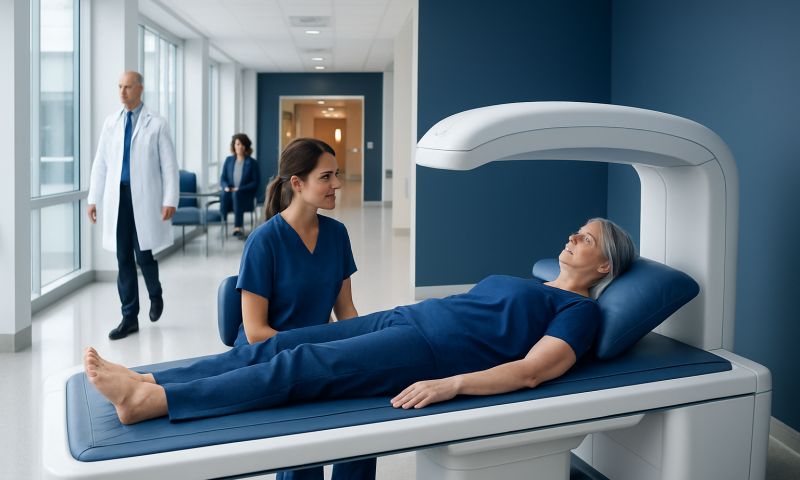
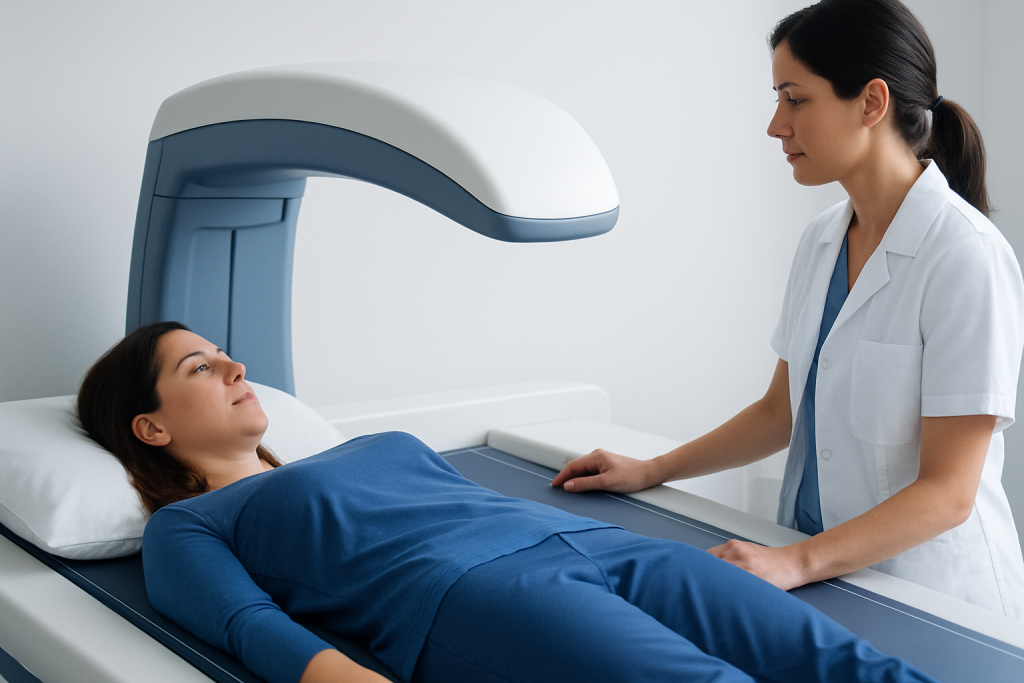
Bone density testing is usually done with DEXA, which uses very low-dose X-rays to measure mineral content in the bone. The process is simple: the patient lies on a table while the scanner passes over the body, and the examination is generally painless. No special recovery time is needed afterward.
The results are commonly reported as T-scores and sometimes Z-scores. A T-score compares bone density with that of a healthy young adult, while a Z-score compares it with others in the same age group. These numbers help determine whether bone density is normal, reduced, or in the osteoporosis range, but they are always interpreted alongside the patient’s history.
In some cases, a clinician may also use fracture-risk tools together with the scan. This can be useful when the bone density result falls into a borderline range and the decision about treatment depends on the bigger clinical picture. Testing may also be repeated after a period of time to see whether bone loss is stable or progressing.
Treatment Options
Treatment depends on the degree of bone loss and the person’s overall fracture risk. Not everyone with reduced bone density needs the same approach. Some patients do best with monitoring and lifestyle changes, while others may benefit from medication to help strengthen bone and lower fracture risk.
Medicines used for osteoporosis are chosen by a doctor based on age, fracture history, other health conditions, and whether the goal is prevention or treatment. The exact option and follow-up schedule should be individualized, because bone health treatment often continues over time and may need adjustment.
Alongside medical treatment, supportive measures matter. Adequate calcium and vitamin D intake, weight-bearing exercise, balance work, and fall prevention can all be part of the plan. These steps do not replace prescribed therapy when it is needed, but they often make the whole strategy more effective.
For patients traveling from another country, it can help to leave with a written summary of the scan result, any treatment recommendations, and a follow-up plan that can be shared with a local doctor. This makes the transition smoother and helps maintain continuity of care.
Prevention & Self-care
Bone health is shaped over many years, so prevention is not limited to one age group. Regular physical activity, especially walking, stair climbing, resistance exercise, and balance training, helps bones respond to stress in a healthy way. Staying active also supports muscle strength, which lowers fall risk.
Nutrition is another important piece. A balanced diet with enough calcium, vitamin D, protein, and overall calories supports bone maintenance. If food intake is limited or absorption is affected by illness, a doctor may suggest supplementation after reviewing the patient’s needs.
Daily habits can protect the skeleton in practical ways. Not smoking, limiting alcohol, reviewing medications that increase fall risk, and making the home safer all contribute to fracture prevention. People with known risk factors should not wait for symptoms before asking whether testing is appropriate.
- Choose weight-bearing and strength-building exercise when medically suitable
- Use good lighting, stable footwear, and fall-safe home arrangements
- Discuss calcium and vitamin D needs with a clinician
- Ask whether long-term medicines may affect bone density
- Keep follow-up testing on schedule if low bone mass has already been found
When to See a Doctor
A bone density test is worth discussing if the person is a postmenopausal woman, an older adult, or someone with fracture risk factors. It is also reasonable to ask about testing after a low-trauma fracture, during long-term steroid therapy, or when another medical condition may be affecting bone strength.
Medical advice is especially important if there has been height loss, new back pain, repeated fractures, or difficulty recovering from minor injuries. These signs do not prove osteoporosis, but they do make evaluation more important. A clinician can decide whether testing, blood work, imaging, or treatment is the best next step.
Patients planning care across borders may benefit from arranging testing before travel or early in their stay, so results can be reviewed without delay. Acibadem Health Point’s multidisciplinary specialists and JCI-accredited hospitals can diagnose and treat this condition for international patients, helping coordinate assessment and follow-up in a clear, organized way.
Living With the Result
Bone density testing is not just about receiving a number. It is about understanding what the number means for everyday life and future fracture risk. A normal result can reassure the patient, while a lower result can prompt timely action before a serious injury occurs.
Some people feel discouraged when the test shows bone loss, but the finding is often useful precisely because it appears early. It gives the patient and clinician time to respond with targeted steps, whether that means monitoring, lifestyle change, or treatment. In that sense, the test is less a label than a planning tool.
The most helpful approach is usually steady and realistic: review the risk factors, follow the recommended plan, and reassess when advised. With the right support, many people can protect bone health and remain active, independent, and confident in daily movement.
Frequently asked questions
Who should plan a bone density test first?
Postmenopausal women, older adults, and anyone with fracture risk factors should ask a doctor whether testing is appropriate. People taking long-term corticosteroids or living with certain medical conditions may also benefit from earlier screening. The decision is usually based on overall risk rather than age alone.
Is a DEXA scan painful or dangerous?
A DEXA scan is generally painless and quick. It uses a very low dose of X-rays, and most people can return to normal activities right away. It is commonly used because it is both practical and reliable for measuring bone density.
Can osteoporosis be present without symptoms?
Yes. Bone loss often develops quietly for years before a fracture or spinal change brings attention to it. That is why testing can be helpful even when the person feels completely well.
What do T-scores mean?
T-scores compare bone density with that of a healthy young adult. They help show whether bone mass is normal, below normal, or in the osteoporosis range. A doctor interprets the score together with age, medical history, and other risk factors.
If the test shows low bone density, does it always mean medication is needed?
Not always. Some people need monitoring and lifestyle measures first, while others benefit from medicine to lower fracture risk. The best plan depends on the result, the person’s age, and the full clinical picture.
How can someone prepare for testing while traveling for care?
It helps to bring prior imaging, medication lists, and any previous fracture or lab results. Patients should also ask how the result will be shared with their local doctor after they return home. Clear planning makes follow-up easier and more consistent.
References
- National Institute of Arthritis and Musculoskeletal and Skin Diseases
- International Osteoporosis Foundation
- U.S. Preventive Services Task Force
- National Osteoporosis Foundation
- World Health Organization
This article is for general information only and is not a substitute for professional medical advice. Please consult a qualified doctor about your individual situation.