

Blepharoplasty: Procedure, Recovery and Risks

Key Takeaways
- Blepharoplasty can address drooping upper lids, under-eye puffiness, or both, depending on the person’s needs.
- The procedure may be performed for cosmetic reasons, functional reasons, or a combination of both.
- A careful preoperative assessment helps determine whether eyelid surgery is appropriate and safe.
- Recovery usually involves temporary swelling, bruising, and activity limits while tissues settle.
- Results can be long lasting, but eyelids continue to age naturally over time.
Medically reviewed by the Acıbadem clinical team — August 19, 2026
Blepharoplasty is a surgical procedure that reshapes the upper eyelids, lower eyelids, or both by removing or repositioning excess skin, fat, and sometimes muscle. It is often chosen to improve a tired appearance and may also help when drooping upper eyelids interfere with vision or daily comfort.
Overview
Blepharoplasty is the medical term for eyelid surgery. It is designed to refine the upper eyelids, lower eyelids, or both by removing or repositioning excess skin, fat, and, in some cases, a small amount of muscle. People often seek it when eyelids begin to look heavy, puffy, or tired, but the procedure can also be useful when drooping skin narrows the visual field.
For many people, the decision is not only about appearance. A loose upper eyelid can make it harder to see clearly, especially when reading or looking upward. Some patients also describe a sense of eyelid heaviness, forehead strain from constantly raising the brows, or makeup that no longer sits well on the lid.
Because eyelid surgery involves a very visible and delicate area, the planning stage matters as much as the operation itself. The surgeon considers facial balance, skin quality, eye health, tear production, and the patient’s goals. For international patients, that conversation may also include travel timing, recovery planning, and how follow-up will be organized once they return home.
Symptoms

Blepharoplasty is not defined by one single symptom. People usually notice a pattern of changes around the eyes that gradually become more apparent in photos or in the mirror. The upper lids may appear hooded or sag over the lashes, while the lower lids may show bulging fat pads, fine wrinkling, or a tired appearance that does not improve with rest.
Functional symptoms can be just as important as cosmetic ones. Some people report reduced side vision, especially if the upper lid skin hangs low enough to cover the pupil area. Others experience eye strain, a habit of lifting the forehead to keep the eyes open, or difficulty applying eye makeup because the lid crease is less visible.
- Drooping or hooded upper eyelids
- Under-eye puffiness or “bags”
- Excess skin that creases or folds over the lashes
- Heaviness around the eyes
- Visual obstruction in more advanced cases
It is also important to note what blepharoplasty does not do. It does not treat every concern around the eyes, such as dark circles caused by pigmentation, brow descent, dry eye disease, or wrinkles that are mainly related to skin quality. A consultation helps clarify whether eyelid surgery alone can meet the person’s goals or whether another approach would be more suitable.
Causes & Risk Factors
The most common reason people consider blepharoplasty is the natural aging process. Over time, the skin loses elasticity, soft tissues may weaken, and fat can shift or become more noticeable. These changes can affect the upper and lower eyelids differently, which is why some patients need surgery only on one area while others benefit from both.
Genetics also play a role. Some people develop prominent upper eyelid skin folds or under-eye fullness at a relatively young age. Sun exposure, smoking, and general skin thinning may contribute to earlier or more noticeable changes, although eyelid appearance is influenced by many factors and is not always predictable.
Medical and anatomical considerations matter too. A person with dry eyes, thyroid eye disease, previous eyelid surgery, or certain muscle or nerve conditions may need a more detailed assessment. A surgeon will also consider whether the brows have descended, because brow position can mimic or worsen upper eyelid heaviness. In some cases, lifting the brows rather than the eyelids is the more appropriate first step.
Diagnosis
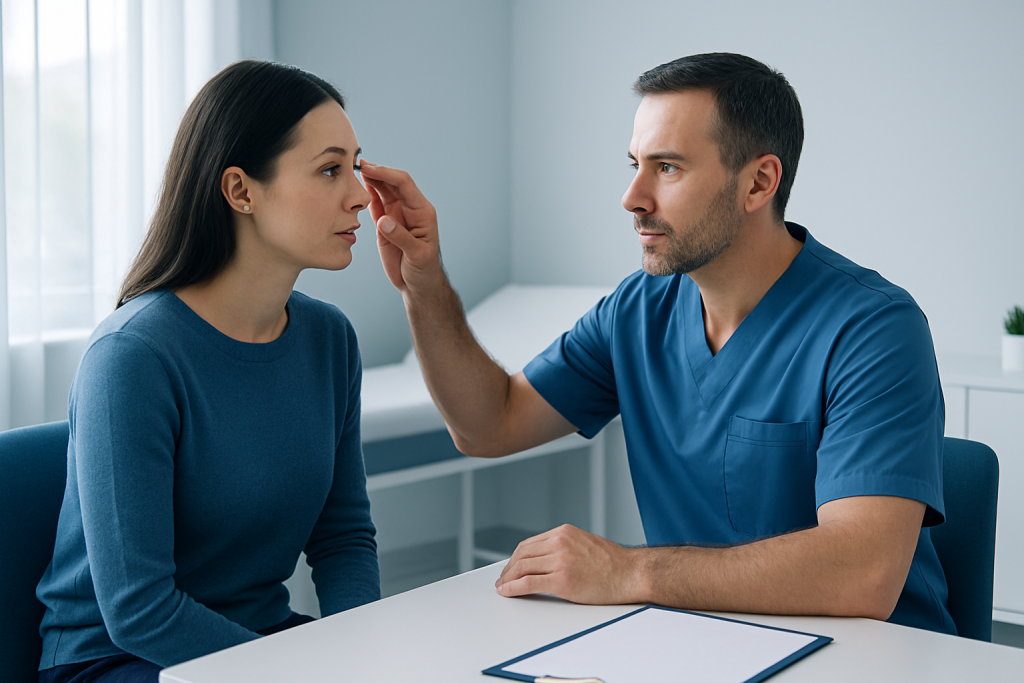
Blepharoplasty begins with a clinical evaluation rather than a test. The surgeon examines the eyelids in motion and at rest, checks how much skin and fat are present, and looks at how the eyelids interact with the brows and the rest of the face. If there is concern about vision, an eye examination or visual field testing may be recommended.
The consultation also explores the patient’s symptoms and goals. A thoughtful discussion helps distinguish between cosmetic preferences and functional concerns. The surgeon may ask when the changes started, whether one side is more bothersome, and whether there are symptoms such as irritation, dryness, or difficulty seeing upward.
For international patients, this visit often includes practical planning as well. The team may discuss medical history, medication review, anesthesia choices, recovery support, and the best timing for travel. Clear communication is especially important when a patient will complete part of the recovery outside the treating country, because follow-up instructions should be simple, specific, and realistic.
In select cases, photographs are taken for planning and comparison. These are not just for record keeping; they help align expectations and define the intended correction before surgery begins.
Treatment Options
Blepharoplasty is usually performed as an outpatient procedure. The operation may be done with local anesthesia, sedation, or general anesthesia depending on the extent of surgery, the patient’s preferences, and the surgeon’s recommendation. The goal is precise tissue adjustment with minimal disruption to surrounding structures.
Upper blepharoplasty typically involves an incision hidden within the natural eyelid crease. Through this opening, the surgeon removes or repositions excess skin and, when needed, small pockets of fat. The incision is then closed with fine sutures to help the scar blend into the crease over time.
Lower blepharoplasty can be approached in different ways. In some patients, the incision is placed just below the lash line; in others, it may be made on the inside of the eyelid to address fat without an external skin incision. The choice depends on whether the main concern is puffiness, loose skin, or both, as well as the quality of the lower eyelid support.
Not every eyelid concern requires the same operation. Some patients benefit from a conservative, tissue-sparing plan, while others need a combined approach that may include brow treatment or skin resurfacing for fine lines. The safest result usually comes from matching the procedure to the anatomy rather than pursuing a one-size-fits-all solution.
During the early recovery period, cold compresses, head elevation, and temporary activity restrictions are common recommendations. The surgeon may also prescribe ointments or drops if needed. A good surgical plan includes not only the day of the procedure, but also how the patient will manage the first week, the first follow-up visit, and the journey home if travel is involved.
Prevention & Self-care
Blepharoplasty is not something that can be “prevented” in the usual sense, because many of the changes it treats are part of aging and facial anatomy. However, people who want to protect the skin around the eyes can support eyelid health with practical habits that reduce irritation and may slow some visible wear over time.
Daily sun protection is useful because ultraviolet exposure can weaken skin structure. Wearing sunglasses, using a broad-spectrum sunscreen around the orbital area when appropriate, and avoiding smoking can support overall skin quality. Gentle eye makeup removal and avoiding repeated rubbing may also help preserve delicate eyelid skin.
After surgery, self-care becomes especially important. Patients are usually advised to rest, limit strenuous activity, avoid heavy lifting for a short period, and follow instructions for cleaning the incision area. Contact lenses, eye makeup, and facial treatments may need to wait until the surgeon says they are safe again.
- Sleep with the head slightly elevated during the first days if advised
- Use cold compresses only as directed
- Protect the eyes from sun and wind during recovery
- Attend follow-up visits even if the area feels comfortable
- Seek guidance before resuming exercise, swimming, or air travel
International patients may need a more detailed home plan than local patients. It helps to arrange assistance for the first few days, understand how to take prescribed medications correctly, and know which warning signs should prompt contact with the surgical team after returning home.
When to See a Doctor
A consultation is worthwhile when drooping eyelids, puffiness, or under-eye fullness are affecting confidence, comfort, or vision. People do not need to wait until the problem becomes severe. Even mild eyelid changes can be worth discussing if they interfere with reading, driving, wearing glasses, or everyday grooming.
Medical review is especially important if one eyelid suddenly droops, if there is pain, double vision, redness, or a change in eye movement, or if the appearance has changed rapidly. Those features may point to a condition other than routine aging and should be assessed promptly by an eye or surgical specialist.
Patients considering surgery should also speak with a doctor if they have dry eyes, glaucoma, thyroid eye disease, bleeding disorders, are taking blood-thinning medication, or have had previous eye or eyelid procedures. These details do not automatically rule out blepharoplasty, but they do shape the safest plan.
For people who are traveling for care, it is sensible to choose a center that can provide coordinated evaluation, surgery, and postoperative support. Acibadem Health Point’s multidisciplinary specialists and JCI-accredited hospitals diagnose and treat blepharoplasty for international patients with an emphasis on clear communication and coordinated follow-up.
Recovery and Long-Term Results
Most people should expect swelling, bruising, and temporary tightness after eyelid surgery. These effects usually improve gradually over days and weeks, though subtle settling can continue for longer. The eyes may feel slightly dry, watery, or more sensitive to light during the early recovery phase.
Returning to routine activities depends on the extent of surgery and the person’s pace of healing. Many patients resume light daily tasks relatively soon, but strenuous exercise, swimming, and contact lenses may need to wait until the surgeon confirms healing is adequate. Stitches, if used, are usually removed during a follow-up visit according to the surgeon’s schedule.
Blepharoplasty results can be long lasting, especially when expectations are realistic and the operation is tailored carefully. That said, the face continues to age naturally. Some patients may eventually notice new changes in skin laxity or brow position years later, even if the original surgical result remains good.
The best outcomes often come from viewing blepharoplasty as part of a broader eye-area plan rather than a stand-alone fix. Protecting the skin, supporting eye health, and staying in touch with the surgical team during recovery all help patients get the most from the procedure.
Frequently asked questions
What is the difference between upper and lower blepharoplasty?
Upper blepharoplasty focuses on excess skin or fullness in the upper eyelids, which can create hooding or even block vision. Lower blepharoplasty addresses puffiness, loose skin, or under-eye bags below the eyes. Some patients need only one area treated, while others benefit from both.
Is blepharoplasty only for cosmetic reasons?
No. It is often done to improve appearance, but it can also help when drooping upper eyelids interfere with vision or cause a sense of heaviness. A consultation can clarify whether the issue is mainly functional, cosmetic, or both.
How long does recovery usually take?
Early swelling and bruising are common and improve gradually, but the pace varies from person to person. Many people feel presentable sooner than they expect, although subtle healing continues for weeks. The surgeon’s aftercare plan is the best guide for returning to work, exercise, and travel.
Will blepharoplasty remove dark circles under the eyes?
Not always. Dark circles may be caused by pigmentation, skin thinning, shadowing, or blood vessel visibility, which are not fully corrected by eyelid surgery alone. The surgeon can explain whether blepharoplasty, another treatment, or a combination approach is more appropriate.
Is blepharoplasty a permanent solution?
The changes made during surgery are long lasting, but they do not stop the natural aging process. Over time, skin may gradually loosen again and other facial features can change. Even so, many people enjoy a lasting improvement in eyelid contour and comfort.
What should an international patient plan for before surgery?
It helps to allow enough time for consultation, surgery, early follow-up, and a safe recovery window before flying home. Patients should also bring a full medication list, discuss any eye conditions in advance, and know how to reach the surgical team if questions arise after travel.
References
- American Society of Plastic Surgeons
- American Academy of Ophthalmology
- MedlinePlus
- Mayo Clinic
- National Health Service
This article is for general information only and is not a substitute for professional medical advice. Please consult a qualified doctor about your individual situation.
Explore treatments in Turkey — costs, top hospitals & a free quote
JCI-accredited · board-certified surgeons · reply within 24h
Add us as a Preferred Source to see more of our trusted health content across Google Search, AI Overviews and Discover.
More from the Health Library

Blepharoplasty and Dry Eyes: What Needs Checking Before Eyelid Surgery Abroad

Eyelid Surgery and Dry Eyes: What Surgeons Check Before They Recommend Blepharoplasty

Blepharoplasty for Tired Eyes: When It Helps Puffiness, Hooding, or Vision
Related Specialists

Dr. İlker Altundağ
Aesthetic Plastic & Reconstructive Surgery
Dr. Serkan Tokgönül
Aesthetic Plastic & Reconstructive Surgery
Dr. Ömercan Yağız Öksüz
Aesthetic Plastic & Reconstructive Surgery
Prof. Dr. Mehmet Veli Karaaltın
Aesthetic Plastic & Reconstructive Surgery