

Blepharoplasty for Tired Eyes: When It Helps Puffiness, Hooding, or Vision

Key Takeaways
- Blepharoplasty can address puffiness, excess eyelid skin, and upper lid hooding that may make the eyes look or feel tired.
- When the upper eyelid hangs low enough, surgery may improve the field of vision as well as appearance.
- Not every under-eye concern is treated the same way; dark circles, brow droop, and skin laxity need separate assessment.
- A good consultation includes eye health, facial anatomy, medical history, and realistic discussion of recovery and scars.
- Recovery is usually gradual, with swelling and bruising improving over days to weeks and final results taking longer to settle.
Medically reviewed by the Acıbadem clinical team — July 13, 2026
Blepharoplasty is eyelid surgery that can reduce excess skin or fat around the eyes and, in some cases, improve vision when the upper lids begin to droop. It is chosen both for functional reasons and for a more rested appearance, after a careful evaluation by a qualified specialist.
Overview
Blepharoplasty is a surgical procedure that reshapes the upper eyelids, lower eyelids, or both. For many people, the first reason they consider it is not vanity but the feeling that their eyes look constantly heavy, puffy, or less open than they used to.
In practical terms, the operation removes or repositions excess skin, muscle, and sometimes fat. That can smooth bulges on the upper lids, soften under-eye bags, and reduce the fold of skin that hangs over the eyelashes. In selected cases, especially when the upper lid begins to block part of the visual field, blepharoplasty can also have a functional benefit.
Because the eye area is delicate and highly visible, the decision is rarely only about the eyelids themselves. A specialist will usually look at the brow position, skin quality, eye surface health, and the shape of the lower lid so that treatment matches the actual cause of the concern rather than one feature seen in isolation.
Symptoms That Suggest Blepharoplasty May Help
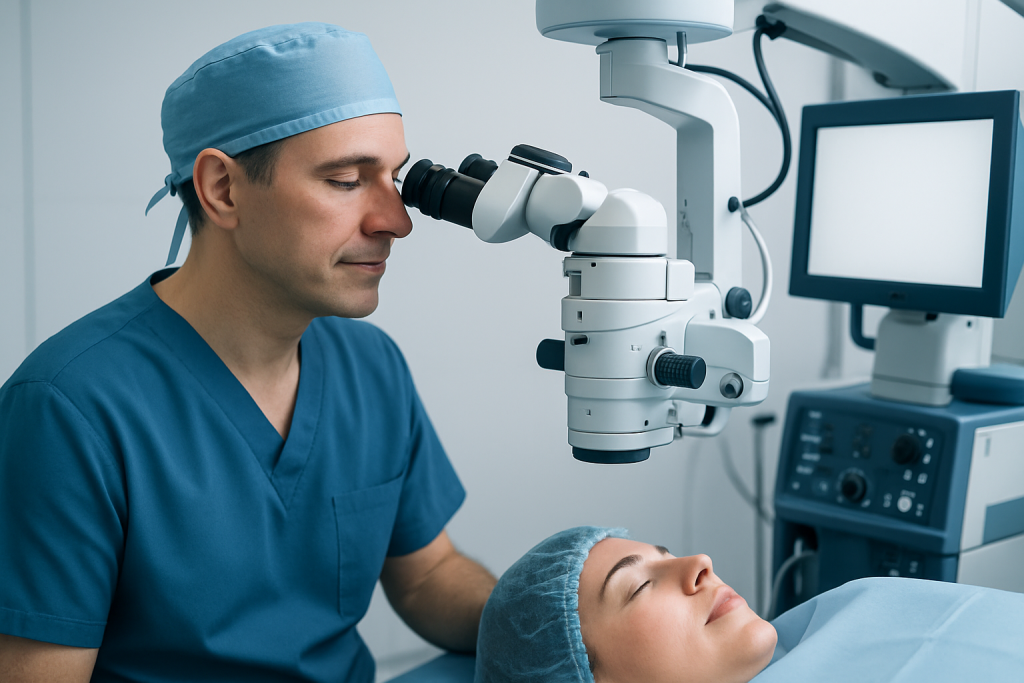
People often seek advice after noticing that makeup no longer sits the same way, lashes seem partly hidden, or the upper eyelids feel heavier by the end of the day. Others are bothered by under-eye bags that persist even with good sleep and skincare. These changes may be subtle at first, then become more noticeable in photos or in the mirror.
Functional symptoms matter just as much as cosmetic ones. Some people raise their eyebrows unconsciously to compensate for drooping upper lids, which can create forehead tension or a tired expression. Others describe needing to tilt the head back to see clearly, or finding that the upper lid skin brushes the eyelashes and interferes with daily activities.
- Upper eyelid hooding that covers the natural crease
- Puffiness or fullness caused by protruding fat pockets
- Skin that rests on or near the eyelashes
- Under-eye bags or loose lower-lid skin
- Difficulty seeing upward or outward because of lid droop
- Feeling that the eyes look tired even when the person is well rested
It is important to note that not every tired-looking eye is a blepharoplasty problem. Brow descent, dry eyes, allergies, sinus congestion, or facial volume loss can all change the appearance of the eye area and may need different solutions.
Causes & Risk Factors

The eyelids age in a way that is both visible and predictable. Skin becomes thinner and less elastic over time, the supporting tissues relax, and small fat pads may become more prominent. The upper lids may start to fold lower, while the lower lids may appear baggier or looser.
Genetics also play a major role. Some people develop eyelid puffiness or hooding at a younger age because of inherited anatomy, including naturally fuller fat pads or a heavier upper lid fold. For them, the issue may be present long before general signs of aging become obvious.
Other factors can contribute or make symptoms more noticeable:
- Sun exposure, which can accelerate skin laxity
- Smoking, which affects skin quality and healing
- Chronic eye rubbing or irritation
- Fluid retention that makes puffiness more obvious
- Changes after weight loss or overall facial aging
- Medical conditions that affect eyelid position, eye dryness, or healing
Risk is not the same for everyone, and not all people with droopy lids need surgery. A careful medical assessment helps determine whether surgery is likely to improve the problem and whether another issue, such as a brow lift or treatment for dry eye, should be addressed first.
Diagnosis and Preoperative Assessment
Blepharoplasty planning starts with a clinical examination rather than a photograph. The specialist evaluates how much excess skin is present, whether the eyebrow position is influencing the upper lid, and whether the eyelid margin is actually drooping or simply covered by loose skin. For lower eyelid concerns, the shape and tone of the lid are important to avoid creating a hollow or pulled-down appearance.
When vision is part of the complaint, formal eye testing may be recommended. A visual field assessment can help document whether the upper lids are limiting peripheral vision. The doctor may also review tear production, corneal health, prescription glasses or contact lens use, and any history of eye disease or previous surgery.
Because the eyelids heal best when the whole person is considered, the consultation typically includes medical history, medications, allergies, and habits such as smoking. For international patients, it is also practical to discuss how many visits are needed, what kind of follow-up is expected after returning home, and whether local eye care can assist with routine checks once travel is complete.
Treatment Options
Blepharoplasty is tailored to the anatomy involved. Upper eyelid surgery focuses on removing or repositioning the tissue that creates a heavy fold, while lower eyelid surgery may address bags, loose skin, or subtle repositioning of fat to smooth the contour under the eye. In some cases, both lids are treated during the same operation.
For people whose main issue is visual obstruction from excess upper-lid skin, the procedure is generally designed to open the lid crease and restore a clearer line of sight. For those seeking a fresher appearance, the goal is usually a natural result rather than a tight or overcorrected look. Good surgical planning respects the patient’s own eyelid shape and ethnic facial features.
Not every patient needs blepharoplasty alone. If the brow has descended, a brow-lift approach may be discussed. If the problem is mainly facial volume loss or dark circles, fillers or skin treatments may sometimes be more appropriate, though these are not substitutes for surgery when true eyelid redundancy is present.
Common elements of care may include:
- Detailed marking of the eyelids before surgery
- Local anesthesia with sedation or general anesthesia, depending on the case
- Careful tissue removal or repositioning to preserve eye closure and function
- Small, hidden incisions placed in natural eyelid folds
- Postoperative eye ointment, cold compresses, and follow-up examinations
Patients should ask about the likely scar location, how long swelling may last, and what results are realistic. A thoughtful surgeon will explain both the expected improvement and the limits of surgery.
Recovery and Self-care
Recovery is usually more manageable than many people expect, but it does require patience. Swelling, mild tightness, tearing, and bruising are common early on, especially around the first week. The eye area can look uneven at first as healing progresses at different speeds on each side.
Rest, head elevation, and the use of cold compresses in the early period are commonly recommended. Patients are usually advised to avoid rubbing the eyes, heavy lifting, bending, or activities that increase pressure around the face until the surgeon says it is safe. Contact lenses are often paused for a time, and glasses may be easier to use initially.
Good self-care also means protecting the eyes and the incision lines from sun exposure and following the prescribed cleaning instructions carefully. For someone traveling from another country, planning recovery time is especially important: it is wise to allow enough days for early review before flying, and to leave room for remote follow-up if the surgeon advises it.
Most people notice steady improvement over days and weeks, but final refinement can take longer. Residual swelling may subtly change eyelid shape before the tissues settle fully, so early photographs do not always represent the end result.
Possible Risks and Complications
As with any operation, blepharoplasty has risks, even when performed by an experienced specialist. Most concerns are temporary and manageable, but patients should understand them before deciding. Common issues include bruising, swelling, temporary dry eyes, and short-term light sensitivity.
Less common problems can include infection, bleeding, asymmetry, difficulty closing the eyes completely for a period of time, or visible scarring. Lower eyelid surgery in particular requires careful planning because the lid must retain enough support to sit naturally against the eye.
These risks are one reason the consultation matters so much. A person with dry eye, thyroid eye disease, prior eyelid surgery, or certain medical conditions may need a modified plan or a different approach entirely. Safety depends on matching the treatment to the patient rather than the other way around.
When to See a Doctor
It is sensible to seek medical evaluation if the eyelids seem to be worsening, if the upper lids are interfering with vision, or if swelling appears unusual, painful, or one-sided. A specialist should also be consulted if the eye feels dry, the lids do not close well, or a lump in the eyelid changes shape or becomes tender.
Anyone considering surgery should ask for an assessment by a qualified plastic surgeon or oculoplastic surgeon. That is especially important if there is a history of eye disease, prior cosmetic procedures, blood-thinning medication use, or a family tendency toward prominent scarring. The goal is to identify whether blepharoplasty is the right answer and, if so, how to do it safely.
For international patients, coordinated care can make the process smoother. Acibadem Health Point’s multidisciplinary specialists and JCI-accredited hospitals diagnose and treat blepharoplasty cases for international patients, with attention to both surgical planning and postoperative follow-up.
Prevention and Long-Term Eye Area Care
Blepharoplasty can improve the current eyelid contour, but healthy habits still matter afterward. Sun protection, not smoking, and gentle eye care support the skin and help protect the investment in healing. People who are prone to puffiness may also notice that sleep, hydration, and allergy control influence how the eye area looks from day to day.
It is also helpful to keep expectations realistic. Surgery can reduce excess skin and bags, yet it does not stop the natural aging process. Over time, the brow, cheeks, and skin around the eyes continue to change, so long-term maintenance may involve skincare, glasses with sun protection, or additional procedures years later for some people.
Choosing treatment for the eye area is best done with a clear understanding of what is cosmetic, what is functional, and what is simply part of facial anatomy. That distinction helps patients select the least invasive option that truly addresses the problem.
Frequently asked questions
What is the difference between blepharoplasty and a brow lift?
Blepharoplasty removes or repositions tissue in the eyelids, while a brow lift raises a low eyebrow that may be pushing extra skin onto the upper lids. Some people need only one procedure, while others benefit from both because the real cause of the heaviness is spread across the forehead and eyelid area.
Can blepharoplasty improve vision?
Yes, if excess upper-lid skin is blocking part of the visual field, surgery may help open the line of sight. A specialist may perform vision testing or examine photographs to show whether the problem is functional rather than only cosmetic.
Will the scars be visible?
Incisions are usually placed in natural eyelid creases or just beneath the lashes, where they tend to heal discreetly. Scars fade gradually, but good healing depends on following postoperative instructions and protecting the skin from sun exposure.
How long does recovery usually take?
Bruising and swelling are most noticeable in the first days and often improve over the following weeks. Many people feel socially ready sooner than full refinement occurs, but the eyelids can continue to settle for a longer period.
Is blepharoplasty the right treatment for dark circles?
Not always. Dark circles may be caused by thin skin, pigment, shadowing, or volume loss rather than extra eyelid tissue, so the best treatment can be different. A careful assessment helps determine whether surgery, skincare, or another approach is more suitable.
Who should be especially careful before surgery?
People with dry eye, thyroid eye disease, prior eyelid surgery, bleeding disorders, or a history of poor wound healing should be evaluated carefully. The same is true for anyone who smokes or uses medicines that affect bleeding, because those factors can influence healing and planning.
References
- American Society of Plastic Surgeons
- American Academy of Ophthalmology
- Mayo Clinic
- National Eye Institute
- MedlinePlus
This article is for general information only and is not a substitute for professional medical advice. Please consult a qualified doctor about your individual situation.
Explore treatments in Turkey — costs, top hospitals & a free quote
JCI-accredited · board-certified surgeons · reply within 24h
Add us as a Preferred Source to see more of our trusted health content across Google Search, AI Overviews and Discover.
More from the Health Library

Blepharoplasty and Dry Eyes: What Needs Checking Before Eyelid Surgery Abroad

Eyelid Surgery Planning: When Puffiness, Hooding, or Brow Position Changes the Recommendation

Eyelid Surgery and Dry Eyes: What Surgeons Check Before They Recommend Blepharoplasty
Related Specialists

Dr. İlker Altundağ
Aesthetic Plastic & Reconstructive Surgery
Dr. Serkan Tokgönül
Aesthetic Plastic & Reconstructive Surgery
Dr. Ömercan Yağız Öksüz
Aesthetic Plastic & Reconstructive Surgery
Prof. Dr. Mehmet Veli Karaaltın
Aesthetic Plastic & Reconstructive Surgery