Bedbug Bites: Symptoms, Causes and Treatment

Key Takeaways
- Bedbug bites often appear as itchy red bumps or welts, sometimes in clusters or lines.
- The skin reaction varies from person to person, and some people have little or no visible mark.
- Relief focuses on reducing itching, calming inflammation, and avoiding scratching.
- Treating the environment is just as important as treating the skin, because bites continue if the infestation remains.
- Medical advice is helpful if the skin becomes infected, symptoms are severe, or the cause of the rash is unclear.
Medically reviewed by the Acıbadem clinical team — August 19, 2026
Bedbug bites are usually more irritating than dangerous, but they can cause significant itching, sleep loss, and anxiety until the source is found. Recognizing the pattern of bites, caring for the skin, and addressing the home environment are the key steps to recovery.
Overview
Bedbug bites are small skin reactions caused by bed bugs feeding on human blood, usually at night. The bites themselves are not a sign of poor hygiene, and they can affect anyone staying in a home, hotel, hospital, dormitory, or rented accommodation where the insects are present.
For many people, the first clue is not the bite but the pattern: itchy bumps that appear after sleep, often on exposed skin such as the face, neck, arms, hands, or legs. Some people react strongly, while others barely notice a mark at all. That difference can make the condition confusing, especially when traveling or settling into a new place and trying to determine whether the problem began in a hotel, luggage, or the home.
Bedbug bites usually improve with simple skin care once the exposure stops. The longer-term solution, however, is environmental: identifying the source, cleaning or treating the area thoroughly, and preventing the insects from spreading to clothing, bedding, or suitcases.
Symptoms
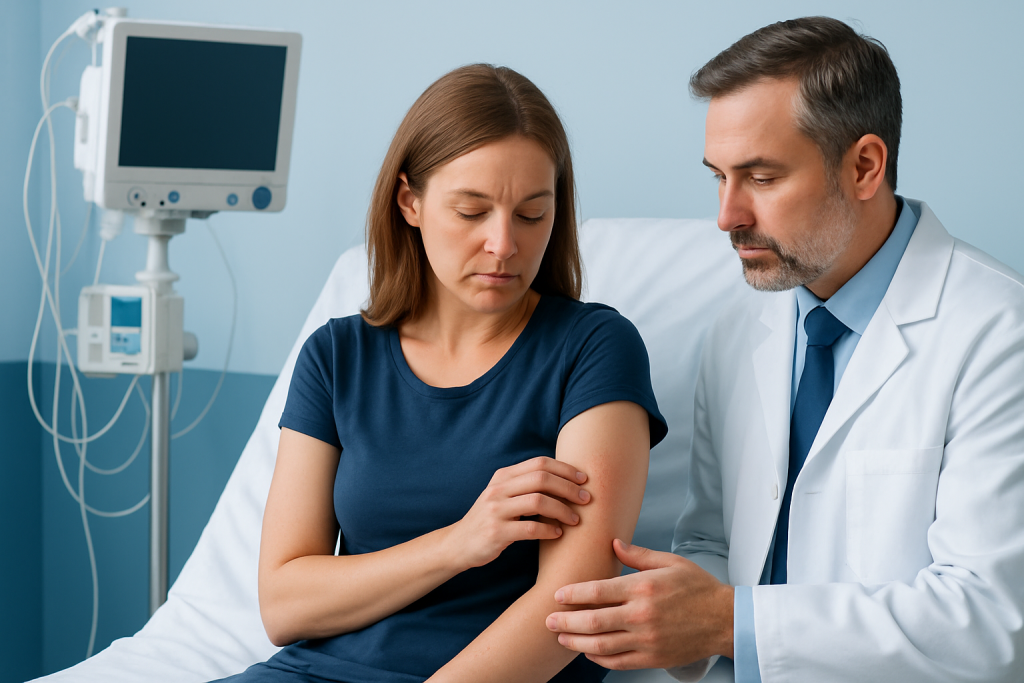
Bedbug bites commonly show up as small, red, itchy bumps or raised welts. They may appear in a line, cluster, or scattered pattern, depending on how the insect fed and how the person’s skin reacted. In some people, the bumps become larger or more inflamed over several hours or days.
Symptoms are usually concentrated on skin exposed during sleep. Common areas include the face, neck, shoulders, arms, hands, and lower legs. The itching may be mild or intense, and repeated scratching can lead to broken skin, crusting, or a secondary infection.
- Itchy red bumps or welts
- Lines or grouped clusters of bites
- Swelling around individual bumps
- Skin irritation that worsens after sleeping
- Occasional small blisters or dark marks after healing
Some people have no reaction at all, which is why bites alone cannot confirm the presence of bed bugs. A careful look at the sleeping environment often provides the missing evidence.
Causes & Risk Factors
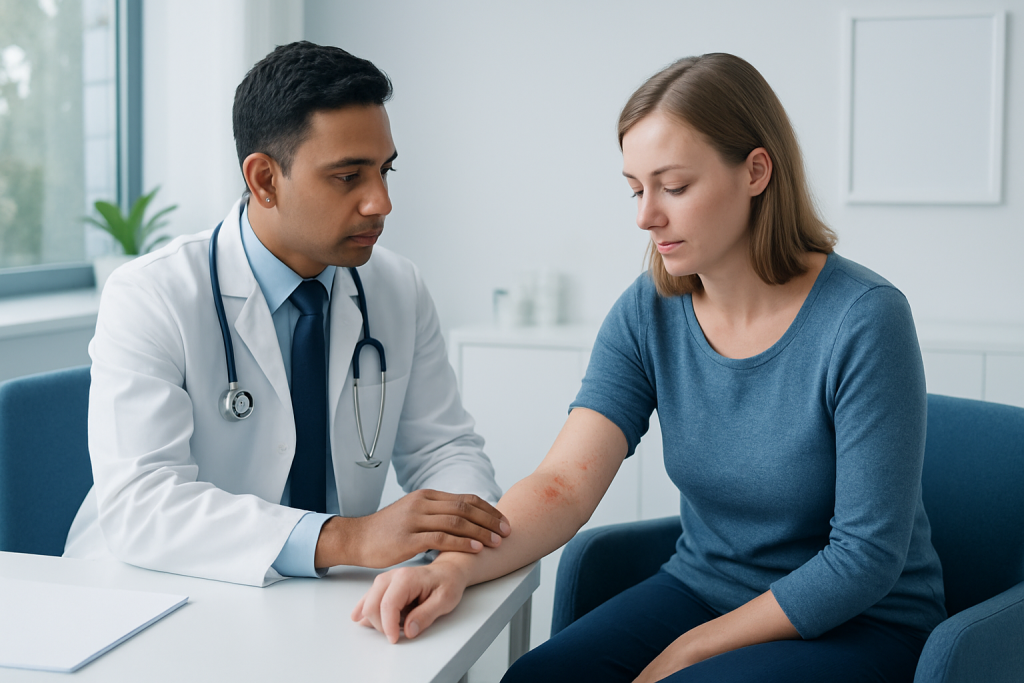
Bedbugs are small, flat insects that hide in mattresses, bed frames, upholstered furniture, baseboards, seams of luggage, and cracks in walls or floors. They come out when people are resting and feed briefly before returning to hiding places. The reaction that follows is the body’s response to the insect’s saliva, not to dirt or contamination.
Anyone can be bitten, but the chance of exposure rises in places where many people sleep in close quarters or where luggage and furniture move between locations. International travel can make the source harder to identify because bites may appear only after returning home, when it is no longer obvious whether the insects were picked up in transit or from a previous stay.
Factors that may increase the likelihood of encountering bedbugs include:
- Staying in hotels, hostels, or shared housing
- Using secondhand mattresses or furniture
- Frequent travel with unpacked luggage near sleeping areas
- Living in buildings where infestations can spread between rooms or apartments
- Delayed detection, since bedbugs hide well and travel in seams and folds
Bedbug bites do not spread from person to person. What spreads is the infestation, usually by the insects hitching a ride on belongings, not by direct human contact.
Diagnosis
There is no single test that confirms bedbug bites from the skin alone. Clinicians usually rely on the appearance of the rash, the location of the bites, the timing in relation to sleep or travel, and whether there are signs of bedbugs in the environment. Because several insects and skin conditions can look similar, the history matters as much as the rash itself.
A doctor may ask about recent travel, overnight stays, new furniture, shared housing, or whether other household members have similar marks. They may also look for clues such as clustered bites, evidence of scratching, or signs of infection. In some cases, the skin may be assessed to rule out allergic reactions, scabies, flea bites, eczema, or other causes of itching.
If the diagnosis remains unclear, the next practical step is often environmental inspection rather than extensive testing. Looking at mattress seams, headboards, fabric folds, and nearby furniture can reveal tiny dark spots, shed skins, eggs, or live insects, helping connect the skin findings to the cause.
Treatment Options
Most bedbug bites are managed with symptom relief while the environment is addressed. Cool compresses, gentle washing, and avoiding scratching can reduce discomfort and lower the risk of skin irritation. Many cases settle on their own over several days to a few weeks.
Topical soothing products or anti-itch medicines may be recommended by a healthcare professional when itching is bothersome. If the reaction is more pronounced, a doctor may suggest treatments aimed at reducing inflammation. The main goal is to help the skin heal comfortably while avoiding unnecessary irritation.
When scratching breaks the skin, the area should be kept clean and observed for infection. A clinician may recommend treatment if redness expands, warmth develops, pus appears, or pain increases. Severe allergic reactions are uncommon, but swelling of the face, difficulty breathing, or widespread hives requires urgent medical attention.
It is also important to treat the source. A home or travel setting with bedbugs usually needs coordinated pest control measures, such as washing bedding and clothing on hot settings when appropriate, drying on high heat if safe for the fabric, vacuuming carefully, sealing items, and using professional extermination when needed. Skincare alone will not stop new bites if the insects remain present.
Prevention & Self-care
Preventing bedbug bites is mostly about lowering exposure and spotting a problem early. Travelers can reduce risk by checking bedding and mattress seams in lodging, keeping luggage off beds and upholstered furniture when possible, and washing clothes promptly after returning home. A small amount of prevention during travel can save a great deal of skin irritation later.
At home, careful housekeeping around sleeping areas helps make hiding places less available. This does not mean every clean home is bedbug-free, but regular inspection can help detect a problem before it spreads. Items brought in from outside, especially secondhand furniture, should be checked before being placed in bedrooms.
- Inspect mattress seams, bed frames, and nearby furniture regularly
- Keep suitcases off beds and floors during travel when possible
- Wash and dry travel clothing promptly after returning home
- Avoid bringing in used mattresses or upholstered furniture without inspection
- Use protective encasements for mattresses and box springs if advised
For the skin itself, simple measures are often enough: cool compresses, fragrance-free cleansers, loose clothing, and an effort to avoid scratching. If itching is affecting sleep, work, or travel plans, a clinician can suggest the safest symptom relief based on the person’s age, medical history, and skin condition.
When to See a Doctor
Medical advice is sensible when the rash is difficult to identify, when bites are severe, or when symptoms are not improving with basic care. A doctor can help distinguish bedbug bites from other causes of itching and guide treatment if the skin is becoming inflamed.
It is especially important to seek care if there are signs of infection, such as increasing redness, warmth, tenderness, pus, or fever. People with eczema, diabetes, weakened immunity, or a history of strong allergic reactions may also benefit from earlier evaluation, because their skin may need closer follow-up.
If travel is involved, it can be helpful to bring a clear timeline: when the bites first appeared, where the person slept, whether other guests or family members were affected, and whether any insects or stains were seen on bedding. For international patients who need evaluation while abroad or after returning home, Acibadem Health Point’s multidisciplinary specialists and JCI-accredited hospitals can diagnose and treat bedbug-related skin reactions in a coordinated way.
Frequently asked questions
How can someone tell bedbug bites apart from other insect bites?
Bedbug bites often appear in clusters or lines on exposed skin that was uncovered during sleep. The pattern and timing can be suggestive, but they are not enough on their own to confirm the cause. A home or hotel inspection is often needed to make the diagnosis more certain.
Do bedbug bites always itch?
No. Some people have a strong itchy reaction, while others notice only small marks or no visible reaction at all. The size of the skin response depends on individual sensitivity, not on how severe the infestation is.
Are bedbug bites dangerous?
Most bedbug bites are not dangerous and improve with basic care. The main concerns are discomfort, sleep disruption, and the possibility of skin infection from scratching. Very severe allergic reactions are uncommon but should be assessed urgently.
What should be done first after noticing possible bedbug bites?
The skin can be washed gently and cooled with a compress to ease itching. At the same time, the sleeping area should be checked for signs of bedbugs so the source can be addressed. If the rash is spreading, painful, or unclear, a clinician should review it.
Can bedbugs live in luggage or clothes after travel?
Yes, they can hide in seams, folds, and fabric items, which is why travel clothing and luggage deserve careful attention. Washing and drying clothing promptly after returning home can help reduce the chance of bringing insects indoors. A suitcase should also be inspected and cleaned if exposure is suspected.
When do bedbug bites need medical attention?
They should be evaluated if there are signs of infection, if the itching is severe enough to disturb sleep or daily life, or if the rash does not look typical. Immediate care is needed for facial swelling, trouble breathing, or widespread hives. A doctor can also help if another skin condition may be causing the symptoms.
References
- Centers for Disease Control and Prevention
- World Health Organization
- American Academy of Dermatology
- Mayo Clinic
This article is for general information only and is not a substitute for professional medical advice. Please consult a qualified doctor about your individual situation.
Explore treatments in Turkey — costs, top hospitals & a free quote
JCI-accredited · board-certified surgeons · reply within 24h
Add us as a Preferred Source to see more of our trusted health content across Google Search, AI Overviews and Discover.