Arms Fitness Workout

Key Takeaways
- Arms training works best when it includes the biceps, triceps, shoulders, and forearms together.
- Good form matters more than lifting heavy weights, especially for beginners and returning exercisers.
- Mild muscle soreness can be normal, but sharp pain, numbness, or swelling should not be ignored.
- A balanced routine should pair arm exercises with chest, back, and core work.
- People recovering from injury or surgery should ask a clinician before starting a new workout plan.
An arms fitness workout can support everyday strength, posture, and confidence when it is built around good technique and gradual progress. This guide explains how to train the arms safely, what results to expect, and when pain or weakness should be checked by a doctor.
Overview
An arms fitness workout is often chosen for visible tone, but its value goes far beyond appearance. Strong arm muscles help with carrying groceries, lifting luggage, pushing doors, reaching overhead, and supporting shoulder stability during everyday movement.
The arms are not one single unit. A practical routine usually trains the biceps on the front of the upper arm, the triceps on the back, the forearms, and the muscles around the shoulder blade and shoulder joint. When these areas work together, movement feels smoother and less tiring.
For many people, the best place to start is not with advanced routines, but with a plan that is repeatable. A well-designed program uses manageable resistance, clear technique, and enough recovery time for muscles to adapt. That approach is especially important for people who are new to exercise, returning after a break, or managing joint sensitivity.
What Results to Expect
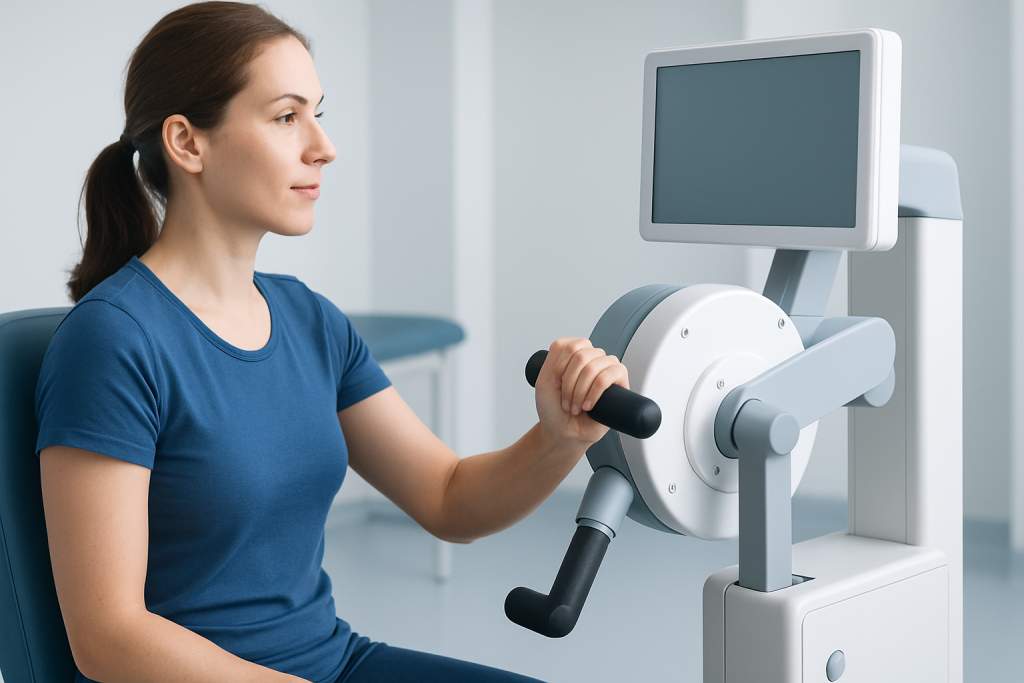
Arm training can improve strength before it produces dramatic visible change. That is because the nervous system learns to recruit muscle fibers efficiently early on, even before muscle size begins to increase. Many people notice that everyday tasks feel easier within a few weeks of steady practice.
Visible changes usually depend on several factors, including consistency, total training volume, nutrition, sleep, and overall body composition. Some people want leaner-looking arms, while others want more shape or more power. The same workout can support different goals, but the plan should match the person’s starting point and health status.
It is also useful to remember that arm workouts alone do not create balanced upper-body fitness. The shoulders, chest, back, and core influence how safely the arms move. A routine that includes pulling, pushing, and posture-focused exercises tends to feel more complete and sustainable.
Exercises Commonly Used in an Arm Workout

A good arms fitness workout often combines simple movements rather than relying on one “best” exercise. Curls target the biceps, triceps extensions or press-down style movements train the back of the arm, and rows or pull-based exercises help support the muscles that stabilize the upper limb.
Bodyweight options can be effective, especially for beginners. Wall push-ups, modified push-ups, chair dips only if they are comfortable and approved by a clinician, and plank variations can build strength without equipment. Dumbbells, resistance bands, cable machines, and even water bottles can be used when appropriate and safe.
- Biceps curls: Helpful for the front of the upper arm and elbow flexion.
- Triceps extensions: Useful for the back of the arm and elbow extension.
- Rows: Support the back and shoulder blade muscles that assist arm control.
- Push-ups or wall push-ups: Train chest, shoulders, and triceps together.
- Farmer carries: Build grip strength and forearm endurance.
Exercise selection should match ability. Someone with wrist discomfort may need neutral-grip options, while a person with shoulder pain may need to avoid deep pressing movements until evaluated. The safest routine is the one that can be performed with control and without compensatory strain.
How to Build a Safe Routine
Structure is more important than intensity at the beginning. A balanced session may include a brief warm-up, two or three arm-focused exercises, and a cool-down that allows the muscles and joints to settle. Controlled movement, not momentum, should guide each repetition.
Beginners often do well with two to three sessions per week, with rest days between harder workouts. That spacing allows tissue recovery and reduces the risk of overuse. Progress can be gradual: a few extra repetitions, a slightly stronger resistance band, or a small increase in weight once the current level feels comfortable and stable.
Breathing is part of good form. Exhaling during the effort phase and inhaling during the easier phase can help maintain rhythm and reduce unnecessary bracing. If the neck, lower back, or shoulders are taking over the movement, the load is likely too heavy or the technique needs adjustment.
Causes & Risk Factors for Arm Pain During Exercise
Arm discomfort during a workout can come from ordinary muscle fatigue, but it can also reflect technique issues or a pre-existing condition. Repeating the same movement too often, using too much weight, skipping warm-up, or training with poor shoulder alignment can all irritate tissues over time.
Some people have a higher chance of symptoms because of previous injuries, arthritis, tendon irritation, nerve compression, or recent surgery. Poor posture from desk work may also contribute by placing the neck and shoulders in positions that make arm exercises harder to tolerate.
Risk can increase when workouts are copied from the internet without modification. A person with limited mobility, an older adult, or someone in rehabilitation may need an adapted plan rather than a standard “one-size-fits-all” arm day. In those situations, professional guidance can prevent frustration and help the person progress more safely.
Diagnosis and Evaluation
Most people do not need medical testing before starting a basic fitness routine. However, if arm pain, weakness, swelling, tingling, or reduced range of motion is present, a doctor may ask detailed questions about when symptoms started, which movements trigger them, and whether there was an injury.
Depending on the findings, evaluation may include a physical examination of the shoulder, elbow, wrist, neck, and grip strength. The clinician may look for tendon irritation, joint limitation, nerve-related symptoms, or signs that the problem is coming from another area such as the neck.
When needed, additional tests may be recommended. These can include imaging or nerve studies, but only if the history and examination suggest a reason. The goal is not to investigate every sore arm, but to distinguish routine post-exercise muscle soreness from a condition that deserves targeted treatment.
Treatment Options
Most uncomplicated exercise-related muscle soreness improves with rest, gentle movement, hydration, and time. Light activity often feels better than complete inactivity, especially when the person keeps moving without pushing through pain. Temporary reduction in training volume may be enough to allow recovery.
If there is tendon irritation, joint strain, or another musculoskeletal issue, treatment may include activity modification, physiotherapy, and a gradual strengthening plan. A rehabilitation specialist can help correct movement patterns and build strength without repeatedly aggravating the same structure.
In more complex cases, treatment depends on the diagnosis. A nerve problem, inflammatory condition, or significant injury may require a more specific medical approach. The important point is that ongoing symptoms are not something to simply “train through” if they are changing the way the arm functions.
Prevention & Self-care
Most arm workout problems are easier to prevent than to treat. A short warm-up that increases circulation, attention to joint alignment, and a realistic progression plan can make training much more comfortable. People often benefit from learning proper form before chasing heavier weights or higher repetition counts.
Recovery is part of the routine, not an interruption to it. Sleep, balanced nutrition, and spacing hard sessions apart all help muscles adapt. It is also wise to vary exercises over time so the same tendons and joints are not exposed to identical stress every session.
- Start with light resistance and increase slowly.
- Keep the wrists, elbows, and shoulders aligned during lifts.
- Avoid jerking, swinging, or locking joints forcefully.
- Stop if pain is sharp, worsening, or associated with tingling.
- Ask for help with form if a movement feels awkward or unstable.
For international patients traveling for care, exercise advice should be simple enough to continue after returning home. A clear written plan from the care team can make follow-up easier and support consistent rehabilitation across countries and time zones.
When to See a Doctor
Medical advice is appropriate if arm pain lasts more than a short time, keeps returning, or makes daily tasks difficult. Weakness, visible swelling, numbness, loss of motion, or pain that wakes a person at night are also reasons to be assessed.
Someone should seek prompt evaluation after a fall, direct blow, or sudden popping sensation, especially if the arm cannot move normally afterward. New symptoms in the neck, chest, or hand should also be reviewed, since the source of the problem may not be the arm itself.
People with diabetes, inflammatory disease, a history of surgery, or known nerve problems may need a lower threshold for assessment. Acibadem Health Point’s multidisciplinary specialists and JCI-accredited hospitals can diagnose and treat arm and upper-limb conditions for international patients, with care plans that can continue after travel home.
Frequently asked questions
How often should someone do an arms fitness workout?
For many beginners, two to three arm-focused sessions per week is a reasonable starting point. The key is to allow recovery between harder sessions so the muscles and tendons can adapt. People returning from injury or with joint pain may need a slower progression guided by a clinician.
Should arm workouts include both biceps and triceps?
Yes. Training both sides of the upper arm helps keep strength balanced and supports more efficient movement. A routine that only focuses on the biceps can leave the triceps undertrained and may not support the shoulder and elbow as well.
Is soreness after arm exercise normal?
Mild muscle soreness can be normal, especially after a new workout or an increase in resistance. It usually improves with rest, light movement, and time. Sharp pain, swelling, numbness, or weakness is not typical soreness and should be evaluated.
Can arm exercises help shoulder stability?
They can, especially when the routine includes rows, push-based movements, and exercises that strengthen the muscles around the shoulder blade. The shoulder works best as part of a larger upper-body system, not as an isolated joint. Good technique matters more than heavy lifting.
What if a person has wrist or elbow pain during curls or push-ups?
That may mean the exercise needs to be modified rather than abandoned entirely. Grip position, range of motion, resistance level, and exercise choice can often be adjusted to reduce strain. If the pain persists, a doctor or physiotherapist should assess it.
Can someone start an arm workout after surgery or an injury?
Only with medical clearance, since healing tissues often need specific limits and a gradual return. A rehabilitation plan is usually safer than a standard gym routine at first. The right progression depends on the exact procedure or injury and the person’s current function.
References
- American Academy of Orthopaedic Surgeons
- Mayo Clinic
- National Institute of Arthritis and Musculoskeletal and Skin Diseases
- World Health Organization
- American College of Sports Medicine
This article is for general information only and is not a substitute for professional medical advice. Please consult a qualified doctor about your individual situation.