

Areola: Anatomy and Common Conditions

Key Takeaways
- The areola is a normal part of breast anatomy and often changes with hormones, age, pregnancy, breastfeeding, and body weight.
- New asymmetry, persistent itching, bleeding, discharge, lumps, or skin thickening around the areola deserve medical review.
- Diagnosis usually begins with a history and examination, followed by imaging or biopsy only when needed.
- Many areola concerns are benign and can be managed with observation, skincare, or treatment of the underlying cause.
- People who travel for care should plan follow-up before leaving and keep records of any imaging or procedures.
Medically reviewed by the Acıbadem clinical team — August 19, 2026
The areola is the pigmented skin surrounding the nipple, and it can change in size, color, texture, or sensitivity over time for many normal reasons. Understanding those changes can help a person know what is expected, what may need attention, and when a clinician should take a closer look.
Overview
The areola is the darker circular area of skin around the nipple. In everyday life, it is easy to think of it as a fixed feature, but it is actually a living part of breast skin that can change with age, hormones, pregnancy, breastfeeding, medications, and even friction from clothing or exercise.
Those changes are often harmless. Some people notice that their areola becomes larger or darker during puberty or pregnancy, while others observe mild texture changes, dry skin, or differences between the two sides. A change becomes more meaningful when it is sudden, persistent, one-sided, or accompanied by pain, a lump, discharge, or skin breakdown.
For Myomectomy Recovery for International Patients: The Usual Travel Timeline" class="ahp-ilk">international patients, areola-related concerns may come up during routine breast care, reconstructive planning, or evaluation of a new symptom while abroad. A clear medical assessment can separate normal variation from changes that need treatment and can help a person plan care calmly and efficiently.
Symptoms and common appearance changes
The areola does not have one universal appearance. Its color, diameter, and texture vary widely from person to person, and they may also shift across different stages of life. A person may simply be noticing a long-standing feature more carefully, especially if they are pregnant, starting a new exercise program, or preparing for breast surgery.
Common benign changes include gradual darkening, mild enlargement, small bumps caused by Montgomery glands, temporary tenderness, and occasional dryness. These findings are usually not concerning on their own, especially when both sides are similar and the skin remains intact.
Symptoms that deserve attention are those that feel new or unusual for the individual. Examples include:
- itching that does not settle with basic skin care
- flaking, crusting, or persistent redness
- bleeding, ulceration, or cracking
- new nipple discharge, especially if bloody or spontaneous
- a firm lump beneath or near the areola
- one-sided flattening, distortion, or rapid shape change
Because the areola sits in a highly visible and sensitive area, even minor symptoms can feel alarming. A measured examination is usually the best next step, since many causes are simple to treat once identified.
Causes and risk factors

The areola changes for many reasons, and not all of them point to disease. Hormonal shifts are among the most common influences. Puberty, menstrual cycling, pregnancy, breastfeeding, and menopause can all affect pigmentation, size, and tenderness. Hormonal medications may do the same.
Skin irritation is another frequent cause. Repeated friction from bras, sports equipment, or surgical dressings can lead to dryness, thickening, or small cracks. Eczema, contact dermatitis, and fungal or bacterial skin infections may also affect the areola, particularly when the skin barrier is already sensitive.
Some causes are related to breast conditions rather than the skin alone. A blocked duct, a benign cyst, inflammation, or, less commonly, a breast cancer-related process can create visible areola changes. Risk increases when there is a personal or family history of breast disease, prior breast surgery, known skin conditions, or symptoms that are persistent and one-sided.
Important factors a clinician may ask about include recent pregnancy or breastfeeding, new products applied to the area, previous piercings, trauma, breast implants or reconstruction, and whether the change is stable or evolving. Those details help distinguish normal variation from a problem that needs closer workup.
Diagnosis
Evaluation usually starts with a conversation and a physical examination. A clinician will ask when the change began, whether it is affecting one or both sides, and whether there are associated symptoms such as pain, discharge, itch, fever, or a palpable lump. In many cases, this first step already points clearly toward a benign skin issue or hormonal change.
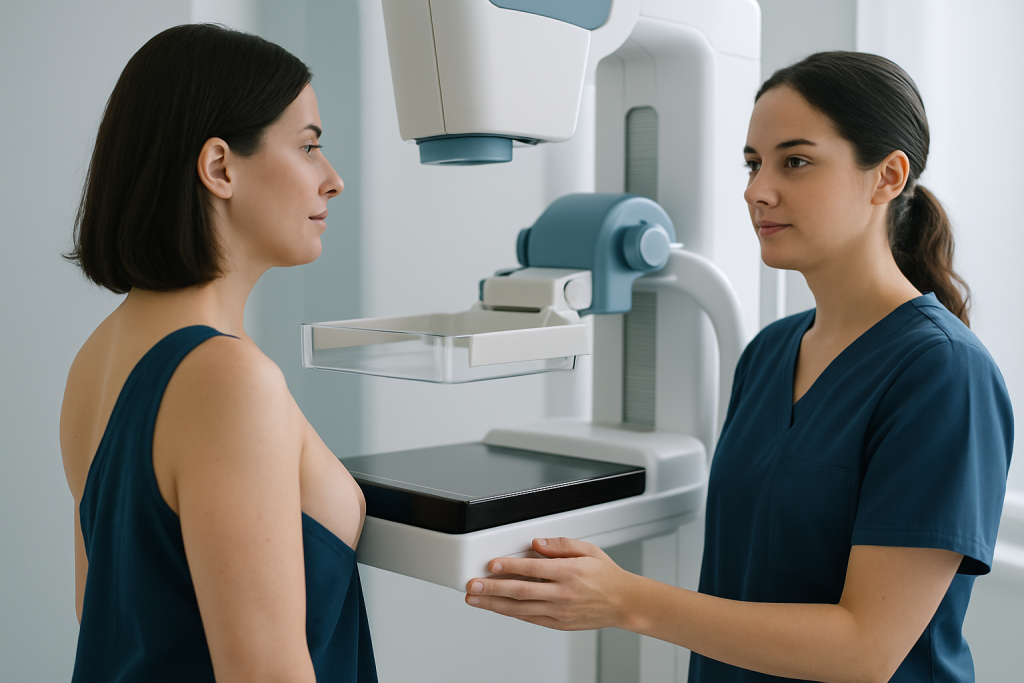
If the exam suggests a breast or skin condition that needs more detail, imaging may be recommended. Ultrasound is often useful for a focused look at a lump or duct change, while mammography may be used depending on age, risk profile, and the broader breast picture. If the areola skin itself looks suspicious or does not respond to treatment, a small biopsy may be considered.
The goal of diagnosis is not to test everything, but to match the evaluation to the symptom. That approach is especially helpful for people who are traveling for care, because it can reduce unnecessary delays and make it easier to complete the most important tests before returning home.
Treatment options
Treatment depends entirely on the cause. A person with simple dryness or irritation may only need gentler skin care, a different bra fabric, or a short period of observation. If eczema or dermatitis is present, a clinician may recommend targeted topical therapy and avoidance of the trigger product or material. When an infection is found, the treatment is directed to that infection.
For breastfeeding-related changes, management may include latch support, relief of friction, and guidance on protecting the skin barrier. If a blocked duct, abscess, or persistent nipple-areola symptom is present, further treatment may be needed, sometimes with drainage or additional imaging. When a structural or concerning lesion is identified, a breast specialist or surgeon may guide the next step.
Areola treatment may also be part of reconstructive or cosmetic breast surgery. In those settings, the discussion usually focuses on symmetry, size, pigment, projection, scar placement, and expected healing. Patients traveling for surgery should ask about wound care, the timeline for return visits, and how results are monitored after they go home.
In every case, the most useful treatment plan is one that matches the underlying problem rather than the visible change alone. That is why a careful diagnosis matters more than self-treating with multiple creams or home remedies.
Prevention and self-care
Not every areola change can be prevented, especially those linked to hormones or normal life stages. Still, a few habits can reduce irritation and help the area stay comfortable. Gentle washing, avoiding harsh scrubs, and choosing breathable clothing can all protect sensitive skin.
Self-care is especially practical when the symptoms look like dryness or mild friction. Patients often do well with the following general measures:
- use mild, fragrance-free skin products
- avoid scratching or picking at flaky skin
- wear supportive but non-abrasive bras
- change out of sweaty clothing soon after exercise
- watch for reactions to new detergents, lotions, or nipple products
It is also wise to become familiar with what is normal for one’s own breasts. Regular self-awareness does not replace professional screening, but it makes it easier to notice a new lump, asymmetry, discharge, or skin change early. For patients who receive care while abroad, keeping copies of imaging reports, biopsy results, and operative notes can make future follow-up much smoother.
When to see a doctor
A medical review is appropriate when an areola change is new, persistent, or clearly different from the person’s usual pattern. The same is true if the change is affecting one side only or if it is paired with a lump, nipple inversion, discharge, redness, warmth, fever, bleeding, or skin ulceration.
People should not wait if the skin looks thickened, scaly, or eczematous and does not improve, because some breast conditions can resemble routine skin irritation at first. Even when the cause turns out to be benign, early assessment can reduce worry and speed treatment.
If care is being arranged from another country, it helps to ask in advance which tests are needed, whether follow-up can be coordinated remotely, and how to handle dressing changes or wound checks after travel. Acibadem Health Point’s multidisciplinary specialists and JCI-accredited hospitals diagnose and treat areola-related concerns for international patients as part of coordinated breast care.
Living with areola changes
Many people feel self-conscious about the areola because it is both visible and personal. That reaction is understandable, especially when the change appears during pregnancy, after surgery, or during a period of medical uncertainty. A calm, fact-based evaluation usually helps people regain perspective and choose the right next step.
If the change is benign, reassurance and simple skin care may be enough. If treatment is needed, most areola-related conditions respond well once the underlying cause is identified. For those considering reconstructive or aesthetic care, a thoughtful consultation can help align the result with natural proportions and the patient’s own goals.
The most practical approach is to treat the areola as a meaningful part of breast health rather than an isolated cosmetic detail. When it changes, the question is not only how it looks, but why it changed and whether anything else is happening underneath the surface.
Frequently asked questions
What is the areola?
The areola is the pigmented skin surrounding the nipple. Its size, color, and texture vary naturally from person to person and can change over time.
Are areola changes always a sign of disease?
No. Many changes are normal and linked to hormones, pregnancy, breastfeeding, friction, or aging. A change is more concerning when it is new, one-sided, persistent, or associated with a lump, discharge, or skin breakdown.
Can the areola become darker during pregnancy?
Yes. Hormonal shifts in pregnancy commonly cause the areola to darken and sometimes enlarge. These changes often become less noticeable after pregnancy, though some variation may remain.
What causes an itchy or flaky areola?
Dry skin, eczema, contact irritation, and sometimes infection can affect the area. If symptoms continue or only affect one side, a clinician should examine the skin to rule out other causes.
Should nipple or areola discharge be checked?
Yes, especially if it happens without squeezing, is bloody, or comes from one side only. Discharge can have benign causes, but it should be assessed to confirm the source and cause.
How is an areola problem diagnosed?
Diagnosis usually begins with a medical history and physical examination. Depending on the findings, a clinician may order ultrasound, mammography, or a small biopsy.
When should someone seek urgent medical help?
Urgent care is sensible if there is rapidly worsening redness, fever, severe pain, pus, or a new lump with skin changes. These findings can suggest infection or another problem that needs prompt assessment.
References
- American Cancer Society
- National Cancer Institute
- American College of Obstetricians and Gynecologists
- Mayo Clinic
- NHS
This article is for general information only and is not a substitute for professional medical advice. Please consult a qualified doctor about your individual situation.
Explore treatments in Turkey — costs, top hospitals & a free quote
JCI-accredited · board-certified surgeons · reply within 24h
Add us as a Preferred Source to see more of our trusted health content across Google Search, AI Overviews and Discover.
More from the Health Library



Related Specialists

Dr. Gamze Karababa
Gynecology & Obstetrics
Dr. Onur Özdenoğlu
Gynecology & Obstetrics
Dr. Selcen Bahadır
Gynecology & Obstetrics
Prof. Dr. A. Taner Usta
Gynecology & Obstetrics