All-on-4 vs. All-on-6: Which Full-Mouth Solution Fits Your Bone and Budget?

Key Takeaways
- All-on-4 uses four implants per arch, while All-on-6 uses six, which may increase support in some cases.
- Both treatments can be planned for people with significant tooth loss, but bone volume and gum health matter.
- The choice is not only about budget; stability, long-term maintenance, and jaw anatomy also influence the decision.
- A detailed scan and exam are needed before any recommendation can be made.
- Good home care, regular follow-up, and lifestyle factors such as smoking can affect implant success.
Medically reviewed by the Acıbadem clinical team — June 13, 2026
All-on-4 and All-on-6 are fixed full-mouth dental solutions designed to replace many or all missing teeth with a stable, natural-looking bridge supported by implants. The best option depends on bone quality, bite forces, oral health, and treatment goals rather than on a single “better” choice.
Overview
For people who have lost many teeth, the question is often not whether to replace them, but which full-mouth path makes the most sense. All-on-4 and All-on-6 are two fixed implant-supported options that restore a full arch of teeth with a bridge anchored to dental implants rather than removable dentures.
The two treatments share the same goal: to provide a stable, functional smile that feels more secure than conventional dentures. The main difference is simple in concept but important in planning. All-on-4 uses four implants to support the arch, while All-on-6 uses six. That extra support may be helpful in certain mouths, but it is not automatically the right answer for everyone.
Because the decision depends on bone shape, bite forces, overall oral health, and the person’s long-term priorities, it is best understood as a tailored treatment choice rather than a standard package. For international patients, this often means bringing together scans, consultations, and a treatment timeline that fits travel and recovery plans.
What the treatments are designed to do
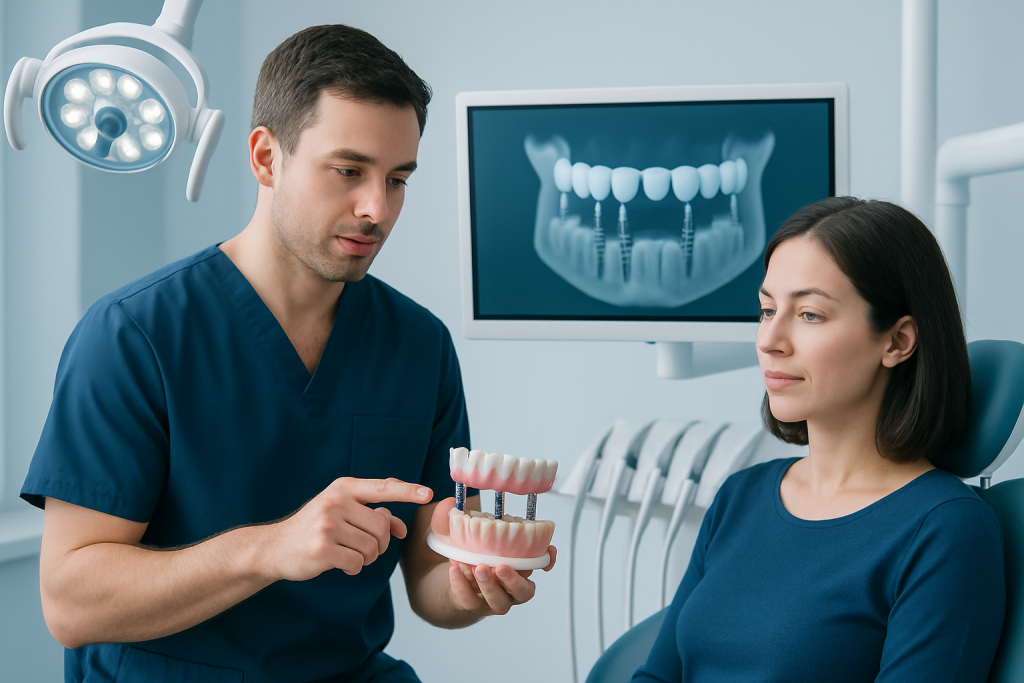
All-on-4 and All-on-6 are both used when multiple teeth in one arch are missing, badly damaged, or no longer restorable. Instead of replacing each tooth one by one, the dentist places strategically positioned implants into the jaw and attaches a full bridge on top. In many cases, this can restore chewing, speech, and appearance with fewer implants than a fully individual replacement approach.
The implant placement is carefully planned to use available bone efficiently. In All-on-4, two implants are typically placed toward the front and two are angled farther back to make use of stronger bone areas. All-on-6 follows the same principle but adds two more implants, which may spread chewing forces more widely across the jaw.
Neither option is simply “better” in every situation. The right choice depends on whether the jaw can support the planned implants safely, how much stability is needed, and whether the person’s bite or bone condition suggests that added support would be beneficial.
How the two options differ in everyday terms

The most visible difference is the number of implants, but that number reflects more than a technical detail. More implants can sometimes mean better distribution of force, especially in people with stronger bites, longer spans of missing teeth, or bone that is present but not ideal in shape. In other cases, four well-placed implants can provide enough support without adding unnecessary complexity.
All-on-6 may offer a wider safety margin in certain clinical situations, but it also requires enough space, bone, and planning to place six implants appropriately. The jaw anatomy must allow the implants to be positioned in a way that avoids important structures and achieves long-term stability. If the available bone is limited in key areas, a surgeon may still recommend All-on-4, bone grafting, or another approach instead of forcing six implants into a compromise plan.
Budget is often part of the conversation, but it should be considered alongside maintenance and predictability. A treatment that appears simpler on paper may become more expensive later if it does not match the person’s anatomy or chewing demands. The most practical plan is usually the one that balances support, healing, and realistic long-term care.
Who may be a candidate
People who have lost most or all teeth in an arch are common candidates for both options, especially if they want a fixed alternative to removable dentures. Many patients appreciate the ability to speak and chew with more confidence, as well as the feeling of having teeth that stay in place.
Eligibility depends on more than the number of missing teeth. A dentist or oral surgeon will assess bone volume, gum health, bite alignment, oral hygiene habits, medical history, and risk factors such as smoking or uncontrolled diabetes. Some patients with significant bone loss may still be candidates, but they may need additional planning, staged treatment, or preliminary procedures first.
People should also think about their own recovery logistics. International patients, for example, may need to coordinate imaging, surgery, temporary teeth, follow-up checks, and the timing of return travel. A good treatment plan should fit not only the mouth, but also the patient’s life after treatment.
Diagnosis and treatment planning
The evaluation usually begins with a dental exam, digital imaging, and a conversation about goals. Cone-beam CT scans are often used to map bone height, bone width, and nearby anatomical structures. This helps the team decide whether four implants are enough or whether six would improve support, or whether another approach is needed altogether.
Planning also includes a review of the person’s medical history and current medications. Conditions that affect healing, gum disease, past implant problems, or habits such as teeth grinding can influence the treatment design. In some cases, the dentist may recommend treating active infection, improving oral hygiene, or stabilizing medical issues before moving forward.
For patients traveling from another country, this planning stage is especially valuable. A clear scan-based roadmap helps the team explain what can be done in one visit, what requires a second stage, and what type of temporary restoration may be appropriate during healing.
Treatment process and recovery
Although each case is individualized, the process often includes implant placement followed by a period of healing. Some patients receive a temporary fixed bridge soon after surgery, while the final bridge is placed later once the implants have integrated with the bone. This timing depends on bone quality, stability at placement, and the surgeon’s clinical judgment.
Recovery is usually managed with soft foods, careful cleaning, and follow-up visits. Mild swelling, soreness, and temporary eating limits are expected after surgery, but they typically improve as healing progresses. Patients are usually instructed to avoid heavy pressure on the new teeth until the dental team confirms that the implants are stable enough for regular function.
Follow-up matters just as much as surgery itself. The implants and bridge should be checked for fit, cleanliness, bite balance, and tissue health. For international patients, this may require planning a return visit or arranging local follow-up with clear instructions from the treating team.
Prevention, maintenance, and self-care
Long-term success depends on daily care. Even though the bridge is fixed, the gums and implants still need thorough cleaning to help prevent inflammation around the implants. A dentist may recommend special brushes, flossing tools, water flossers, or other cleaning aids to reach under and around the bridge.
Protecting the implants also means supporting the rest of the body. Smoking can make healing more difficult and may affect implant outcomes. Uncontrolled blood sugar, untreated gum disease, and persistent teeth grinding can also increase risk. If bruxism is present, a night guard may be suggested to reduce excessive forces on the restoration.
- Brush twice daily with a soft brush and recommended technique.
- Clean beneath the bridge as instructed by the dental team.
- Keep all review appointments, even if the teeth feel comfortable.
- Avoid using the teeth to open packaging or bite hard non-food objects.
- Report looseness, discomfort, or gum changes early.
These habits matter because implants are not “set and forget” devices. Good maintenance helps protect both the implants and the surrounding tissues over time.
When to see a doctor
A dental consultation is appropriate for anyone who has lost multiple teeth, struggles with unstable dentures, or wants to understand whether a fixed full-mouth solution is possible. A professional exam is the only way to know whether All-on-4, All-on-6, grafting, or another plan is the best fit.
People should seek prompt evaluation if they notice swelling, persistent pain, bleeding gums around existing implants, loose prosthetic parts, difficulty chewing, or changes in how the bite feels. These symptoms do not always mean a serious problem, but they do deserve attention before a small issue becomes more complicated.
For patients considering treatment abroad, it is wise to contact the dental team early and ask what scans, records, and medical information are needed. Acibadem Health Point’s multidisciplinary specialists and JCI-accredited hospitals can diagnose and treat this condition for international patients, with planning designed to support both the procedure and the follow-up journey.
Choosing between All-on-4 and All-on-6
The decision often comes down to a blend of anatomy, function, and practicality. All-on-4 may be sufficient when bone is limited in certain areas but can still support a well-planned fixed bridge. All-on-6 may be preferred when the jaw can accommodate more implants and the team wants broader load distribution for added support.
Budget matters, but it should be weighed against the expected durability of the plan, the amount of surgery involved, and the likelihood of future adjustments. A lower upfront option is not always the most economical if it does not align with the mouth’s structure or the patient’s bite forces. Likewise, a more extensive plan is not always necessary if four implants already provide a stable and predictable result.
The most useful question is not “Which one is better?” but “Which one is appropriate for this mouth, this bite, and this life situation?” A careful consultation can usually answer that with far more confidence than a generic comparison chart.
Frequently asked questions
Is All-on-6 always more stable than All-on-4?
Not always. Six implants can spread chewing forces across more support points, but stability also depends on implant position, bone quality, bite forces, and how well the restoration is planned. In some mouths, four implants are already enough for a secure result.
Which option is better for limited bone?
Limited bone does not automatically mean one treatment is best. All-on-4 is often designed to work efficiently with available bone, but some patients may still need grafting or another plan. A scan-based assessment is the best way to decide.
Can someone switch from dentures to these implant solutions?
Yes, many people move from removable dentures to a fixed implant-supported bridge. The dentist first checks whether the jaw can support implants safely and whether any gum or bone treatment is needed before surgery.
How long does recovery take?
Initial healing usually takes several weeks, but the full process can take longer as the implants integrate with the bone and the final bridge is made. The exact timeline depends on the individual treatment plan and whether temporary teeth are used.
Do All-on-4 and All-on-6 need special cleaning?
Yes. The bridge and the tissues around the implants need daily cleaning, often with tools designed to reach under the restoration. Regular professional checkups are also important because healthy-looking gums can still develop inflammation if plaque builds up.
Is one option more expensive because it uses more implants?
Usually, more implants can mean a higher overall treatment cost, but pricing also depends on imaging, surgery complexity, materials, temporary teeth, and whether extra procedures are needed. It is best to ask for a full treatment plan rather than comparing only the number of implants.
References
- American Dental Association
- American Academy of Implant Dentistry
- Mayo Clinic
- Cleveland Clinic
- National Institute of Dental and Craniofacial Research
This article is for general information only and is not a substitute for professional medical advice. Please consult a qualified doctor about your individual situation.