When Your Knee Pops and Hurts: Causes and Care
When a knee pops and hurts, the sound itself is not always a sign of damage, but pain suggests the joint or surrounding tissues may be irritated or injured. The pattern of symptoms—especially swelling, locking, giving way, or symptoms after a twist or fall—helps determine whether medical assessment is needed.
What it can mean when a knee pops and hurts
A knee that pops and hurts may be reacting to a minor movement-related irritation, but it can also signal an injury inside or around the joint. The knee contains bones, cartilage, ligaments, tendons, muscles, and fluid-filled tissue spaces. A sound can occur when these structures move, when tiny gas bubbles shift within joint fluid, or when joint surfaces glide over one another.
Many people notice clicking, cracking, or popping when squatting, climbing stairs, standing from a chair, or exercising. If there is no pain, swelling, weakness, or limitation in movement, these sounds are commonly not concerning. However, a new or painful pop deserves attention, particularly if it started after a twist, awkward landing, direct blow, or sudden increase in activity.
The sound alone cannot diagnose a condition. It is more useful to consider when it happens, where the pain is felt, whether the knee swells, and whether the knee catches, locks, or feels unstable. A qualified clinician can assess these features and help distinguish a temporary problem from a condition needing treatment.
Patterns of symptoms that offer useful clues
Pain at the front of the knee, especially with stairs, squatting, running, or prolonged sitting, may relate to the way the kneecap moves in its groove. This can be associated with muscle weakness, changes in training, footwear, or alignment. A grinding or crackling feeling behind the kneecap may occur along with this type of pain.
Pain along the inner or outer joint line after a twisting event can occur with a meniscus injury. The menisci are rubbery cartilage pads that help distribute load across the knee. Some people describe catching, a sharp pain with rotation, or difficulty fully straightening the knee. Not every click indicates a meniscus tear, but persistent mechanical symptoms should be checked.
A loud pop at the time of an injury followed by rapid swelling, instability, or difficulty continuing activity may occur with a ligament injury, including an anterior cruciate ligament injury. Pain and swelling directly over the front of the knee after kneeling or impact may have other causes, such as tendon or bursa irritation.
- Crackling with gradual stiffness: may occur with cartilage changes or osteoarthritis.
- Popping during activity with soreness afterward: may reflect overuse or tendon irritation.
- Giving way: can result from pain-related muscle inhibition, kneecap instability, or ligament injury.
- True locking: means the knee cannot fully bend or straighten and should be medically assessed.
Common causes of painful knee popping

Overuse is a frequent explanation, particularly after starting a new exercise program, increasing running distance, changing training surfaces, or returning to sport after time away. Repeated loading can irritate tendons and tissues around the kneecap. Weakness or reduced control in the hip and thigh muscles may also alter how forces travel through the knee.
Patellofemoral pain, often called pain around or behind the kneecap, is common in active people and can also affect those who spend long periods sitting. Tendon problems, such as patellar tendon irritation, may cause pain below the kneecap that is worse with jumping, running, or stairs. These conditions often improve with tailored activity modification and rehabilitation.
Injury to the meniscus, ligaments, or kneecap stabilizers is more likely after a clear traumatic event. Cartilage can also be affected by injury or gradual wear. Osteoarthritis may cause activity-related pain, stiffness after rest, reduced motion, and crepitus—a crackling or grinding sensation. Learn more about knee osteoarthritis when symptoms are gradual and persistent.
Less commonly, infection, inflammatory arthritis, gout, or another medical condition can cause a painful swollen knee. These causes are important to identify because they may need urgent or specific treatment. A hot, red, markedly swollen knee or fever should not be managed with home care alone.
How clinicians assess a painful popping knee
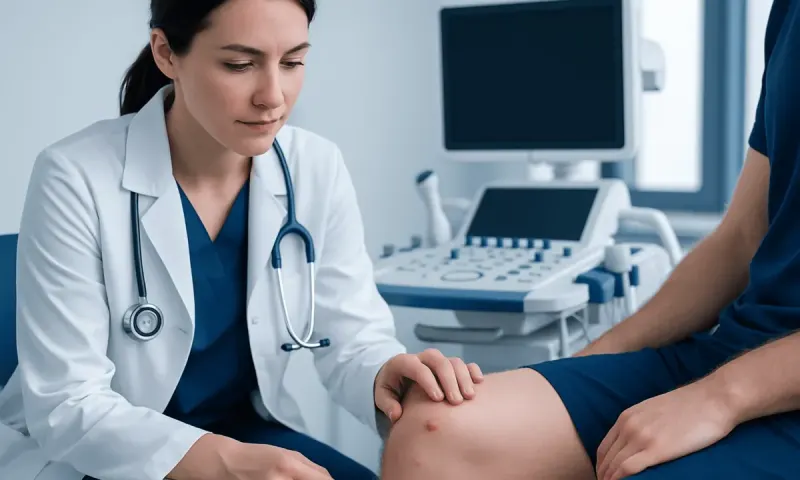
Assessment usually begins with questions about the onset of symptoms. A clinician may ask whether there was a fall, twist, pop during sport, recent training change, previous injury, fever, or other joint symptoms. Details such as swelling timing, exact pain location, and whether the knee locks or gives way can be especially informative.
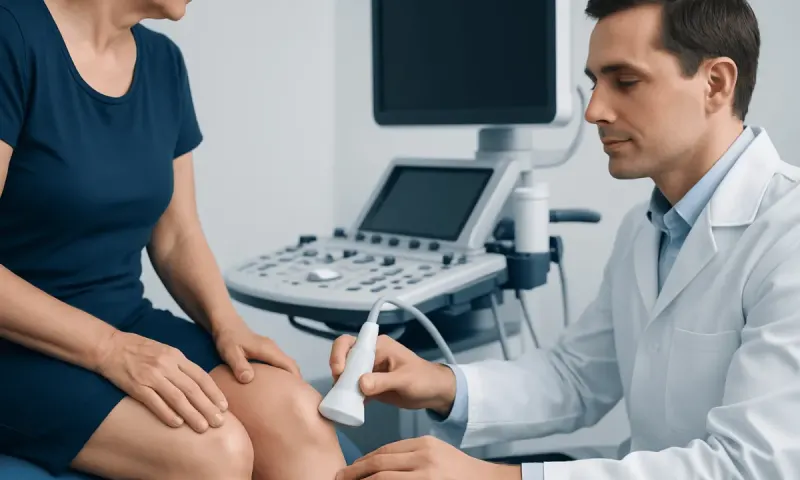
During the examination, the clinician checks walking, knee alignment, range of motion, tenderness, swelling, kneecap movement, muscle strength, and joint stability. Certain gentle maneuvers may help assess the meniscus and ligaments. The examination is considered together with the person’s symptoms; no single test is perfect on its own.
Imaging is not necessary for every painful knee. X-rays may be useful after some injuries or when arthritis or bone changes are suspected. Magnetic resonance imaging (MRI) can provide more detail about soft tissues such as the meniscus, cartilage, tendons, and ligaments when the result is likely to affect management. Blood tests or joint-fluid testing may be considered if infection or inflammatory disease is a concern.
Treatment options depend on the cause
Treatment is based on the diagnosis, symptom severity, activity needs, and overall health. For many non-serious overuse problems, a period of relative rest is helpful. This means reducing or changing activities that provoke pain while maintaining comfortable movement and, when appropriate, choosing lower-impact exercise such as swimming or cycling.
Physical therapy is often central to recovery. A program may improve strength in the thigh, hip, and core muscles, restore movement, and address balance and movement patterns. Gradual progression is important: returning too quickly to running, jumping, deep squats, or pivoting sports can prolong symptoms. Clinicians may also discuss temporary bracing, taping, or other supports for selected conditions.
Cold packs may relieve pain and swelling after activity or a recent minor injury. Non-prescription pain medicines may be suitable for some people, but choices should be discussed with a pharmacist or clinician, especially for people with kidney disease, stomach ulcers, bleeding risks, heart disease, pregnancy, or regular medication use. For persistent tendon or joint problems, structured physical therapy and rehabilitation can support safe recovery.
Some tears, fractures, major ligament injuries, or conditions causing persistent locking or instability may require specialist care and, in selected cases, surgery. Procedures are not the first choice for every knee problem. The goal is to use the least invasive effective approach while restoring comfortable function and protecting long-term joint health.
Self-care and prevention for minor symptoms
For mild pain without a significant injury, it can help to pause the activity that triggers symptoms for several days and avoid forcing the knee through painful movements. Gentle range-of-motion exercises may help prevent stiffness if they do not increase pain. A cold pack wrapped in cloth can be applied for short intervals; it should not be placed directly on the skin.
As symptoms settle, gradual strengthening and conditioning can reduce the chance of recurrence. Exercises should focus on good technique and should not cause sharp pain, marked swelling, or a worsening limp. Increasing training volume or intensity in small steps, allowing recovery days, and using appropriate footwear for the activity may also reduce overload.
Maintaining a body weight that is appropriate for the individual can lessen load on the knees, particularly during walking and stair climbing. Sleep, balanced nutrition, and management of long-term health conditions also support recovery. A clinician or physiotherapist can provide individual guidance when symptoms keep returning or when a person is unsure which activities are safe.
When to seek medical care
Prompt medical evaluation is advisable after a significant knee injury, particularly if there is a loud pop followed by rapid swelling, visible deformity, inability to bear weight, severe pain, numbness, or a feeling that the knee is unstable. Urgent assessment is also important if the knee is hot, red, very swollen, or accompanied by fever or feeling unwell, as these symptoms can indicate infection or inflammation.
A routine appointment is appropriate when pain lasts more than a few weeks, repeatedly returns, limits work, sleep, walking, or exercise, or is associated with recurrent swelling, catching, locking, or giving way. Early assessment can clarify the cause and support a plan that fits the individual’s goals.
Acıbadem Health Point’s multidisciplinary specialists and JCI-accredited hospitals diagnose and treat knee conditions for international patients. They can coordinate orthopedic assessment and rehabilitation when symptoms require further evaluation.
Frequently asked questions
01Is it normal for a knee to pop and hurt?
Knee popping can be normal, particularly if it is painless and there is no swelling or loss of movement. When popping is painful, new, persistent, or follows an injury, it may reflect irritation or damage involving the kneecap, tendons, cartilage, meniscus, or ligaments. A clinician can assess the pattern and determine whether testing is needed.
02Why does my knee pop when I squat?
Squatting places pressure through the kneecap and joint surfaces, so clicking or crackling may become more noticeable. Painless sounds are often harmless. Pain with squatting can be related to kneecap pain, tendon irritation, muscle weakness, technique, or joint changes and is worth evaluating if it continues.
03Does a popping sound mean a ligament tear?
No. A popping sound alone does not prove a ligament tear. However, a pop during a twist or landing followed by rapid swelling, instability, or inability to continue activity can occur with a significant ligament injury and should be assessed promptly.
04Can a meniscus tear cause popping and pain?
Yes, a meniscus tear may cause pain, clicking, catching, or a sensation that the knee is stuck, especially after twisting. Symptoms vary, and similar complaints can have other causes. A physical examination and sometimes MRI can help confirm whether the meniscus is involved.
05Should I exercise if my knee pops and hurts?
It is generally sensible to stop or modify movements that cause sharp pain, swelling, or a sense of instability. Low-impact movement may be possible for some people, but the safest choice depends on the cause. A physiotherapist or doctor can advise on a gradual return to activity.
06When is knee pain an emergency?
Urgent care is needed for a deformed knee, inability to bear weight after an injury, severe or rapidly worsening swelling, or a knee that is hot and red with fever. Seek prompt evaluation as well if the joint locks completely or there is numbness, a cold foot, or worsening weakness.
This article is for general information only and is not a substitute for professional medical advice. Please consult a qualified doctor about your individual situation.
Persistent digestive symptoms? Get evaluated in Turkey
JCI-accredited · board-certified surgeons · reply within 24h
Add us as a Preferred Source to see more of our trusted health content across Google Search, AI Overviews and Discover.