Tumor Inside Throat: Diagnosis, Outlook and Treatment

A tumor inside the throat may be benign or cancerous, and symptoms such as persistent hoarseness, swallowing difficulty, a neck lump, or unexplained weight loss should be assessed by an ENT specialist. Outlook and treatment depend on the tumor’s exact location, type, size, spread, and a person’s overall health.
What a Tumor Inside the Throat Can Mean
A tumor inside the throat is an abnormal growth affecting structures involved in breathing, swallowing, or speaking. The term “throat” can refer to the pharynx (the passage behind the nose and mouth), the larynx or voice box, the tonsil area, the base of the tongue, or, less commonly, the trachea (windpipe). A growth may be benign, meaning noncancerous, or malignant, meaning cancerous.
Because these areas are close together, symptoms can overlap. A person may notice persistent throat pain, a changed voice, a feeling that something is stuck, difficulty swallowing, a neck lump, or breathing changes. Many of these symptoms are also caused by infections, reflux, allergies, or voice strain, but symptoms that do not settle should not be assumed to be harmless.
The outlook is not determined by the word “tumor” alone. Clinicians need to establish the exact site, cell type, and stage before discussing likely treatment and prognosis. Early assessment can help preserve important functions such as speech, swallowing, and breathing while addressing the underlying cause.
Symptoms and When to Seek Medical Care
Symptoms of a tumor inside the throat differ according to its location. Laryngeal tumors often cause hoarseness or a persistent voice change. Tumors in the pharynx or tonsil region may cause pain when swallowing, one-sided throat discomfort, ear pain without an ear infection, or a feeling of obstruction. A neck lump can occur when nearby lymph nodes are enlarged.
- Hoarseness lasting more than two to three weeks
- Difficulty or pain when swallowing
- A persistent sore throat or unexplained ear pain
- A lump in the neck, mouth, or throat
- Unexplained weight loss, ongoing cough, or coughing blood
- Noisy breathing, shortness of breath, or a worsening feeling of airway blockage
When to seek medical care: A person should arrange a medical review promptly for persistent symptoms, particularly a new neck lump, ongoing hoarseness, or swallowing difficulty. Emergency care is needed for significant trouble breathing, severe choking, rapidly increasing neck swelling, or coughing a substantial amount of blood.
Causes and Risk Factors

Some throat tumors are benign growths, such as papillomas, cysts, or certain nerve-related tumors. Cancerous tumors most often arise from the lining cells of the throat and are commonly squamous cell carcinomas. The factors associated with cancer differ somewhat by site, and not everyone diagnosed has an identifiable risk factor.
Tobacco use and regular heavy alcohol intake increase the risk of several head and neck cancers, especially when combined. Infection with certain types of human papillomavirus (HPV) is associated with cancers of the oropharynx, including the tonsil and base-of-tongue region. Previous radiation exposure, occupational exposures, poor nutrition, and a weakened immune system may also be relevant in selected cases.
Tracheal cancer is rare and differs from more common throat cancers. It can develop from several cell types in the windpipe, and symptoms may initially resemble asthma or bronchitis. A careful specialist assessment is important when breathing symptoms persist or do not respond as expected to usual treatment.
How Doctors Diagnose a Throat Tumor
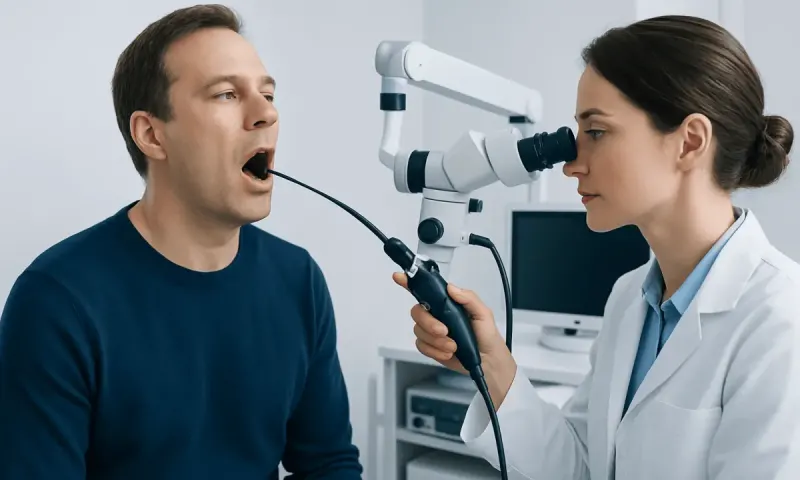
Assessment usually begins with a medical history and examination of the mouth, throat, neck, and voice. An ear, nose, and throat (ENT) specialist may use flexible laryngoscopy: a slim camera passed gently through the nose to view the throat, voice box, and upper airway. This examination can often be performed in the clinic.
If a suspicious area is found, a biopsy is needed to confirm whether cancer is present and identify the cell type. A biopsy may be collected during endoscopy under anesthesia, depending on the site. For certain oropharyngeal cancers, laboratory testing may include HPV-related markers because they can influence staging and treatment discussions.
CT, MRI, PET-CT, ultrasound, and chest imaging may be used to define the extent of disease and check lymph nodes or other areas. The results are reviewed by a multidisciplinary team, which may include ENT and head-and-neck surgeons, oncologists, radiation oncologists, radiologists, pathologists, speech and swallowing therapists, and dietitians.
Modern Treatment Approaches
Treatment is personalized according to the tumor’s location, type, stage, molecular features where relevant, a person’s health, and their priorities for speech and swallowing. Benign tumors may only need observation, removal, or treatment of an underlying contributing condition. Cancer treatment is planned with the aim of cure when feasible, while maintaining function and quality of life.
Early cancers may be treated with surgery or radiotherapy alone. Surgical approaches can include endoscopic techniques through the mouth or more extensive procedures when required. Radiotherapy uses carefully planned high-energy radiation to target cancer cells. Radiotherapy treatment may be used as a primary treatment, after surgery, or to relieve symptoms in advanced disease.
For locally advanced throat cancer, treatment may involve chemoradiotherapy, surgery followed by additional therapy, or selected combinations of systemic treatment and radiation. Chemotherapy and immunotherapy may be used in recurrent or metastatic disease, depending on tumor characteristics and previous treatment. Nutrition, pain management, dental care, speech therapy, and swallowing rehabilitation are important parts of treatment, not secondary concerns.
Acıbadem Health Point’s multidisciplinary specialists in JCI-accredited hospitals diagnose and treat head and neck tumors for international patients, with treatment planning based on individual clinical findings.
How Serious Is Throat Cancer?
Throat cancer can be serious because it may affect breathing, swallowing, speech, nutrition, and nearby lymph nodes. However, seriousness varies greatly. A small tumor found early may be highly treatable, while a larger tumor that has spread to lymph nodes or distant organs generally requires more intensive treatment and may have a less favorable outlook.
The precise location matters. Cancers of the larynx, hypopharynx, oropharynx, and nasopharynx behave differently and are staged differently. In some oropharyngeal cancers, HPV-associated disease has a better average treatment response than similar cancers not linked to HPV, although it still requires specialist care.
It is important to avoid applying a general prognosis to an individual. The care team can explain the stage, treatment goals, likely side effects, and factors that influence outlook after pathology and imaging results are available. Information about throat cancer can also help patients understand the broad categories of disease and treatment.
What Is the Life Expectancy for Someone With Tracheal Cancer?
There is no single life-expectancy figure for tracheal cancer. Primary tracheal cancers are uncommon, and outcomes depend strongly on the exact tumor type, whether it can be completely removed, the degree of airway involvement, whether lymph nodes or distant sites are affected, and the person’s overall health.
Some tracheal tumors grow slowly, while others are more aggressive. When disease is localized and surgery is possible, treatment may offer long-term disease control or cure for some people. When complete removal is not possible, radiotherapy, systemic treatment, airway procedures, and supportive care may still improve breathing, symptoms, and quality of life.
Published outcomes are often difficult to compare because tracheal cancer is rare and includes different tumor types. A specialist team should interpret imaging and biopsy findings before discussing individual expectations. Prognosis is best considered as a personalized discussion rather than a prediction based on one average number.
What Is the Survival Rate for Throat Cancer by Age?
Survival rates for throat cancer are not best understood by age alone. National cancer registries may report outcomes by broad age groups, but these averages combine different throat sites, stages, treatments, and health backgrounds. They cannot predict what will happen for one person.
Younger adults may, on average, have fewer other medical conditions and may tolerate intensive treatment differently. Older adults can also benefit from curative treatment when they are otherwise fit, but decisions may need to account for heart, lung, kidney, nutritional, hearing, or mobility issues as well as personal preferences.
Stage at diagnosis, tumor site, HPV status in applicable cancers, smoking status, treatment response, and access to experienced multidisciplinary care often have a greater influence on outcome than chronological age alone. A clinician can place age in context after reviewing the full diagnosis.
How Long Can You Live With Stage 4 Throat Cancer Without Treatment?
It is not possible to give a reliable timeframe for untreated stage 4 throat cancer. “Stage 4” covers a broad range of disease, including some tumors that are advanced locally but have not spread to distant organs, as well as cancers that have metastasized. The growth rate, location, airway involvement, nutrition, and other health conditions all affect what happens next.
Without cancer-directed treatment, symptoms and complications may progress over weeks to months or sometimes longer, but the course is unpredictable. Problems can include increasing pain, swallowing difficulty, weight loss, infection, bleeding, airway narrowing, or spread to other parts of the body. A treating specialist should be contacted quickly if treatment is being delayed because symptoms can sometimes be managed while decisions are being made.
Choosing not to have curative treatment does not mean care ends. Palliative care can provide expert help with pain, breathlessness, nutrition, swallowing, emotional support, and practical planning at any stage. It can be provided alongside cancer treatment or as the main focus of care when that aligns with the person’s goals.
Frequently asked questions
01Can a tumor inside the throat be benign?
Yes. Some throat tumors are noncancerous, including certain cysts, papillomas, and nerve-related growths. Even a benign tumor can affect breathing, swallowing, or voice depending on its size and location, so specialist assessment is still important.
02What tests confirm whether a throat tumor is cancer?
A biopsy is the test that confirms whether a suspicious growth is cancerous and identifies its cell type. Doctors usually combine biopsy findings with an ENT examination and imaging such as CT, MRI, or PET-CT to determine the extent of disease.
03Is persistent hoarseness always a sign of throat cancer?
No. Hoarseness is commonly caused by viral infections, reflux, allergies, smoking-related irritation, or vocal strain. However, a voice change that lasts more than two to three weeks, especially in a person who smokes or has other symptoms, should be evaluated.
04Can throat cancer be cured?
Many throat cancers can be treated with curative intent, particularly when found before distant spread. The chance of cure depends on the tumor site, stage, biology, and response to treatment, so an individual prognosis requires a specialist review.
05Will treatment affect swallowing or speech?
Treatment can affect swallowing, taste, saliva production, speech, or voice, although the effects vary with the tumor location and treatment type. Speech and language therapists, swallowing specialists, dietitians, and dental teams can help prevent and manage these effects.
06Does HPV-related throat cancer have a different outlook?
Certain HPV-related cancers of the oropharynx often have a better average response to treatment than comparable HPV-negative tumors. HPV status is only one part of prognosis, and treatment planning still depends on stage, health, smoking history, and other clinical factors.
This article is for general information only and is not a substitute for professional medical advice. Please consult a qualified doctor about your individual situation.
Medical weight-loss options in Turkey — costs & eligibility
JCI-accredited · board-certified surgeons · reply within 24h
Add us as a Preferred Source to see more of our trusted health content across Google Search, AI Overviews and Discover.