Non Small Cell Tumor: Diagnosis, Outlook, and Modern Treatment Approaches
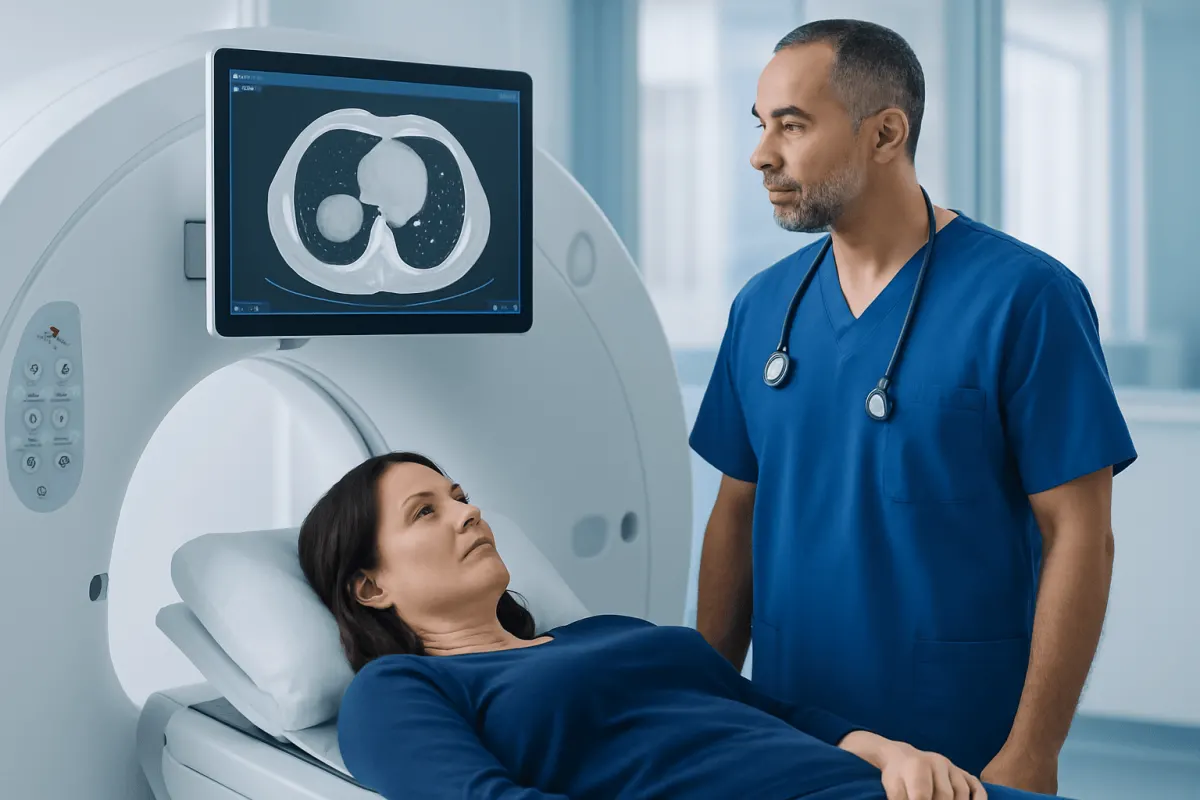
A non small cell tumor usually refers to non-small cell lung cancer (NSCLC), a group of lung cancers that tend to grow and spread more slowly than small-cell lung cancer. Treatment and outlook depend mainly on the cancer stage, tumor subtype, molecular test results, and the person's general health.
Overview: what is a non small cell tumor?
A non small cell tumor commonly means non-small cell lung cancer (NSCLC). It begins when cells in the lung develop changes that allow them to grow out of control. NSCLC accounts for most lung cancers and is different from small-cell lung cancer in its cell appearance, typical behavior, and treatment approach.
The main types are adenocarcinoma, squamous cell carcinoma, and large-cell carcinoma. They can occur in different parts of the lung and may cause similar symptoms, but their pathology and genetic features can differ. This is why a precise tissue diagnosis and tumor testing are important before treatment begins.
NSCLC may be localized to the lung, spread to nearby lymph nodes, or travel to distant organs. Care is planned by stage, rather than by the tumor name alone. A multidisciplinary team may include lung specialists, thoracic surgeons, medical oncologists, radiation oncologists, pathologists, radiologists, and supportive-care professionals.
Symptoms and how non-small cell lung cancer is found
Early non-small cell lung cancer does not always cause symptoms. Some tumors are found unexpectedly on imaging performed for another reason or through lung cancer screening in people who meet national eligibility criteria. Screening is typically performed with low-dose CT, not a standard chest X-ray.
When symptoms occur, they can include a cough that persists or changes, chest discomfort, shortness of breath, wheezing, hoarseness, recurrent chest infections, fatigue, reduced appetite, or unintended weight loss. Coughing up blood, even a small amount, needs prompt medical assessment.
These symptoms can also result from many noncancerous conditions, including infection, asthma, chronic obstructive pulmonary disease, or reflux. Their presence does not confirm cancer, but ongoing or worsening symptoms deserve evaluation so that the cause can be identified.
- New or persistent cough
- Unexplained breathlessness or chest pain
- Repeated bronchitis or pneumonia
- Unintentional weight loss or continuing fatigue
- Blood in mucus when coughing
Causes and risk factors
Smoking tobacco is the strongest preventable risk factor for non-small cell lung cancer. Risk rises with the amount and duration of exposure, but lung cancer can also develop in people who have never smoked. Stopping smoking at any age can improve health and may reduce future cancer risk.
Secondhand smoke, radon exposure, workplace carcinogens such as asbestos or diesel exhaust, air pollution, and previous chest radiation may also contribute. A personal or family history of lung cancer and certain chronic lung diseases can be relevant, although most people with a risk factor will not develop lung cancer.
No single exposure explains every case. For this reason, people should not blame themselves for a diagnosis. Clinicians focus on determining the tumor’s type and extent, treating it appropriately, and supporting physical and emotional wellbeing throughout care.
Diagnosis, staging, and tumor biomarker testing
Diagnosis usually begins with imaging, often a chest CT scan. If a suspicious area is seen, clinicians may use further imaging such as PET-CT and brain imaging to assess whether cancer has spread. A biopsy is needed to confirm the diagnosis and identify the exact tumor type.
A biopsy may be obtained with bronchoscopy, an ultrasound-guided needle procedure, CT-guided needle biopsy, surgery, or by sampling an affected lymph node. The pathology laboratory examines the cells under a microscope. In some situations, blood-based testing may provide additional information, but it does not always replace a tissue biopsy.
Staging describes the tumor size, whether nearby lymph nodes contain cancer, and whether cancer has spread elsewhere. In NSCLC, stages generally range from I to IV. Earlier stages are confined to the lung or nearby areas, while stage IV means there is distant spread.
Advanced NSCLC should also undergo biomarker testing when enough tissue is available. Tests may look for changes in genes such as EGFR, ALK, ROS1, BRAF, KRAS, MET, RET, NTRK, or HER2, as well as PD-L1 protein expression. Results can identify patients who may benefit from a targeted medicine or immunotherapy.
Treatment options and modern treatment approaches
Treatment is individualized. For some stage I or II tumors, surgery to remove the cancer offers the main chance of cure. The operation may remove a segment of lung, a lobe, or, less commonly, an entire lung. Lymph nodes are usually assessed during surgery to provide accurate staging.
Radiation therapy can be used when surgery is not suitable, after surgery in selected situations, or together with chemotherapy for some locally advanced cancers. Highly focused radiation, including stereotactic body radiation therapy, may be an option for certain small, early tumors in people who cannot have surgery.
Chemotherapy may be given before surgery, after surgery, with radiation, or for cancer that has spread. The choice depends on stage, the goal of treatment, tumor features, kidney and liver function, and a person’s preferences and overall health.
For many advanced tumors, biomarker results guide systemic treatment. Targeted therapies act on particular cancer-driving alterations, while immunotherapy helps the immune system recognize and attack cancer cells. These treatments can be used alone or with chemotherapy in appropriate circumstances, and doctors monitor closely for side effects and response.
What are the new treatments for non-small cell lung cancer?
Newer treatments for non-small cell lung cancer are increasingly based on the biology of an individual tumor. Targeted therapies can block specific cancer-driving gene changes, and newer options continue to be developed for a growing range of alterations. This makes comprehensive biomarker testing important, especially for advanced adenocarcinoma and for selected other NSCLC cases.
Immunotherapy is another major advance. Medicines known as immune checkpoint inhibitors may be used before or after surgery for certain earlier-stage cancers, with chemotherapy and radiation for some stage III cancers, or as part of treatment for metastatic disease. Whether it is suitable depends on the clinical situation, PD-L1 results, molecular findings, and potential risks.
Research is also evaluating new targeted drug combinations, antibody-drug conjugates, vaccines, cellular approaches, and treatments designed to overcome drug resistance. A clinical trial may be an option for some people, particularly when standard treatments have not worked or a rare molecular alteration is present. Trial eligibility should be discussed with the oncology team.
Is non-small cell carcinoma curable?
Non-small cell carcinoma can be curable when it is found at an early stage and all cancer can be successfully treated, often with surgery or radiation. Depending on the pathology and stage, chemotherapy, immunotherapy, or targeted treatment may also be recommended before or after local treatment to lower the risk of recurrence.
When NSCLC has spread to distant parts of the body, it is usually not considered curable with currently available standard treatments. However, modern systemic therapies can often control the disease for meaningful periods, relieve symptoms, and help many people maintain daily activities. Outcomes vary widely between individuals.
Prognosis cannot be accurately predicted from stage alone. It is influenced by tumor subtype, molecular features, response to treatment, other health conditions, and access to appropriate follow-up. The treating oncologist is best placed to explain what the diagnosis means in an individual situation.
What is non-small cell adenocarcinoma?
Non-small cell adenocarcinoma is the most common subtype of NSCLC. It develops from gland-forming cells, which are often located in the outer parts of the lung. It can occur in people who smoke and in people who have never smoked.
Adenocarcinoma is especially likely to be assessed for actionable genetic changes because these results may directly affect treatment choices. A tumor may have an EGFR mutation, an ALK rearrangement, or another alteration that can be targeted with a specific medicine. Not every adenocarcinoma has a targetable change.
The word adenocarcinoma describes how the cells look and behave under the microscope; it does not by itself determine the stage or outlook. Staging scans and pathology findings are needed to understand whether the cancer is localized or has spread.
Are you cancer free after a lobectomy?
A lobectomy removes one lobe of the lung and may remove all detectable cancer when a tumor is localized and completely excised. If the surgical margins and sampled lymph nodes show no cancer, the operation can be performed with curative intent. However, no operation can promise that cancer will never return.
Pathology results after surgery help the team determine whether additional treatment is needed. Some people may be advised to have chemotherapy, targeted therapy, immunotherapy, or radiation depending on their stage and tumor characteristics. Others may need surveillance alone.
Regular follow-up is important after a lobectomy. This usually includes clinical review and chest imaging at intervals determined by the care team. Follow-up also supports recovery, smoking cessation, rehabilitation, vaccination planning, and prompt assessment of new symptoms.
When to seek medical care
Medical advice should be sought for a cough that lasts several weeks, coughing up blood, unexplained weight loss, persistent chest pain, worsening breathlessness, or repeated chest infections. Urgent medical assessment is appropriate for severe difficulty breathing, significant bleeding when coughing, severe chest pain, or sudden new confusion or weakness.
People who have been diagnosed with NSCLC should contact their treatment team about new or worsening symptoms, treatment side effects, fever during chemotherapy, or any concern that feels difficult to manage. Early communication can help clinicians address complications and improve comfort.
Acıbadem Health Point’s multidisciplinary specialists and JCI-accredited hospitals diagnose and treat lung cancer for international patients, with care plans based on pathology, staging, and molecular results.
Frequently asked questions
01What is the difference between non-small cell and small-cell lung cancer?
Non-small cell lung cancer is a broad group that includes adenocarcinoma and squamous cell carcinoma. Small-cell lung cancer is less common, usually grows and spreads more quickly, and is typically treated with different combinations of chemotherapy, immunotherapy, and radiation.
02Can a non small cell tumor be removed with surgery?
Surgery may be suitable when the tumor is confined to the lung or nearby lymph nodes and a person is fit enough for an operation. The surgical team considers tumor location, lung function, stage, and overall health before recommending a procedure.
03Why is biomarker testing important in NSCLC?
Biomarker testing looks for genetic changes and proteins in the cancer that may guide treatment. Some results identify targeted medicines, while PD-L1 testing can help assess whether immunotherapy may have a role.
04Does every person with NSCLC need chemotherapy?
No. Chemotherapy is not required for every person with NSCLC. It may be recommended depending on the cancer stage, surgery results, tumor biology, and whether targeted therapy or immunotherapy is more appropriate.
05Can non-small cell lung cancer recur after treatment?
Yes, NSCLC can return after apparently successful treatment, which is why scheduled follow-up is important. The chance of recurrence depends on the original stage, pathology findings, and treatment received.
06Can people who never smoked develop non-small cell lung cancer?
Yes. Although smoking is the leading risk factor, NSCLC can occur in people who have never smoked. In these cases, tumor biomarker testing is particularly important because some cancers have treatable genetic alterations.
This article is for general information only and is not a substitute for professional medical advice. Please consult a qualified doctor about your individual situation.
Medical weight-loss options in Turkey — costs & eligibility
JCI-accredited · board-certified surgeons · reply within 24h
Add us as a Preferred Source to see more of our trusted health content across Google Search, AI Overviews and Discover.