Throat Tumor Diagnosis, Outlook, and Treatment Options
A throat tumor can be noncancerous or cancerous, and the outlook depends on its exact location, type, stage, and a person’s overall health. Early specialist assessment helps clarify the diagnosis and allows treatment to be planned with the goals of cure, disease control, and preservation of speech and swallowing whenever possible.
Throat tumor overview
A throat tumor is an abnormal growth in the throat or nearby structures. The term can describe a benign, or noncancerous, growth as well as a malignant growth, meaning cancer. In everyday use, people may use “throat cancer” to refer to cancers affecting the pharynx, larynx (voice box), tonsils, base of the tongue, or other parts of the head and neck.
The first priority is determining exactly where the tumor began and what its cells look like under a microscope. Most malignant throat tumors are squamous cell carcinomas, which begin in the thin cells lining the throat. However, other tumor types can occur, and benign conditions can sometimes cause similar symptoms.
Throat tumors are assessed by a multidisciplinary team that may include ear, nose and throat specialists, head and neck surgeons, medical oncologists, radiation oncologists, radiologists, pathologists, speech and swallowing therapists, and dental professionals. This coordinated approach helps balance cancer control with function, including breathing, voice, eating, and swallowing.
Symptoms and signs that may need assessment
Symptoms vary according to the tumor’s location. A tumor involving the larynx may cause persistent hoarseness or a change in voice. Tumors in the pharynx or tonsil region may cause pain or discomfort when swallowing, a persistent sore throat, a sensation that something is stuck in the throat, or ear pain without an ear infection.
Other possible signs include a lump in the neck, unexplained weight loss, coughing up blood, persistent cough, noisy breathing, or difficulty breathing. A painless neck lump can sometimes be the first noticeable sign because head and neck cancers may spread to nearby lymph nodes.
These symptoms are common and often have noncancerous explanations, such as infection, reflux, allergies, or vocal strain. Still, symptoms that persist, recur, or worsen deserve medical evaluation rather than self-treatment alone.
- Hoarseness lasting more than a few weeks
- Difficulty or pain with swallowing
- A new or enlarging neck lump
- Persistent throat pain or one-sided ear pain
- Unexplained weight loss, bleeding, or breathing difficulty
Causes and risk factors

Throat cancer develops when cells acquire genetic changes that allow them to grow abnormally. Tobacco use is a major risk factor, including cigarettes, cigars, pipes, and smokeless tobacco. Regular heavy alcohol use also raises risk, and tobacco plus alcohol has a stronger combined effect than either exposure alone.
Some throat cancers, especially certain tumors of the tonsils and base of the tongue, are linked to high-risk human papillomavirus (HPV) infection. HPV-related cancers often have different clinical features and may have a more favorable outlook than comparable cancers unrelated to HPV, although treatment planning still depends on the individual situation.
Additional factors can include increasing age, prior radiation exposure to the head and neck, poor nutrition, and occupational exposure to certain dusts or chemicals. Not everyone with risk factors develops cancer, and some people diagnosed with throat cancer have no obvious risk factor. A clinician can explain which factors may be relevant in an individual case.
How a throat tumor is diagnosed and staged
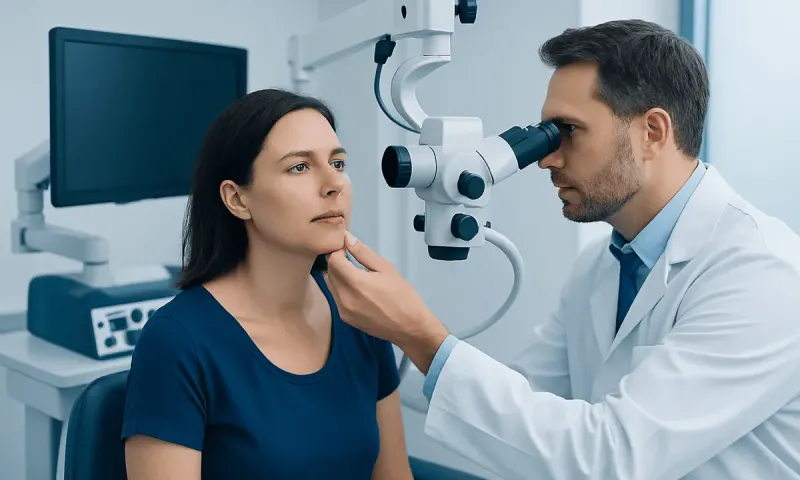
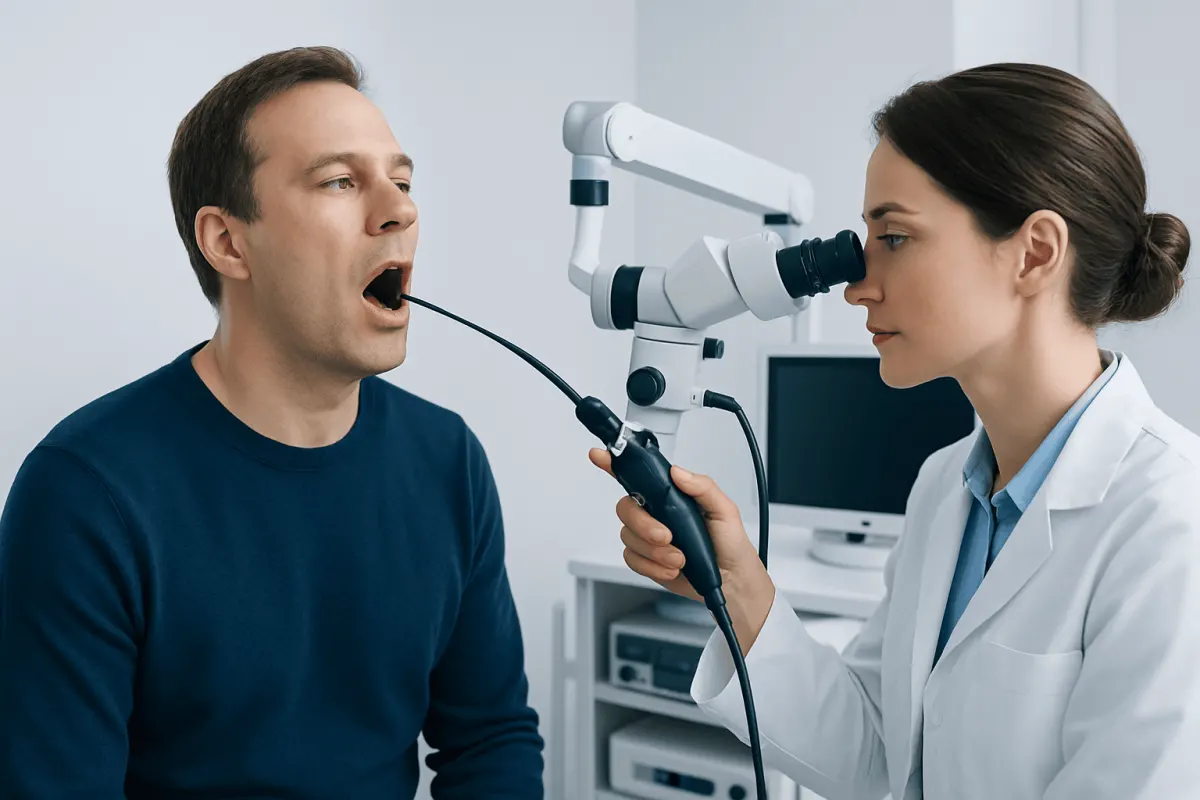
Assessment usually begins with a medical history and examination of the mouth, throat, neck, and voice. An ENT specialist may use a flexible nasendoscope, a thin camera passed gently through the nose, to view areas that cannot be seen clearly during a routine mouth examination.
If a suspicious area is found, a biopsy is needed to establish the diagnosis. This may be done in the clinic, through a needle biopsy of a neck lymph node, or during a procedure under anesthesia. Pathology testing identifies the tumor type and may include HPV-related testing when appropriate.
Imaging tests such as CT, MRI, PET-CT, ultrasound, or chest imaging help show the size of the tumor, whether lymph nodes are involved, and whether cancer has spread elsewhere. The results are used to assign a stage. Staging guides treatment choices, but it does not predict any one person’s outcome with certainty.
Before treatment, the team may also assess nutrition, dental health, hearing, speech, swallowing, and general fitness. These evaluations support safer treatment and help plan rehabilitation early.
What are the treatment options for a tumor in the throat?
Treatment depends on whether the tumor is benign or malignant, its site and stage, HPV status where relevant, previous treatment, and the person’s health and preferences. Benign tumors may be monitored, removed surgically, or treated according to their cause and symptoms. Cancer treatment is individualized and commonly uses one approach or a carefully planned combination.
Early-stage throat cancers may be treated with surgery or radiation therapy, often with the aim of curing the cancer while preserving voice and swallowing function. Selected tumors may be removed using minimally invasive approaches, including transoral techniques, when anatomy and tumor features allow. Larger or more advanced tumors may require combined radiation and chemotherapy, surgery followed by radiation or chemoradiotherapy, or other tailored approaches.
Surgery can involve removing the tumor and, when necessary, lymph nodes in the neck. Reconstructive surgery may help restore form and function after more extensive procedures. Robotic surgery can be considered for selected head and neck tumors when a specialist team determines that a transoral approach is suitable.
Supportive treatment is an important part of care. Speech and swallowing therapy, nutritional support, pain control, dental care, smoking cessation support, and rehabilitation can improve comfort, recovery, and long-term function.
What is the newest treatment for throat cancer?
There is no single newest treatment that is right for every throat cancer. Advances increasingly focus on selecting treatment based on the tumor’s biology, location, stage, and the person’s needs. For some recurrent or metastatic head and neck cancers, immunotherapy medicines that help the immune system recognize cancer cells have become an important treatment option.
Targeted therapies may also be used in specific circumstances, especially when cancer has returned or spread and treatment decisions are guided by previous therapies and overall health. Clinical trials continue to evaluate new immunotherapy combinations, targeted medicines, treatment sequencing, and ways to make radiation and surgery more precise.
Modern radiation planning techniques can shape radiation more closely around the tumor while limiting exposure to nearby healthy tissues. In selected situations, minimally invasive surgical methods may reduce the impact of treatment on swallowing or appearance. These approaches are not automatically better for every person; their suitability should be assessed by an experienced head and neck cancer team.
For cancers that have returned or spread, immunotherapy may be discussed alongside systemic treatment, palliative radiation, surgery in selected cases, and symptom-focused supportive care. The treatment plan should be reviewed regularly as symptoms, scan results, and treatment response change.
How successful is treatment for throat cancer?
Treatment for throat cancer can be highly successful, particularly when disease is diagnosed at an early stage and remains confined to its original site. Outcomes are influenced by the tumor’s location, size, lymph node involvement, spread to other organs, tumor biology, HPV status for oropharyngeal cancers, smoking history, response to treatment, and general health.
Population survival figures can provide broad context but cannot accurately predict what will happen for an individual. Different cancer registries may report outcomes differently, and statistics often describe people treated years earlier rather than the results achievable with current techniques. A treating specialist is best placed to discuss prognosis after reviewing pathology and staging results.
Successful care is not measured only by tumor control. Preserving or restoring the ability to communicate, swallow, breathe comfortably, maintain nutrition, and return to daily activities are also central goals. Ongoing follow-up helps identify recurrence early and addresses treatment effects such as dry mouth, voice changes, swallowing difficulty, thyroid problems, or dental concerns.
How long can you live with throat cancer with treatment?
Many people live for years after treatment for throat cancer, and some are cured. The likely outlook varies widely: early-stage cancers generally have a better prognosis than cancers that have spread to distant parts of the body, while many locally advanced cancers can still be treated with curative intent using combined therapy.
It is understandable to want a clear timeframe, but no doctor can reliably estimate survival from the diagnosis name alone. A meaningful discussion requires the exact cancer site, stage, biopsy findings, HPV status when relevant, treatment response, and a person’s other health conditions. Asking the oncology team about the aim of treatment—cure, long-term control, or symptom relief—can make prognosis discussions more practical and clear.
Even when a cancer cannot be cured, treatment can often slow its growth, relieve symptoms, and support quality of life. Palliative care can be introduced at any stage to help with pain, nutrition, fatigue, emotional wellbeing, and practical needs; it is not limited to end-of-life care.
When to seek medical care
Medical care should be sought promptly for a new neck lump, difficulty breathing, coughing up blood, or an inability to swallow fluids. Urgent evaluation is especially important if breathing is becoming noisy or labored, as swelling or a mass can occasionally affect the airway.
A person should arrange a non-emergency appointment with a doctor or ENT specialist for hoarseness, throat pain, swallowing problems, ear pain, or a neck swelling that lasts more than a few weeks. Earlier assessment is sensible for anyone with a history of tobacco use, heavy alcohol use, or previous head and neck cancer.
Reducing tobacco exposure, limiting alcohol, attending dental and medical checkups, and discussing HPV vaccination with an appropriate clinician can support prevention. After treatment, scheduled follow-up appointments should be kept even when a person feels well, because they monitor recovery and look for changes that may need attention.
Acıbadem Health Point’s multidisciplinary specialists and JCI-accredited hospitals evaluate and treat head and neck tumors for international patients, with care plans developed according to diagnosis, staging, and functional needs.
Frequently asked questions
01Is every throat tumor cancerous?
No. Some throat tumors are benign, meaning they are not cancerous, while others are malignant. A clinical examination and biopsy are often needed to determine the exact diagnosis.
02Can a throat tumor cause ear pain?
Yes. Pain from the throat can sometimes be felt in the ear because these areas share nerve pathways. Persistent one-sided ear pain, particularly with throat symptoms or a neck lump, should be assessed by a clinician.
03Can a throat tumor be seen during a regular examination?
Some tumors can be seen in the mouth or throat during an examination, but others are located deeper and cannot be viewed directly. An ENT specialist may use a flexible camera examination and imaging to inspect the area more fully.
04Does HPV cause all throat cancers?
No. HPV is associated with many cancers of the tonsils and base of the tongue, but it does not cause all throat cancers. Tobacco and alcohol exposure remain important risk factors, especially for cancers in other parts of the throat and voice box.
05Will treatment affect speech or swallowing?
It can, depending on the tumor location and treatment used. Speech and swallowing specialists can assess function before treatment and provide rehabilitation to support recovery during and after care.
06Can throat cancer come back after treatment?
Yes, recurrence is possible, which is why regular follow-up is important. Follow-up visits also help clinicians manage treatment side effects and identify new symptoms that may require investigation.
This article is for general information only and is not a substitute for professional medical advice. Please consult a qualified doctor about your individual situation.
Medical weight-loss options in Turkey — costs & eligibility
JCI-accredited · board-certified surgeons · reply within 24h
Add us as a Preferred Source to see more of our trusted health content across Google Search, AI Overviews and Discover.