Topical Finasteride Treats Pattern Hair Loss at the Scalp

You notice more hair in the shower drain, or the light hits your crown in a photo and you see scalp where you didn’t before. If you’ve been reading about hair loss treatments, topical finasteride has probably come up.
It’s a prescription treatment used mainly for pattern hair loss. Medical evidence suggests it can lower DHT in the scalp and support hair maintenance or regrowth, and it may lead to lower systemic exposure than the oral tablet. But it is not risk-free, and it should be used under medical supervision.
What topical finasteride is and what the evidence shows
Topical finasteride is a form of finasteride applied directly to the scalp rather than taken by mouth. It is used mainly for androgenetic alopecia, the most common type of pattern hair loss in men and, in selected cases, in women under specialist guidance. Its goal is to reduce the effect of dihydrotestosterone, or DHT, around hair follicles that are genetically sensitive to this hormone.
Some people assume topical finasteride is just a “cosmetic” product with no real drug effect. That is not what the evidence shows. Research suggests it can lower DHT in the scalp and may improve hair density, hair count, or slow further shedding in some patients. There is a second myth worth clearing up: that the medicine stays entirely on the scalp. Some of it can be absorbed into the bloodstream, so weigh both the benefits and the risks.
Topical use gets attention because it may achieve useful scalp effects with less systemic exposure than the tablet. That does not automatically make it the better choice for everyone. The right choice depends on the diagnosis, the extent of hair loss, medical history, fertility considerations, tolerance of risk, and whether the person may benefit from combination care such as hair transplant treatment or other medical therapies.
Who may benefit from topical finasteride
Topical finasteride is usually considered for people with pattern hair loss, especially those who want a prescription option but are concerned about taking a daily tablet. Pattern hair loss often begins with thinning at the temples, a receding hairline, or reduced density at the crown. In women, thinning may be more diffuse across the top of the scalp, although treatment decisions are more individualized.
It is most likely to help when hair follicles are miniaturizing but still active. This is why earlier treatment often works better than waiting until hair loss is advanced. Once follicles have been inactive for a long time, medication alone may be less effective, and other options may be discussed.
Not every case of shedding is androgenetic alopecia. Stress-related shedding, thyroid problems, iron deficiency, inflammatory scalp disorders, and certain medications can also cause hair loss. A careful assessment is important because using topical finasteride for the wrong condition may delay proper treatment. When needed, doctors may also evaluate for related scalp conditions such as hair loss.
How it works and what results to expect

Finasteride works by inhibiting the enzyme 5-alpha-reductase, which converts testosterone into DHT. In genetically susceptible follicles, DHT gradually shortens the growth phase of the hair cycle and causes hairs to become thinner and shorter over time. By lowering DHT activity around the follicle, finasteride may help preserve existing hair and support thicker growth in some areas.
Topical formulations are designed to deliver the medicine to the scalp. Evidence suggests they can reduce scalp DHT and may also lower blood DHT to a lesser degree than oral treatment, depending on the formulation and dose. This is one reason topical treatment has gained interest, although products vary and not all formulations have been studied equally.
Do not expect a quick change. Many patients need several months before noticing less shedding or improved density, and the full effect may take longer. The aim is often stabilization first, then visible improvement. If treatment is stopped, the benefit usually fades over time because the underlying hormonal tendency remains.
- Best response is often seen in early to moderate pattern hair loss.
- Maintenance requires continued use.
- Combination therapy may be recommended in selected cases, such as topical or oral minoxidil.
- Advanced baldness may require procedural options as well as medical treatment.
Possible side effects, safety concerns, and common myths
A common misunderstanding is that topical finasteride has no systemic risk. While the amount reaching the bloodstream may be lower than with tablets, absorption can still happen. Possible side effects discussed with finasteride include sexual side effects, breast tenderness, mood changes, and skin irritation at the application site. Not everyone experiences these effects, and many people tolerate treatment well, but the possibility should be reviewed honestly.
Another important safety issue is pregnancy exposure. Finasteride is generally not appropriate where there is a risk of exposure during pregnancy because interference with fetal development is a concern. For this reason, it should be stored and handled carefully and only used exactly as prescribed. Women who are pregnant or may become pregnant should discuss all hair-loss treatments with a qualified doctor before use.
Topical finasteride is also not a cure for every type of baldness, and stronger is not always better. Increasing frequency or combining unverified products without guidance may raise side-effect risk without improving results. People with scalp disease, hormone-related conditions, depression history, fertility concerns, or those taking multiple medications should have a personalized review before starting.
How doctors diagnose hair loss before prescribing treatment
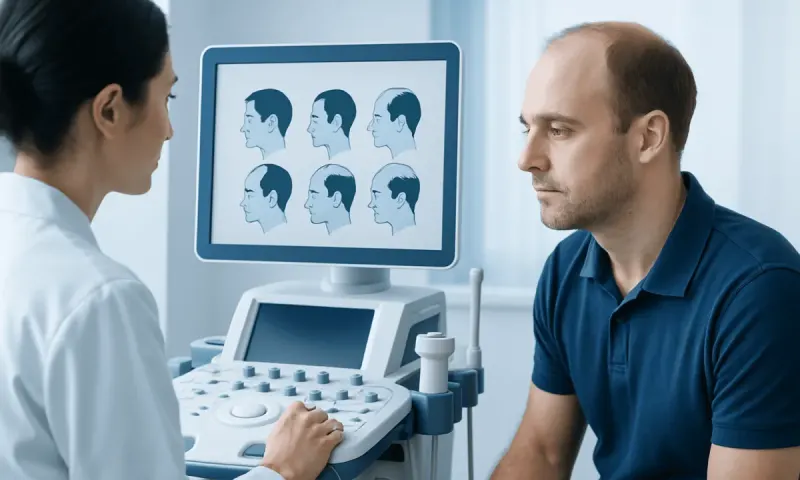
Everything starts with getting the diagnosis right. A clinician usually asks when shedding began, whether the hairline is changing, if there is itching or scalp scaling, and whether there is a family history of pattern hair loss. They may also ask about stress, recent illness, weight change, childbirth, medications, and nutritional factors because several conditions can mimic androgenetic alopecia.
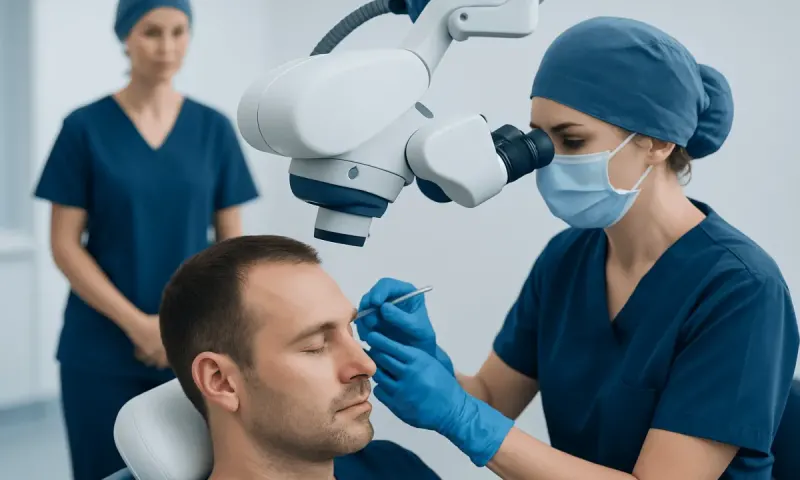
The scalp is then examined for distribution of thinning, follicle miniaturization, redness, scale, broken hairs, or scarring. In some cases, dermoscopy or trichoscopy helps the doctor inspect hair shafts and follicles more closely. If symptoms suggest another cause, blood tests may be recommended to look for thyroid disease, anemia, iron deficiency, or other contributing issues.
This matters because the plan changes completely if your hair loss comes from inflammation, infection, alopecia areata, or shedding after an illness. If there is diagnostic uncertainty, referral to specialists in dermatology care can help guide the plan. Accurate diagnosis also helps set realistic expectations about whether medication, procedures, or a combination approach is most suitable.
Treatment options and where topical finasteride fits
Topical finasteride is one option within a broader hair-loss treatment plan. Doctors may recommend it alone or alongside minoxidil, depending on the patient’s goals and medical history. Some patients prefer topical therapy because it avoids a daily oral medicine, while others may be better candidates for oral treatment or a combined approach after discussing benefits and risks.
Adjunctive measures can include treating dandruff or scalp inflammation, optimizing nutrition if there is a deficiency, and managing medical causes of shedding. In more advanced hair loss, medication may help protect existing hair, but it may not fully restore areas where follicles are no longer active. In that setting, procedural approaches may be considered, including hair restoration procedures.
Choose your treatment with a doctor, not from claims you read online. Factors such as age, pattern of loss, reproductive plans, comfort with side-effect risk, and the need for long-term maintenance all matter. Near the end of evaluation and care planning, some international patients may choose centers such as Acıbadem Health Point, where multidisciplinary specialists in JCI-accredited hospitals diagnose and treat hair-loss conditions using medical and procedural options.
Self-care, practical use, and what to avoid
Use topical finasteride exactly as prescribed: the amount, the timing, and the part of the scalp you apply it to. Applying more than recommended does not necessarily improve outcomes and may increase unwanted exposure. Hands should be washed after application unless the hands are the treatment site, and the medicine should be kept away from children and anyone for whom it was not prescribed.
Everyday scalp care helps too. Gentle cleansing, avoiding harsh chemical or heat damage, and treating coexisting dandruff or irritation can support overall scalp health. Hair growth is slow, so consistent use and regular follow-up are more useful than frequently switching between products. Photographing the scalp under similar lighting every few months can help track progress more reliably than day-to-day observation.
Be careful with unregulated online products or compounded formulas of uncertain quality. Differences in concentration, vehicle, and dosing can affect both effectiveness and safety. And do not mix several prescription or over-the-counter hair-loss products without asking your doctor first, particularly if your scalp becomes irritated or side effects appear.
When to seek medical care
A medical review is advisable before starting topical finasteride, especially if hair loss is sudden, patchy, painful, associated with redness or scaling, or accompanied by symptoms such as fatigue, weight change, or menstrual irregularities. These features may point to a cause other than routine pattern hair loss and may need a different treatment approach.
Patients already using topical finasteride should seek medical advice if they notice persistent scalp irritation, breast changes, mood symptoms, sexual side effects, allergic reactions, or any other symptoms that concern them. It is also important to check in if there is no improvement after an appropriate trial period, because the diagnosis or plan may need adjustment.
Urgent care is appropriate for severe allergic symptoms, significant swelling, or other rapidly worsening reactions. For ongoing assessment, a specialist can review whether treatment should be continued, changed, or combined with other options, including evaluation for alopecia areata or non-hormonal causes of thinning if the pattern is unclear.
Frequently asked questions
01Is topical finasteride as effective as oral finasteride?
Studies suggest topical finasteride can be effective for pattern hair loss, especially for maintaining hair and improving density in some patients. Whether it matches oral finasteride exactly may depend on the formulation, dose, and the individual. A doctor can help compare expected benefit with potential side effects.
02Does topical finasteride cause fewer side effects?
It may lead to lower systemic exposure than oral finasteride, which is why some patients consider it. However, lower exposure does not mean zero risk. Side effects and scalp irritation can still occur, so monitoring remains important.
03How long does topical finasteride take to work?
Hair treatment usually takes time because the hair cycle changes slowly. Many people need several months before they notice reduced shedding or visible improvement. Continued use is typically needed to maintain results.
04Can women use topical finasteride?
In some situations, a specialist may consider finasteride-related treatment for women, but this requires careful medical judgment. It is generally avoided when pregnancy is possible because of fetal risk concerns. Women with hair thinning should first have the cause properly assessed.
05Can topical finasteride be used with minoxidil?
Yes, doctors sometimes combine topical finasteride with minoxidil because the two treatments work differently. This may improve overall results in selected patients. The combination should still be guided by a clinician to reduce irritation and ensure the regimen is appropriate.
06What happens if someone stops using topical finasteride?
The medicine does not permanently change the tendency toward pattern hair loss. If it is stopped, the protective effect usually fades gradually, and hair loss may continue. This is why long-term maintenance is often part of the treatment plan.
This article is for general information only and is not a substitute for professional medical advice. Please consult a qualified doctor about your individual situation.
Hair transplant in Turkey — costs, graft counts & a free assessment
JCI-accredited · board-certified surgeons · reply within 24h
Add us as a Preferred Source to see more of our trusted health content across Google Search, AI Overviews and Discover.