Exosomes Hair Treatment: What Research Shows
Exosomes hair treatment involves applying or injecting laboratory-derived cell-signaling particles into the scalp with the aim of supporting hair follicles. It remains an emerging, not fully standardized approach, so a dermatologist should first identify the cause of hair loss and discuss established treatment options.
Overview: What Is Exosomes Hair Treatment?
Exosomes hair treatment is an emerging approach for hair thinning in which exosomes are placed into or onto the scalp, often using injections, microneedling or another delivery method. Exosomes are very small membrane-bound particles released by cells. They carry proteins, lipids and genetic material that help cells communicate with one another.
The intended aim is to influence the scalp environment around hair follicles and encourage processes involved in repair, inflammation control and growth signaling. However, exosome therapy for hair loss is not yet a routine, universally standardized medical treatment. Products may differ substantially in their source, processing, purity and concentration, and high-quality long-term clinical evidence remains limited.
Hair loss has many possible causes, including hereditary pattern hair loss, hormonal changes, nutritional deficiencies, thyroid disorders, autoimmune conditions, scalp inflammation, medication effects and physical stress. A careful diagnosis is therefore the most useful first step before considering any procedure. A person with ongoing thinning may benefit from assessment for hair loss and its underlying cause.
How Exosomes May Affect Hair Follicles
Hair follicles naturally cycle through growth, transition and resting phases. In laboratory research, exosomes have been studied for their ability to influence signaling between cells involved in wound healing, immune responses and tissue repair. Some early research suggests that certain exosome preparations may support pathways associated with follicle activity.
It is important to distinguish these biological possibilities from proven clinical outcomes. Findings from cell studies and small early human studies do not establish that all commercially offered exosome products regrow hair, work equally well or are safe for everyone. A treatment’s effect may depend on the type and stage of hair loss, the health of the follicles and the exact product used.
For people with androgenetic alopecia, or hereditary pattern hair loss, medical treatments that slow follicle miniaturization may still form the foundation of care. In some cases, clinicians may also discuss hair transplantation when loss is stable and donor hair is adequate. Exosome treatment, if considered, should be discussed as an investigational or adjunctive option rather than a guaranteed substitute for established care.
Who May Be a Candidate?

A suitable candidate is generally an adult with non-scarring hair thinning who has had a medical assessment and understands the uncertainties surrounding exosome treatment. People with early-stage hereditary thinning may have more living, miniaturized follicles to preserve than people with long-standing areas where follicles are no longer active.
Before treatment, a clinician should review the pattern and duration of hair loss, scalp symptoms, medical conditions, medications, pregnancy plans and previous treatments. Examination of the scalp, dermoscopy and, when indicated, blood tests or a scalp biopsy can help identify conditions that need a different approach.
Exosome therapy may not be appropriate for a person with an active scalp infection, unexplained scalp lesions, uncontrolled inflammatory scalp disease or suspected scarring alopecia. It should also be approached cautiously in people with significant immune-system conditions, a history of cancer or other complex medical concerns, because safety evidence in these groups is incomplete. A dermatologist can help weigh potential risks, benefits and alternatives.
- Potentially suitable: stable, non-scarring thinning after appropriate evaluation.
- Needs prompt assessment first: sudden shedding, patchy bald areas, scalp pain, scaling, redness or scarring.
- May need another treatment plan: nutritional, hormonal, autoimmune, infectious or medication-related hair loss.
What Happens During the Procedure?
There is no single approved protocol for exosomes hair treatment. The details vary by clinic, including the origin of the exosome preparation, the amount used, whether a numbing cream is offered and the delivery technique. A reputable provider should explain what product is being proposed, how it is processed and stored, what evidence supports its use and what follow-up will be provided.
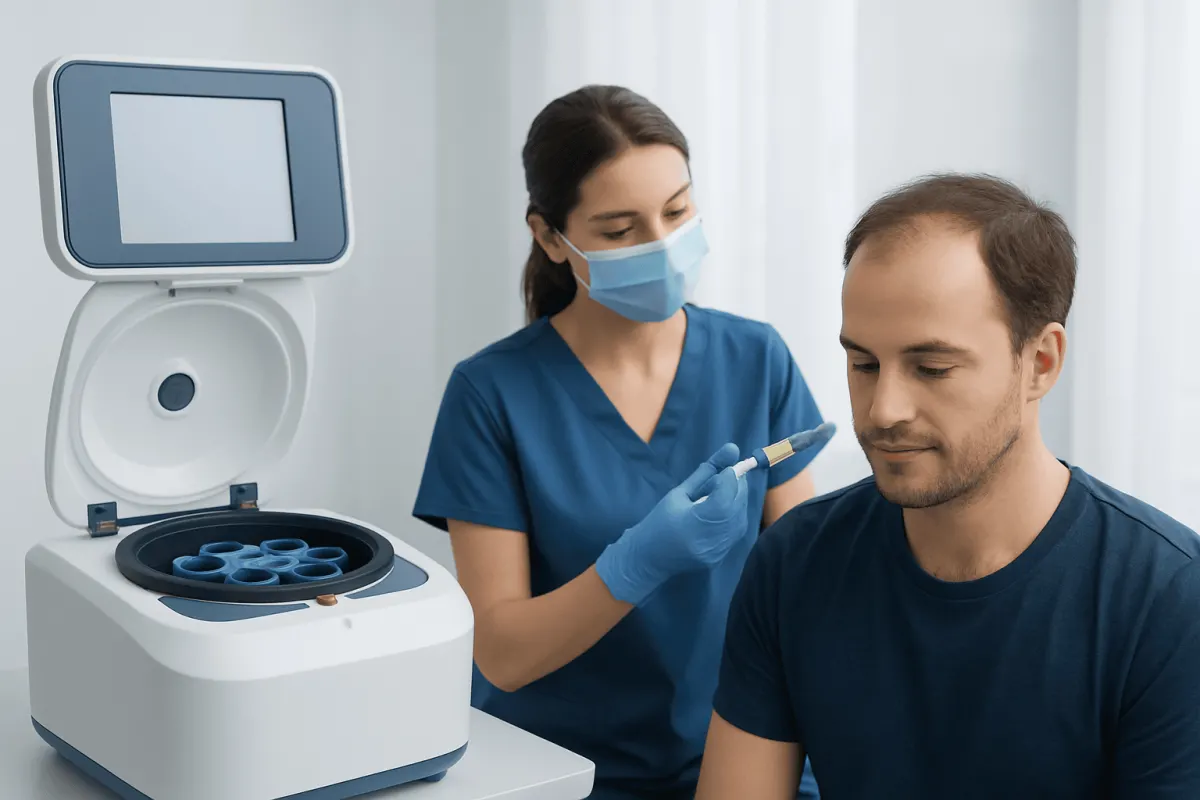
After reviewing medical history and obtaining informed consent, the clinician photographs the scalp and maps the treatment areas. The scalp is cleansed, and local anesthetic or a topical numbing agent may be used. Exosomes may then be introduced through small injections, microneedling-assisted application or another controlled technique. The visit often includes advice on hair washing, exercise, sun exposure and use of scalp products afterward.
The procedure itself is commonly completed in one appointment, but the number and spacing of sessions are not standardized. Some providers recommend a series of treatments, while others use a single session followed by review. Because the research base is still developing, patients should be cautious about fixed promises regarding session numbers, outcomes or maintenance schedules.
For established surgical restoration, a specialist may instead recommend hair transplantation after assessing the donor area, expectations and likely long-term pattern of loss. The best plan is individualized and may combine medical and procedural options.
Recovery Timeline, Benefits and Risks
Recovery is usually short after a minimally invasive scalp procedure. Mild tenderness, pinpoint bleeding, swelling, redness, itching or temporary sensitivity can occur for a day or two, especially if injections or microneedling were used. Many people return to routine non-strenuous activities the same day, but instructions from the treating clinician should take priority.
In the first 24 to 48 hours, patients are often advised to avoid touching or scratching the scalp, heavy sweating, swimming, saunas and unapproved styling or scalp products. They may be asked to delay washing the hair briefly or use a gentle shampoo afterward. Avoiding direct sun exposure and following the clinic’s instructions can help protect an irritated scalp.
Potential benefits are still uncertain. Some individuals may notice reduced shedding, improved hair shaft thickness or fuller-looking coverage over time, but results are variable and cannot be predicted. Hair follicles grow slowly, so any meaningful change would generally be assessed using standardized photographs over several months rather than days or weeks.
The possible downsides include infection, inflammation, allergic or immune reactions, persistent scalp irritation, uneven results and financial loss if the treatment does not help. The broader concern is that exosome products are not all made or regulated to the same standards. Contamination, inaccurate labeling and inconsistent biological activity are potential risks when products are poorly sourced or handled.
How Long Does It Take to See Results From Hair Exosomes?
If a person responds, visible changes are unlikely to be immediate. Hair grows in cycles, and a treatment intended to influence follicle activity would generally need several months before reduced shedding or early improvements in density can be evaluated. Some people may notice changes around three to six months, while others may see no meaningful difference.
Any reported timeline should be interpreted carefully because studies have used different products, treatment methods and outcome measures. Before-and-after photographs can also be affected by lighting, hair length, styling and camera angle. For a fair assessment, photographs should be taken under similar conditions before treatment and at scheduled follow-up visits.
A clinician may recommend continuing evidence-based hair-loss management during monitoring, depending on the diagnosis and individual health factors. If progressive thinning continues despite a treatment plan, the diagnosis and treatment approach should be reviewed rather than simply repeating an unproven procedure.
What Not to Do After Exosome Hair Treatment?
After exosome hair treatment, a person should follow the clinic’s specific aftercare plan because delivery methods differ. In general, it is sensible to avoid rubbing, picking or massaging the treated scalp and to keep hands clean before touching the area. Scratching can worsen irritation and increase the chance of introducing bacteria into small injection or microneedling sites.
For the first day or two, patients may be advised to postpone intense exercise, swimming, hot baths, saunas and steam rooms, as sweat, heat and water exposure can aggravate a sensitive scalp. Hair dye, strong chemical treatments, exfoliating scalp products and unapproved topical products should also be avoided until the clinician confirms it is appropriate.
A person should not stop prescribed hair-loss medicines, start supplements or use anti-inflammatory medicines solely because of online advice. Medication changes should be discussed with the prescribing clinician. Worsening pain, spreading redness, pus, fever, facial swelling or breathing difficulty requires urgent medical evaluation.
What Is the Dark Side of Exosome Therapy?
The main concern is uncertainty. Exosome therapy is scientifically interesting, but there is not yet enough consistent, high-quality clinical evidence to confirm its effectiveness, ideal dose, best delivery method or long-term safety for hair loss. Advertising may sometimes present early findings as more certain than they are.
Product quality is another important issue. Exosomes can be derived from different cell sources, and manufacturing requires careful donor screening, purification, testing, storage and sterile handling. When these controls are unclear, there may be risks related to contamination, unwanted immune reactions or a product that does not contain what is claimed.
Patients should be wary of providers who promise permanent regrowth, claim that exosomes can treat every type of hair loss or do not offer a medical diagnosis first. Asking direct questions about clinician qualifications, product sourcing, risks, alternatives, consent and follow-up can support informed decision-making.
Do Exosomes Really Regrow Hair?
Exosomes may have the potential to support hair growth in some people, but they cannot currently be described as a proven, reliable way to regrow hair. Early studies and biological research are encouraging enough to justify continued investigation, yet they do not show that every product or protocol delivers the same result.
Whether regrowth is possible depends largely on why hair has been lost and whether follicles remain capable of producing hair. Treatments are less likely to restore hair in scarred areas where follicles have been permanently destroyed. A dermatologist can identify whether hair loss is likely to be reversible, controllable or best addressed through surgical restoration.
For people seeking care from abroad, Acıbadem Health Point’s multidisciplinary specialists and JCI-accredited hospitals can assess hair-loss causes and discuss appropriate medical and procedural options. The goal should be a realistic plan that prioritizes diagnosis, scalp health and evidence-based treatment choices.
When to Seek Medical Care
A person should arrange a medical appointment for hair thinning that is new, persistent, distressing or changing quickly. Early evaluation is especially useful when hair loss is accompanied by fatigue, weight changes, menstrual changes, acne, excess facial hair, recent illness, restrictive dieting or a new medication, as these clues may point to an underlying cause.
Prompt dermatology assessment is advisable for patchy bald spots, broken hairs, scalp pain, burning, redness, crusting, scaling, pustules or shiny scar-like areas. These signs can occur with autoimmune, fungal, inflammatory or scarring conditions that may need timely treatment to protect remaining follicles.
Urgent medical care is needed after any scalp procedure for signs of a serious reaction, such as difficulty breathing, swelling of the lips or face, severe pain, fever, spreading redness or drainage. Seeking professional care early is reassuring and helps ensure that treatment is appropriate for the individual’s condition.
Frequently asked questions
01Is exosomes hair treatment approved for hair loss?
Regulatory status differs by country, but exosome-based products are not broadly established as approved standard treatments for hair loss. Patients should ask their clinician about local regulation, the product source and the quality of evidence for the proposed procedure. A medical evaluation remains important before treatment.
02Is exosome hair treatment painful?
Discomfort depends on how the product is delivered. Scalp injections and microneedling can cause temporary stinging or pressure, and a topical or local anesthetic may be used. Mild tenderness and redness afterward are possible.
03How many exosome sessions are needed for hair loss?
There is no universally accepted number of sessions because treatment protocols are not standardized and research is still limited. Recommendations may vary between providers, but no clinic can reliably predict the number needed for an individual. Patients should be cautious about package-based promises.
04Can exosomes treat all types of hair loss?
No. Hair loss may be hereditary, autoimmune, nutritional, hormonal, inflammatory, infectious or scarring, and these causes require different management. Exosomes are unlikely to restore follicles that have been permanently damaged by scarring hair loss.
05Can exosome treatment be combined with other hair-loss treatments?
It may be considered alongside other treatments in selected patients, but the plan should be made by a qualified clinician. Combining procedures or medicines without guidance can increase irritation or make it difficult to judge what is helping. The underlying diagnosis should guide all treatment decisions.
06Are the results of hair exosome therapy permanent?
There is not enough long-term evidence to say that any benefit is permanent. Hereditary hair loss often continues over time, even after temporary improvement with a treatment. Follow-up assessment and a long-term hair-care plan are usually needed.
This article is for general information only and is not a substitute for professional medical advice. Please consult a qualified doctor about your individual situation.
Hair transplant in Turkey — costs, graft counts & a free assessment
JCI-accredited · board-certified surgeons · reply within 24h
Add us as a Preferred Source to see more of our trusted health content across Google Search, AI Overviews and Discover.