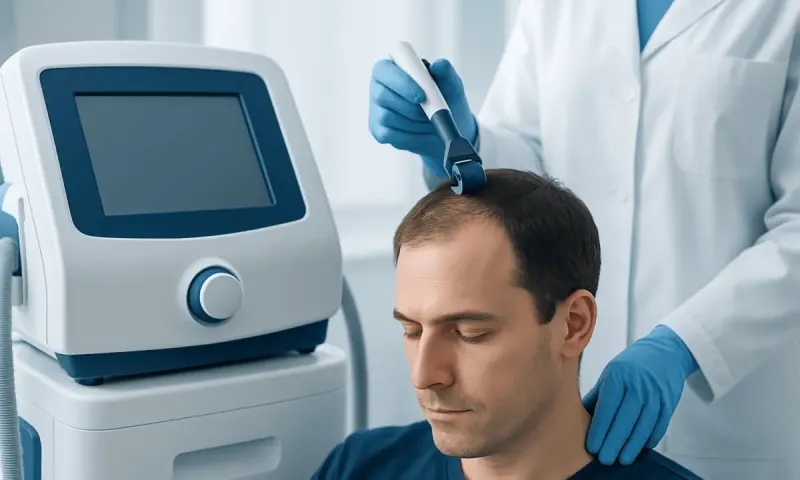
Top 5 Hair Transplant Clinics in Turkey: Choosing Safely

There is no permanent, evidence-based ranking for a top 5 hair transplant clinic in Turkey; the safer choice is a clinic with a named, licensed doctor, transparent planning and structured follow-up. A careful assessment of the cause of hair loss, donor supply and medical suitability should come before travel or booking.
Overview: Comparing Hair Transplant Clinics Safely
There is no independent, lasting clinical ranking that can identify one definitive top 5 hair transplant clinic in Turkey for all patients. Rather than relying on a list, patients can choose more safely by checking the named doctor’s credentials, the surgical setting, the quality of the consultation and the plan for follow-up care.
Hair transplantation is a surgical treatment most often considered for pattern hair loss. It moves follicles from an area with relatively stable hair growth, usually the back or sides of the scalp, to thinning areas. Searches for top 5 hair transplant clinic in Turkey reviews or top 5 hair transplant in Turkey can be useful starting points, but online rankings and testimonials do not replace a personal medical assessment.
Lists describing the top 5 hair transplant clinics in Turkey or top 5 hair transplant clinics in Istanbul, as well as claims about the top 5 hair transplant surgeons in Turkey, should be treated as promotional snapshots rather than proof of quality. A suitable clinic will explain who performs each stage, what results are realistic and what support is available if questions or complications arise after the patient returns home.
What is the most reputable hair transplant clinic in Turkey?
The most reputable clinic is not necessarily the most visible online or the one with the largest number of reviews. A reputable service provides a consultation with a clearly identified, licensed doctor, documents the diagnosis and treatment plan, obtains informed consent and gives patients realistic information about limitations, recovery and possible risks.
Patients can ask for the doctor’s full name, medical registration details, relevant training and experience with the planned technique. They can also ask to see consistently photographed before-and-after cases that resemble their own hair type and pattern of loss. Photos should show appropriate timeframes and should not be treated as a promise of an identical outcome.
Hospital or clinic quality systems, infection-control practices, emergency arrangements and clear documentation are important. Reviews may reveal practical issues such as communication and aftercare, but they can be curated, incomplete or difficult to verify. A clinic should never pressure a person to make an immediate deposit or promise guaranteed density.
How to choose the best hair transplant clinic?
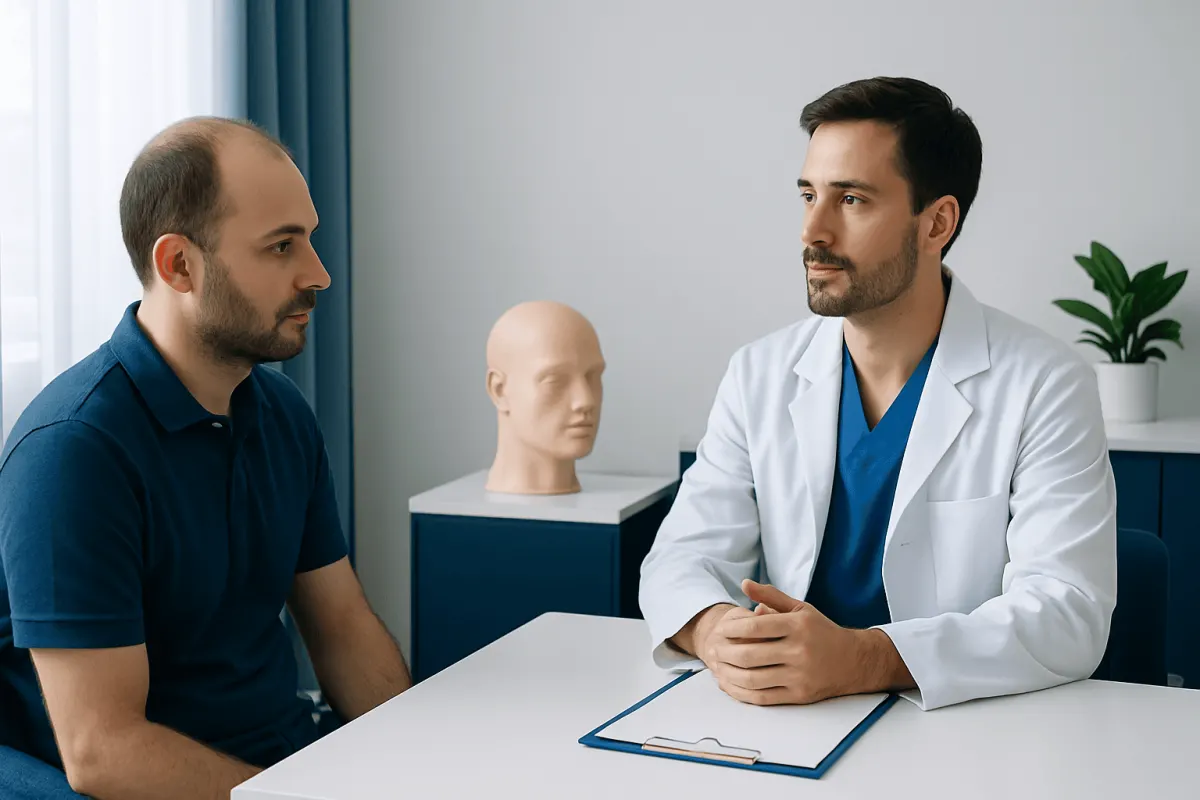
The best choice is individual: it depends on the cause and stability of hair loss, the quality of the donor area, scalp health, medical history and the person’s goals. A responsible clinic will first determine whether transplantation is appropriate, rather than assuming every thinning area needs surgery.
- Confirm the name and role of the doctor responsible for assessment, hairline design, graft harvesting and implantation.
- Ask how the clinic evaluates donor density, future hair loss and the number of grafts proposed.
- Check where the procedure takes place and how medical emergencies, infection prevention and pain management are handled.
- Request a written plan covering the technique, aftercare, medicines if needed, follow-up and what is included or excluded.
- Make sure communication, consent forms and post-procedure instructions are understood in a language the patient can use confidently.
It is reasonable to compare more than one consultation. A good consultation allows time for questions and explains alternatives, including medical treatment, observation or treatment of an underlying scalp condition. Patients should be cautious if a clinic offers a graft number before examining the scalp or reviewing a medical history.
How to choose a hair transplant Turkey?
Choosing a hair transplant in Turkey involves both clinical and travel planning. Before travelling, patients should have a remote or in-person consultation that includes clear photographs, a medical history and discussion of medications, allergies, previous procedures and hair-loss progression. Sudden shedding, patchy loss, scarring, itching or scalp inflammation may need diagnosis and treatment before surgery is considered.
International patients should ask how pre-operative tests are arranged, whether a doctor is available during the visit, and how follow-up will work after returning home. Written records of the procedure, graft count, technique, prescribed aftercare and contact details can help a local clinician provide care if needed. Travel plans should allow enough flexibility for the clinic’s recommended checks and recovery instructions.
Location alone does not determine safety or results. The important questions are whether the proposed procedure is medically appropriate, whether the responsible clinician is transparent and whether the patient will have a reliable route to advice after leaving the clinic.
How Hair Transplantation Works: Candidacy and Procedure Steps
A hair transplant redistributes genetically more resistant follicles; it does not produce new follicles or cure the process causing hair loss. Suitable candidates commonly have pattern hair loss, an adequate donor area and realistic expectations. A dermatologist or qualified doctor should assess whether hair loss is stable enough for surgery and whether conditions such as alopecia areata, nutritional deficiency, thyroid disease, infection or scarring hair loss need other treatment first.
Follicular unit extraction, known as FUE, removes individual follicular units from the donor area. Follicular unit transplantation, or FUT, removes a narrow strip of donor scalp that is then divided into grafts. Some clinics use an implanter pen technique often called DHI; this describes a method of placing grafts and does not by itself indicate superior outcomes.
Although details vary, a procedure usually includes:
- medical review, scalp examination, hairline design and informed consent;
- preparation of the donor and recipient areas, often with local anaesthetic;
- careful harvesting and preparation of follicular grafts;
- creation of recipient sites and placement of grafts at planned angles and density; and
- discharge instructions, wound-care guidance and an aftercare contact plan.
Patients should specifically ask who will carry out each part of the procedure. The clinician’s planning of the hairline, donor preservation and graft placement can affect the natural appearance of the result and options for any future treatment.
Recovery Timeline, Benefits and Risks
Recovery differs between individuals and techniques. Mild swelling, redness, tightness or discomfort can occur in the first days, while small scabs commonly form around grafts and usually clear as directed by the clinical team. Many people return to quiet daily activities within a few days, but rubbing the scalp, strenuous exercise, sun exposure, swimming and certain headwear may need to be avoided for a period advised by the surgeon.
Transplanted hairs often shed during the first weeks; this can be a normal part of the growth cycle. New growth may become noticeable after several months, while the appearance continues to mature over approximately 9 to 12 months and sometimes longer. The potential benefit is a fuller, natural-looking redistribution of a person’s own hair, but results vary and future hair loss can continue.
Possible risks include bleeding, infection, prolonged redness, numbness, swelling, scarring, folliculitis, poor graft growth, uneven density, an unnatural hairline and overharvesting of the donor area. Temporary shedding of existing hairs, sometimes called shock loss, can also occur. Careful candidate selection and experienced medical planning can reduce risk, but no procedure can guarantee a particular result.
How much do 3,000 hair grafts cost in Turkey?
There is no single trustworthy cost for 3,000 hair grafts in Turkey, and it would be misleading to give one figure without a clinical assessment. The final estimate can vary according to the technique, donor-area complexity, medical team, operating setting, length of care, medications, interpretation support, accommodation arrangements and follow-up services.
A graft is a follicular unit that may contain one or more hairs, so a graft count is not the same as a guaranteed level of coverage or density. Patients should request an itemized written estimate and ask whether it includes the doctor-led consultation, procedure, tests, aftercare appointments and management of unexpected concerns. A low quote should not outweigh evidence of safe practice, clear medical responsibility and realistic planning.
When to Seek Medical Care
People should seek medical assessment before booking a transplant if hair loss is sudden, patchy, rapidly progressing or accompanied by pain, scaling, itching, redness or scarring. A doctor should also review hair loss that begins after illness, major stress, pregnancy, a new medicine or substantial weight change. Identifying the cause may allow effective treatment without surgery or improve the safety of a future transplant.
After a procedure, patients should contact their treating clinic promptly for worsening pain, spreading redness, pus, fever, significant bleeding or increasing swelling. Urgent medical care is needed for severe allergic symptoms, breathing difficulty, chest pain or other serious symptoms. For international patients, Acıbadem Health Point’s multidisciplinary specialists and JCI-accredited hospitals can assess hair-loss conditions and provide coordinated surgical care with appropriate follow-up planning.
Frequently asked questions
01Is FUE better than FUT for a hair transplant?
Neither technique is automatically better for every person. FUE and FUT have different donor-area effects, recovery considerations and suitability, so the choice should follow an examination of scalp characteristics and future hair-loss plans.
02Does a hair transplant stop future hair loss?
No. A transplant redistributes donor follicles but does not stop ongoing thinning in non-transplanted areas. A doctor may discuss medical or non-surgical options to help manage future hair loss where appropriate.
03Can women have a hair transplant in Turkey?
Some women are suitable candidates, particularly when hair loss has a defined pattern and the donor area is strong. However, diffuse thinning and certain medical causes of hair loss require careful assessment before surgery is planned.
04Are online hair transplant reviews reliable?
Reviews can provide useful information about communication and patient experience, but they cannot confirm medical quality or predict an individual's result. They should be balanced with verification of the doctor, consultation process, clinical setting and written aftercare plan.
05Is 3,000 grafts the right amount for every patient?
No. The appropriate graft number depends on donor density, scalp size, hair thickness, hair characteristics, current hair loss and likely future thinning. Overharvesting can compromise the donor area, so a larger number is not always better.
06How long should follow-up continue after a hair transplant?
Follow-up should continue according to the treating clinician's plan, particularly during the first weeks and months of healing. Patients travelling internationally should know how to contact the clinic remotely and when to see a local doctor if a concern develops.
This article is for general information only and is not a substitute for professional medical advice. Please consult a qualified doctor about your individual situation.
Hair transplant in Turkey — costs, graft counts & a free assessment
JCI-accredited · board-certified surgeons · reply within 24h
Add us as a Preferred Source to see more of our trusted health content across Google Search, AI Overviews and Discover.