Alopecia Areata: Patchy Hair Loss and Immune-Based Treatments

Alopecia areata is an autoimmune condition that causes patchy hair loss, most often on the scalp but sometimes on the eyebrows, beard, or body. Many people experience regrowth, and dermatologists can offer treatments that calm inflammation and support hair recovery.
Overview
Alopecia areata is a common form of autoimmune hair loss. In this condition, the body’s immune system mistakenly reacts against hair follicles, especially during the active growth phase of hair. The follicles usually remain alive, which means hair can grow back, although the timing and pattern of regrowth vary from person to person.
The most typical sign is one or more smooth, round or oval patches of hair loss on the scalp. Some people lose hair from the beard area, eyebrows, eyelashes, or other parts of the body. In a smaller number of patients, hair loss can become more extensive, involving the entire scalp, known as alopecia totalis, or the entire body, known as alopecia universalis.
Alopecia areata can affect children and adults. It is not contagious, and it is not caused by washing hair too often, wearing hats, or using ordinary hair products. Although it can be emotionally distressing, it is usually not physically painful and does not damage general health. A dermatologist can help confirm the diagnosis, explain the likely course, and discuss treatment choices based on the extent of hair loss and the patient’s priorities.
Symptoms and Patterns of Hair Loss
The hallmark symptom of alopecia areata is sudden patchy hair loss. The skin in the affected area is often smooth and normal in color, without scarring. Some people notice extra hair on a pillow, in the shower, or while brushing, while others discover a patch by chance or when a hairdresser points it out.
Hair loss may appear in different patterns. A person may have a single small patch, several patches, or a band-like pattern around the sides and back of the scalp. Nails can also be affected in some patients, with tiny pits, ridges, roughness, or brittleness. These nail changes are not dangerous, but they can help support the diagnosis.
- Round or oval bald patches on the scalp or beard area
- Short broken hairs or tapering hairs near the edge of a patch
- Eyebrow or eyelash thinning in some cases
- White or fine regrowing hairs that may later regain pigment
- Periods of improvement followed by new patches in some patients
Alopecia areata behaves differently for each individual. Some patches regrow within months, while others persist or recur. The degree of hair loss at the first visit, nail involvement, childhood onset, and family or personal history of autoimmune disease can influence the discussion about prognosis, but they do not predict the future with certainty.
Causes & Risk Factors

Alopecia areata is considered an autoimmune disease. In healthy hair growth, follicles cycle through growth, resting, and shedding phases. In alopecia areata, immune cells gather around hair follicles and interrupt normal growth. This causes hairs to shed, but because the follicle is generally not destroyed, regrowth remains possible.
The exact trigger is not always clear. A combination of genetic susceptibility and immune system factors is believed to contribute. Some patients have relatives with alopecia areata or other autoimmune conditions, but many have no family history. Stress may be noticed before an episode in some people, yet stress alone is not considered the sole cause.
Risk factors and associated conditions can include a personal or family history of autoimmune disease, such as thyroid disease, vitiligo, atopic dermatitis, or certain allergic tendencies. These associations do not mean that every patient needs extensive testing, but they may guide the doctor’s questions and decisions about blood tests when symptoms suggest another condition.
It is important for patients and families to understand that alopecia areata is not anyone’s fault. Diet, hair washing habits, ordinary styling, or mild scalp dryness do not cause the immune reaction. However, gentle hair care and overall health support can make the scalp more comfortable and help reduce avoidable breakage.
Diagnosis
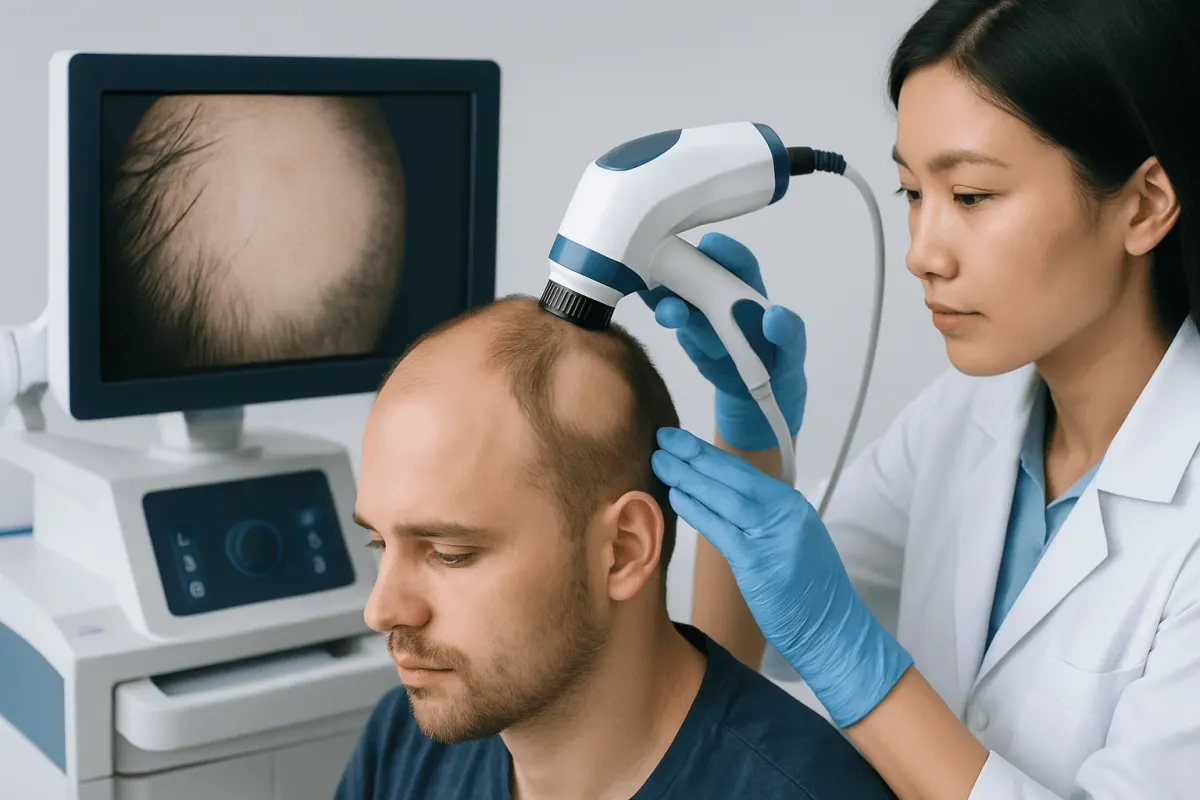
Diagnosis is usually made by a dermatologist through a medical history and physical examination. The doctor examines the shape of the patches, the condition of the scalp skin, and the hairs at the edges of the affected areas. A handheld device called a dermatoscope may be used to look for features such as short regrowing hairs, broken hairs, or characteristic follicle changes.
In many cases, no invasive test is needed. If the diagnosis is uncertain, the doctor may consider other causes of hair loss, such as fungal infection, traction alopecia from tight hairstyles, telogen effluvium after illness or childbirth, trichotillomania, or scarring forms of alopecia. Rarely, a small scalp biopsy may be recommended to clarify the diagnosis.
Blood tests are not required for every patient with alopecia areata. They may be considered if there are symptoms suggesting thyroid disease, anemia, nutritional deficiency, or another autoimmune condition. Testing is individualized, because unnecessary investigations can create confusion without changing treatment.
During the visit, the dermatologist may also assess the severity of hair loss and its impact on daily life. The number, size, and location of patches, involvement of eyebrows or eyelashes, previous episodes, and patient age all help shape a practical treatment plan. Photographs may be taken to monitor progress over time.
Treatment Options
Treatment for alopecia areata depends on the amount of hair loss, how quickly it is progressing, the patient’s age, medical history, and preferences. Because mild cases may regrow spontaneously, observation can be reasonable for a small patch, especially if it is easy to cover. However, many patients prefer active treatment to encourage regrowth and reduce inflammation around hair follicles.
Corticosteroids are among the most established treatments. For limited patchy hair loss, a dermatologist may inject a corticosteroid into the affected skin at carefully spaced intervals. Topical corticosteroids, foams, lotions, or creams may be used, particularly in children or sensitive areas where injections are not suitable. These treatments aim to calm the local immune reaction.
Other options may include topical minoxidil to support hair growth, anthralin in selected cases, or topical contact immunotherapy in specialized dermatology settings. Contact immunotherapy intentionally creates a controlled allergic-type reaction on the scalp to redirect immune activity. It requires experience, follow-up, and careful patient selection.
For more extensive or difficult-to-treat alopecia areata, immune-targeted therapies may be considered. Janus kinase inhibitors, often called JAK inhibitors, are newer medicines that affect immune signaling involved in alopecia areata. They may help selected adults and, depending on local approvals, some adolescents with severe disease. These medicines require medical supervision, screening, and monitoring for possible side effects, so the benefits and risks should be discussed in detail with a qualified dermatologist.
Prevention, Self-care and Emotional Support
There is no proven way to prevent alopecia areata completely, because it is driven by immune system activity and genetic susceptibility. Still, self-care can protect the scalp, reduce irritation, and support emotional wellbeing. Patients should avoid harsh chemical treatments or tight hairstyles that create unnecessary traction on already vulnerable hair.
Sun protection is important when scalp, eyebrow, or body hair is missing. A hat, scarf, sunscreen on exposed skin, and sunglasses if eyelashes are affected can help protect sensitive areas. Gentle shampooing, soft brushes, and avoiding aggressive rubbing can reduce breakage of fragile regrowing hairs.
- Use mild hair-care products and avoid frequent heat styling when hair is fragile.
- Protect exposed scalp skin from sun, cold, and irritation.
- Consider cosmetic options such as wigs, hair fibers, eyebrow pencils, or microblading after medical advice.
- Seek support from family, counseling, or patient groups if hair loss affects confidence or mood.
- Keep follow-up appointments so treatment can be adjusted as hair changes.
The emotional effect of alopecia areata can be significant even when the physical area of hair loss is small. Children and teenagers may need extra support at school and in social situations. Open conversations, reassurance that the condition is not contagious, and practical styling or cosmetic solutions can help patients feel more in control while medical treatment is planned.
When to See a Doctor
A person should see a dermatologist if they notice sudden patchy hair loss, rapid shedding, eyebrow or eyelash loss, nail changes, itching or scaling of the scalp, or hair loss in a child. Medical assessment is also important if the scalp is red, painful, crusted, or if there is concern about infection or scarring hair loss, because these conditions require different treatment.
Patients already diagnosed with alopecia areata should return for follow-up if patches are expanding, new areas appear, treatment is not helping, or side effects occur. People considering immune-based medicines such as JAK inhibitors should have a careful evaluation, including review of medical history, current medications, infection risk, and appropriate monitoring.
International patients who need coordinated dermatology care may seek evaluation at centers experienced in hair and skin disorders. Acıbadem Health Point’s multidisciplinary specialists and JCI-accredited hospitals diagnose and treat alopecia areata for international patients, with care plans based on individual medical needs. Any treatment decision should be made after consultation with a qualified doctor who can assess the patient in person.
Frequently asked questions
01Is alopecia areata contagious?
No. Alopecia areata is not contagious and cannot be spread through touch, shared combs, hats, or close contact. It is an immune-mediated condition in which the body’s immune system affects hair follicles.
02Will hair grow back after alopecia areata?
Hair can regrow because the follicles are usually not permanently destroyed. Some people recover without treatment, while others have repeated episodes or need medical therapy. The course is individual, so follow-up with a dermatologist is helpful.
03Can stress cause alopecia areata?
Stress may be noticed before an episode in some patients, but it is not considered the only cause. Alopecia areata results from immune system activity in a person who may be genetically susceptible. Managing stress can support wellbeing, but it should not replace medical evaluation.
04What is the best treatment for patchy alopecia areata?
The best treatment depends on the size, location, and duration of the patches, as well as the patient’s age and preferences. For small areas, corticosteroid injections or topical treatments are commonly used. More extensive disease may require specialized immune-based therapies.
05Are JAK inhibitors suitable for everyone with alopecia areata?
No. JAK inhibitors are generally considered for selected patients with more significant or persistent alopecia areata, depending on local approvals and individual health factors. They require medical screening and ongoing monitoring because they affect immune signaling.
06Should children with alopecia areata be treated differently?
Children can develop alopecia areata, and treatment is chosen carefully based on age, severity, comfort, and safety. Topical therapies are often preferred, and injections may not be suitable for every child. Emotional support and communication with school can be very important.
This article is for general information only and is not a substitute for professional medical advice. Please consult a qualified doctor about your individual situation.
Hair transplant in Turkey — costs, graft counts & a free assessment
JCI-accredited · board-certified surgeons · reply within 24h
Add us as a Preferred Source to see more of our trusted health content across Google Search, AI Overviews and Discover.