Syndesmosis Injury: Symptoms, Diagnosis and Recovery
A syndesmosis injury, often called a high ankle sprain, affects the strong ligaments that connect the tibia and fibula just above the ankle joint. It can be more persistent than a typical ankle sprain, but timely diagnosis and appropriate treatment support a safe return to daily activities and sport.
Overview: What Is a Syndesmosis Injury?
A syndesmosis injury is damage to a group of strong fibrous ligaments that hold together the two lower-leg bones: the tibia (shinbone) and fibula. These ligaments sit just above the ankle joint and help keep the ankle stable during weight-bearing movements such as walking, running, jumping, and turning.
This injury is often called a high ankle sprain because it occurs above the area affected by the more common lateral ankle sprain. A typical ankle sprain usually involves ligaments on the outer side of the ankle. In contrast, a syndesmosis injury may involve stretching, partial tearing, or complete tearing of the ligaments between the tibia and fibula.
Syndesmosis injuries range from mild and stable to severe and unstable. When the bones separate abnormally or there is an associated fracture, the injury may need more intensive treatment. An accurate assessment is important because recovery can take longer than for many ordinary ankle sprains.
Symptoms of a High Ankle Sprain
The main symptom is pain above the ankle, often toward the front or outer side of the lower leg. Pain may develop immediately after an injury or become more noticeable over the following day. Swelling and bruising can occur, although they may be less obvious than with a typical outer-ankle sprain.
Walking, climbing stairs, rising onto the toes, running, and twisting the foot outward can be painful. Some people feel weakness, stiffness, or a sense that the ankle is not steady. Tenderness may be present when pressure is applied along the space between the tibia and fibula.
Symptoms can vary depending on the severity of ligament damage and whether another injury is present. A fracture, dislocation, or significant separation between the lower-leg bones can cause marked pain, inability to bear weight, visible deformity, or rapidly increasing swelling. These symptoms require prompt medical evaluation.
- Pain above the ankle rather than only at the outer ankle
- Discomfort when the foot turns outward or the ankle bends upward
- Difficulty bearing weight or pushing off while walking
- Swelling, bruising, stiffness, or reduced ankle movement
- A feeling of instability during activity
Causes and Risk Factors

A syndesmosis injury commonly happens when the foot is planted and the lower leg rotates outward. This can occur during contact sports, skiing, football, basketball, rugby, and other activities that involve sudden changes of direction. It may also happen after a fall, a forceful twist, or a direct blow to the outside of the leg while the foot remains fixed.
Some injuries occur alongside ankle fractures, particularly fractures involving the fibula. In these cases, the syndesmotic ligaments may be disrupted because the force affecting the bones also stresses the ankle joint. For this reason, clinicians carefully assess the syndesmosis whenever an ankle fracture is suspected.
Risk may be higher in people who participate in pivoting or collision sports, have had a previous ankle injury, return to exercise before regaining strength and balance, or have inadequate footwear for their activity. Uneven surfaces, fatigue, poor landing mechanics, and reduced ankle flexibility may also contribute.
How a Syndesmosis Injury Is Diagnosed
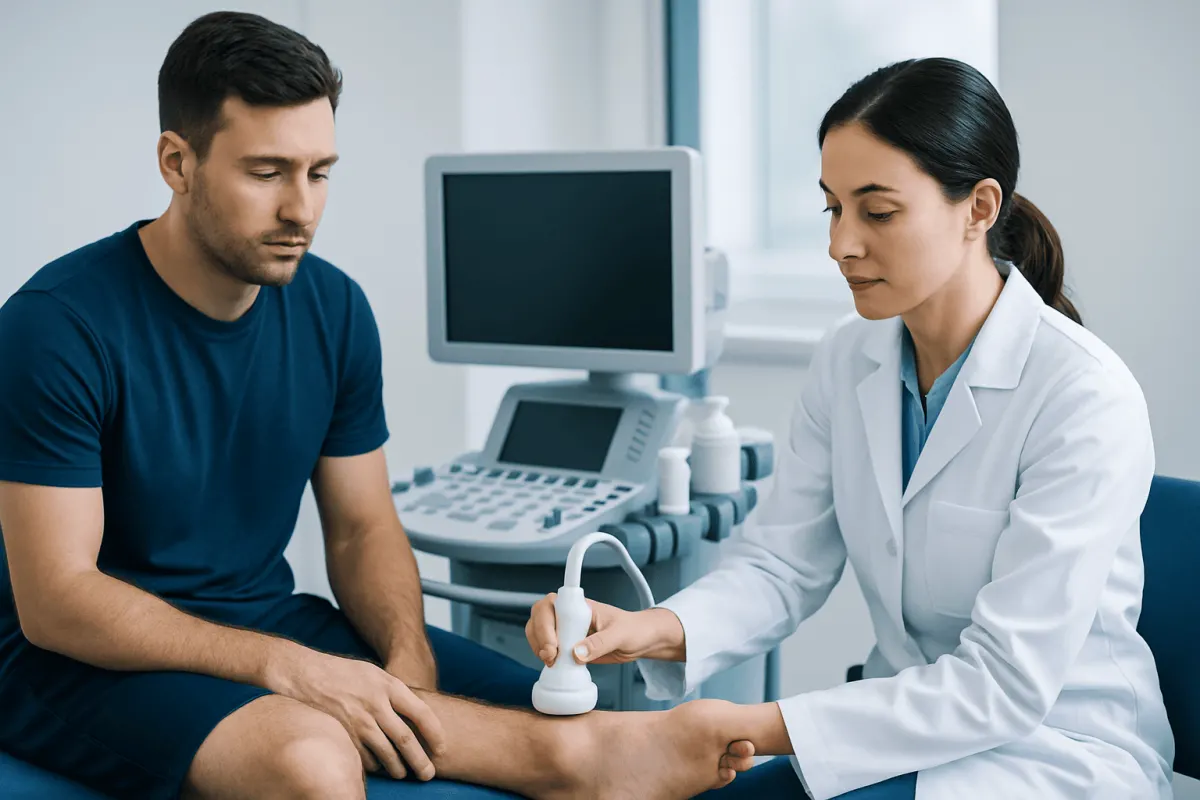
A clinician begins by asking how the injury occurred and reviewing symptoms, activity level, and previous ankle problems. During the physical examination, they check for swelling, bruising, areas of tenderness, ankle movement, ability to bear weight, and signs of instability.
Specific examination maneuvers may gently stress the lower-leg bones or rotate the foot to identify pain around the syndesmosis. These tests are useful but are interpreted alongside the full clinical picture, since pain and swelling from other ankle injuries can overlap.
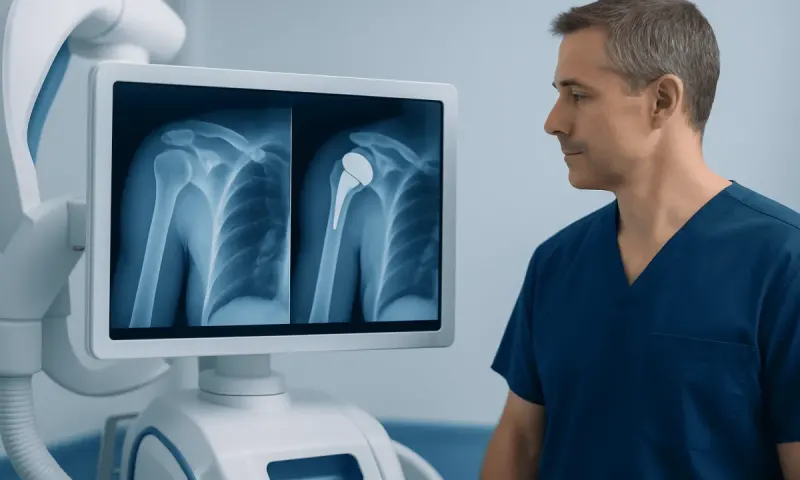
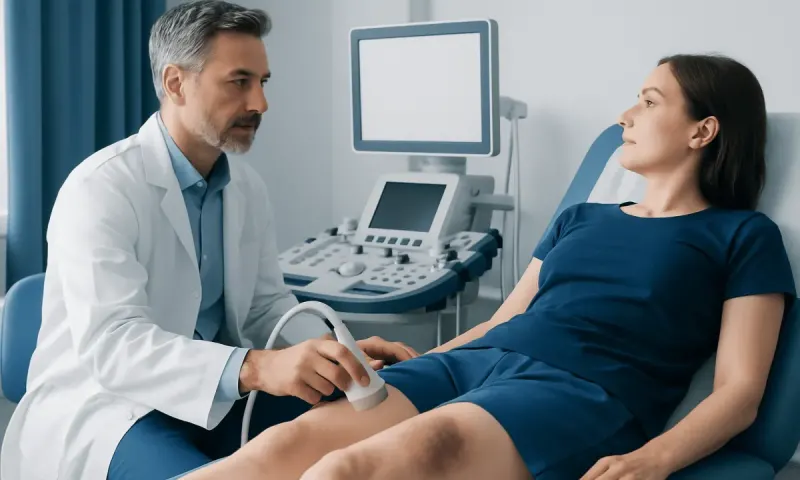
X-rays are commonly used to look for a fracture and to assess the alignment of the ankle bones. A mild syndesmosis injury may not be apparent on a routine X-ray. When the diagnosis remains uncertain or a more detailed view of ligament damage is needed, a doctor may recommend magnetic resonance imaging (MRI), computed tomography (CT), ultrasound, or stress imaging. The results help determine whether the injury is stable and guide treatment planning.
Treatment Options
Treatment depends on the degree of ligament injury, ankle stability, associated fractures, and the person’s activity needs. Stable injuries without significant separation of the tibia and fibula are often treated without surgery. Early care may include reducing activity, protecting the ankle with a boot or brace, elevating the leg, and using cold packs for short periods to help manage pain and swelling.
A clinician may advise crutches or limited weight-bearing for a period of time, followed by a gradual return to walking. Pain-relieving medicines may be considered when appropriate for the individual’s health history. A doctor or pharmacist can help identify safe options, particularly for people with kidney disease, stomach ulcers, bleeding risks, pregnancy, or medication interactions.
Physiotherapy is an important part of recovery. Rehabilitation commonly progresses from restoring comfortable movement to improving calf and ankle strength, balance, coordination, and sport-specific control. Exercises should be tailored to symptoms and stability rather than rushed according to a fixed timeline.
If the syndesmosis is unstable, the ankle bones are displaced, or an associated fracture requires fixation, surgery may be recommended. Surgical stabilization uses implants such as screws or a suture-button device to restore alignment while the ligaments heal. Ankle surgery may be followed by a period of protection and a structured rehabilitation program.
Recovery, Rehabilitation and Return to Activity
Recovery time differs widely. Mild stable injuries may improve over several weeks, while more substantial ligament tears or injuries treated surgically can require months of rehabilitation. High ankle sprains often take longer to recover than common lateral ankle sprains because the syndesmosis is stressed with every step and during rotational movements.
Progress is usually based on function rather than time alone. Before returning to running, work involving physical demands, or sport, the person should have little or no pain, near-normal ankle movement, good strength, and the ability to balance, hop, change direction, and perform relevant activities without instability.
Following the rehabilitation plan closely can help reduce the chance of persistent symptoms. A brace or taping may sometimes be recommended during the early return to sport. If pain increases, swelling returns, or the ankle feels unstable during progression, activity should be reduced and the treating clinician or physiotherapist should be consulted.
Prevention and Self-Care
Not every ankle injury can be prevented, especially in sports with contact or unpredictable movement. However, improving ankle and leg strength, balance, coordination, and landing technique can lower the risk of many lower-limb injuries. Gradual increases in training intensity give muscles and ligaments time to adapt.
Supportive, activity-appropriate footwear and attention to playing surfaces are also helpful. People returning after an ankle injury should complete rehabilitation rather than relying only on pain improvement. Lingering weakness or poor balance can raise the likelihood of another injury.
After a new ankle injury, it is sensible to avoid forcing painful movements or continuing sports through significant pain. Resting from aggravating activities and seeking assessment when weight-bearing is difficult can help ensure that a high ankle sprain, fracture, or other injury is not overlooked.
When to See a Doctor
Medical assessment is recommended for ankle pain above the joint, trouble walking after a twist or impact, persistent swelling, or pain that does not steadily improve. A clinician can distinguish a syndesmosis injury from a typical ankle sprain, tendon injury, or fracture and can advise on safe activity levels.
Urgent medical care is appropriate if there is an obvious deformity, severe or worsening pain, inability to bear weight, numbness or tingling, a cold or pale foot, an open wound, or rapidly increasing swelling. These signs may indicate a more serious injury that needs prompt evaluation.
People whose symptoms continue despite rest and basic care should arrange follow-up, particularly if they have ankle instability or need to return to sport or physically demanding work. Acıbadem Health Point’s multidisciplinary specialists and JCI-accredited hospitals diagnose and treat syndesmosis injuries for international patients, with care plans based on the injury’s stability and individual rehabilitation needs.
Frequently asked questions
01Is a syndesmosis injury the same as an ankle sprain?
A syndesmosis injury is a type of ankle sprain, but it affects different ligaments from the most common ankle sprain. It involves the ligaments joining the tibia and fibula above the ankle and is often called a high ankle sprain. It can require a longer recovery period because these ligaments help stabilize the ankle during walking and twisting.
02Can a person walk with a syndesmosis injury?
Some people can walk with a mild syndesmosis injury, although it may be painful and may cause limping. Others cannot bear weight comfortably, especially when the injury is more severe or occurs with a fracture. Continuing to walk or play through significant pain can worsen symptoms, so medical advice is important.
03How long does a high ankle sprain take to heal?
Healing time depends on the severity of the ligament injury, ankle stability, associated injuries, and rehabilitation progress. Mild injuries may improve over several weeks, while severe injuries or those requiring surgery may need several months. A clinician should guide return to activity based on strength, movement, stability, and symptoms.
04Does every syndesmosis injury need surgery?
No. Stable injuries without abnormal separation between the tibia and fibula can often be managed with protection, gradual weight-bearing, and rehabilitation. Surgery is more likely when the ankle is unstable, the bones have separated, or there is an associated fracture needing stabilization.
05What imaging test is best for a syndesmosis injury?
X-rays are often the first test because they can identify fractures and show whether the ankle alignment is abnormal. MRI can provide detailed information about ligament injury when standard X-rays are normal or unclear. The most suitable test depends on the examination findings and suspected severity of the injury.
06Can a syndesmosis injury cause long-term problems?
Most people recover well with accurate diagnosis, appropriate protection, and rehabilitation. However, untreated instability or a premature return to high-impact activity may contribute to ongoing pain, weakness, or ankle instability. Persistent symptoms should be reviewed by a qualified healthcare professional.
This article is for general information only and is not a substitute for professional medical advice. Please consult a qualified doctor about your individual situation.
Joint and spine care in Turkey — expert assessment & treatment
JCI-accredited · board-certified surgeons · reply within 24h
Add us as a Preferred Source to see more of our trusted health content across Google Search, AI Overviews and Discover.