Sprained and Broken Ankle: What You Need to Know

Key Takeaways
- A sprain affects ligaments, while a fracture involves a broken bone.
- Pain, swelling, and difficulty walking can happen with both injuries.
- X-rays and sometimes further imaging help confirm whether the ankle is broken.
- Early protection, rest, and proper evaluation reduce the chance of complications.
- Recovery time depends on the exact injury and whether surgery is needed.
A sprained and broken ankle can look similar at first, but the treatment and recovery plan are not the same. Understanding the signs, how doctors confirm the injury, and what to do in the first hours can help protect healing and mobility.
Overview
When someone has a sprained and broken ankle concern, the first question is usually simple: is it a ligament injury, or is a bone actually broken? The answer matters because the ankle may need anything from short-term support and rehabilitation to a cast, boot, or surgery. Both injuries can cause immediate pain and swelling, and both deserve careful assessment rather than guesswork.
A sprain happens when the ligaments that stabilize the ankle are stretched or torn. A fracture is a break in one or more bones that form the ankle joint, including the tibia, fibula, or talus. Because the symptoms overlap so much, people often cannot tell the difference without an examination and imaging.
The ankle is a weight-bearing joint, so even a seemingly minor injury can affect walking, balance, and daily movement. For travelers or people far from home, getting the right diagnosis early is especially helpful, because it shapes whether it is safe to continue walking, fly, or begin rehabilitation where they are staying.
Symptoms
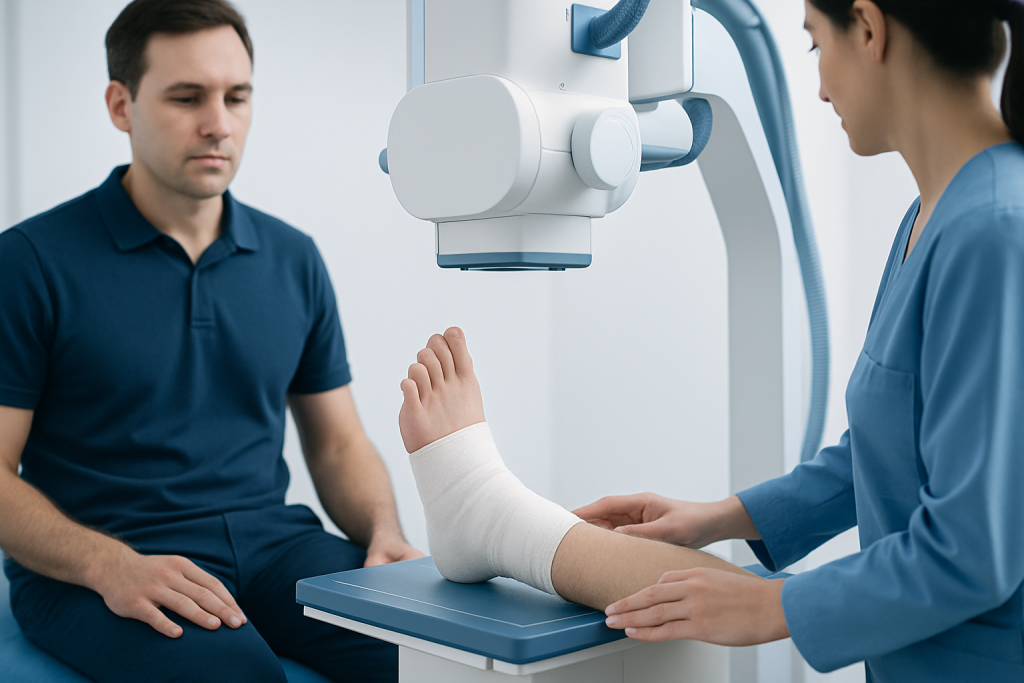
Both sprains and fractures can cause pain right away, but the pattern of symptoms sometimes offers clues. A sprain often produces tenderness around the soft tissue on the outside or inside of the ankle, swelling, bruising, and discomfort that may worsen with movement. A fracture may cause more intense pain, inability to bear weight, deformity, or a feeling that the ankle is unstable or “wrong.”
There is no single symptom that reliably separates the two. Some fractures still allow limited walking, and some severe sprains can be very painful. That is why health professionals look at the whole picture, including how the injury happened, where the pain is located, and whether the person can take a few steps.
- Common signs in either injury include swelling, bruising, and tenderness.
- More severe pain with obvious shape change may suggest a fracture.
- Marked instability or a popping sensation can occur with significant ligament injury.
- Numbness, coldness, or color change in the foot needs urgent attention.
If the ankle is swollen quickly after a twist, it is reasonable to treat it cautiously until a clinician evaluates it. The safest approach is not to assume it is “just a sprain,” especially if weight-bearing is difficult.
Causes & Risk Factors

An ankle sprain usually follows a twisting motion, such as landing awkwardly, stepping off a curb, or rolling the foot inward on uneven ground. Fractures can happen in the same kinds of accidents, but they are more likely when the force is stronger, when the person falls from a height, or when the ankle is trapped and twisted during sports or a traffic injury.
Several factors can increase the chance of either injury. Previous ankle injury, weak supporting muscles, poor balance, high-impact sports, walking on uneven surfaces, and footwear that does not support the foot well all play a role. Age and bone health also matter, because brittle bones may fracture more easily after a fall.
People with reduced sensation in the feet, certain neurological conditions, or balance problems may not recognize an injury immediately and can continue walking on it, which can worsen both sprains and fractures. For international travelers, long walks through airports, heavy luggage, and unfamiliar surroundings can add strain after an initial twist or stumble.
Diagnosis
Diagnosis starts with a careful history and physical examination. A clinician will ask how the injury happened, whether a pop was felt or heard, and whether the person could continue walking after the event. The exam looks for areas of bone tenderness, swelling patterns, bruising, range of motion, and signs of joint instability.
X-rays are commonly used when a fracture is suspected, especially if the ankle cannot bear weight or there is tenderness over the bony parts of the joint. In some cases, a normal X-ray does not fully explain symptoms, and the doctor may consider repeat imaging, MRI, or CT depending on the concern. These tests can show hidden fractures, cartilage injury, or significant ligament damage.
Clinical decision rules are often used to decide when imaging is needed, helping reduce unnecessary scans while still finding important injuries. The goal is not just to label the injury, but to understand whether the joint is stable and what kind of support will help it heal safely.
Treatment Options
Treatment depends on whether the ankle is sprained, broken, or both. A mild sprain may improve with protection, rest, ice, compression, elevation, and gradual return to movement. A more significant sprain can require a brace, temporary crutches, and guided rehabilitation to restore strength and balance.
A broken ankle often needs more structured treatment. Some fractures are managed with a boot or cast if the bone alignment is acceptable and the joint remains stable. Others need reduction or surgery to realign and stabilize the bones with plates, screws, or other fixation methods. The exact plan depends on the location of the fracture, whether the joint is displaced, and the person’s overall health.
Pain control, swelling reduction, and protection of the ankle are important in both conditions. Physical therapy is often part of recovery after the acute phase, because stiffness and muscle weakness can linger even when the bone or ligaments are healing. For patients who receive care away from home, coordinated follow-up is particularly important so that imaging, immobilization, and rehabilitation stay on the same track.
- Protection may include a brace, boot, cast, or crutches.
- Ice and elevation can help early swelling.
- Rehabilitation helps restore walking mechanics and reduce repeat injury.
- Surgery is reserved for fractures or unstable injuries that need internal fixation.
Prevention & Self-care
Not every ankle injury can be prevented, but many can be reduced with practical habits. Supportive footwear, good lighting, clear walking surfaces, and attention on stairs and curbs all lower risk. Athletes often benefit from balance training, ankle-strengthening exercises, and proper warm-up before activity.
If an ankle injury has already occurred, self-care should focus on protection rather than testing the joint too early. Rest from impact activity, elevation when possible, and using the recommended support device all help the injured tissues settle. Returning to normal walking should be gradual, not rushed, because pain can ease before the tissue is ready for full load.
People recovering while traveling should plan ahead for mobility needs, such as extra time in transit, assistance with luggage, and arrangements for follow-up care. When a person is flying or crossing borders with an injury, a clinician may advise how to keep the ankle protected and what signs mean medical review should happen sooner rather than later.
When to See a Doctor
Medical evaluation is important if the ankle looks deformed, cannot bear weight, or pain is severe after injury. A doctor should also assess the ankle if swelling and bruising are extensive, if pain is centered directly over a bone, or if the person has numbness, tingling, or changes in foot color or temperature.
Even when the injury seems manageable, it is wise to seek evaluation if pain does not improve over a few days or if walking remains difficult. Persistent swelling, repeated “giving way,” or a feeling that the ankle never fully recovered can signal a more complex sprain, a missed fracture, or joint instability that needs treatment.
For international patients, prompt assessment can prevent a small injury from becoming a longer recovery problem. Acibadem Health Point works with multidisciplinary specialists and JCI-accredited hospitals to diagnose and treat ankle injuries for international patients, helping coordinate imaging, orthopedic review, and follow-up planning.
Recovery and Follow-Up
Recovery time varies widely. A mild sprain may improve in days to weeks, while a severe sprain or fracture can take much longer, especially if immobilization or surgery is required. The pace of healing depends on the exact structures involved, how stable the ankle is, and how well the rehabilitation plan is followed.
Follow-up matters because symptoms alone do not always reveal whether healing is on track. Clinicians may check walking ability, swelling, pain level, range of motion, and alignment over time. If the ankle remains stiff or weak after the initial healing phase, rehabilitation can help rebuild confidence and reduce the risk of repeat injury.
It is common for people to worry about missing work, travel, or exercise. A clear plan from the treating doctor can make the process easier to manage, especially when care is being coordinated across distances or between countries. The aim is not simply to heal the injury, but to restore stable, comfortable use of the ankle in everyday life.
Frequently asked questions
01How can a person tell if an ankle is sprained or broken?
It is often difficult to tell by symptoms alone because both injuries can cause pain, swelling, and bruising. A fracture is more likely if the ankle cannot bear weight, looks deformed, or has strong tenderness over a bone, but imaging is often needed to confirm the diagnosis.
02Should an injured ankle be walked on?
If walking causes significant pain or the ankle feels unstable, it is better to avoid putting weight on it until a clinician evaluates the injury. Continuing to walk on a possible fracture or severe sprain can worsen the damage and delay recovery.
03Does every ankle injury need an X-ray?
Not every ankle injury needs imaging, but X-rays are commonly recommended when a fracture is suspected. A doctor decides based on the injury pattern, where the tenderness is located, and whether the person can take a few steps.
04What is the first thing to do after an ankle injury?
The ankle should be protected, rested, and elevated as soon as possible, and any excessive activity should stop. If there is severe pain, deformity, numbness, or inability to bear weight, medical evaluation should happen promptly.
05How long does it take to recover from a sprain or fracture?
Recovery depends on severity and treatment. Mild sprains can improve relatively quickly, while severe sprains and fractures may take weeks to months, especially if immobilization, surgery, or rehabilitation is needed.
06Can a severe sprain need the same treatment as a fracture?
Sometimes, yes. A major sprain can require a brace, crutches, and structured rehabilitation similar to a fracture recovery plan, although the details are different. The key is matching treatment to the stability of the ankle.
This article is for general information only and is not a substitute for professional medical advice. Please consult a qualified doctor about your individual situation.
Joint and spine care in Turkey — expert assessment & treatment
JCI-accredited · board-certified surgeons · reply within 24h
Add us as a Preferred Source to see more of our trusted health content across Google Search, AI Overviews and Discover.