Broken Foot vs Sprained: Key Differences Explained

Key Takeaways
- A sprain affects ligaments, while a fracture breaks a bone; both can cause pain, swelling, and trouble walking.
- Severe pain, deformity, inability to bear weight, or pain that worsens over time may suggest a fracture.
- Doctors usually confirm the difference with an exam and imaging such as X-rays, and sometimes MRI or CT.
- Early care focuses on protection, rest, ice, compression, elevation, and safe pain relief as advised by a clinician.
- Follow-up matters because some foot fractures need immobilization, crutches, or specialist care to heal well.
A broken foot and a sprained foot can look similar at first, but they involve different tissues and often need different care. Understanding the typical signs, how doctors confirm the diagnosis, and when to seek help can prevent a minor injury from becoming a longer recovery.
Overview
When someone is weighing broken foot vs sprained, the first challenge is that both injuries can create the same early picture: swelling, bruising, tenderness, and a painful step. The difference is what has been injured. A sprain means a ligament has been stretched or torn; a fracture means one of the bones in the foot has cracked or broken.
That distinction matters because the treatment plan may be quite different. A mild sprain may recover with protection and gradual return to activity, while a foot fracture can need immobilization, crutches, or a boot, and in some cases specialist follow-up to make sure the bones heal in the correct position.
For people deciding whether to travel for treatment or wait at home, the safest approach is to treat the injury as potentially serious until a clinician evaluates it. Foot injuries are easier to manage early than after several days of walking on a fracture that has not been recognized.
Symptoms
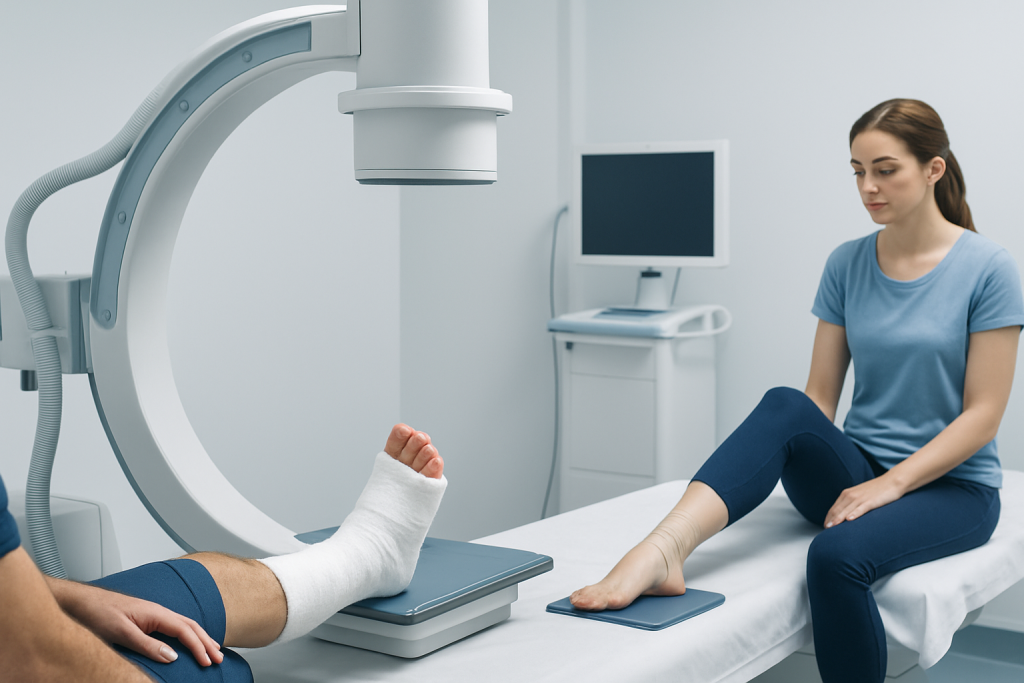
Sprains and fractures both commonly cause pain, but the pattern can offer clues. A sprained foot often hurts around a joint, especially after twisting or rolling the foot. Swelling may appear quickly, and bruising can develop within hours or over the next day. Movement may be uncomfortable, but some weight-bearing may still be possible, depending on the severity.
A broken foot may also cause swelling and bruising, yet the pain is often sharper and more focused over a specific bone. Some people describe a popping or cracking sensation at the moment of injury. Walking may be extremely difficult, and trying to stand may feel unstable or impossible.
Signs that can lean toward a fracture include:
- Visible deformity or an unusual angle of the foot
- Pain that is intense when touching one spot on the bone
- Inability to bear weight for more than a few steps
- Numbness, tingling, or toes that look pale or blue
- Pain that does not improve with rest and protection
Still, symptoms alone cannot reliably separate one from the other. Some sprains are severe, and some fractures are small or subtle, so imaging is often needed when the diagnosis is uncertain.
Causes & Risk Factors

Foot sprains usually happen when the foot twists, rolls inward or outward, or lands awkwardly during sports, walking on uneven ground, or stepping off a curb. The ligaments around the ankle and midfoot are designed to stabilize the foot, and sudden force can overstretch them.
Broken feet often result from a direct blow, a fall, a sports collision, dropping a heavy object on the foot, or repetitive stress. Stress fractures can develop gradually from repeated impact, especially in runners, dancers, military recruits, and others who increase activity too quickly.
Certain factors can raise the chance of either injury becoming more severe or healing more slowly:
- Osteoporosis or lower bone density
- Previous foot or ankle injuries
- High-impact sports or repetitive training
- Footwear that does not provide enough support
- Balance problems or uneven walking surfaces
International travelers may also face delays in care, unfamiliar terrain, or long days on foot. Those factors do not cause injury on their own, but they can make a minor twist more likely to become a more complicated problem if the person keeps walking on it.
Diagnosis
A clinician usually begins by asking how the injury happened, where it hurts, and whether the person can bear weight. A hands-on exam helps identify tenderness, swelling, bruising, instability, and any abnormal alignment. The location of the pain often gives important clues, but it cannot confirm the exact injury by itself.
X-rays are the most common test used to look for a fracture. They can show many broken bones clearly, although very small fractures or early stress fractures may not appear right away. If symptoms suggest a more complex injury, or if pain persists despite a normal X-ray, a doctor may recommend MRI or CT to look more closely at bones and soft tissues.
Medical evaluation is especially important when the injury involves the midfoot, the toes are numb or discolored, or the person cannot take four steps. These findings may indicate a fracture or a more significant sprain that deserves prompt care. For travelers, it is often helpful to arrange evaluation before flying or long-distance transport, since pressure changes, prolonged sitting, and walking through airports can worsen pain.
Treatment Options
Treatment depends on whether the injury is a sprain or a fracture, how severe it is, and which bone or ligament is involved. Early care for both conditions usually starts with protection and rest. Many clinicians recommend a form of the RICE approach: rest, ice, compression, and elevation. A boot, brace, or splint may be used to keep the foot still and reduce pain.
For a sprain, the goal is to let the ligaments calm down while gradually restoring motion, strength, and balance. Mild sprains may improve with protected walking and home care, while more significant sprains may require physical therapy. The return to activity should be gradual, because too much too soon can prolong symptoms.
For a fracture, treatment may include a cast, walking boot, crutches, or non-weight-bearing instructions. Some fractures need reduction, which means realigning the bone, and a smaller number require surgery if the bone pieces are displaced, unstable, or involve a joint surface. Pain control is usually personalized by the treating clinician, and safe medication choices depend on the person’s overall health and other medicines.
Healing time varies with the injury type and the person’s general health. A simple sprain may settle over days to weeks, while a fracture may need several weeks or longer. Follow-up visits are important because the plan may change as swelling improves and healing is reassessed.
Prevention & Self-care
Not every foot injury can be prevented, but a few habits can lower risk. Supportive shoes, attention to uneven surfaces, and conditioning exercises for balance and calf strength can all help. People who run, play court sports, or travel frequently on foot may benefit from a gradual increase in activity rather than abrupt changes in pace or distance.
If a foot injury has already happened, self-care should be conservative until a clinician gives clearer guidance. The foot should be rested and protected from extra stress. Ice can help with pain and swelling during the first couple of days, and elevation may reduce throbbing after standing or walking. Compression should be comfortable, not tight enough to cause numbness or color change.
It is also wise to avoid “testing” the injury repeatedly by walking on it. A person who keeps pushing through pain may turn a manageable injury into a longer recovery. Travelers may want to rearrange flights, hotel transfers, or sightseeing plans if walking is painful, since overuse before diagnosis can complicate care.
When to See a Doctor
Any foot injury that causes severe pain, obvious deformity, inability to bear weight, or numbness should be assessed promptly. A doctor should also be seen if bruising and swelling are extensive, if pain is concentrated on a bone, or if symptoms are not improving over a few days.
Immediate medical attention is appropriate if the toes become pale, blue, cold, or weak, or if there is an open wound with visible bone. These are not typical features of a simple sprain and may point to a more serious injury that needs urgent treatment.
If the injury occurred during travel, it is still worth seeking care before continuing long journeys. A clear diagnosis can help a person decide whether they can walk safely, need support devices, or should delay travel. Acibadem Health Point’s multidisciplinary specialists and JCI-accredited hospitals diagnose and treat foot injuries for international patients, with evaluation and follow-up arranged in a way that supports recovery beyond the first visit.
Living With Recovery and Returning to Activity
Recovery is not only about the bone or ligament healing; it is also about regaining confidence in movement. Once pain begins to ease, clinicians may suggest gentle range-of-motion work, then strength and balance exercises, and finally a return to normal walking, work, or sport. The pace should match the injury, not the calendar.
For people who are away from home, follow-up planning matters. It can help to save the imaging report, discharge instructions, and any mobility restrictions in an easy-to-access place. If care continues in another country, a clear record makes it easier for the next clinician to understand what has already been done.
Any return to activity should stop short of sharp pain, increasing swelling, or a limp that gets worse as the day goes on. Those are signals to pause and check back with a clinician rather than trying to force progress.
Frequently asked questions
01How can someone tell if a foot is broken or just sprained?
The symptoms can overlap, so it is not always possible to tell without an exam and imaging. A fracture is more likely if there is deformity, severe focal bone pain, or inability to bear weight, but a sprain can still be painful enough to need medical review.
02Can a broken foot still be walked on?
Some foot fractures allow limited walking at first, especially stress fractures or small, stable fractures. However, walking on a fracture can worsen pain or delay healing, so a clinician should decide how much weight-bearing is safe.
03Do all sprained feet need an X-ray?
Not always. Doctors usually use the injury history and exam to decide whether imaging is needed, especially if the pain is severe or there are signs that raise concern for a fracture.
04What is the first thing to do after a foot injury?
The foot should be rested and protected from more stress. Ice, elevation, and a supportive wrap or brace may help if they are comfortable, but the person should avoid forcing the foot to bear weight until it has been assessed if the injury seems significant.
05How long does recovery take?
Recovery time depends on whether the injury is a sprain or fracture and how severe it is. Mild sprains may improve in days to weeks, while fractures often need several weeks or more and sometimes follow-up imaging or therapy.
06When should a traveler seek care before flying?
Care should be sought before flying if the foot is very painful, swollen, deformed, or difficult to bear weight on. A medical check can help determine whether travel is safe and whether a boot, crutches, or another plan is needed.
This article is for general information only and is not a substitute for professional medical advice. Please consult a qualified doctor about your individual situation.
Joint and spine care in Turkey — expert assessment & treatment
JCI-accredited · board-certified surgeons · reply within 24h
Add us as a Preferred Source to see more of our trusted health content across Google Search, AI Overviews and Discover.