What Is Shoulder Massager? A Complete Medical Guide

Key Takeaways
- Shoulder massagers may help relax tight muscles and improve temporary comfort.
- They are best suited for mild muscle tension, not unexplained, severe, or injury-related pain.
- People with certain medical conditions should check with a clinician before using massage devices or heat.
- Good posture, movement breaks, and targeted exercises can reduce recurring shoulder strain.
- Persistent shoulder pain, numbness, weakness, swelling, or reduced range of motion deserves medical assessment.
A shoulder massager is a device designed to ease muscle tension in the shoulders, neck, and upper back through kneading, pressure, heat, or vibration. It may offer short-term comfort, but it is not a substitute for medical evaluation when pain is persistent, severe, or linked to injury.
Overview
A shoulder massager is a handheld, wearable, or chair-style device that applies pressure, vibration, rolling motion, kneading, or gentle heat to the shoulder area. For many people, the goal is simple: ease tight muscles after a long workday, support relaxation, and make everyday movement feel less restricted.
It is important to view a shoulder massager as a comfort tool, not a diagnosis or cure. Shoulder discomfort can come from muscle overuse, posture strain, tendon irritation, arthritis, neck problems, or an injury, and the right response depends on the cause. A device may soothe symptoms, but it does not replace an examination when the pain is new, persistent, or unusual.
For people considering care while traveling for treatment, it can be helpful to think of a shoulder massager as one part of a broader recovery routine. Clinicians often look at the full picture: how the pain started, how far it spreads, what movements aggravate it, and whether the shoulder problem is actually coming from the neck, spine, or another structure nearby.
How Shoulder Massagers Work
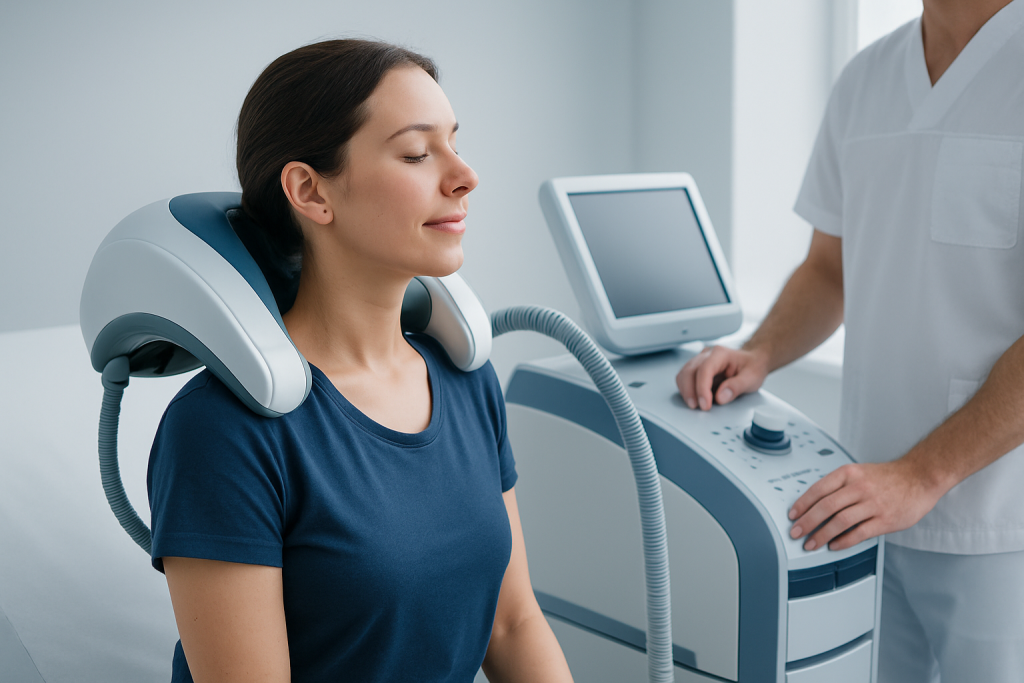
Different shoulder massagers use different mechanisms. Some wrap around the shoulders and upper back with rotating nodes that mimic kneading. Others use vibration or percussion-like motion, while some combine massage with warmth to relax stiff muscles and improve comfort.
The sensation may feel helpful because massage can temporarily reduce muscle guarding, improve local circulation, and interrupt the cycle of tension and pain. Heat may also make tissues feel looser, which can be useful for muscle tightness that develops after prolonged sitting, computer work, or repetitive lifting.
Still, the effect is usually short-term. If shoulder pain keeps returning, a massager may be masking the symptom rather than addressing the reason it keeps happening. That is why persistent discomfort deserves a medical review, especially when symptoms affect sleep, work, or movement.
Common Symptoms People Try to Ease

People often use a shoulder massager when the upper trapezius, neck, or shoulder muscles feel tight, heavy, or sore. The discomfort may be described as stiffness after desk work, a dull ache after exercise, or a sense that the shoulders are “stuck” in a raised position.
Some people seek relief for tension headaches linked to neck and shoulder strain. Others use massage after a long drive, long flight, or periods of carrying bags, children, or sports equipment. In those cases, the device may support relaxation and help the area feel less fatigued.
However, not every shoulder symptom is simple muscle tension. Pain with lifting the arm, clicking after an injury, night pain, weakness, numbness, or pain that travels down the arm may point to a tendon, joint, or nerve problem. Those patterns should be assessed rather than repeatedly treated at home.
Causes and Risk Factors for Shoulder Tension
Shoulder tightness often develops from daily habits rather than a single event. Common triggers include long hours at a computer, phone use with the head tilted forward, poor desk setup, repetitive overhead activity, carrying heavy loads on one side, and stress-related muscle clenching.
Other factors can increase shoulder strain. These include weak upper-back muscles, reduced flexibility in the chest and neck, sudden changes in exercise intensity, and sleeping positions that keep the shoulder compressed for long periods. In some people, a previous injury changes how the shoulder moves and increases the likelihood of recurrent discomfort.
Medical causes also matter. Rotator cuff irritation, frozen shoulder, arthritis, bursitis, neck disc problems, and inflammatory conditions can all cause shoulder pain or stiffness. Because the shoulder is such a mobile joint, the same symptom can have several different explanations, which is why self-treatment should be used thoughtfully.
Diagnosis: When a Shoulder Massager Is Not Enough
If pain is mild and clearly related to muscle tension, a shoulder massager may be reasonable as part of home care. But if symptoms continue, clinicians usually start by asking detailed questions about onset, location, movement limits, previous injuries, work demands, sports, and any numbness or weakness.
A physical examination can reveal whether the problem is likely in the shoulder joint itself, the muscles around it, or the neck. The doctor may check range of motion, strength, tenderness, and signs of nerve involvement. In some cases, imaging such as X-rays, ultrasound, or MRI is recommended to clarify tendon, joint, or bone issues.
For international patients, that assessment often matters more than the device itself, because it helps avoid delays and trial-and-error use of home products. A precise diagnosis makes it easier to choose between rest, physiotherapy, medication, injection-based care, or, in some situations, surgery.
Treatment Options
Treatment depends on the cause, but the first steps often focus on reducing irritation and restoring movement. Clinicians may recommend activity modification, supervised physiotherapy, posture correction, and targeted exercises to strengthen the shoulder blade, rotator cuff, and upper back muscles.
Massage devices may be used as an adjunct for muscle tension, provided they are comfortable and do not worsen pain. Warmth may help some people, while others do better with gentle mobility work, stretching, or brief breaks from repetitive tasks. If inflammation or a structural problem is present, the plan may include other medical treatments tailored to the diagnosis.
In more complex cases, especially after trauma or with long-standing loss of function, treatment may need specialist input from orthopedics, rehabilitation medicine, or neurology. Patients who travel for care should also discuss how follow-up will work after they return home, including exercise plans and warning signs that require review.
Prevention and Self-care
Prevention is often more effective than repeatedly chasing symptoms with a device. A balanced routine that includes posture awareness, regular movement breaks, upper-back strengthening, and shoulder mobility work can reduce the strain that builds during the day.
Simple self-care steps may include adjusting the chair and screen height, keeping shoulders relaxed rather than lifted, avoiding long periods in one position, and spreading carrying loads more evenly. Sleep position matters too; a supportive pillow and a comfortable arm position can reduce overnight irritation.
When using a shoulder massager, moderation helps. It should feel pleasant or mildly relieving, not painful or forceful. People should avoid using it directly over acute injuries, areas of swelling, broken skin, or regions where numbness or abnormal sensation is present. Those with osteoporosis, bleeding disorders, blood clotting concerns, or complex medical conditions should ask a clinician before using massage or heat.
- Use the device for short sessions first and observe how the shoulder responds.
- Stop if pain increases, dizziness develops, or symptoms spread down the arm.
- Pair massage with exercise and ergonomic changes rather than relying on it alone.
- Choose a product that is gentle, stable, and easy to control.
When to See a Doctor
Medical assessment is recommended if shoulder pain lasts more than a short period, interferes with sleep or daily tasks, or keeps returning after home care. It is also important to seek care if there is swelling, redness, deformity, significant weakness, marked stiffness, fever, or pain after a fall or other injury.
Prompt evaluation is especially important when symptoms include numbness, tingling, a sense of arm weakness, or pain that starts in the neck and travels into the arm or hand. These features can suggest nerve involvement or another condition that needs a targeted treatment plan.
If a shoulder massager consistently causes discomfort instead of relief, that is also useful information. It may mean the problem is not simple muscle tension, or that the device is too intense for the tissues involved. A doctor or physiotherapist can help determine whether the shoulder needs rest, rehabilitation, imaging, or a different kind of care. Acibadem Health Point’s multidisciplinary specialists and JCI-accredited hospitals diagnose and treat shoulder conditions for international patients seeking coordinated care.
Frequently asked questions
01What is a shoulder massager used for?
A shoulder massager is used to ease muscle tension, improve comfort, and promote relaxation in the shoulders, neck, and upper back. It may help after long periods of sitting, stress, or repetitive activity. It is most useful for mild muscular tightness rather than unexplained pain.
02Can a shoulder massager treat shoulder pain?
It may temporarily reduce discomfort from tight muscles, but it does not treat every cause of shoulder pain. Joint problems, tendon injuries, neck-related pain, and nerve irritation may need medical evaluation and a different treatment approach. If pain persists, a clinician should assess it.
03Is it safe to use heat with a shoulder massager?
Heat can be helpful for some people with muscle tightness, but it is not right for every situation. It should be used carefully and avoided over swelling, acute injury, numb skin, or areas that become overly hot. People with circulation problems or other medical concerns should ask a doctor first.
04How long should a shoulder massager be used?
Short sessions are usually better than long ones, especially when first trying a device. The goal is gentle relief, not strong pressure or soreness afterward. If symptoms worsen after use, the device may be too intense or the problem may need medical review.
05When should shoulder pain be checked by a doctor?
Shoulder pain should be checked if it lasts, worsens, follows an injury, or limits normal movement. Numbness, weakness, swelling, fever, or pain that radiates down the arm also deserve medical attention. These signs can point to conditions that massage alone will not solve.
06Can posture exercises help more than a shoulder massager?
Often, yes. A shoulder massager can ease tension, but posture correction, strengthening, and mobility exercises help reduce the strain that causes the tension in the first place. Many people do best with both symptom relief and a longer-term movement plan.
This article is for general information only and is not a substitute for professional medical advice. Please consult a qualified doctor about your individual situation.
Joint and spine care in Turkey — expert assessment & treatment
JCI-accredited · board-certified surgeons · reply within 24h
Add us as a Preferred Source to see more of our trusted health content across Google Search, AI Overviews and Discover.