Scoliosis: Symptoms, Causes and Treatment

Key Takeaways
- Scoliosis symptoms may include uneven shoulders, a visible curve in the spine, and one hip or shoulder blade appearing more prominent.
- Many people do not feel pain at first, which is why posture changes are often noticed before discomfort.
- Diagnosis usually involves a physical exam and imaging when needed to measure the spinal curve.
- Treatment depends on age, curve size, growth stage, and symptoms; observation, bracing, physical therapy, or surgery may be considered.
- Regular follow-up matters because scoliosis can change over time, especially during periods of growth.
Scoliosis can appear gradually, so the first clues are often small changes in posture, shoulder height, or waistline shape rather than pain. Understanding the symptoms early can help families and adults seek timely evaluation and choose appropriate care.
Overview
Scoliosis is a sideways curvature of the spine that can also include rotation of the vertebrae. It may develop in childhood or adolescence, and it can also be found in adults, either as a long-standing condition or as a curve that develops later in life.
What makes scoliosis symptoms easy to miss is that the body often adjusts around the curve. A person may simply look a little uneven in the mirror, notice clothes fitting differently, or hear a family member mention that one shoulder seems higher than the other. In many cases, the condition is first picked up during a routine school check, a sports physical, or a visit for an unrelated back concern.
For international patients planning assessment or treatment abroad, the practical question is often not just whether scoliosis is present, but how much it is affecting balance, comfort, movement, and future growth. A careful orthopedic evaluation helps distinguish a mild curve that can be monitored from one that needs active treatment.
Symptoms
The visible signs of scoliosis are often more noticeable than pain. Parents or adults may see that one shoulder sits higher, one shoulder blade sticks out more, or the waist looks uneven. When a person bends forward, one side of the rib cage or lower back may appear higher than the other.
Common symptoms and signs may include:
- Uneven shoulders or shoulder blades
- A head that appears slightly off-center over the pelvis
- One hip higher than the other
- Ribs that seem more prominent on one side
- Clothing that hangs unevenly
- Back fatigue or aching, especially after long periods of standing or sitting
Many children and teenagers with scoliosis do not report pain, which is why posture changes can be the key clue. Adults are more likely to describe stiffness, back discomfort, or reduced endurance, especially if the curve has been present for years or if spinal arthritis is also involved. Breathing problems are uncommon in mild scoliosis, but larger curves may affect chest space and should be assessed by a doctor.
Causes & Risk Factors
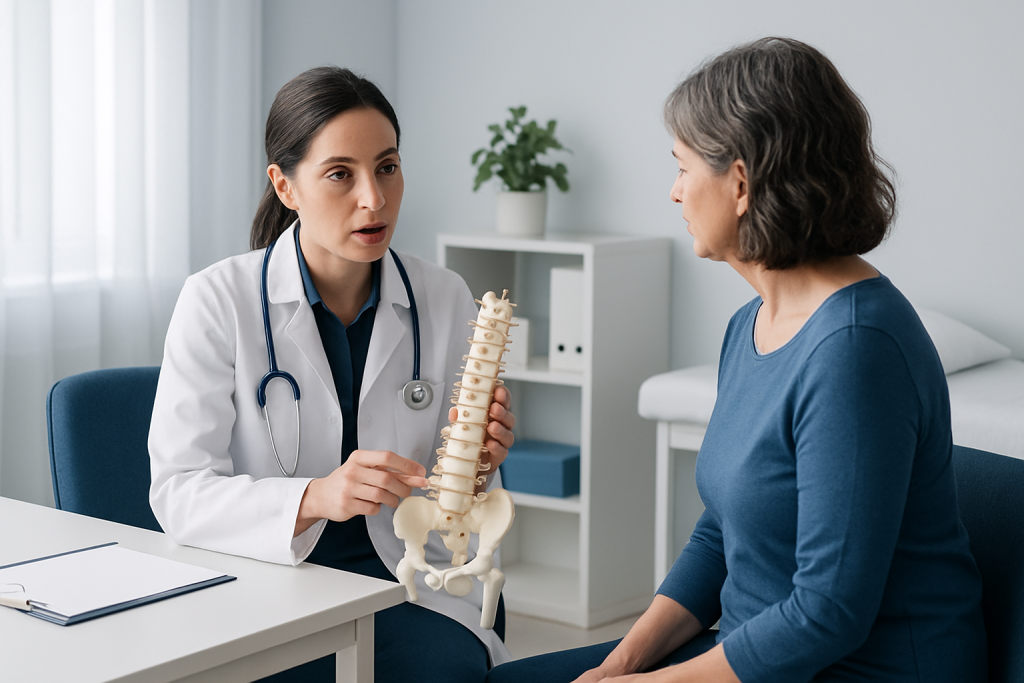
Scoliosis has more than one possible cause. The most common form in adolescents is idiopathic scoliosis, which means no single cause is identified. It often appears during growth spurts and may run in families, suggesting that inherited factors can play a role.
Other forms can develop because of neuromuscular conditions, congenital differences in the spine, or changes related to aging. In adults, degeneration of the discs and joints can gradually lead to spinal curvature, sometimes with pain, imbalance, or nerve irritation.
Factors that may increase the chance of scoliosis or make it more likely to progress include:
- Rapid growth during childhood or adolescence
- A family history of scoliosis
- Neuromuscular disorders that affect muscle control
- Congenital spine differences present at birth
- Age-related wear and tear in the spine
It is important to note that common daily activities, carrying a backpack, or sitting with poor posture do not usually cause true scoliosis. They may, however, make an existing curve or uneven posture easier to notice.
Diagnosis
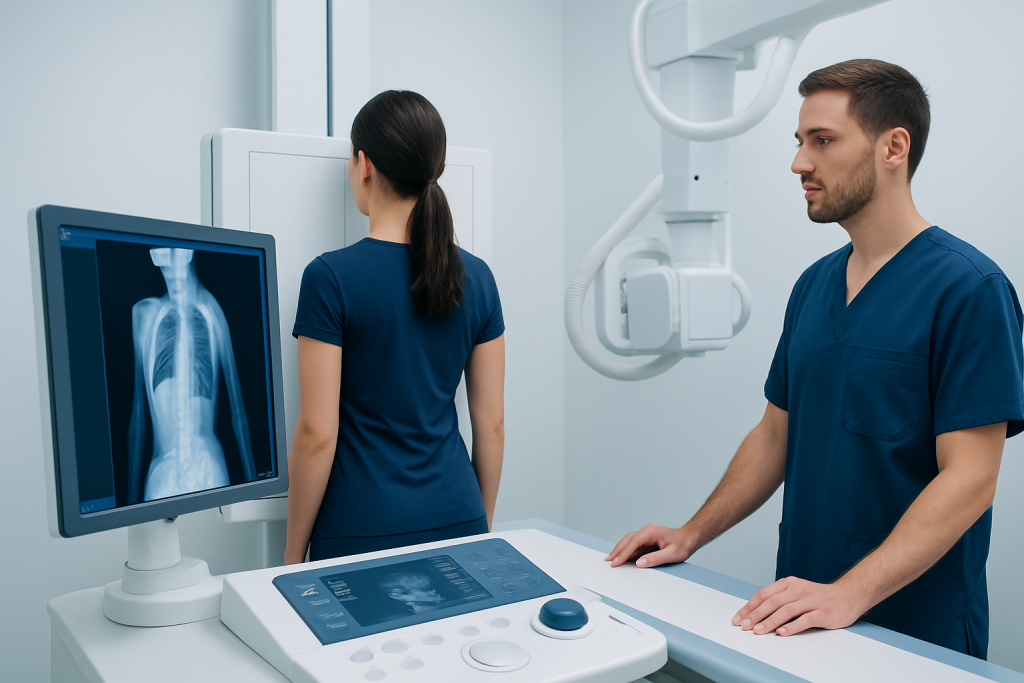
Diagnosis begins with a physical examination. The clinician looks at shoulder level, waist symmetry, hip height, and how the spine behaves when the person bends forward. This simple examination can reveal the rotational changes that often accompany scoliosis.
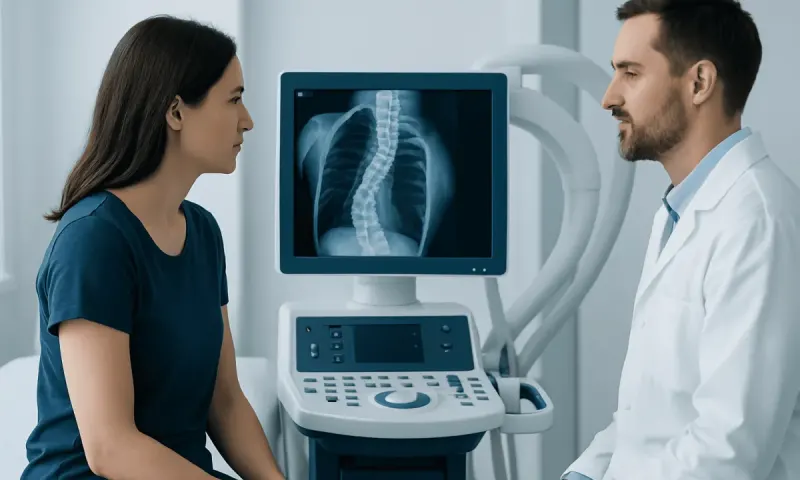
If scoliosis is suspected, imaging may be used to confirm the diagnosis and measure the curve. X-rays are the standard test for measuring the angle and monitoring whether the curve is stable or changing. In some situations, additional imaging may be recommended if the doctor wants a closer look at the bones, nerves, or surrounding structures.
For families traveling from another country, it can help to bring prior X-rays, reports, and growth history if available. This gives the orthopedic team a clearer picture of whether the curve is newly discovered or already known, and whether it is likely to remain stable or progress during remaining growth.
Treatment Options
Treatment is based on several factors, including the person’s age, the size of the curve, whether growth is still ongoing, and whether symptoms are interfering with daily life. A mild curve may only need observation over time, while a growing child with a more significant curve may need active treatment.
Bracing is commonly used for children and teenagers who are still growing and whose curves fall into a range where support may help slow progression. A brace does not usually straighten the spine permanently, but it can be an important part of preventing a curve from becoming larger during growth.
Physical therapy, posture training, and exercises designed for scoliosis may help with strength, mobility, and body awareness. These approaches are often most useful as part of a broader plan rather than as a stand-alone cure. In adults, treatment may focus on pain control, movement, core strengthening, and managing associated arthritis or nerve symptoms.
Surgery is considered when a curve is severe, progressing despite other treatment, or causing significant functional problems. The aim is to correct and stabilize the spine as safely as possible while reducing future progression. A specialist will discuss the expected recovery, follow-up schedule, and travel considerations if treatment is being planned from abroad.
Prevention & Self-care
Most cases of scoliosis cannot be prevented, especially when the cause is idiopathic or related to growth. The most useful step is early recognition, because timely evaluation can open the door to monitoring or treatment before a curve becomes more difficult to manage.
Everyday self-care can support comfort and confidence, whether scoliosis is mild or being treated more actively. Staying physically active, maintaining general fitness, and following the care plan recommended by the orthopedic team can make day-to-day life easier. For some people, targeted exercises, safe stretching, and core-strength work help reduce stiffness and improve endurance.
Practical tips may include:
- Keep scheduled follow-up visits, especially during growth spurts
- Use the brace exactly as instructed if one is prescribed
- Choose activities that keep the back moving without overstraining it
- Pay attention to new pain, numbness, or changes in balance
- For traveling patients, plan review appointments and imaging before return travel whenever possible
When to See a Doctor
A doctor should evaluate any persistent asymmetry in the shoulders, ribs, hips, or waist, especially in a child or teenager who is still growing. Even when there is no pain, a visible curve deserves assessment because scoliosis can progress quietly.
Prompt medical review is also important if back pain is increasing, if there is numbness or weakness, if walking becomes less steady, or if breathing feels limited. Adults who notice a new curve or a change in an old one should not assume it is just muscle strain, since degenerative scoliosis and other spinal conditions may require different care.
International patients often benefit from an orthopedic opinion that combines imaging review, physical examination, and a clear follow-up plan that can continue after they return home. Acibadem Health Point’s multidisciplinary specialists and JCI-accredited hospitals diagnose and treat scoliosis for international patients in a coordinated way, with attention to both treatment and continuity of care.
Living With Scoliosis
Living with scoliosis is often very manageable, especially when the condition is identified early and followed over time. Many people continue school, sports, work, and travel with appropriate guidance and periodic reassessment.
What matters most is matching the care plan to the person, not simply to the X-ray. A curve that is small and stable may be observed, while a curve that is changing may need bracing, therapy, or surgery. Clear communication with the care team helps patients understand what is being watched, what symptoms matter, and when a change in plan may be needed.
For families making decisions across borders, a well-organized diagnosis and treatment plan can reduce uncertainty. Knowing who will review imaging, who will manage follow-up, and how care will continue after the visit makes the process more practical and less stressful.
Frequently asked questions
01What are the earliest scoliosis symptoms?
The earliest signs are often subtle posture changes rather than pain. One shoulder may sit higher, one hip may look more prominent, or clothing may hang unevenly. A forward bend test can make the curve easier to see.
02Does scoliosis always cause pain?
No, many children and teenagers with scoliosis do not feel pain at first. Adults are more likely to notice back discomfort, stiffness, or fatigue, especially if the curve has been present for a long time. Pain is not required for scoliosis to be present.
03Can scoliosis get worse over time?
Yes, some curves remain stable while others progress, particularly during periods of rapid growth. In adults, curves may also change gradually due to age-related spine wear. Regular follow-up helps track whether the curve is stable.
04How is scoliosis confirmed?
A doctor usually starts with a physical examination and then uses X-rays if scoliosis is suspected. The images help measure the curve and guide treatment decisions. Other tests may be used if the doctor wants more detail about the spine or nerves.
05Is a brace always necessary?
No, bracing is only recommended in certain cases, usually for growing children or teenagers with curves that may progress. Mild curves are often monitored instead. The treatment plan depends on age, growth, curve size, and symptoms.
06Can adults be treated for scoliosis?
Yes, adults can be evaluated and treated as well. Care may include exercise-based rehabilitation, pain management, monitoring, or surgery in selected cases. The right option depends on symptoms, curve behavior, and overall spine health.
This article is for general information only and is not a substitute for professional medical advice. Please consult a qualified doctor about your individual situation.
Joint and spine care in Turkey — expert assessment & treatment
JCI-accredited · board-certified surgeons · reply within 24h
Add us as a Preferred Source to see more of our trusted health content across Google Search, AI Overviews and Discover.