Scoliosis Spinal Curvature: Signs, Types and Care
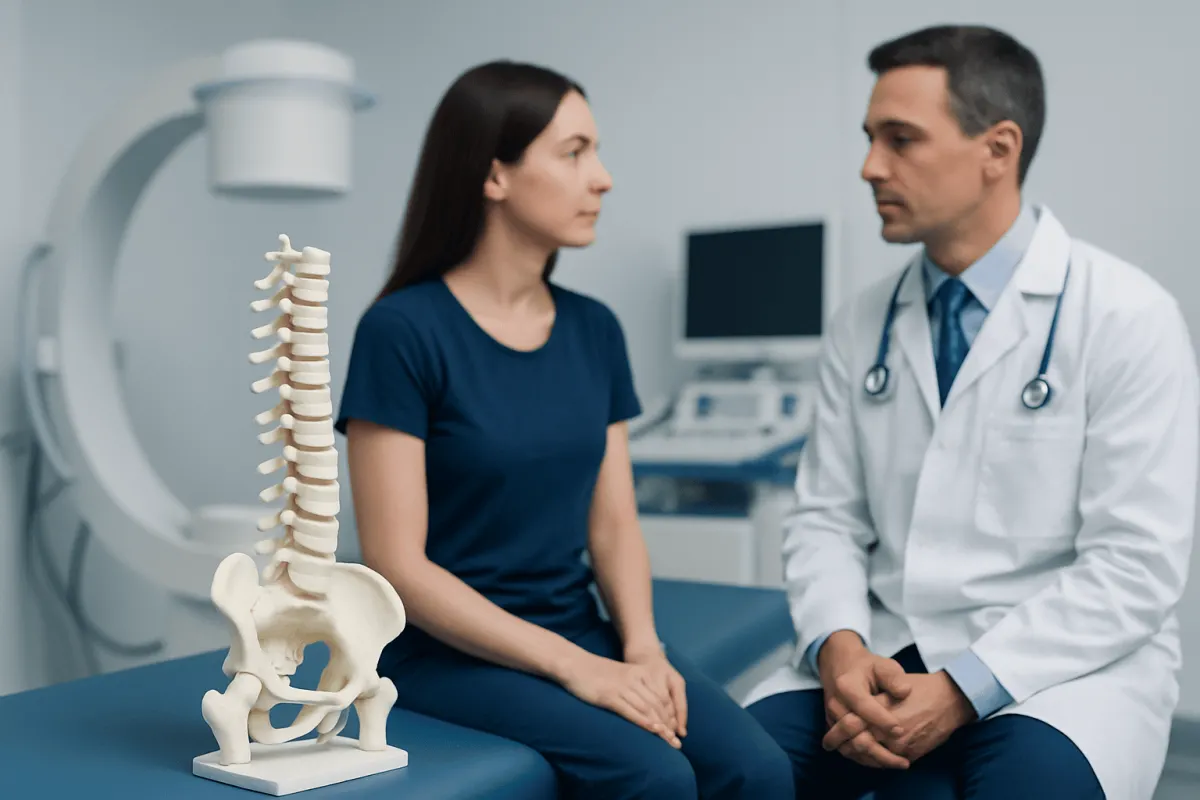
Scoliosis spinal curvature is an abnormal side-to-side curve of the spine, usually accompanied by rotation of the vertebrae. Many curves are mild and monitored over time, while progressive or more pronounced curves may need specialist treatment.
Scoliosis spinal curvature overview
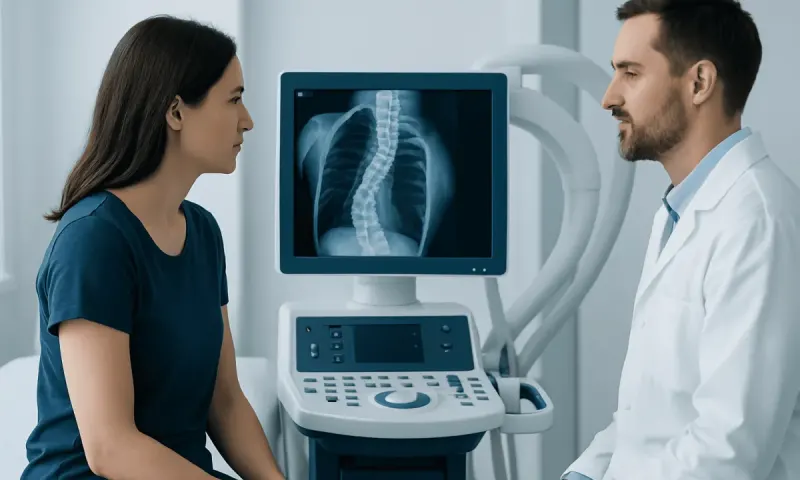
Scoliosis spinal curvature is a sideways curve of the spine that is measured on an X-ray and is usually associated with rotation of the spinal bones, called vertebrae. A small degree of spinal asymmetry can occur in many people, but scoliosis is generally diagnosed when the curve measures at least 10 degrees by the Cobb angle method.
The spine may curve to the right or left in the chest area, lower back, or both. Rather than being simply a posture problem, scoliosis is a three-dimensional change in spinal alignment. It can make one shoulder, shoulder blade, hip or side of the waist appear higher or more prominent.
Scoliosis most often becomes noticeable during the adolescent growth period. However, it can also be present at birth, arise in association with neurological or muscle conditions, or develop later in adulthood because of age-related changes in the spinal discs and joints.
What is scoliosis a curvature of?
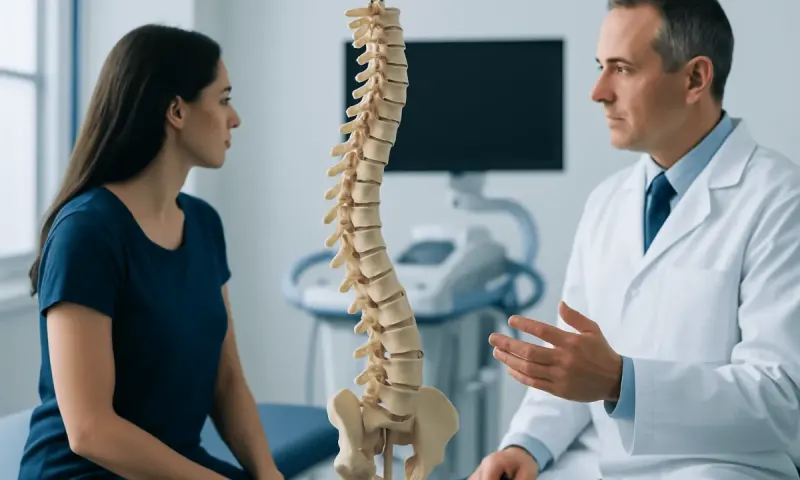
Scoliosis is a curvature of the spine in the coronal plane, meaning it bends sideways when viewed from the front or back. In addition to this lateral curve, the vertebrae commonly rotate, which contributes to the rib or muscle prominence seen when a person bends forward.
A normal spine has gentle curves when viewed from the side: an inward curve in the neck and lower back, and an outward curve through the upper back. These normal front-to-back curves are different from scoliosis. Scoliosis refers specifically to an abnormal sideways curve, although changes in the side-view profile can occur alongside it.
Healthcare professionals describe curves by their location and direction, such as a right thoracic curve in the upper back or a left lumbar curve in the lower back. The location, size and pattern of the curve help clinicians assess likely progression and plan follow-up.
What are the 7 types of scoliosis?
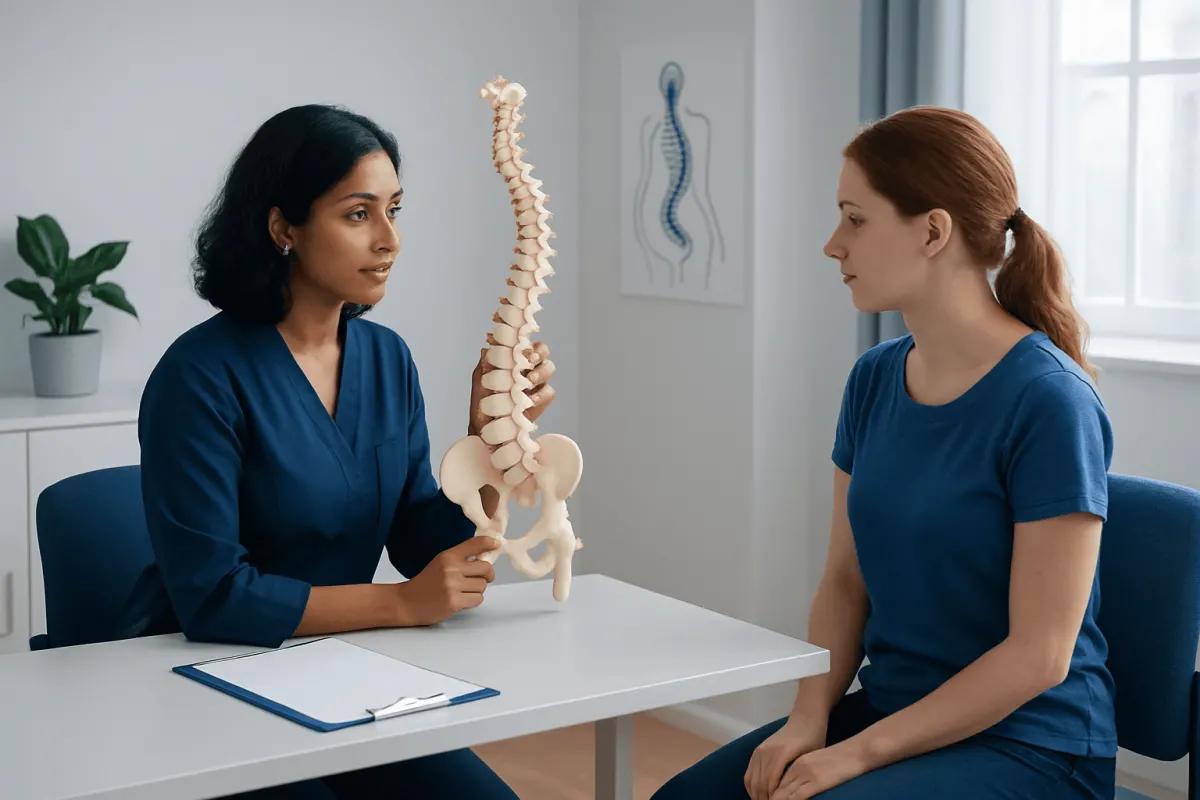
There is no single universal list of exactly seven types, because scoliosis can be classified by cause, age of onset or curve pattern. A practical clinical classification includes seven commonly discussed forms: idiopathic scoliosis, congenital scoliosis, neuromuscular scoliosis, syndromic scoliosis, degenerative scoliosis, traumatic scoliosis and functional (non-structural) scoliosis.
- Idiopathic scoliosis: the most common form, with no specific underlying cause identified; it is often first detected during adolescence.
- Congenital scoliosis: caused by vertebrae that do not form or separate normally before birth.
- Neuromuscular scoliosis: associated with conditions that affect muscle control or nerve function, such as cerebral palsy or muscular dystrophy.
- Syndromic scoliosis: occurs as part of a genetic or connective-tissue syndrome.
- Degenerative scoliosis: develops in adulthood as spinal discs and joints wear over time.
- Traumatic scoliosis: may develop after a significant spinal injury or following surgery that alters spinal balance.
- Functional scoliosis: a temporary, flexible curve related to factors such as leg-length difference, muscle spasm or pain; it may improve when the underlying issue is corrected.
Structural forms involve lasting changes in the spine and usually include vertebral rotation. A clinician can distinguish a structural curve from a functional one through examination and imaging. For more information on related spinal concerns, readers may find scoliosis care and assessment helpful.
What are 5 symptoms of scoliosis?
Mild scoliosis often causes no pain or noticeable symptoms, especially in children and teenagers. It may first be identified during a routine examination, school screening where available, or when a family member notices an asymmetry in posture.
Five common signs or symptoms of scoliosis are:
- One shoulder appearing higher than the other.
- One shoulder blade looking more prominent.
- An uneven waist or hips that seem unlevel.
- A rib or lower-back prominence on one side when bending forward.
- Clothes hanging unevenly or appearing to sit differently on the body.
Back discomfort may occur, particularly in adults with degenerative scoliosis, but pain alone does not confirm scoliosis. Numbness, weakness, balance difficulty, bowel or bladder changes, or severe persistent pain are not typical features of uncomplicated adolescent idiopathic scoliosis and should be evaluated promptly.
Is scoliosis very serious?
Scoliosis is not always very serious. Most curves are mild, remain stable or progress slowly, and do not interfere significantly with daily activities. The importance of a curve depends on its size, location, cause, the person’s age and remaining growth, symptoms, and whether it is changing over time.
In a growing child or adolescent, a larger curve may be more likely to progress before skeletal maturity. Very large curves, especially in the upper spine, can alter chest shape and may affect lung function in some cases. In adults, degenerative scoliosis can contribute to back pain, posture changes or nerve compression, although symptoms vary considerably.
Early assessment does not mean surgery is inevitable. It helps establish an accurate baseline and identify people who need monitoring or treatment. With appropriate follow-up, many people with scoliosis participate fully in school, work, exercise and family life.
Causes, risk factors and diagnosis
About eight in ten cases of adolescent scoliosis are idiopathic, meaning that no single cause can be found. It tends to run in families, suggesting a genetic contribution, but it is not caused by carrying a backpack, poor posture, sports participation or a lack of exercise. Girls are more likely than boys to develop curves that progress enough to need treatment.
During assessment, a clinician asks about growth, family history, pain, neurological symptoms and previous medical conditions. The physical examination commonly includes the forward-bend test, during which the clinician looks for asymmetry of the ribs or lower back. Leg length, muscle strength, reflexes and walking may also be assessed.
Standing X-rays of the full spine are used to confirm scoliosis and measure the Cobb angle. Repeat imaging may be recommended during growth to check whether a curve is changing. MRI is not routinely required, but may be considered when there are unusual symptoms, neurological findings, significant pain, very early onset or an atypical curve pattern.
Treatment options and everyday self-care
Treatment is individualized. Observation with periodic examinations and X-rays is often appropriate for small curves, particularly when a person is near the end of growth. The aim is to identify meaningful progression while avoiding unnecessary treatment.
For some growing children and adolescents with moderate, progressive curves, a brace may be recommended to reduce the chance that the curve will worsen while growth continues. Bracing does not straighten every curve permanently, and its benefit depends on the curve pattern, growth stage and consistent use as prescribed. Exercise-based physiotherapy can improve strength, flexibility, posture awareness and function; it may be used alongside, rather than as a replacement for, monitoring or bracing when these are indicated.
Surgery may be considered for selected severe or progressing structural curves, or when scoliosis causes substantial imbalance or symptoms. Procedures are planned carefully by spine specialists and may involve correcting and stabilizing part of the spine. Scoliosis surgery is generally discussed only after a detailed review of imaging, growth, symptoms and personal goals.
Regular physical activity is beneficial for general health and is usually encouraged. Swimming, walking, cycling, strengthening and flexibility work can often be adapted safely. A clinician or physiotherapist can advise on suitable activity when there is pain, a neuromuscular condition, recent surgery or a rapidly changing curve.
When to seek medical care
A parent, caregiver or adult should arrange a medical assessment if there is a newly noticed uneven shoulder, rib prominence, uneven waist or hip level, a change in posture, or a curve that seems to be increasing. Assessment is especially important during rapid growth in childhood and adolescence, when some curves can change more quickly.
Prompt medical advice is appropriate if scoliosis is accompanied by persistent or night pain, weakness, numbness, difficulty walking, fever, unexplained weight loss, or changes in bladder or bowel control. These symptoms may have causes other than scoliosis, but they warrant timely evaluation.
At Acıbadem Health Point, multidisciplinary spine specialists in JCI-accredited hospitals assess and treat scoliosis for international patients, coordinating imaging, rehabilitation and surgical consultation when needed. A qualified clinician can explain the likely cause of an individual curve and recommend an appropriate monitoring or treatment plan.
Frequently asked questions
01Can scoliosis be corrected without surgery?
Many people do not need surgery. Mild curves may only need observation, while bracing can help limit progression in some growing adolescents. Physiotherapy and regular activity can support comfort, strength and function, but the best plan depends on the curve and stage of growth.
02Does poor posture cause scoliosis?
Poor posture does not cause structural scoliosis. Slouching can make asymmetry appear more noticeable and may contribute to temporary discomfort, but it does not create the vertebral rotation seen in true scoliosis. A clinician can help distinguish posture-related changes from a structural curve.
03Can scoliosis get worse with age?
Some curves can progress, especially during rapid growth. In adulthood, larger curves or curves linked to spinal degeneration may also change gradually over time. Regular follow-up is useful when a clinician believes progression is possible.
04Is exercise safe for people with scoliosis?
Exercise is generally safe and beneficial for people with scoliosis. It can improve overall fitness, muscle endurance and wellbeing, although it does not replace clinical monitoring when a curve may progress. Individual advice is important for people with pain, neurological symptoms, severe curves or recent surgery.
05How is scoliosis diagnosed?
Diagnosis begins with a history and physical examination, often including a forward-bend test. Standing spinal X-rays confirm the curve and measure it using the Cobb angle. Further imaging may be recommended if the findings are unusual or there are neurological symptoms.
06At what age is scoliosis most often found?
Idiopathic scoliosis is commonly detected during late childhood or adolescence, particularly during periods of rapid growth. It can also occur in younger children or adults. The age at which it appears helps clinicians consider the most likely cause and the need for follow-up.
This article is for general information only and is not a substitute for professional medical advice. Please consult a qualified doctor about your individual situation.
Joint and spine care in Turkey — expert assessment & treatment
JCI-accredited · board-certified surgeons · reply within 24h
Add us as a Preferred Source to see more of our trusted health content across Google Search, AI Overviews and Discover.