How to Fix Scoliosis: Treatments That Can Help

Scoliosis cannot always be fully reversed, but many curves can be monitored, managed or surgically corrected when needed. The right approach depends on the curve’s cause, size, progression risk, symptoms and the person’s stage of growth.
How can scoliosis be fixed?
How to fix scoliosis depends on what is meant by “fix.” A spinal curve may be observed, prevented from worsening, managed to reduce symptoms, or corrected with surgery. For many people, especially those with mild scoliosis, the goal is not to make the spine perfectly straight but to maintain comfort, movement, balance and quality of life.
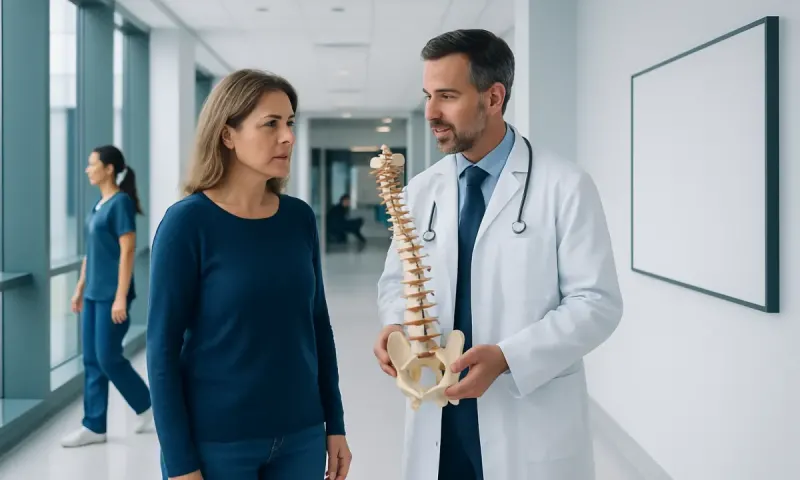
Care is individualized. A clinician considers the person’s age, whether they are still growing, the type and location of the curve, X-ray measurements, symptoms and whether the curve is changing over time. Options can include regular follow-up, scoliosis-specific physiotherapy, pain management, bracing or spinal surgery.
It is important to distinguish structural scoliosis from poor posture. Structural scoliosis involves a fixed sideways curve with some rotation of the vertebrae. Postural asymmetry may look similar but can improve when a person changes position; it needs a different approach. An assessment by a qualified clinician helps identify the cause and guide treatment.
Understanding scoliosis and its treatment goals
Scoliosis is a sideways curvature of the spine that is typically measured on an X-ray. It often develops during the growth years, although it can also appear or become more noticeable in adulthood. The most common form is idiopathic scoliosis, meaning its precise cause is not known. It is not caused by carrying a backpack, poor posture or ordinary sports activities.
Some curves remain small and stable. Others can increase during periods of rapid growth, which is why children and adolescents may need scheduled follow-up. In adults, an existing childhood curve may progress slowly, or degenerative changes in spinal discs and joints may contribute to a new curve.
Treatment goals differ from person to person. In a growing child, the priority may be preventing a moderate curve from worsening. For an adult, treatment often focuses on reducing pain, protecting nerve function, improving walking tolerance and supporting independent daily activities. The condition is discussed in more detail on the scoliosis information page.
Is it possible to completely fix scoliosis?

It is sometimes possible to substantially straighten a scoliosis curve with surgery, but it is not always possible—or necessary—to completely eliminate the curve. Surgery generally aims to improve alignment, balance and function while safely stabilizing the spine. A small residual curve may remain even after a successful procedure.
Non-surgical treatments do not usually completely reverse an established structural curve. However, they can be very valuable. Monitoring can identify progression early, bracing can reduce the likelihood of worsening in selected growing children, and specialized rehabilitation can improve strength, body awareness, breathing mechanics, movement and symptom control.
People asking how to fix scoliosis in the back may be looking for a rapid correction at home. Exercises, stretching and posture changes can support spinal health, but they should not replace an evaluation when there is a visible curve, persistent pain or a changing body shape. A treatment plan is safest when based on examination and appropriate imaging.
How to fix scoliosis on your own: safe self-care and exercise
It is not advisable to try to fix structural scoliosis on your own using online exercises, forceful stretching, braces bought without medical guidance or spinal manipulation. These approaches cannot accurately account for the location, rotation and flexibility of an individual curve. Some may delay proper assessment or aggravate pain.
That said, self-care can play an important role alongside medical guidance. Regular low-impact activity, such as walking, swimming or cycling, can support general fitness. A physiotherapist may recommend scoliosis-specific exercises, core and hip strengthening, mobility work, breathing exercises and strategies for daily activities. These programs are tailored rather than identical for everyone.
Helpful habits may include staying active within comfortable limits, using good lifting technique, pacing activities that trigger pain and maintaining healthy sleep routines. There is no strong evidence that a particular mattress, supplement, hanging exercise or posture device can cure scoliosis. Anyone with new, persistent or worsening back pain should discuss it with a clinician rather than relying solely on home care.
- Continue usual school, work and recreational activities when medically appropriate.
- Use prescribed braces exactly as advised by the treating team.
- Ask a physiotherapist which exercises are suitable for the specific curve and symptoms.
- Avoid promising “straightening” programs that discourage medical follow-up.
How do Chinese treat scoliosis?
In China, scoliosis care in major medical centers commonly includes the same evidence-based principles used internationally: clinical examination, standing spinal X-rays, monitoring of mild curves, bracing for selected children who are still growing, physiotherapy and surgery for appropriate severe or progressive cases. Management is usually provided by orthopedic spine specialists, rehabilitation teams and other professionals as needed.
Traditional Chinese medicine approaches, such as acupuncture, massage, tai chi or herbal treatments, may also be used by some people for comfort, relaxation or general well-being. These methods may help some individuals manage nonspecific back pain, but they have not been shown to reliably correct a structural scoliosis curve or prevent progression on their own.
When considering any complementary treatment, it is sensible to keep the primary care team informed. This helps avoid unsafe combinations of therapies and ensures that important follow-up, bracing or surgical discussions are not postponed. The most appropriate plan remains one based on the individual curve, symptoms and overall health.
Is scoliosis 100% curable?
Scoliosis is not considered 100% curable in every person. The outlook is often very good, particularly for mild curves that do not progress or cause symptoms. Many people with scoliosis live active lives and never need surgery.
Whether a curve can be changed depends on its underlying cause and flexibility. In children who are still growing, early identification of a progressing curve may create an opportunity to use bracing to limit further change. In adults, treatment is often directed toward symptoms and function because the mature spine is less responsive to bracing and exercise for curve correction.
Even when the curve remains, its impact can often be reduced. Individualized rehabilitation, appropriate pain care, activity modification and treatment of related problems such as nerve compression can make a meaningful difference. The aim is realistic, long-term spinal health rather than an unrealistic promise of a perfectly straight spine.
What is the newest treatment for scoliosis?
There is no single newest treatment that is suitable for every type of scoliosis. Advances continue in imaging, low-dose X-ray technology, three-dimensional surgical planning, navigation and techniques designed to preserve motion in selected young patients. The choice of treatment still depends on established clinical factors rather than novelty alone.
One developing surgical option for carefully selected children and adolescents is vertebral body tethering. This approach uses a flexible cord along the outside of the spine to guide further growth, rather than permanently fusing spinal segments. It is not appropriate for all curves, and long-term outcomes, complications and the possibility of additional surgery need careful discussion with an experienced pediatric spine team.
Modern spinal fusion remains an important and well-established option for severe or progressive scoliosis. It uses implants and bone grafting to correct and stabilize the curve. When surgery is being considered, a specialist may explain scoliosis surgery options, expected recovery, potential benefits and possible risks in relation to the individual situation.
When to seek medical care
Medical assessment is appropriate when one shoulder, shoulder blade, hip or side of the waist looks higher than the other; when the ribs appear more prominent on one side while bending forward; or when a child’s posture seems to be changing during growth. These signs do not always mean scoliosis, but an examination can provide clarity and reassurance.
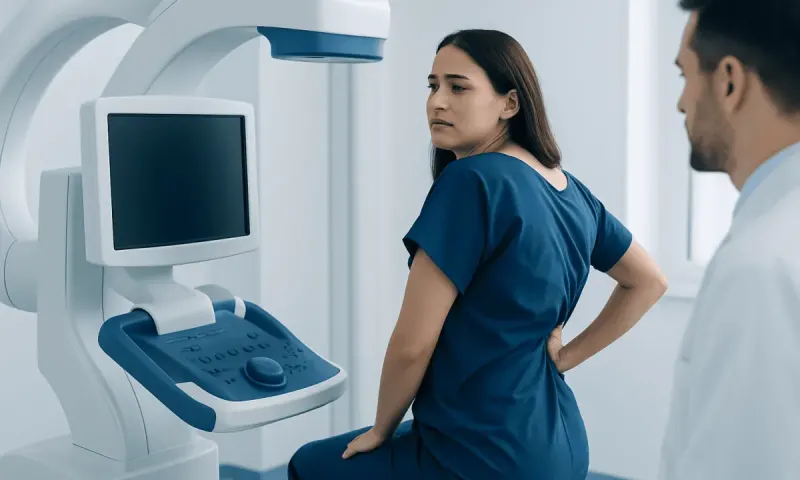
Adults should seek advice for back pain that persists, worsening imbalance, new leg pain, numbness, weakness or reduced walking tolerance. Urgent medical attention is needed for sudden weakness, loss of bladder or bowel control, numbness around the groin area, fever with severe back pain, or back pain after a significant injury.
A clinician may arrange standing X-rays and, in selected situations, MRI or other tests to assess the spine and nerves. Acıbadem Health Point’s multidisciplinary specialists at JCI-accredited hospitals evaluate and treat scoliosis for international patients, with care plans based on each person’s curve and needs.
Frequently asked questions
01Can exercise straighten scoliosis?
Exercise can improve strength, mobility, posture awareness, fitness and pain management for many people with scoliosis. However, exercise alone does not reliably straighten every structural spinal curve. A scoliosis-specific program prescribed by a qualified physiotherapist is more appropriate than generic online routines.
02How do doctors decide whether scoliosis needs treatment?
Doctors consider the size and pattern of the curve, whether it is progressing, the person’s age and remaining growth, symptoms and overall spinal balance. Mild stable curves often need observation only. Bracing or surgery may be discussed when a curve has a meaningful risk of worsening or is causing significant problems.
03Can adults fix scoliosis without surgery?
Adults can often improve symptoms and function without surgery through individualized physiotherapy, regular activity, pain management and treatment of related nerve or joint problems. These measures may not fully straighten an established curve. Surgery is generally reserved for selected severe, progressive or disabling cases.
04Does wearing a brace cure scoliosis?
A brace does not usually cure scoliosis or permanently straighten an established curve. In children and teenagers who are still growing, it can help slow or prevent progression of certain moderate curves. Braces should be prescribed, fitted and monitored by an experienced clinical team.
05Can scoliosis get worse with age?
Some scoliosis curves can progress with age, while others remain stable. Risk depends on factors such as curve size at skeletal maturity, curve type and degenerative changes in the adult spine. Regular review is particularly useful when there are new symptoms or visible changes in posture.
06Is scoliosis surgery always necessary for a severe curve?
Not always. Surgery decisions are based on curve progression, spinal balance, symptoms, lung function in very large thoracic curves, neurological findings and personal circumstances. A spine surgeon can explain whether monitoring, non-surgical care or an operation is the most suitable option.
This article is for general information only and is not a substitute for professional medical advice. Please consult a qualified doctor about your individual situation.
Joint and spine care in Turkey — expert assessment & treatment
JCI-accredited · board-certified surgeons · reply within 24h
Add us as a Preferred Source to see more of our trusted health content across Google Search, AI Overviews and Discover.