Salivary Gland Cancer: Diagnosis, Outlook and Treatment
Salivary gland cancer is an uncommon group of cancers that starts in glands producing saliva, most often the parotid glands near the jaw. Early assessment of a new or changing lump is important because treatment and outlook depend on the tumor type, location, grade and extent of spread.
Salivary gland cancer at a glance
Salivary gland cancer is a rare cancer that develops in one of the glands that make saliva. It can often be treated successfully, especially when found before it has spread, but care needs to be tailored carefully because there are many different tumor types and grades. A new lump near the jaw, in front of the ear, under the chin or inside the mouth should be evaluated by a qualified clinician.
There are three pairs of major salivary glands: the parotid glands in front of and below the ears, the submandibular glands beneath the jaw, and the sublingual glands under the tongue. Hundreds of smaller salivary glands line the mouth, throat, nasal passages and upper airway. Cancer can arise in any of these locations, although the parotid gland is the most frequent site for salivary gland tumors overall.
Salivary gland cancers vary widely. Some grow slowly and are less likely to spread, while high-grade cancers can behave more aggressively. The pathology report, scans and surgical findings help the specialist team determine the likely outlook and recommend an individualized treatment plan.
Symptoms and signs that deserve assessment
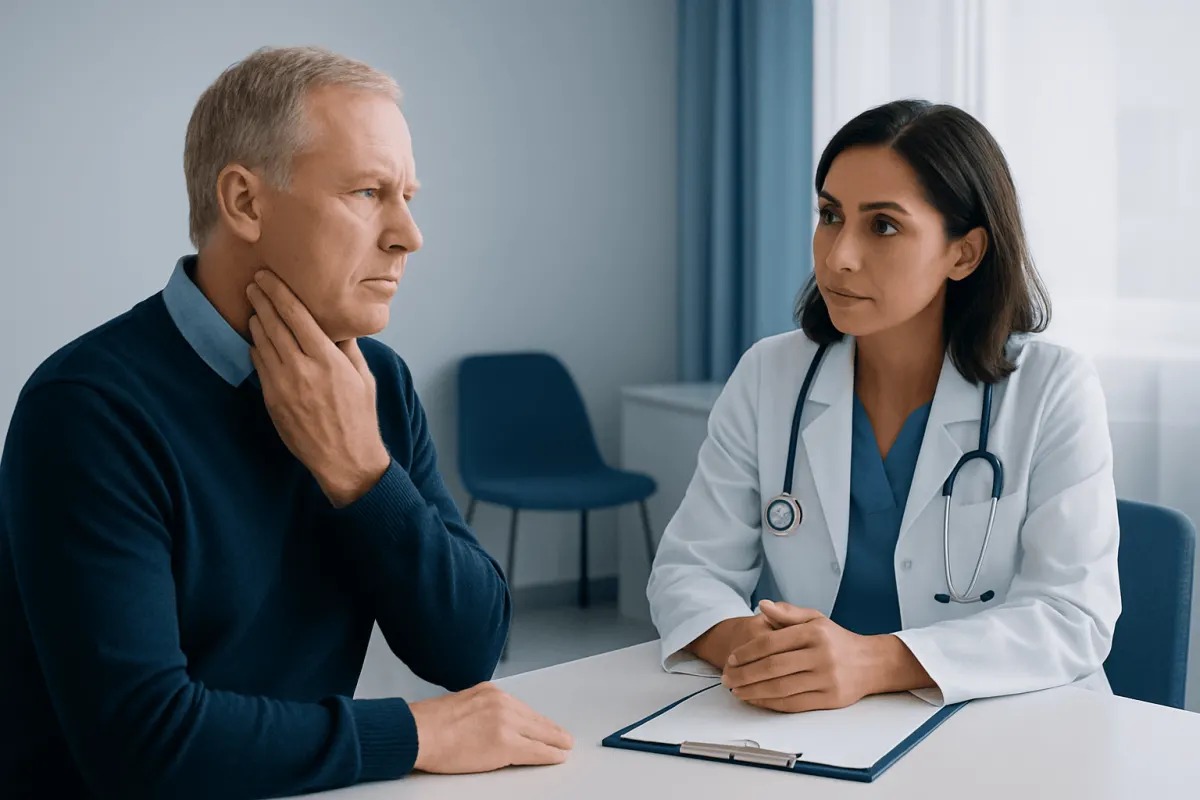
A painless lump is the most common possible sign of a salivary gland tumor. It may appear near the ear, along the jawline, below the jaw, in the cheek, on the palate or in the neck. A lump is not automatically cancer; infections, stones and benign tumors can cause swelling as well. However, a persistent, enlarging or firm lump should not be ignored.
Other symptoms may include pain around a gland, difficulty opening the mouth fully, trouble swallowing, numbness or tingling in part of the face, or weakness of facial muscles. Facial weakness, such as difficulty closing one eye or a drooping corner of the mouth, can occur when a tumor affects the facial nerve and requires prompt assessment.
Symptoms depend on the gland involved and the size of the growth. Some tumors are found during dental examinations or imaging performed for another reason. A doctor can assess the area and arrange appropriate tests rather than relying on symptoms alone to distinguish a benign condition from cancer.
- A growing lump near the ear, jaw, mouth or neck
- Persistent pain, numbness or unexplained facial weakness
- Difficulty swallowing, chewing or opening the mouth
- A mass that remains after an infection has resolved
Causes, tumor types and risk factors
In most people, the exact cause of salivary gland cancer is not known. It is not contagious, and it is usually not linked to anything a person has done. Cancer develops when cells acquire genetic changes that allow them to grow and survive abnormally. These changes may occur over time and are not generally inherited.
Recognized risk factors include older age, previous radiation exposure to the head and neck area, and certain workplace exposures in some industries. A history of other cancers or immune suppression may be relevant for some individuals. These factors do not mean that a person will develop cancer, and many people diagnosed with salivary gland cancer have no identifiable risk factor.
There are many pathological types, including mucoepidermoid carcinoma, adenoid cystic carcinoma, acinic cell carcinoma, secretory carcinoma and salivary duct carcinoma. Tumors are also described by grade. Low-grade tumors tend to resemble normal cells more closely and often grow more slowly, whereas high-grade tumors have a greater likelihood of returning or spreading. This detailed classification is central to treatment planning.
What percentage of parotid tumors are cancerous?
Most parotid tumors are benign rather than cancerous. Broadly, about 15% to 25% of parotid gland tumors are malignant, meaning roughly three out of four to four out of five are not cancer. The exact proportion can vary among clinical settings and populations.
Although this is reassuring, it cannot determine the nature of an individual lump. A benign-looking or painless mass can still need investigation, while some malignant tumors may initially grow slowly. Imaging and a tissue sample, interpreted by experienced specialists, provide much more reliable information than symptoms or appearance alone.
The likelihood of cancer is generally higher for tumors arising in smaller salivary glands and in some other major glands than for tumors in the parotid. This is one reason why careful evaluation is recommended for any unexplained salivary gland mass.
How salivary gland cancer is diagnosed
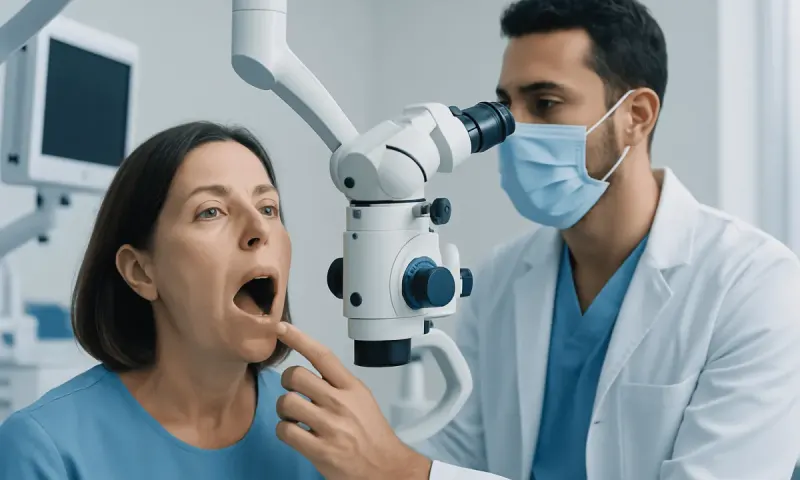
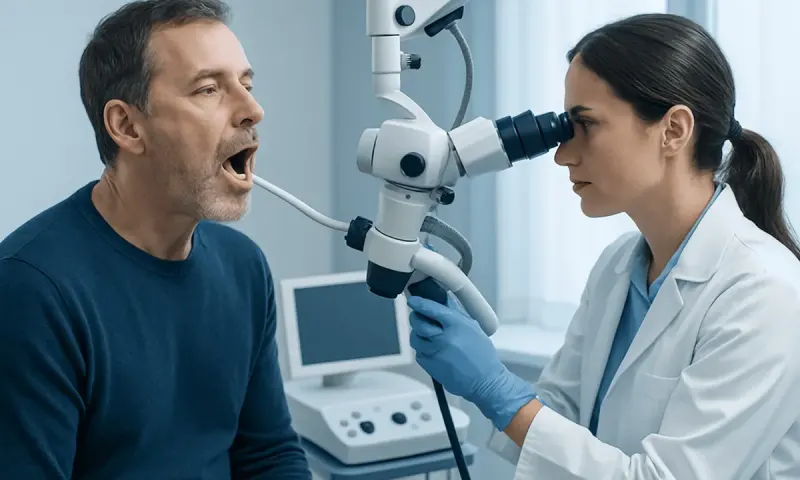
Diagnosis starts with a medical history and examination of the head, neck, mouth and facial nerve function. The clinician may ask how long a lump has been present, whether it has changed, and whether there are symptoms such as pain, dry mouth, swallowing difficulty or facial weakness.
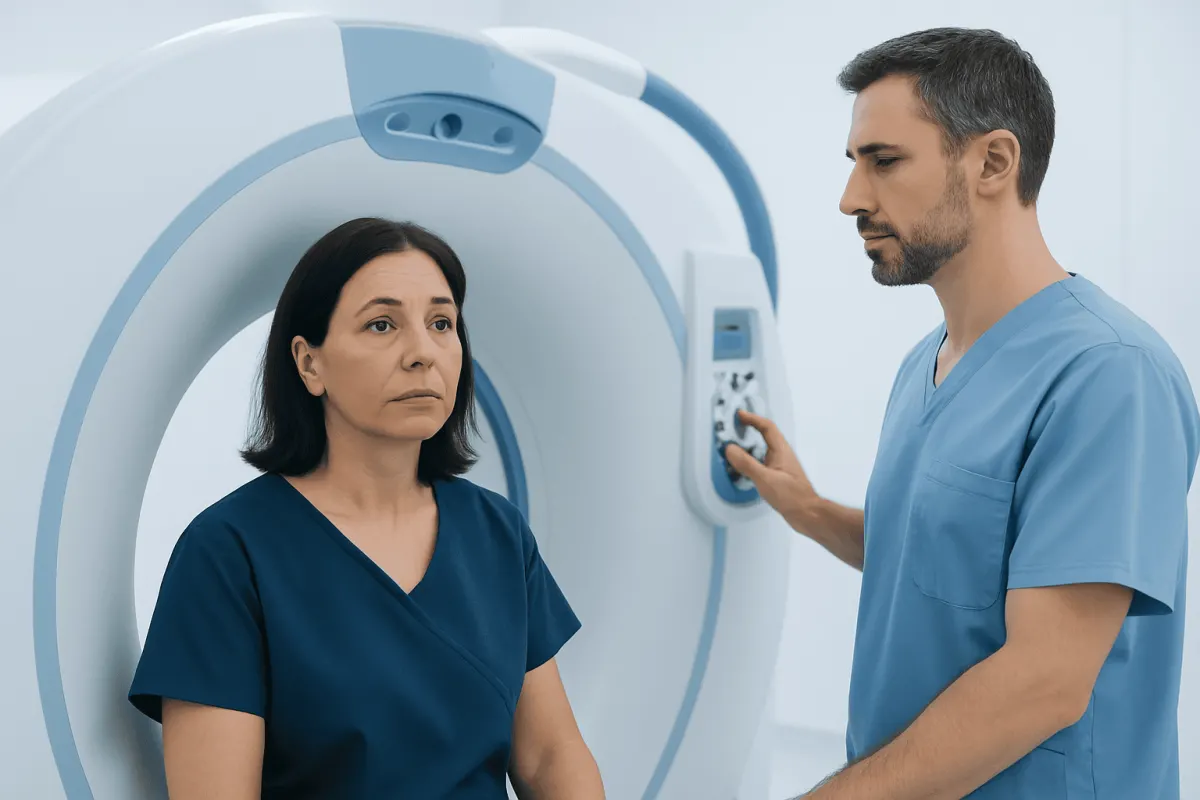
Ultrasound is often useful for examining a superficial lump and guiding a needle sample. CT or MRI scans can show the tumor’s size, its relationship to nerves and nearby structures, and whether neck lymph nodes appear involved. Additional imaging may be recommended when there is concern that cancer has spread or when more detailed staging is needed.
A biopsy is usually needed to identify the tumor type. Fine-needle aspiration removes cells through a thin needle, while a core needle biopsy obtains a small cylinder of tissue. In selected cases, surgery may be both diagnostic and therapeutic. Pathologists examine the sample and may perform specialized tests to clarify the precise diagnosis and identify features that could guide systemic treatment.
Is a parotid gland biopsy painful?
A parotid gland biopsy is usually tolerable and is commonly performed using local anesthetic, which numbs the skin and tissues in the area. A person may feel a brief sting from the anesthetic and pressure or a short pinching sensation while the sample is taken. Ultrasound guidance is often used to help place the needle accurately.
After the procedure, mild tenderness, bruising or swelling can occur for a short time. These symptoms usually settle with simple measures advised by the clinical team. Serious complications are uncommon, but patients should contact their care team if they develop increasing swelling, bleeding, fever, worsening pain or other concerning symptoms.
The choice between fine-needle aspiration and core biopsy depends on the location and characteristics of the mass and the information needed. The clinician will explain the reason for the procedure, possible risks and how to prepare.
What is Warthin's tumor?
Warthin’s tumor, also called papillary cystadenoma lymphomatosum, is a benign parotid gland tumor. It is not salivary gland cancer and does not usually spread to other parts of the body. It commonly occurs near the lower part of the parotid gland and may feel like a slow-growing, painless lump.
It is more often diagnosed in older adults and is associated with tobacco use. Warthin’s tumors can occasionally occur on both sides or in more than one location within the parotid gland. A specialist may recommend observation, needle sampling, imaging or surgical removal depending on the diagnosis, symptoms, growth pattern and the person’s overall health.
Because different parotid tumors can feel similar, Warthin’s tumor should not be self-diagnosed. A specialist assessment and appropriate testing are needed to confirm the nature of the lump.
Treatment, follow-up and when to seek medical care
Surgery is the main treatment for many localized salivary gland cancers. The operation aims to remove the tumor with an appropriate margin while preserving important structures whenever safely possible. For parotid tumors, protecting the facial nerve is an important consideration; however, if a cancer has invaded the nerve, removing part of it may sometimes be necessary to achieve cancer control. Reconstruction and rehabilitation may be discussed as part of planning.
Radiotherapy may be recommended after surgery when there are higher-risk features, such as high-grade disease, close or involved margins, spread to lymph nodes or involvement around nerves. It may also be used when surgery is not suitable. Some advanced or recurrent cancers may be treated with systemic therapies, including chemotherapy, targeted therapy or immunotherapy, depending on the tumor’s pathology and molecular characteristics. Medical oncology assessment can help determine whether systemic treatment is appropriate.
When to seek medical care: A person should arrange medical assessment for a lump near the salivary glands that lasts more than a few weeks, grows, feels fixed or is associated with pain. Urgent assessment is especially important for facial weakness, persistent numbness, difficulty swallowing or breathing, rapidly increasing swelling, or a neck lump. People previously treated for salivary gland cancer should attend planned follow-up visits and report new symptoms promptly.
Follow-up commonly includes clinical examinations and, where appropriate, imaging. Radiation oncology care and surgical care are often coordinated through a multidisciplinary team. Acıbadem Health Point’s multidisciplinary specialists and JCI-accredited hospitals diagnose and treat salivary gland cancer for international patients, with plans based on pathology, stage and individual needs.
Can parotid cancer come back?
Yes, parotid cancer can recur after treatment, but the risk differs substantially between tumor types and stages. Factors that influence recurrence risk include tumor grade, size, lymph node involvement, surgical margins, spread along nerves and whether the cancer had spread beyond the gland. Some cancers can recur locally near the original site, in neck lymph nodes or at more distant sites.
Recurrence does not mean that cancer Treatment Options: Surgery, Chemo, Radiation & Beyond" class="ahp-ilk">treatment options are exhausted. Management may include further surgery, radiotherapy if it was not used before or if re-treatment is appropriate, and systemic therapy for selected cancers. The best approach depends on where and when the cancer returns, prior treatments and a person’s overall health.
Some salivary gland cancers, particularly certain slower-growing types, can return many years later. Long-term follow-up is therefore important even after apparently successful treatment. Patients should ask their care team about their individual surveillance schedule and symptoms that should prompt earlier contact.
Frequently asked questions
01Is salivary gland cancer common?
Salivary gland cancer is uncommon compared with many other cancers. It includes a wide range of tumor types that can begin in the major salivary glands or in minor glands throughout the mouth and throat. Its rarity is one reason expert pathology review and multidisciplinary planning can be valuable.
02Can a salivary gland lump be benign?
Yes. Many salivary gland lumps, particularly in the parotid gland, are benign. Common benign tumors include pleomorphic adenoma and Warthin's tumor. Even so, a persistent or enlarging lump should be assessed because examination alone cannot always identify its cause.
03How is salivary gland cancer staged?
Staging describes the size and local extent of the tumor, whether nearby lymph nodes are involved and whether cancer has spread to distant organs. Imaging, pathology findings and surgical results may all contribute to staging. The stage helps guide treatment discussions, but tumor type and grade are also important.
04Does salivary gland cancer always require surgery?
Surgery is commonly the preferred treatment for a removable, localized salivary gland cancer. However, the plan depends on the tumor location, stage, pathology, a person's health and potential effects on nearby nerves or other structures. Radiotherapy or systemic treatment may be used instead of, before, after or alongside surgery in selected cases.
05What happens after parotid gland surgery?
Recovery varies with the extent of surgery and whether reconstruction or neck surgery was needed. Temporary swelling, numbness, discomfort and changes around the incision can occur, and some people need support for facial nerve weakness. The surgical team provides individualized guidance about wound care, activity, eating and follow-up.
06Can salivary gland cancer be prevented?
There is no certain way to prevent most salivary gland cancers because the exact cause is often unknown. Avoiding tobacco and following workplace safety guidance can support general health and may reduce some risks. Prompt assessment of a persistent salivary gland lump remains the most practical step for earlier diagnosis.
This article is for general information only and is not a substitute for professional medical advice. Please consult a qualified doctor about your individual situation.
Oncology care in Turkey — second opinion and treatment plan
JCI-accredited · board-certified surgeons · reply within 24h
Add us as a Preferred Source to see more of our trusted health content across Google Search, AI Overviews and Discover.