Non-Melanoma Skin Cancer: Diagnosis and Treatment
Non-melanoma skin cancer usually refers to basal cell carcinoma and squamous cell carcinoma, two common cancers that develop in the skin’s outer layers. Most cases can be treated successfully, particularly when a changing or non-healing skin lesion is assessed early.
Overview: what non-melanoma skin cancer means
Non-melanoma skin cancer is a broad term for cancers that arise from skin cells other than melanocytes, the pigment-producing cells involved in melanoma. The two main types are basal cell carcinoma (BCC) and squamous cell carcinoma (SCC). They commonly occur on areas with long-term sun exposure, such as the face, ears, scalp, neck, hands, and lower legs, although they can develop anywhere on the body.
Basal cell carcinoma is the most common type and usually grows slowly. Squamous cell carcinoma can also often be treated effectively, but some tumors have a greater chance of growing deeper or spreading if they are delayed or left untreated. A prompt assessment helps clinicians identify the type of lesion and select treatment that aims to remove or control the cancer while preserving healthy tissue and function.
Non-melanoma skin cancer is different from melanoma, but any suspicious skin change deserves attention. A diagnosis does not automatically mean advanced disease, and many people are treated with a relatively localized procedure. The outlook depends on the cancer type, size, location, depth, cell features, immune health, and whether it has previously returned.
Signs and symptoms that should be checked
Non-melanoma skin cancers do not always look the same. They may begin as a new growth or a spot that gradually changes over weeks or months. Some lesions are painless, so the absence of discomfort does not rule out a problem.
- A pearly, shiny, skin-colored, pink, or translucent bump
- A sore that does not heal, crusts repeatedly, or bleeds easily
- A rough, scaly, red, or thickened patch
- A firm red nodule or wart-like growth
- A scar-like area that appears white, waxy, or yellowish
- A changing lesion near the lip, ear, eyelid, scalp, or a chronic wound
Some early precancerous sun-damaged areas, called actinic keratoses, may feel rough like sandpaper. They are not the same as invasive cancer, but a clinician may recommend treatment or monitoring because some can progress to squamous cell carcinoma. People should avoid trying to diagnose a lesion from a photograph alone, as several harmless conditions can resemble skin cancer.
Causes and factors that raise risk
Ultraviolet (UV) radiation is the leading preventable cause of many non-melanoma skin cancers. UV exposure comes from sunlight and artificial tanning devices. Risk can build over time, including through everyday outdoor activities, and intermittent intense sun exposure that causes sunburn may also contribute.
Risk is higher in people with fairer skin that burns easily, but non-melanoma skin cancer can affect people of every skin tone. Other factors include older age, previous skin cancer, a family history of skin cancer, many actinic keratoses, radiation exposure, certain chemical exposures, and long-term immune suppression after an organ transplant or for another medical reason.
Having a weakened immune system does not mean a person will develop skin cancer, but it can affect screening needs and treatment decisions. Clinicians may recommend closer surveillance for people at increased risk. Protecting the skin from UV radiation remains useful at every age and after any previous skin Prostate Cancer Diagnosis: Tests and Next Steps" class="ahp-ilk">cancer diagnosis.
How non-melanoma skin cancer is diagnosed
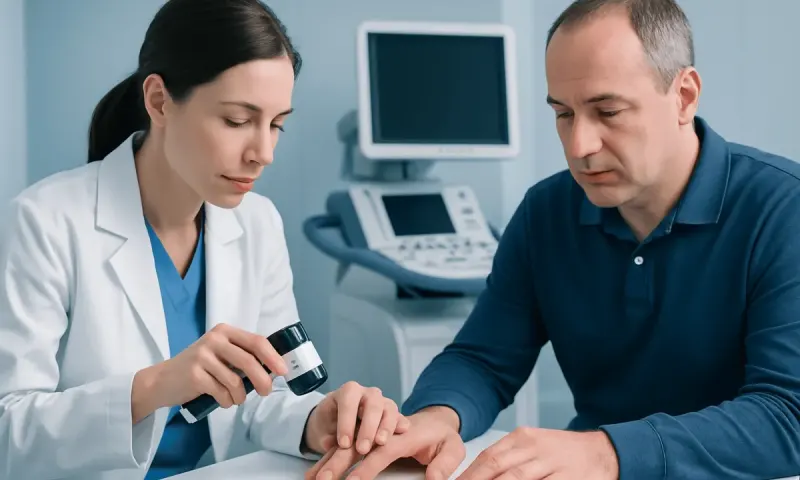
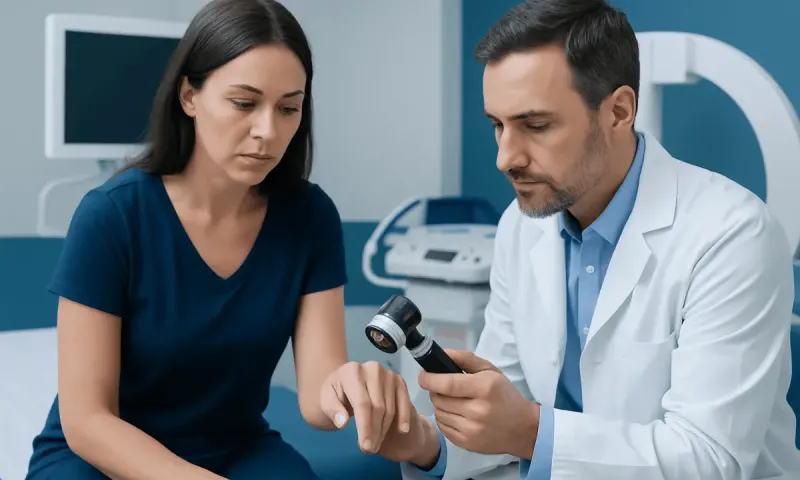
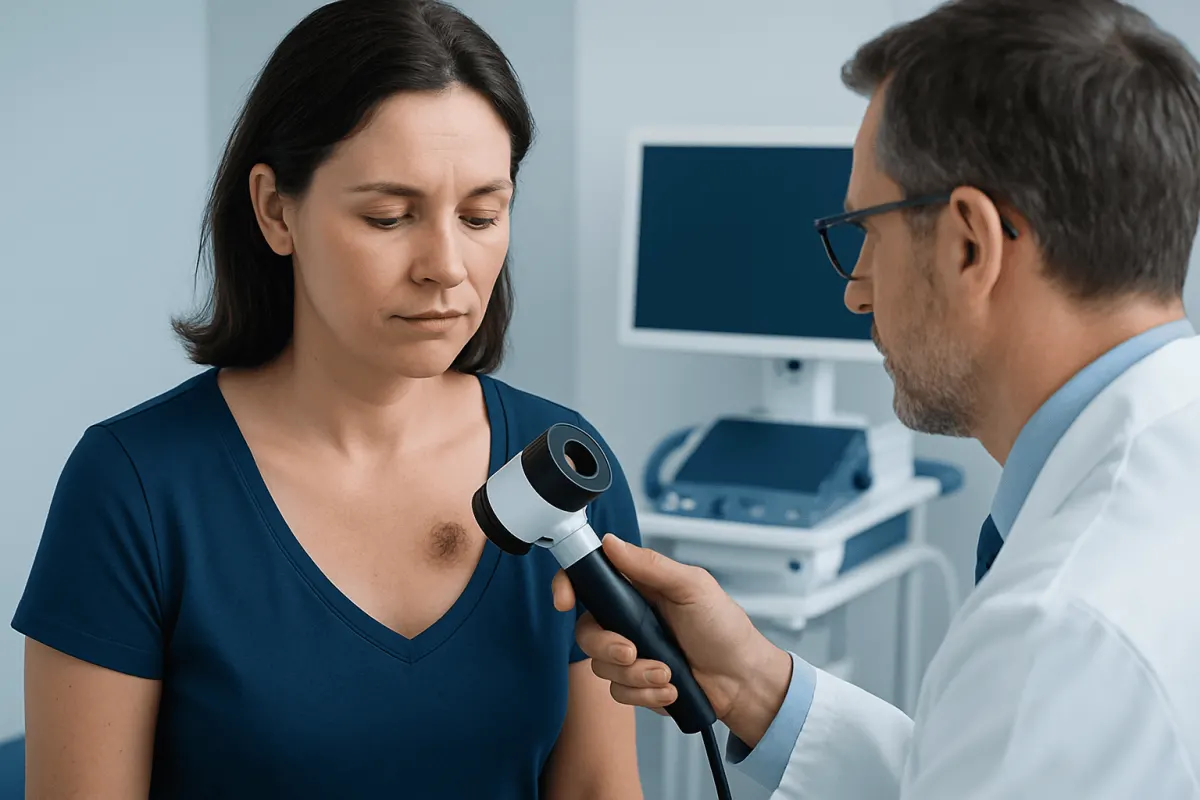
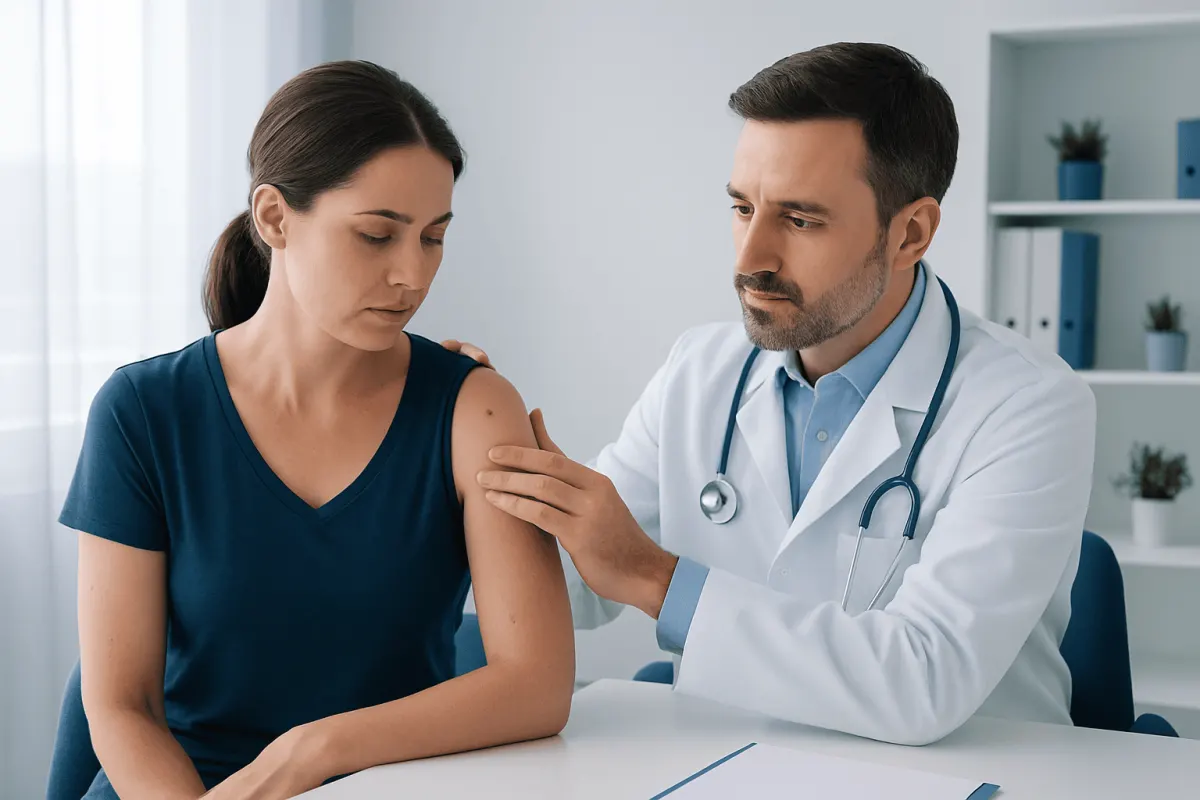
Diagnosis begins with a medical history and a careful examination of the skin. A dermatologist or other qualified clinician may use a dermatoscope, a handheld lighted magnifying device, to examine structures below the skin surface. They will consider how long the lesion has been present, whether it has changed, and whether there are symptoms such as bleeding, tenderness, itching, or crusting.
A biopsy is usually needed to confirm the diagnosis. During this procedure, a small sample or the entire visible lesion is removed under local anesthetic and examined in a laboratory. The pathology report identifies the cancer type and may provide details that help guide treatment, such as the growth pattern or whether the lesion has higher-risk features.
If a cancer appears extensive, recurrent, high risk, or clinically advanced, further assessment may be appropriate. This can include examination of nearby lymph nodes and, in selected situations, imaging. Most small, uncomplicated basal cell and squamous cell cancers do not require extensive imaging before treatment.
What are the treatment options for non-melanoma skin cancer?
Treatment is individualized according to the cancer type, its size and depth, body location, prior treatment, and a person’s overall health. For many localized cancers, surgery is the main treatment because it removes the tumor and allows laboratory confirmation of the margins. Standard excision removes the lesion with a border of surrounding skin, while Mohs micrographic surgery removes thin layers one at a time and checks them during the procedure. Mohs surgery may be particularly useful in cosmetically or functionally sensitive sites, such as the face, or for tumors with a higher risk of recurrence.
Other options may be suitable in selected cases. These include curettage and electrodessication, cryotherapy, photodynamic therapy, and topical medicines for certain superficial cancers or precancerous lesions. Radiation therapy can be considered when surgery is not suitable or as part of care for selected higher-risk cancers. The choice should be made with a skin cancer specialist, taking account of effectiveness, scarring, healing, and follow-up needs.
Advanced basal cell carcinoma or squamous cell carcinoma is less common but may require a multidisciplinary plan. Depending on the cancer, this can include radiation therapy, immunotherapy, or targeted medicines. Treatment teams may also coordinate reconstructive care after removal of cancers in areas where appearance or function needs particular consideration.
At Acıbadem Health Point, multidisciplinary specialists in JCI-accredited hospitals assess and treat non-melanoma skin cancer for international patients, with treatment planning based on the individual diagnosis and clinical needs.
Is non-melanoma skin cancer serious?
Non-melanoma skin cancer should be taken seriously because it is cancer and can continue to grow if untreated. However, many cases are found while they are localized and can be treated effectively. Basal cell carcinoma very rarely spreads to distant parts of the body, although it can cause significant local damage if allowed to grow into nearby skin, cartilage, muscle, or bone.
Squamous cell carcinoma has a greater potential to spread than basal cell carcinoma, particularly when it is large, deep, recurrent, located on high-risk sites, associated with immune suppression, or has certain features under the microscope. These factors are why timely assessment and appropriate treatment matter.
Seriousness is not determined by appearance alone. A small lesion may still need treatment, while a larger lesion may not necessarily be advanced. A clinician can explain the specific risk level after examining the lesion and reviewing biopsy results.
Is non-melanoma skin cancer terminal?
In most situations, non-melanoma skin cancer is not terminal. When diagnosed and treated early, basal cell carcinoma and squamous cell carcinoma are commonly curable. The word “cancer” can understandably feel overwhelming, but many non-melanoma skin cancers are localized to the skin at diagnosis and can be managed with local treatment.
Rarely, a skin cancer may become advanced, invade deeply, return after treatment, or spread to lymph nodes or distant organs. These cases need specialist care and may require more than one treatment approach. Even then, modern therapies can help control disease and relieve symptoms for many people, although the outlook varies significantly from person to person.
Anyone who has received a diagnosis should ask their clinician about the exact type of cancer, its stage or risk category where relevant, the planned treatment, and follow-up. Clear information about an individual case is more useful than trying to predict outlook from general information online.
Can skin cancer go away and come back without treatment?
A skin lesion may appear to improve temporarily if a crust falls off, inflammation settles, or the surface heals. This does not reliably mean that skin cancer has gone away. Cancer cells can remain beneath the surface, and a lesion may bleed, scab, heal partly, and then return in the same place.
Some harmless skin conditions also wax and wane, which is one reason a persistent or recurring spot should be assessed rather than watched indefinitely. Delaying assessment can allow a cancer to become larger and may make treatment more complex. A clinician may use examination and biopsy to distinguish cancer from eczema, infection, trauma, benign growths, or other skin conditions.
After treatment, a cancer can sometimes recur at or near the original site, particularly if it had higher-risk features. People who have had one non-melanoma skin cancer also have an increased likelihood of developing another new skin cancer elsewhere, so follow-up skin examinations are important.
When to seek medical care
A person should arrange a medical appointment for a new or changing skin lesion, especially one that bleeds, crusts, grows, remains scaly, becomes tender, or does not heal within several weeks. Prompt review is also appropriate for a sore that repeatedly heals and reopens, or for a suspicious spot in a previous scar, radiation-treated area, or chronic wound.
People with a past skin cancer, numerous actinic keratoses, an organ transplant, or long-term immune suppression may benefit from regular professional skin examinations. The frequency depends on personal risk and should be agreed with a dermatologist or treating clinician.
Urgent assessment may be needed if a lesion is rapidly enlarging, severely painful, affecting vision or movement, or associated with a noticeably enlarged nearby lymph node. In most cases, an early outpatient evaluation provides clarity and allows treatment planning before the lesion becomes more difficult to manage.
Frequently asked questions
01What is the difference between melanoma and non-melanoma skin cancer?
Melanoma begins in melanocytes, the cells that produce skin pigment. Non-melanoma skin cancer usually refers to basal cell carcinoma and squamous cell carcinoma, which begin in other skin cells. All suspicious skin changes should be assessed, because the treatment and expected behavior vary by type.
02Can non-melanoma skin cancer spread?
Basal cell carcinoma rarely spreads, but it can grow locally and damage nearby tissues if untreated. Squamous cell carcinoma has a higher, though still variable, potential to spread, particularly when it has high-risk features. Early diagnosis and treatment reduce the chance of complications.
03How quickly does non-melanoma skin cancer grow?
Growth rates differ by cancer type and individual lesion. Many basal cell carcinomas grow slowly, whereas some squamous cell carcinomas can grow more quickly. A lesion should be examined promptly rather than monitored at home to judge its growth rate.
04Will treatment leave a scar?
Any procedure that removes skin can leave some degree of scarring, but the appearance varies with the treatment type, lesion size, body site, skin type, and healing process. Clinicians aim to balance complete cancer treatment with the best possible cosmetic and functional outcome. Scar care advice may be provided after treatment.
05How can non-melanoma skin cancer be prevented?
Reducing UV exposure is the most important preventive step. This includes seeking shade when practical, wearing protective clothing and a broad-brimmed hat, using broad-spectrum sunscreen as directed, and avoiding sunbeds. Regular self-checks and professional examinations can support early detection.
06Do I need follow-up after non-melanoma skin cancer treatment?
Yes. Follow-up helps check that the treated area is healing properly and identify recurrence or new skin cancers early. The recommended schedule depends on the cancer type, its risk features, treatment received, and a person’s medical history.
This article is for general information only and is not a substitute for professional medical advice. Please consult a qualified doctor about your individual situation.
Hair transplant in Turkey — costs, graft counts & a free assessment
JCI-accredited · board-certified surgeons · reply within 24h
Add us as a Preferred Source to see more of our trusted health content across Google Search, AI Overviews and Discover.