Subungual Melanoma Cancer: Signs, Diagnosis and Care
Subungual melanoma cancer is a melanoma that develops in the skin structures beneath or around a fingernail or toenail. A persistent new dark streak, pigment spreading onto nearby skin, or unexplained nail change should be assessed promptly, as early diagnosis can improve cancer Treatment Options: Surgery, Chemo, Radiation & Beyond" class="ahp-ilk">treatment options.
Overview: What Is Subungual Melanoma Cancer?
Subungual melanoma cancer is a rare form of melanoma that begins in melanocytes, the cells that make pigment, within the nail unit. It may arise beneath the nail plate, in the nail bed, or in the nail matrix, where the nail grows. It can affect fingernails or toenails and commonly involves one nail rather than several.
Unlike many melanomas on sun-exposed skin, subungual melanoma is not thought to be primarily caused by ultraviolet exposure. It can occur in people of all skin tones and may be mistaken for a bruise, fungal nail infection, or ordinary pigment variation. Because it may be difficult to recognize early, a changing nail lesion deserves medical assessment rather than self-treatment alone.
The outlook depends mainly on how deeply the melanoma has grown and whether it has spread beyond the original site. When identified at an earlier stage, treatment is often more straightforward and can be highly effective. A dermatologist or cancer specialist can explain the individual findings and next steps after diagnosis.
What Are the Early Signs of Melanoma Under the Nail?
The most recognized early sign is a brown, black, gray, or mixed-color vertical band running from the cuticle toward the tip of a single nail. This is sometimes called longitudinal melanonychia. Many nail streaks are harmless, particularly when they are stable and occur in several nails, but a new or evolving streak needs careful evaluation.
Features that may be more concerning include a band that becomes wider, has uneven borders, contains several shades of color, or is noticeably different from marks on other nails. Pigment that extends from the nail onto the surrounding cuticle or skin may be a warning sign called Hutchinson sign. A nail may also split, lift, become distorted, develop a persistent crack, or form a small lump.
Not every subungual melanoma is darkly pigmented. Some are pink, red, flesh-colored, or have little visible pigment, which can make them harder to identify. A persistent nail change without a clear explanation should be checked, especially if it does not grow out with the nail or continues to worsen.
- New pigment in one nail, particularly in adulthood
- A streak that widens closer to the cuticle
- Irregular color, shape, or borders
- Pigment on the surrounding skin or cuticle
- Nail destruction, bleeding, ulceration, or a growing bump
Is Toenail Cancer Painful?
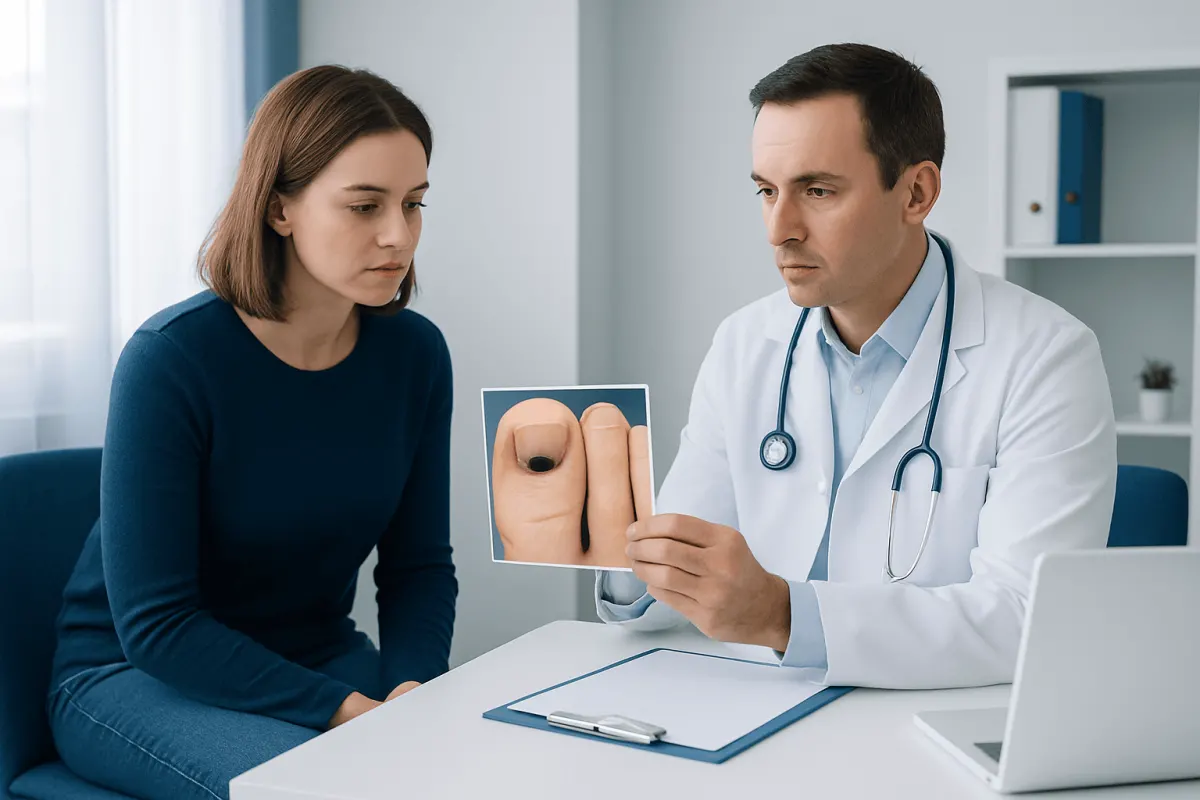
Toenail cancer, including subungual melanoma, is not always painful. Early melanoma beneath a nail may cause no discomfort at all and may be noticed only as a dark streak or change in nail shape. The absence of pain should therefore not be used as a reason to delay an examination of a suspicious nail change.
Pain, tenderness, pressure, bleeding, or difficulty wearing shoes can occur when a lesion grows, causes inflammation, damages the nail, or becomes infected. However, these symptoms are not specific to melanoma. Ingrown nails, trauma, fungal infections, warts, and other non-cancerous conditions can also be painful.
Persistent pain in one toe or finger, particularly when combined with pigment change, a lump, unexplained bleeding, or nail deterioration, should be evaluated by a dermatologist or clinician experienced in nail conditions. Avoid repeatedly cutting into, drilling, or treating an unexplained nail lesion at home, as this can delay diagnosis or irritate the area.
Causes, Risk Factors and How Quickly Nail Melanoma Spreads
The exact cause of subungual melanoma is often unknown. It is not usually linked to sun exposure in the same direct way as many skin melanomas. Previous injury to the nail is sometimes recalled, but trauma is not proven to cause melanoma; it may simply draw attention to a lesion that was already present.
Risk can increase with age, although this condition can occur at different ages. A personal or family history of melanoma, many unusual moles, and certain inherited predispositions may also be relevant. Subungual melanoma occurs across all skin tones. In people with darker skin, it represents a larger proportion of melanoma diagnoses than it does in people with lighter skin.
How quickly nail melanoma spreads varies greatly. Some lesions may develop gradually over months or years, while others can become more invasive in a shorter period. It is not possible to judge the stage or rate of spread from appearance alone. The key factors are the tumor depth and other findings measured after biopsy and, when needed, further staging tests.
Melanoma can spread to nearby lymph nodes or distant organs if it becomes invasive. This is why a suspicious nail lesion should be assessed promptly, even when it appears small or is not painful. Timely evaluation does not mean a person has cancer; it means potentially serious causes can be identified or excluded appropriately.
Diagnosis and Staging of Subungual Melanoma
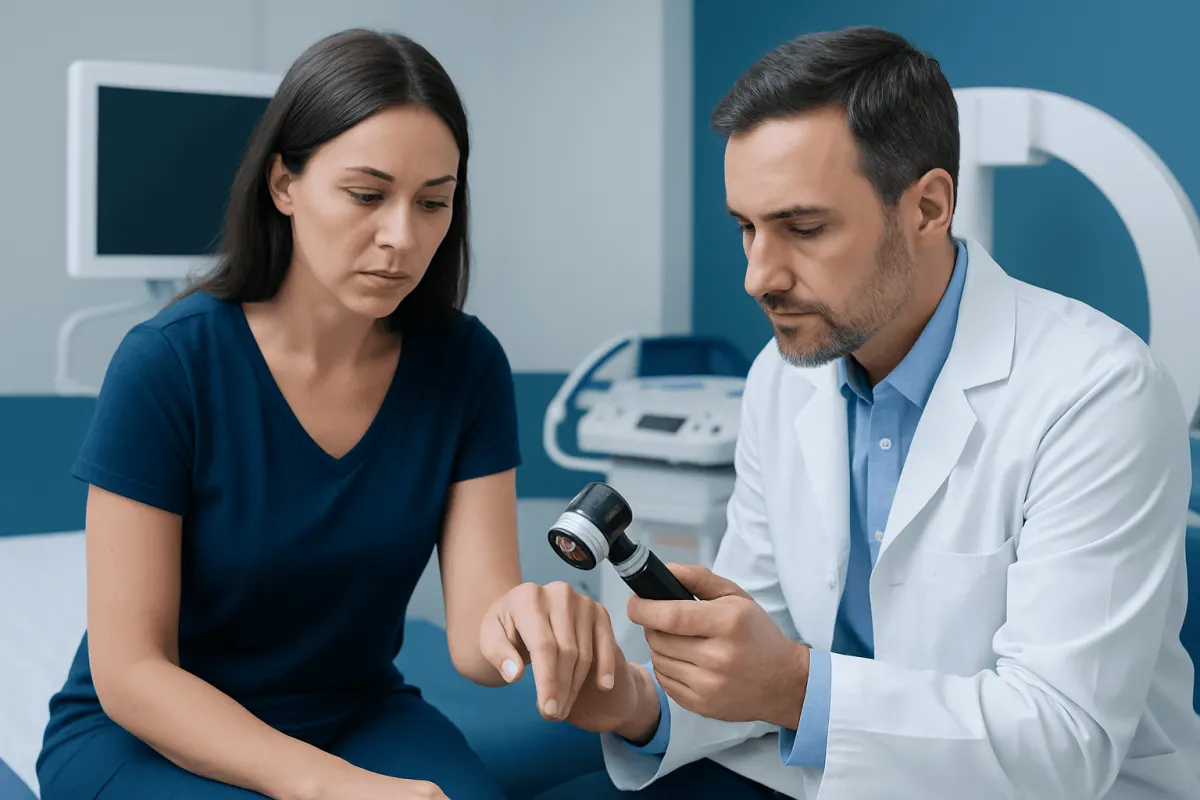
Diagnosis begins with a detailed medical history and close examination of the nail and surrounding skin. A dermatologist may use dermoscopy, a handheld magnifying device with light, to examine pigment patterns. Photographs and measurements may help document whether a lesion changes over time, but monitoring alone is not suitable when clinical features are suspicious.
A biopsy is the only way to confirm whether melanoma is present. The clinician removes a small sample of tissue from the relevant part of the nail unit and sends it to a laboratory for analysis. Because the nail matrix is delicate and important for nail growth, biopsy planning should be performed by an experienced clinician whenever possible.
If melanoma is diagnosed, the pathology report helps determine its thickness, ulceration status, and other features. Depending on the results, the care team may recommend examination of nearby lymph nodes, imaging studies, or sentinel lymph node biopsy. Staging describes whether the cancer remains local or has moved beyond the nail area, and it guides treatment planning.
Conditions that can resemble subungual melanoma include a bruise beneath the nail, fungal infection, benign nail-matrix mole, bacterial infection, inflammatory nail disease, and medication-related pigmentation. A bruise usually moves outward as the nail grows, whereas pigment from the nail matrix tends to remain connected to the cuticle area.
Modern Treatment Approaches and Follow-Up
Surgery is the main treatment for localized subungual melanoma. The goal is to remove the tumor completely while preserving as much function as possible. The precise procedure depends on the location, size, depth, and extent of the melanoma. In some cases, removal of part of the nail unit and surrounding tissue is appropriate; more extensive surgery may be needed for deeper disease.
For invasive melanoma, a sentinel lymph node biopsy may be discussed to check whether microscopic cancer cells have reached the nearest lymph nodes. If melanoma has spread or has a higher risk of recurrence, treatment may involve medical oncology. Immunotherapy and targeted therapies are among the modern systemic treatments used for selected cases of advanced melanoma.
Follow-up is an important part of care. Visits may include skin and lymph node examinations, review of symptoms, and monitoring tailored to the melanoma stage. People are often advised to examine their skin and remaining nails regularly and to report new or changing lesions between appointments.
Care is usually coordinated among dermatology, surgical oncology, pathology, and medical oncology specialists. Acıbadem Health Point’s multidisciplinary specialists and JCI-accredited hospitals diagnose and treat melanoma for international patients, with treatment plans based on the individual pathology and stage.
Can You Go in the Sun if You Have Melanoma?
Yes, a person with melanoma can go outdoors, but protecting the skin from ultraviolet radiation is important. Having melanoma does not mean a person must stay indoors. It does mean avoiding intentional tanning and reducing the risk of further sun damage, which can contribute to other skin cancers and may make it harder to notice new skin changes.
Practical protection includes seeking shade when possible, wearing a broad-brimmed hat, long sleeves, and sunglasses, and using a broad-spectrum sunscreen on exposed skin. Sunscreen should be used as one part of sun protection rather than as a reason to stay in intense sunlight for longer. Tanning beds should be avoided.
Subungual melanoma itself is not generally considered a sun-driven melanoma, since the nail unit is relatively shielded from ultraviolet light. Nonetheless, people with a history of melanoma should discuss individualized sun-safety and skin-surveillance advice with their dermatology team. Regular checks should include areas that are easy to miss, such as the scalp, soles, spaces between toes, and nails.
When to Seek Medical Care
A person should arrange a medical appointment promptly for a new or changing dark line under one nail, especially if the mark widens, becomes irregular, extends onto the surrounding skin, or does not grow out over time. An unexplained nail lump, ongoing bleeding, nail separation, ulceration, or progressive destruction of a single nail also warrants assessment.
Urgent evaluation is sensible when a nail lesion is rapidly changing, is associated with a swollen lymph node, or is accompanied by unexplained persistent symptoms elsewhere in the body. These symptoms have many possible causes, but a clinician can determine whether further testing is needed.
People should not assume a persistent dark area is only a bruise or fungal infection without an appropriate examination. Bringing photographs showing how the change has developed can be helpful. Early assessment offers clarity and allows treatment to begin promptly if it is needed.
Frequently asked questions
01What does subungual melanoma cancer look like?
It often appears as a new brown, black, gray, or mixed-color vertical streak in one fingernail or toenail. The streak may widen, have uneven borders, or extend onto the nearby cuticle or skin. Some cases have little pigment and instead cause a nail lump, splitting, bleeding, or nail distortion.
02Can a fungal nail infection be confused with melanoma?
Yes. Fungal infection can cause thickening, discoloration, crumbling, and separation of a nail, while melanoma can also alter nail color and structure. A persistent or changing lesion in one nail should be examined, because laboratory testing or biopsy may be needed to distinguish the conditions reliably.
03Does a dark streak under a nail always mean melanoma?
No. Dark nail streaks can result from benign pigment changes, injury, medications, infections, or a mole in the nail matrix. However, a new, changing, irregular, or single-nail streak should be assessed by a qualified clinician rather than assumed to be harmless.
04How is subungual melanoma confirmed?
It is confirmed with a biopsy, in which a clinician takes a tissue sample from the suspicious area for laboratory examination. Dermoscopy and clinical examination help determine whether biopsy is appropriate, but they cannot definitively diagnose melanoma on their own.
05Can subungual melanoma be cured?
When found before it has spread, subungual melanoma can often be treated successfully with surgery. The individual outlook depends on tumor depth, involvement of lymph nodes or other sites, and several pathology features. A specialist can explain what the stage means for a particular person.
06Should a nail bruise be checked by a doctor?
A nail bruise often follows a clear injury and gradually moves toward the nail tip as the nail grows. It should be checked if there was no known injury, the discoloration does not grow out, the mark changes or widens, or there are other concerning nail changes. This is particularly important when only one nail is affected.
This article is for general information only and is not a substitute for professional medical advice. Please consult a qualified doctor about your individual situation.
Oncology care in Turkey — second opinion and treatment plan
JCI-accredited · board-certified surgeons · reply within 24h
Add us as a Preferred Source to see more of our trusted health content across Google Search, AI Overviews and Discover.