Stage 3 Prostate Cancer: Diagnosis, Outlook and Treatment
Stage 3 prostate cancer is usually considered locally advanced: it has extended outside the prostate or into nearby structures but has not spread to distant parts of the body. It is often treatable with curative intent, and care is tailored to the tumor’s grade, PSA level, imaging findings, general health, and personal priorities.
Stage 3 prostate cancer at a glance
Stage 3 prostate cancer means the cancer has grown beyond the prostate gland or has reached nearby structures, but there is no evidence that it has spread to distant lymph nodes, bones, or other organs. It is commonly described as locally advanced prostate cancer. Although this diagnosis requires careful planning, many people receive treatment intended to control or cure the cancer.
Stage 3 is generally divided into subgroups. Stage 3A may involve a high prostate-specific antigen (PSA) level, while stage 3B commonly indicates growth into nearby tissues such as the seminal vesicles. Stage 3C refers to cancer with a high-grade appearance under the microscope, suggesting a greater likelihood of faster growth. Staging systems may vary slightly by country and guideline, so an individual’s clinical team should explain the exact stage in context.
Stage alone does not tell the full story. PSA results, biopsy Grade Group, MRI or PSMA PET findings, the amount and location of tumor, age, other health conditions, and treatment preferences all contribute to a personalized plan. This condition is part of the broader spectrum of prostate cancer, for which specialist assessment is important.
How stage 3 prostate cancer is diagnosed and assessed
Prostate cancer is often first suspected after an elevated PSA blood test, a change in PSA over time, or an abnormal digital rectal examination. Neither PSA nor examination alone confirms cancer. A prostate biopsy is typically needed to identify cancer cells and establish the Gleason score or Grade Group, which reflects how abnormal the cells look and how likely they may be to behave aggressively.
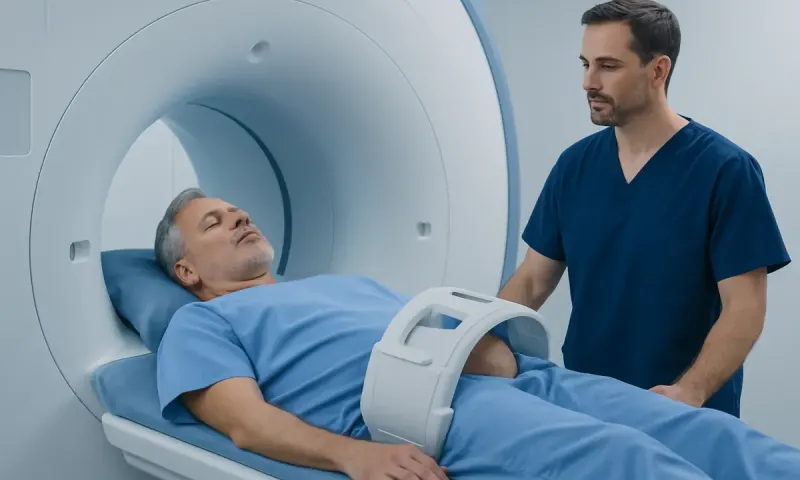
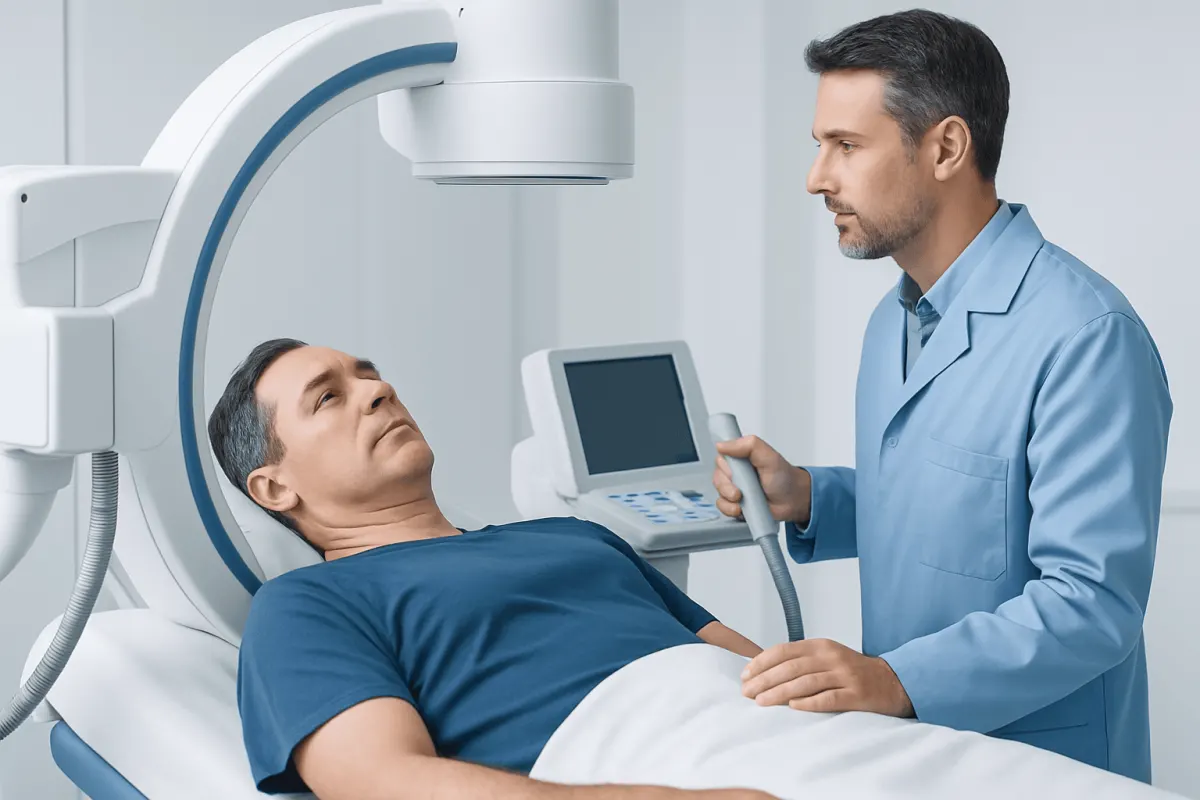
Doctors then use imaging to determine whether the cancer remains confined to the prostate area or has spread farther. Multiparametric MRI can show whether a tumor has grown through the prostate capsule or into the seminal vesicles. Depending on the risk level and local availability, PSMA PET/CT, CT scans, bone scans, or other tests may be used to look for lymph node or bone involvement.
The assessment also includes urinary, bowel, sexual, bone, heart, and general health considerations. These factors matter because they affect both treatment selection and preparation for possible side effects. A review by a urologist, radiation oncologist, and medical oncologist can help ensure that all suitable approaches are considered.
- PSA: a blood marker used in diagnosis, risk assessment, and follow-up.
- Grade Group: a biopsy-based measure of cancer aggressiveness.
- Clinical stage: based on examination and imaging before treatment.
- Pathological stage: may be determined after surgery, if surgery is performed.
Modern treatment approaches for stage 3 prostate cancer

Stage 3 prostate cancer is usually managed with active treatment rather than monitoring alone. Radiation therapy combined with androgen deprivation therapy (ADT), often called hormone therapy, is a common approach. ADT lowers or blocks testosterone, a hormone that can stimulate prostate cancer cells. Depending on the individual risk profile, clinicians may recommend ADT for a longer course and may discuss adding other systemic medicines.
External-beam radiation may be directed at the prostate, seminal vesicles, and sometimes nearby pelvic lymph node regions. Some patients may also be offered a radiation boost using brachytherapy, in which radioactive sources are placed in or near the prostate. Modern planning techniques aim to target cancer precisely while limiting radiation exposure to the bladder, rectum, and surrounding healthy tissues. Radiotherapy should be planned by an experienced radiation oncology team.
Radical prostatectomy, surgery to remove the prostate and seminal vesicles, can be an option for carefully selected people. Because stage 3 disease may extend beyond the gland, some patients need additional radiation and/or hormone therapy after surgery based on pathology findings or PSA trends. Robotic prostatectomy may be available for appropriate candidates, but the choice of technique should be based on clinical suitability rather than technology alone.
Treatment decisions should balance cancer control with possible effects on urinary control, erections, bowel function, energy, bone health, mood, metabolism, and cardiovascular health. Supportive care, including pelvic floor rehabilitation, sexual health support, dietetic advice, and mental health care, can be valuable before, during, and after treatment.
What is the average life expectancy for someone with stage 3 prostate cancer?
There is no single average life expectancy that accurately applies to everyone with stage 3 prostate cancer. Outcomes vary substantially according to Grade Group, PSA level, imaging results, response to treatment, age, overall health, and whether the cancer later returns. Importantly, stage 3 disease has not been shown to have distant spread at diagnosis, and many people live for many years after treatment.
Population survival figures can be helpful for understanding broad trends, but they cannot predict an individual outcome. They may also reflect treatments used years earlier rather than current imaging, radiation techniques, surgical methods, and systemic therapies. A treating specialist can provide a more meaningful estimate by reviewing the complete pathology and staging information.
Rather than focusing only on a single life-expectancy number, it can be helpful to discuss the treatment goal, the chance of local control, the likelihood of needing additional treatment, and the planned schedule for PSA follow-up. These conversations allow care to be aligned with the person’s health status and priorities.
How long does it take for prostate cancer to spread to the bones?
There is no fixed timeline for prostate cancer to spread to the bones. Some prostate cancers grow very slowly and may never spread, while others have features that make earlier spread more likely. High Grade Group, rapidly rising PSA, extensive local tumor growth, and certain molecular features may be associated with a higher risk, but they do not determine a precise timeframe for one person.
Stage 3 prostate cancer does not include confirmed bone metastases. If a doctor suspects spread because of symptoms, PSA changes, or high-risk disease features, imaging such as PSMA PET/CT or a bone scan may be recommended. New persistent bone pain, especially back, hip, or rib pain, should be reported, although these symptoms are commonly caused by non-cancer conditions such as arthritis or injury.
Effective local and systemic treatments are used to reduce the likelihood of progression. After treatment, PSA monitoring is particularly useful because a rising PSA may indicate recurrence before symptoms develop. Follow-up schedules differ by treatment type and should be individualized by the oncology team.
Can slow growing prostate cancer become aggressive?
A prostate cancer that initially appears low risk can sometimes show more aggressive features over time, but this does not happen in every case. Cancer behavior is estimated using PSA levels, MRI findings, repeat examinations, biopsy Grade Group, and—in selected circumstances—genomic testing. These tools help clinicians identify whether a tumor is likely to remain slow growing or may need active treatment.
For people on active surveillance for low-risk disease, regular PSA tests, MRI scans, and repeat biopsy or targeted testing are designed to identify meaningful change early. Stage 3 cancer is generally not managed with active surveillance alone because it has features of local extension or higher-grade disease. Still, careful reassessment remains important throughout care.
A higher biopsy grade at a later assessment can result from true tumor evolution, but it can also reflect more accurate sampling of a cancer that had a more aggressive area from the beginning. This is one reason why pathology review, high-quality imaging, and regular follow-up are important when treatment decisions are being made.
I recently got diagnosed with prostate cancer. What should I do now?
After a new diagnosis, it is reasonable to take time to understand the information before choosing treatment, unless the clinical team identifies a need for urgent action. Ask for copies of the PSA history, biopsy report, imaging reports, and pathology slides where possible. Key questions include the Grade Group, exact clinical stage, whether imaging shows local extension or lymph node involvement, and which cancer Treatment Options: Surgery, Chemo, Radiation & Beyond" class="ahp-ilk">treatment options are appropriate.
Many patients benefit from discussing the case with more than one relevant specialist, particularly a urologist and radiation oncologist. A multidisciplinary review can clarify whether surgery, radiation with hormone therapy, clinical trials, or combined approaches are most suitable. A second pathology opinion may also be useful when biopsy results will strongly influence treatment planning.
It can help to bring a trusted relative or friend to appointments, write down questions in advance, and ask about expected side effects and practical recovery needs. Maintaining regular activity as able, eating a balanced diet, avoiding tobacco, and addressing anxiety or sleep difficulties can support general health during treatment planning. Acıbadem Health Point’s multidisciplinary specialists and JCI-accredited hospitals diagnose and treat prostate cancer for international patients.
When to seek medical care
A person with a recent prostate cancer diagnosis should arrange timely follow-up with the recommended urology or oncology team, even when feeling well. Prostate cancer often causes no symptoms in its earlier or locally advanced stages, so appointments and monitoring tests are important for making informed treatment decisions.
Medical advice should be sought promptly for new or worsening difficulty passing urine, inability to urinate, visible blood in urine, persistent unexplained bone pain, unintentional weight loss, marked weakness, or new neurological symptoms such as leg weakness or loss of bladder or bowel control. These symptoms do not necessarily mean cancer progression, but they require medical assessment.
During treatment, patients should contact their care team about troublesome urinary, bowel, sexual, hormonal, or emotional symptoms. Early support can often improve comfort and quality of life, and clinicians can advise which symptoms need urgent evaluation.
Frequently asked questions
01Is stage 3 prostate cancer curable?
Many people with stage 3 prostate cancer are treated with curative intent. Radiation therapy combined with hormone therapy, surgery in selected cases, or a planned combination of treatments may offer long-term cancer control. The likelihood of cure depends on the cancer’s grade, PSA level, local extent, treatment response, and other individual factors.
02Does stage 3 prostate cancer mean the cancer has spread?
Stage 3 means the cancer has spread locally beyond the prostate or has high-risk features, but it has not spread to distant organs or bones. It may involve nearby tissues such as the seminal vesicles. Distant metastatic prostate cancer is classified differently.
03Will I need hormone therapy for stage 3 prostate cancer?
Hormone therapy is commonly used with radiation therapy for stage 3 disease because it can improve cancer control. The recommended duration and whether additional medicines are appropriate depend on the risk profile and planned treatment. A specialist can explain expected benefits and side effects in the individual situation.
04Can PSA be normal with stage 3 prostate cancer?
Yes, PSA is useful but not perfect. Some prostate cancers, including certain higher-grade cancers, may not produce a PSA level that fully reflects the extent of disease. Doctors interpret PSA alongside biopsy results, examination findings, and imaging.
05What follow-up is needed after treatment for stage 3 prostate cancer?
PSA blood tests are the main method for follow-up after surgery or radiation therapy. The timing and interpretation of PSA changes differ by treatment type, so the care team will provide a personalized monitoring schedule. Follow-up visits also address urinary, bowel, sexual, hormonal, and emotional wellbeing.
06Should someone with stage 3 prostate cancer get a second opinion?
A second opinion can be helpful, especially when deciding between surgery, radiation-based treatment, and combined therapy. It may confirm the pathology and stage, clarify options, and help a person feel confident about the chosen plan. Seeking another opinion should be coordinated without unnecessarily delaying recommended care.
This article is for general information only and is not a substitute for professional medical advice. Please consult a qualified doctor about your individual situation.
Oncology care in Turkey — second opinion and treatment plan
JCI-accredited · board-certified surgeons · reply within 24h
Add us as a Preferred Source to see more of our trusted health content across Google Search, AI Overviews and Discover.