Kidney Stones or Appendicitis: Differences in Abdominal Pain

Kidney stones and appendicitis may both cause sudden, intense abdominal pain, yet they affect different organs and require different care. Kidney stone pain often travels toward the groin and may cause urinary symptoms, while appendicitis commonly causes pain that settles in the lower right abdomen and needs urgent medical assessment.
Overview: kidney stones or appendicitis?
Kidney stones or appendicitis can both cause significant abdominal pain, nausea and vomiting, which is why they are sometimes confused. However, a kidney stone is a hard mineral deposit that develops in a kidney and may travel through the urinary tract, whereas appendicitis is inflammation of the appendix, a small pouch attached to the large intestine.
The pattern of pain can provide useful clues but cannot confirm the cause alone. Kidney stone pain often starts in the side, back or below the ribs and may move toward the lower abdomen or groin. Appendicitis often starts as vague pain around the navel before becoming more focused in the lower right side of the abdomen.
Appendicitis can progress if untreated and may lead to rupture of the appendix. A stone can also need urgent treatment if it blocks urine flow, is associated with infection, or causes uncontrolled symptoms. For this reason, severe or evolving abdominal pain should be assessed by a qualified clinician rather than managed based on symptoms alone.
How the pain and symptoms may differ
Kidney stone pain, also called renal colic, is often intense and cramping. It may come in waves as the ureter, the tube that carries urine from the kidney to the bladder, contracts around a stone. A person may be unable to find a comfortable position and may pace or move frequently. Pain may spread from the flank to the lower abdomen, groin, testicle or labia.
Appendicitis pain typically becomes progressively more persistent over hours. Movement, coughing, walking or riding over bumps may make it more painful. Tenderness is commonly strongest in the lower right abdomen, although the exact location can vary, particularly in children, older adults and during pregnancy.
- Symptoms that can suggest a kidney stone: burning or pain with urination, frequent urge to urinate, blood in the urine, cloudy urine, pain radiating to the groin, and restlessness during pain episodes.
- Symptoms that can suggest appendicitis: reduced appetite, pain that moves to the lower right abdomen, increasing tenderness, low-grade fever, nausea or vomiting after pain begins, and discomfort with movement.
Symptoms overlap considerably. Nausea, vomiting, lower abdominal pain and fever can occur with either condition, particularly if a urinary infection develops alongside a blocked stone. A medical assessment is therefore important when the diagnosis is uncertain.
Why kidney stones and appendicitis happen
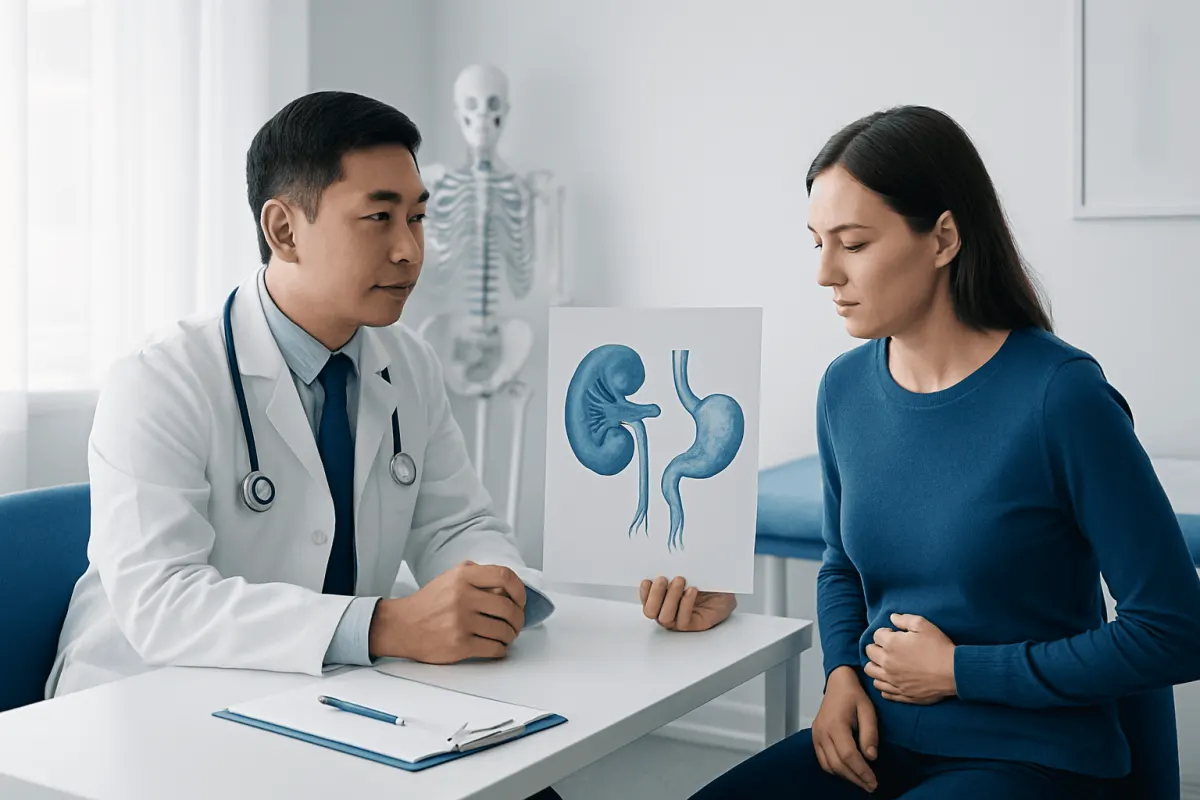
Kidney stones develop when substances normally dissolved in urine, such as calcium, oxalate or uric acid, become concentrated and form crystals. Low fluid intake is a common contributor. Other factors can include a personal or family history of stones, certain dietary patterns, obesity, repeated urinary infections, digestive conditions that affect absorption, and some medicines.
Stones vary in composition. Identifying the stone type, when possible, can help clinicians recommend prevention strategies tailored to the individual. A stone that has passed may be collected and analyzed, while urine and blood tests can identify metabolic factors that raise the likelihood of recurrent stones.
Appendicitis occurs when the appendix becomes blocked or inflamed. Blockage may be related to swollen lymph tissue, hardened stool, infection or, less commonly, another cause. This can allow bacteria to multiply inside the appendix, leading to swelling and inflammation. Appendicitis cannot reliably be prevented through diet or home remedies.
Anyone can develop either condition. Kidney stones are more likely to recur in people who have had them before, while appendicitis is usually an isolated event. A person with previous stones should not assume that new pain is another stone, because appendicitis and other urgent conditions can occur at the same time or present similarly.
How doctors reach a diagnosis
Clinicians begin by asking when pain started, where it is located, whether it moves, and what symptoms accompany it. They also ask about urinary symptoms, bowel changes, prior stones, recent illnesses, medications and, when relevant, pregnancy. A careful abdominal examination helps identify localized tenderness, guarding or signs that the lining of the abdomen may be irritated.
Urinalysis can detect blood, infection markers or crystals that may support a diagnosis of a kidney stone. Blood tests may show dehydration, kidney function changes, inflammation or infection. However, blood in the urine is not present in every stone case, and urinary findings alone do not exclude appendicitis.
Imaging is often the most useful way to clarify the cause. Ultrasound may be used to evaluate the kidneys, urinary tract and appendix, and it is often preferred first in children and pregnancy when appropriate. CT imaging can provide detailed information about stones, appendicitis and alternative causes of acute abdominal pain. The imaging approach is chosen individually, balancing diagnostic value with radiation considerations.
Other conditions can resemble kidney stones or appendicitis, including urinary tract infection, ovarian cysts, ectopic pregnancy, bowel inflammation, gallbladder disease, hernia and gastrointestinal infections. Accurate diagnosis matters because the safest treatment depends on the underlying cause.
Treatment approaches for each condition
Management of a kidney stone depends on its size, location, composition, symptoms and whether it is causing obstruction or infection. Small stones may pass on their own with clinician-guided pain relief, hydration advice and follow-up. A clinician may also prescribe medicine to support stone passage in selected cases. Drinking excessive amounts of fluid during severe colic is not necessarily helpful and may worsen discomfort; fluid advice should follow the treating clinician’s recommendations.
If a stone is too large to pass, causes persistent blockage, leads to recurrent uncontrolled pain, or is associated with infection, a procedure may be recommended. Options can include kidney stone treatment, such as shock wave therapy, ureteroscopy or other stone-removal approaches, depending on the clinical situation.
Appendicitis is commonly treated with surgery to remove the appendix, called an appendectomy. In selected uncomplicated cases, clinicians may discuss antibiotics as an alternative or as part of treatment, but surgery remains important for many people and is especially necessary when perforation or complications are suspected. The timing and approach are determined by the patient’s examination, imaging findings and overall health.
Recovery plans differ according to the treatment received and whether complications were present. Follow-up is important after a kidney stone to address recurrence risk, and after appendicitis to monitor healing, diet progression and any signs of infection. A specialist can explain expected recovery and activity restrictions for the individual situation.
Prevention and self-care after assessment
For people prone to kidney stones, prevention usually starts with maintaining adequate daily fluid intake so urine is generally pale yellow, unless a clinician has advised fluid restriction for another health condition. Nutrition advice should be individualized, especially after stone analysis or a metabolic evaluation. In many cases, a balanced diet with normal food-based calcium intake, less excess sodium and moderation of high-oxalate foods may be discussed.
It is not advisable to eliminate calcium without medical guidance. For certain people, very low dietary calcium can increase absorption of oxalate and may contribute to calcium oxalate stones. A doctor or dietitian can help match dietary changes to the stone type, other medical conditions and nutritional needs.
There is no proven home strategy that prevents appendicitis. Persistent lower right abdominal pain should not be treated with laxatives, enemas or unadvised pain medicines in an attempt to resolve a possible appendix problem. These measures can delay evaluation or complicate assessment.
People who have passed a stone should ask whether follow-up urine testing, blood tests or stone analysis is appropriate. Those who have had an appendectomy generally do not need ongoing appendix-specific prevention, but should follow postoperative instructions and attend recommended reviews.
When to seek medical care
Urgent medical assessment is appropriate for sudden severe abdominal, side or back pain; pain that is worsening or lasting several hours; pain with fever or chills; repeated vomiting; fainting; confusion; or a swollen, hard or very tender abdomen. These signs can occur with appendicitis, an infected obstructing kidney stone, or another condition requiring prompt care.
People should also seek urgent advice if they have pain with inability to urinate, visible blood in urine with significant pain, pregnancy, known kidney disease, a single functioning kidney, a weakened immune system, or a recent urinary tract procedure. Children, older adults and pregnant people may have less typical symptoms and should be assessed with a low threshold.
For milder symptoms that may represent a previously diagnosed kidney stone, contacting a clinician promptly is still sensible, especially if pain control is inadequate or urinary symptoms develop. If appendicitis is possible, avoiding food and drink until medical advice is received may be recommended in case a procedure is needed, but the person should follow local emergency guidance.
Acıbadem Health Point’s multidisciplinary specialists and JCI-accredited hospitals evaluate and treat kidney stone disease and appendicitis for international patients. The appropriate pathway begins with timely clinical assessment, tests and imaging rather than assumptions based on pain location alone.
Frequently asked questions
01Can kidney stones feel like appendicitis?
Yes. A stone in the lower part of the ureter can cause lower abdominal pain, nausea and vomiting that may resemble appendicitis. Urinary symptoms, pain moving toward the groin and pain that comes in waves may favor a stone, but imaging and examination are often needed to tell the difference safely.
02How can a person tell if pain is from a kidney stone or appendicitis?
Pain from a kidney stone often starts in the flank or back and may radiate to the groin, sometimes with blood in the urine or urinary urgency. Appendicitis often begins near the navel and becomes constant in the lower right abdomen, frequently with appetite loss and worsening pain on movement. These patterns are not definitive, so significant pain needs medical evaluation.
03Can appendicitis cause urinary symptoms?
Yes. An inflamed appendix located near the bladder or ureter can occasionally cause urinary frequency, discomfort with urination or changes on a urine test. This is one reason urinary symptoms should not automatically be assumed to mean a kidney stone or urinary tract infection.
04Is fever more likely with appendicitis or kidney stones?
A low fever may occur with appendicitis, especially as inflammation progresses. Kidney stones alone do not usually cause fever, but fever or chills with a suspected stone can indicate urinary infection and possible obstruction, which requires urgent assessment.
05Can a kidney stone pass without treatment?
Many small kidney stones pass naturally, although the process can be painful and may take time. A clinician should confirm the diagnosis and advise on pain relief, monitoring and follow-up. Immediate care is needed if fever, chills, inability to urinate, severe persistent pain or repeated vomiting occurs.
06Can appendicitis go away on its own?
Appendicitis should not be managed at home in the hope that it will resolve. Some carefully selected uncomplicated cases may be treated with antibiotics under medical supervision, but recurrence or complications can occur. A clinician must assess suspected appendicitis promptly to decide on the safest treatment.
This article is for general information only and is not a substitute for professional medical advice. Please consult a qualified doctor about your individual situation.
Persistent digestive symptoms? Get evaluated in Turkey
JCI-accredited · board-certified surgeons · reply within 24h
Add us as a Preferred Source to see more of our trusted health content across Google Search, AI Overviews and Discover.