Is Hair Dead? Understanding Hair Shafts and Follicles
Yes, the part of hair seen above the scalp is made of nonliving, keratinized cells. However, hair grows from living follicles beneath the skin, and changes in shedding, texture, or scalp health can sometimes need medical assessment.
Is hair dead? The short answer
Yes. The hair visible above the scalp is biologically nonliving. It is made primarily of hardened keratin, a protein also found in nails and the outer layer of skin. Once a hair strand emerges from the scalp, it has no blood supply, nerves, or living cells, so cutting it does not hurt and a damaged strand cannot heal itself.
This is usually nothing to worry about. Healthy-looking hair depends on both the condition of the hair shaft and the health of the living hair follicle beneath the skin. The follicle receives nutrients and signals from the body, forms new hair cells, and pushes the growing strand outward.
Because the visible shaft is nonliving, common concerns such as split ends, dryness, or weather-related frizz generally reflect physical or chemical damage rather than a dangerous health problem. However, sudden shedding, bald patches, scalp inflammation, or a clear change in hair density deserves medical attention because these changes can sometimes have an identifiable cause.
Living follicles and the hair growth cycle
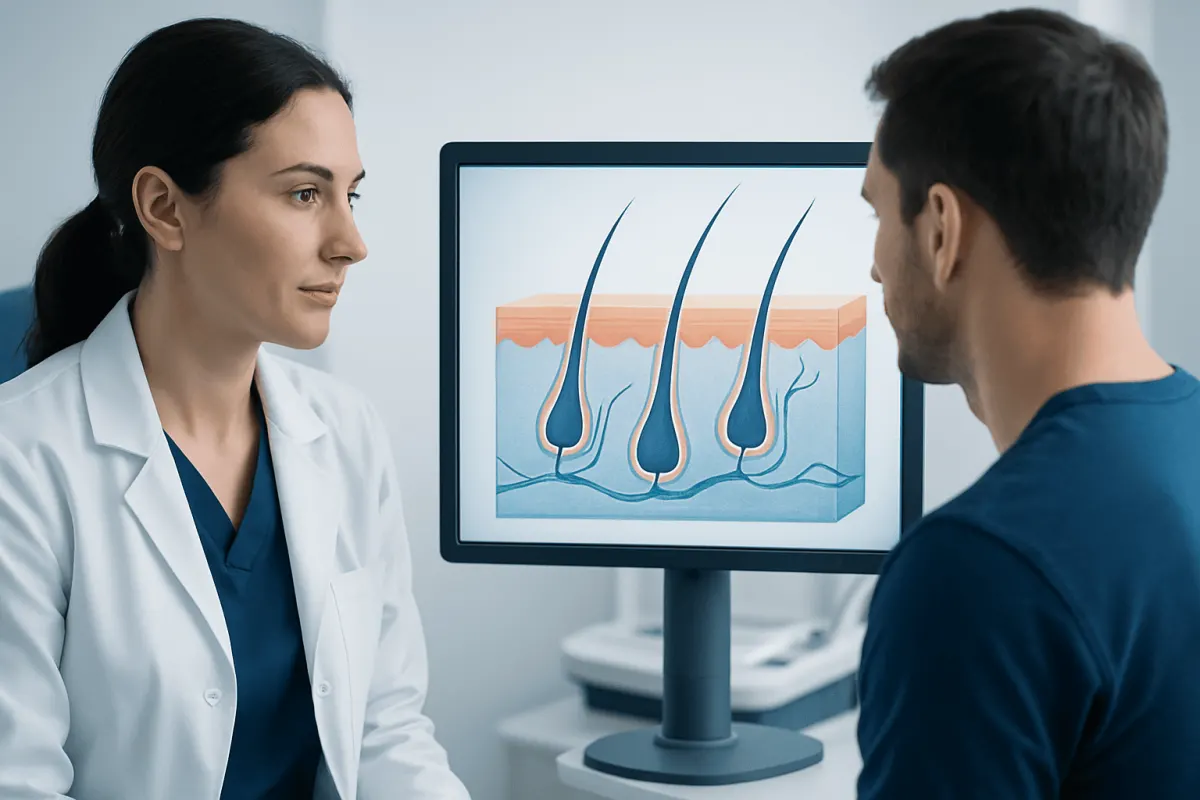
Each hair grows from a follicle, a small structure in the skin that surrounds the hair root. Cells near the base of the follicle divide rapidly and become filled with keratin. As these cells move upward, they lose their internal structures and form the durable hair shaft seen outside the scalp.
Scalp hair naturally moves through repeating phases. During the growth phase, called anagen, hair continues to lengthen. This is followed by a brief transition phase, catagen, and then a resting phase, telogen. At the end of the resting phase, an older hair may shed as a new one begins to develop.
Some daily shedding is therefore expected. The amount can appear greater after washing or brushing because loose hairs may collect until those moments. Hair growth is not synchronized across the scalp, which helps preserve overall coverage even as individual hairs cycle and shed.
The follicle’s activity can be influenced by genetics, age, hormones, illness, nutrition, medications, stressors, and scalp disease. Understanding this distinction between the nonliving shaft and living follicle helps explain why shampoos can improve the feel of hair, while medical treatment may be needed when the pattern of hair growth itself changes.
What makes hair look damaged or unhealthy?

Since hair shafts cannot regenerate, repeated physical and chemical exposure can gradually weaken them. Common sources of damage include bleaching, coloring, chemical straightening or perming, frequent heat styling, tight hairstyles, vigorous towel drying, and rough brushing or combing. These exposures can wear away the protective outer cuticle of the strand.
When the cuticle is disrupted, hair may feel dry or rough, tangle easily, look dull, develop split ends, or break before reaching its expected length. Humidity can also make damaged hair appear more frizzy because it alters how the shaft absorbs and releases moisture.
Conditioners, leave-in products, and protective styling can coat the surface and improve smoothness, manageability, and the appearance of shine. They do not revive dead cells or permanently repair a split end. Trimming damaged ends and reducing further exposure are the most reliable ways to manage breakage.
A change in hair texture alone is not always a sign of disease. Still, a sudden change accompanied by scalp scaling, redness, itching, pain, or increased hair loss should be evaluated. Conditions affecting the scalp can affect the environment in which follicles produce hair.
Hair shedding, hair breakage, and hair loss are different
Hair shedding means complete strands release from the follicle. It may be temporary after a physical stressor, such as a high fever, surgery, major illness, childbirth, rapid weight change, or a significant emotional stress event. This type of shedding can be noticeable but often improves as the triggering factor resolves and the growth cycle gradually normalizes.
Hair breakage occurs along the shaft rather than at the root. Broken hairs are often shorter, uneven in length, and more noticeable around areas exposed to heat, tension, or chemical processing. Breakage may give the impression of thinning, even when the follicles are still producing hair normally.
Hair loss, also called alopecia, describes reduced hair density or absence of hair in an area. It can develop slowly in a genetically patterned way or appear more suddenly and in patches. For example, alopecia areata is an autoimmune condition that can cause smooth, round patches of hair loss.
It is helpful not to self-diagnose based on shed hairs alone. A clinician can distinguish shedding, breakage, and follicle-related loss by looking at the scalp and the distribution of hair changes. This distinction guides the next steps and helps avoid unnecessary treatments.
How a doctor evaluates changes in hair
A doctor will usually begin by asking when the concern started, whether hair loss is gradual or sudden, and whether there were recent illnesses, stressors, dietary changes, new medicines, hormonal changes, or family history of thinning. They may also ask about hair-care practices, including coloring, heat tools, extensions, braids, or tightly pulled styles.
During the examination, the clinician checks the scalp for inflammation, scale, infection, scarring, and the pattern of hair density. They may gently assess how easily hairs release or examine individual hairs more closely. A dermatologist may use dermoscopy, a handheld magnifying tool, to inspect follicles and scalp structures.
Blood tests are not needed for every person with shedding or thinning. When the history or examination suggests an underlying contributor, a doctor may consider tests related to thyroid function, iron status, nutritional deficiencies, hormones, or other conditions. Testing is selected individually rather than routinely.
In uncommon cases, a scalp biopsy may help clarify whether a scarring or inflammatory condition is affecting follicles. Early assessment is particularly important when there is pain, redness, pustules, or scarring, because some inflammatory forms of hair loss can permanently damage follicles if left untreated.
Treatment and everyday hair care
Care depends on the cause. If the concern is mainly shaft damage, the focus is on reducing breakage: using conditioner, limiting high heat, choosing gentler detangling methods, avoiding repeated chemical processing, and loosening styles that pull on the roots. Regular trims can remove split ends and improve the overall appearance of damaged lengths.
If hair loss is related to a medical condition, treatment may target the underlying issue. A clinician may recommend changes in medication when appropriate, treatment for scalp inflammation or infection, nutritional support for a confirmed deficiency, or therapies intended to support regrowth in certain types of alopecia. Treatment decisions should be individualized after diagnosis.
People with gradual hereditary thinning may benefit from an assessment of androgenetic alopecia, the most common pattern of hair loss. Available approaches vary according to age, sex, medical history, pregnancy status, scalp findings, and personal goals. A dermatologist can discuss benefits, limitations, and potential side effects before treatment begins.
Hair care products can improve cosmetic appearance but should not be expected to treat all forms of hair loss. Products that cause burning, persistent itching, or a rash should be stopped, and medical advice should be sought before trying supplements or prescription-strength products for hair concerns.
When to seek medical care
Most dry, frizzy, or mildly broken hair is not an urgent medical issue. It is reasonable to start with gentle hair care and observe whether the appearance improves over several weeks. However, a doctor or dermatologist should assess new or worsening hair loss, especially if it is causing distress or affecting daily confidence.
Medical review is particularly important for sudden or patchy bald areas; a widening part or rapidly reduced density; loss of eyebrows, eyelashes, or body hair; scalp pain, tenderness, redness, scaling, crusting, or pus; or hair loss following a new medication or significant illness. These signs do not always indicate a serious condition, but prompt assessment can help identify treatable causes.
People should also arrange care if hair changes occur with symptoms such as unusual fatigue, unintentional weight change, sensitivity to heat or cold, menstrual changes, acne, increased facial hair, or other signs of hormonal or nutritional imbalance. A qualified clinician can decide whether these symptoms are related and whether testing is useful.
Acıbadem Health Point’s multidisciplinary specialists and JCI-accredited hospitals diagnose and treat hair and scalp concerns for international patients. A consultation can help clarify whether the issue is everyday shaft damage, temporary shedding, or a condition affecting the hair follicles.
Frequently asked questions
01Is hair technically dead?
The part of hair above the scalp is made of nonliving keratinized cells, so it is technically not living tissue. The hair root and follicle under the scalp are living structures that make new hair.
02Can damaged hair heal itself?
A damaged hair shaft cannot heal because it has no living cells. Conditioning products can temporarily improve smoothness and reduce friction, while trimming and gentler care help prevent further damage.
03Why does hair fall out if it is dead?
Hair sheds because the living follicle moves through its normal growth cycle and releases an older strand. Some shedding is expected, but sudden, patchy, or increasing loss should be assessed by a healthcare professional.
04Does cutting hair make it grow faster?
Cutting the visible hair shaft does not change growth within the follicle beneath the scalp. Trimming can make hair look healthier by removing split or broken ends, but it does not increase the rate of follicle growth.
05Can shampoo make hair grow?
Shampoo can clean the scalp and help manage hair texture, but it does not usually change the underlying growth cycle. A medicated shampoo may be recommended for certain scalp conditions, depending on the diagnosis.
06When is hair loss a reason to see a doctor?
A medical review is appropriate for sudden shedding, bald patches, progressive thinning, or scalp symptoms such as pain, redness, or scaling. It is also sensible to seek care when hair loss follows illness, medication changes, or occurs with symptoms that could suggest a hormonal or nutritional concern.
This article is for general information only and is not a substitute for professional medical advice. Please consult a qualified doctor about your individual situation.
Hair transplant in Turkey — costs, graft counts & a free assessment
JCI-accredited · board-certified surgeons · reply within 24h
Add us as a Preferred Source to see more of our trusted health content across Google Search, AI Overviews and Discover.