How Does Testicular Torsion Happen?
Testicular torsion happens when the spermatic cord twists, reducing or stopping blood flow to a testicle. It can begin suddenly during sleep, activity, or without an obvious trigger, and urgent medical assessment is needed to protect the testicle.
How Does Testicular Torsion Happen?
Testicular torsion happens when the spermatic cord, which carries blood vessels to the testicle, twists around itself. This twisting can partly or completely block blood flow. Without timely treatment, the lack of blood supply can damage the testicle, which is why sudden Common Causes, Related Conditions, and When to See a Doctor" class="ahp-ilk">testicular pain should always be treated as urgent.
The condition often occurs because the testicle is able to move more freely than usual within the scrotum. This may be due to an inherited anatomical variation often called a “bell-clapper” deformity. It is not caused by poor hygiene, masturbation, or a person doing something wrong.
Torsion may start during sports, after a minor injury, while turning in bed, or with no clear event at all. Online discussions such as “how does testicular torsion happen reddit” can include personal experiences, but sudden scrotal pain should not be self-diagnosed from social media. It needs immediate assessment by a qualified clinician.
What Things Can Cause Testicular Torsion?
In many cases, there is no single identifiable cause. The underlying issue is usually the way the testicle is attached inside the scrotum. If it can rotate too easily, the spermatic cord may twist during ordinary movement or while the body is at rest.
Factors that may be associated with testicular torsion include a personal or family history of torsion, previous episodes of sudden testicular pain that resolved on their own, rapid growth during puberty, and an undescended testicle. Minor trauma or vigorous activity may sometimes precede symptoms, but they are not the root cause in most people.
Cold temperatures and sudden contraction of the muscles around the scrotum have also been suggested as possible triggers in susceptible people. However, most cases cannot be reliably predicted. An injury should not be assumed to explain severe scrotal pain, since torsion can occur at the same time and requires urgent exclusion.
- Anatomical mobility of the testicle within the scrotum
- Adolescent growth and puberty-related changes
- Family or personal history of torsion
- Previous intermittent twisting and untwisting episodes
- Occasionally, activity, minor injury, or abrupt movement
Can Testicular Torsion Happen on Its Own?
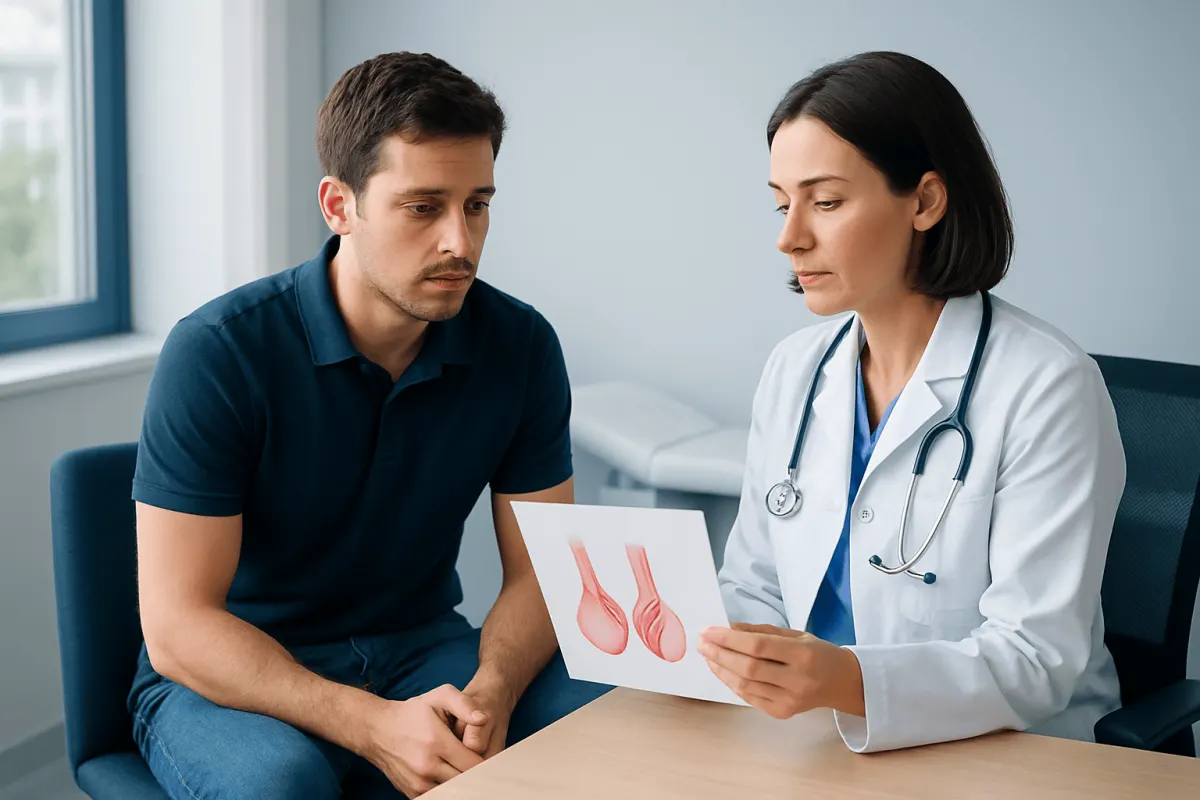
Yes. Testicular torsion can happen on its own, without exercise, injury, sexual activity, or another noticeable trigger. A person may wake with symptoms, notice pain while sitting quietly, or develop discomfort during a normal day. This is one reason it is important not to wait for pain to pass or assume it is a minor strain.
When people ask how does testicular torsion happen in sleep, the answer is that the testicle may rotate during normal movements in bed or during muscle contractions that occur while sleeping. Torsion during sleep is well recognized and does not mean that sleep itself caused a health problem.
Some people experience intermittent torsion, in which the cord twists and then untwists on its own. Pain may be severe but disappear suddenly. Even if symptoms settle, urgent urology assessment is important because torsion may recur and may later remain twisted.
Does Ejaculating Cause Testicular Torsion?
No. Ejaculating does not cause testicular torsion. Sexual arousal, masturbation, intercourse, and ejaculation are not established causes of the spermatic cord twisting. Torsion is primarily related to anatomy and the mobility of the testicle within the scrotum.
Some people may notice testicular discomfort after sexual activity for other reasons, such as muscle tension, congestion, infection, inflammation, or an unrelated injury. However, sudden, severe, one-sided pain should never be attributed automatically to sexual activity, particularly if there is swelling, nausea, or a change in the position of the testicle.
A healthcare professional can distinguish torsion from other causes of scrotal pain, including testicular torsion and inflammation such as epididymitis. Prompt evaluation is especially important because symptoms can overlap, while the urgency and treatment differ.
What Are 5 Warning Signs of Testicular Torsion?
The most typical symptom is sudden, severe pain affecting one testicle or one side of the scrotum. Pain may also spread to the lower abdomen or groin. Symptoms vary between individuals, but the following five signs should prompt immediate emergency medical care.
- Sudden, intense pain in one testicle or side of the scrotum
- Rapid scrotal swelling, tenderness, or redness
- A testicle that appears higher than usual or lies at an unusual angle
- Nausea, vomiting, or lower abdominal pain occurring with testicular pain
- Sudden pain that improves and then returns, which may suggest intermittent torsion
Fever and urinary symptoms are less typical of torsion and may point toward infection, but they do not reliably rule torsion out. In babies and young children, warning signs may be less clear. A newborn may have a swollen, firm, or discolored scrotum, while a child may cry, guard the area, complain of tummy pain, or refuse to walk normally.
Testicular torsion in kids can be difficult to recognize because children may not be able to describe the location or severity of pain. Caregivers should seek urgent assessment for unexplained scrotal swelling or sudden groin, lower abdominal, or testicular pain in a child.
Diagnosis and Treatment Options
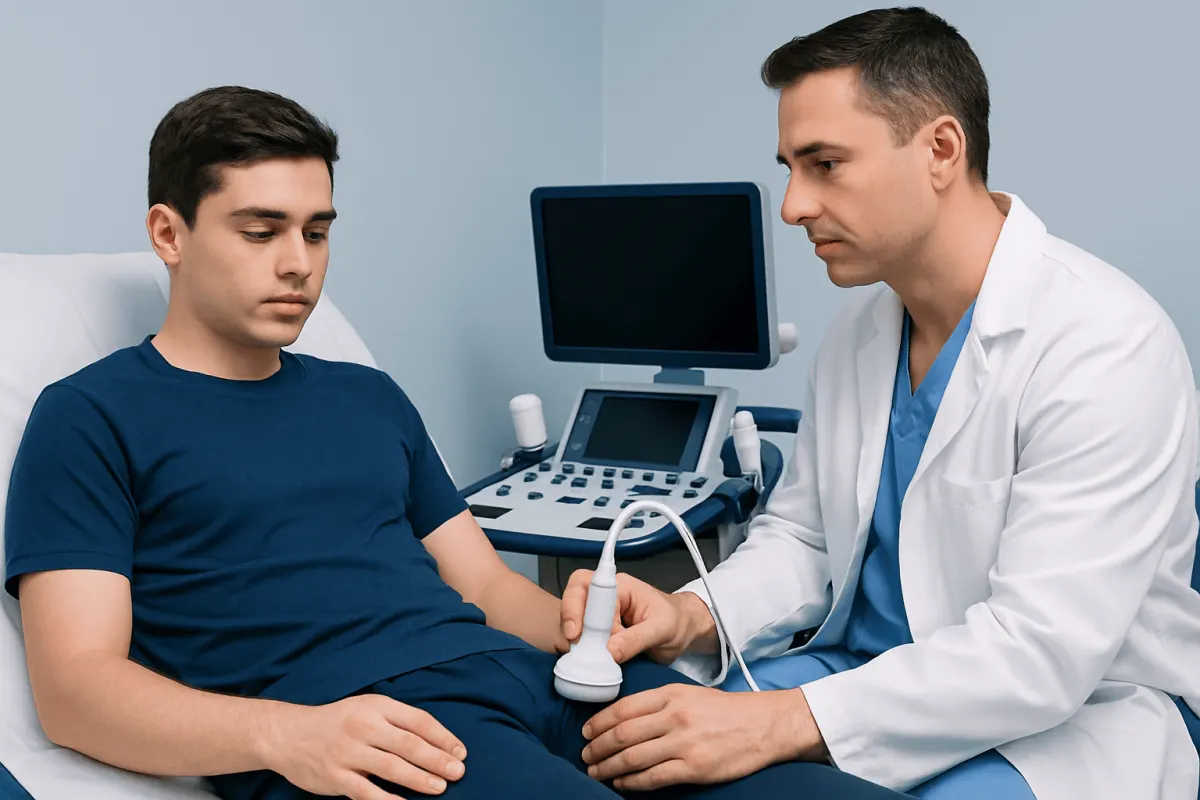
A clinician will ask about the timing and nature of symptoms and examine the abdomen, groin, and scrotum. Because time matters, a strong clinical suspicion of torsion may lead directly to surgery rather than waiting for multiple tests. An ultrasound with Doppler imaging may be used when it can be arranged without delaying necessary treatment.
The usual treatment is emergency surgery, called scrotal exploration. The surgeon untwists the spermatic cord if the testicle is viable and secures the affected testicle inside the scrotum. The other testicle is commonly secured during the same operation because the underlying anatomical tendency may be present on both sides.
If blood flow has been absent for too long and the testicle is no longer viable, removal may be necessary. Early care offers the best chance of preserving the testicle. urology surgery may also be recommended for intermittent torsion to prevent a future complete episode.
Recovery guidance depends on the procedure and the individual. People are commonly advised to rest, wear supportive underwear, avoid strenuous activity and sexual activity until cleared by their surgical team, and attend follow-up appointments.
How Does Testicular Torsion Happen in Babies, Kids, and Dogs?
Testicular torsion can occur at any age, although it is most common during adolescence and can also affect newborns. In babies, torsion may occur before or shortly after birth. It may be noticed as one enlarged, firm, tender, or discolored side of the scrotum. Any such finding in a newborn needs urgent pediatric evaluation.
In children and teenagers, torsion often begins abruptly, sometimes during sleep, exercise, or everyday activity. Puberty is a common time because rapid growth may combine with an anatomical tendency for the testicle to rotate. A prior short-lived episode of scrotal pain should be discussed with a doctor even if it has fully resolved.
People also search for how testicular torsion happens in dogs. Dogs can develop testicular torsion, particularly when a testicle has not descended into the scrotum, but this is a veterinary condition and should be assessed by a veterinarian. Human medical advice should not be applied to animals, and veterinary information should not be used to interpret a person’s symptoms.
When to Seek Medical Care
Seek emergency medical care immediately for sudden testicular or scrotal pain, especially if it is severe, one-sided, associated with swelling, nausea, vomiting, or abdominal pain. Do not wait to see whether pain improves, and do not try to massage, reposition, or treat the testicle at home.
Even when pain stops on its own, urgent same-day assessment is needed because intermittent torsion can return. Fast evaluation is particularly important for babies, children, and teenagers who have scrotal swelling or unexplained lower abdominal or groin pain.
Testicular torsion is not always preventable because it usually reflects anatomy. Protective equipment during contact sports can reduce some injuries but cannot reliably prevent torsion. People with previous suspected intermittent episodes or a family history should discuss their risk with a urologist. Acıbadem Health Point’s multidisciplinary specialists and JCI-accredited hospitals diagnose and treat urgent urological conditions for international patients.
Frequently asked questions
01How quickly should testicular torsion be treated?
Testicular torsion requires emergency assessment as soon as symptoms begin. The chance of preserving the testicle is generally better when blood flow is restored quickly, so a person should go to an emergency department rather than waiting for a routine appointment.
02Can testicular torsion go away by itself?
Sometimes the cord may untwist temporarily, causing pain to improve or disappear. This can be intermittent torsion, and it can twist again later. A person should still seek urgent medical evaluation, even if symptoms have settled.
03Can exercise cause testicular torsion?
Exercise does not usually cause torsion by itself, but movement or minor trauma may trigger twisting in someone with a susceptible anatomical arrangement. Torsion can also happen at rest or during sleep. Sudden pain during sports should be checked urgently rather than assumed to be a strain.
04Is testicular torsion painful all the time?
Complete torsion usually causes sudden, persistent pain that may become severe. With intermittent torsion, pain can come and go if the cord twists and then untwists. Any sudden episode of one-sided testicular pain needs urgent assessment.
05Can testicular torsion affect fertility?
Promptly treated torsion often allows the affected testicle to be preserved. A healthy testicle on the other side can usually provide normal hormone production and fertility potential. Individual fertility effects depend on the severity and duration of reduced blood flow, so follow-up with a urologist is appropriate.
06Can testicular torsion be prevented?
It cannot always be prevented because the main risk is an anatomical tendency for the testicle to rotate. Surgical fixation of both testicles may prevent recurrence after torsion or when intermittent torsion is suspected. Supportive sports equipment may help prevent injury but does not reliably prevent torsion.
This article is for general information only and is not a substitute for professional medical advice. Please consult a qualified doctor about your individual situation.
Explore treatments in Turkey — costs, top hospitals & a free quote
JCI-accredited · board-certified surgeons · reply within 24h
Add us as a Preferred Source to see more of our trusted health content across Google Search, AI Overviews and Discover.