Gynecomastia surgery vs Liposuction: Which Is Right for You?
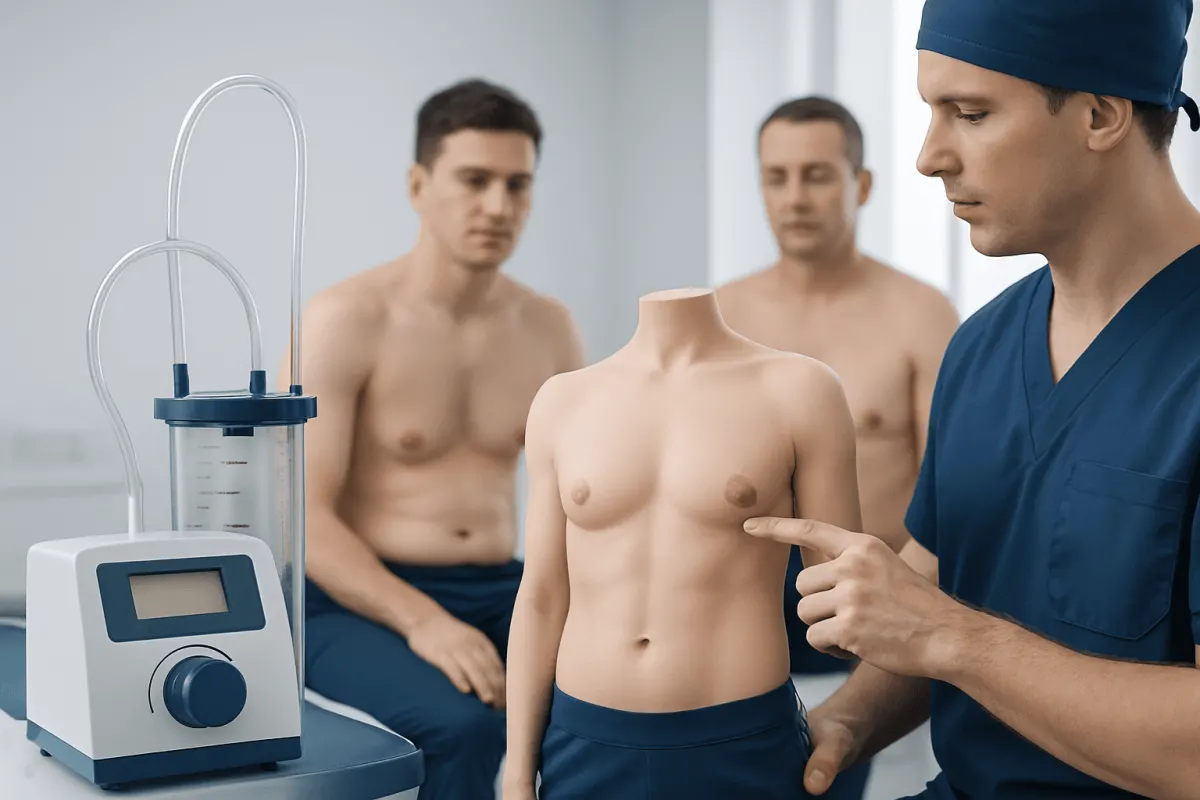
In gynecomastia surgery vs liposuction, liposuction is generally best for excess chest fat with good skin elasticity, while surgical gland removal is usually needed when firm breast gland tissue is present. Many people benefit from a combined approach, chosen after a clinical assessment of the chest, skin quality, medical history, and personal goals.
Gynecomastia surgery vs liposuction: the main difference
When comparing gynecomastia surgery vs liposuction, the central question is what is causing the chest enlargement. Liposuction is designed to remove excess fatty tissue. Gynecomastia surgery, often called gland excision or Breast Reduction: Surgery, Recovery, and Outcomes" class="ahp-ilk">male breast reduction, removes firm breast gland tissue that liposuction alone may not adequately treat.
Gynecomastia is the enlargement of breast tissue in males. It can affect one or both sides of the chest and may develop during puberty, adulthood, or later life. The enlargement may contain mostly fat, mostly glandular tissue, or a combination of both. This distinction is more important than the outward appearance alone when planning treatment.
For people with mixed fatty and glandular enlargement, surgeons may recommend combining techniques. A personalized consultation helps identify the safest and most appropriate option, including whether a procedure is suitable at all. For an overview of the operative treatment pathway, see gynecomastia surgery.
Understanding fat, gland tissue, and skin changes
Excess chest fat without substantial gland enlargement is sometimes described as pseudogynecomastia. It may occur with overall weight gain, although it can also persist in a localized way after weight loss. The chest often feels soft and diffuse, rather than having a distinct firm area beneath the nipple.
True gynecomastia involves glandular breast tissue. It can feel like a firm, rubbery disc or mound directly behind or around the nipple and areola. In some people, the tissue is tender, especially when enlargement is recent. Weight reduction can improve overall chest fullness but does not necessarily remove established gland tissue.
Skin quality also affects the treatment plan. Younger skin may contract well after fat or tissue removal. Significant stretching, loose skin, or a low nipple position may require a more extensive surgical approach to reshape the chest and, in selected cases, remove excess skin.
- Mainly fat: liposuction may be appropriate if skin elasticity is good.
- Mainly gland: excision is usually needed to remove the tissue.
- Fat and gland: combined liposuction and excision may provide the most balanced contour.
- Excess skin: surgery may need to include skin removal or nipple repositioning.
How each procedure works and who may be a candidate

Liposuction uses a narrow tube, called a cannula, inserted through small incisions to loosen and remove fat. Depending on the surgical plan, fluid is first introduced into the treatment area to reduce bleeding and make fat removal easier. Liposuction can contour the broader chest and nearby areas, helping create a smoother transition between the chest and upper torso.
Gynecomastia excision involves making an incision, commonly at the lower edge of the areola, to directly remove glandular tissue. The exact incision and technique depend on the amount and location of tissue, chest shape, and skin excess. Excision allows the surgeon to address the dense tissue that often creates persistent puffiness beneath the nipple.
Suitable candidates are generally in stable health, have a stable weight, and have realistic expectations about scars and healing. A surgeon will review medications, supplements, alcohol and recreational drug use, previous chest procedures, and conditions that may affect bleeding or wound healing. Smoking and nicotine products can increase complication risks and are typically discouraged before and after surgery.
A procedure is not always the first step. If breast enlargement is new, associated with a medication or substance, or linked to a possible hormonal condition, medical evaluation may be recommended before considering cosmetic treatment.
What happens before, during, and after treatment
Before a procedure, the clinician takes a medical history and examines the chest. Testing is not required in every case, but blood tests, breast imaging, or referral to another specialist may be appropriate when symptoms or examination findings suggest an underlying cause. The surgical team also discusses expected scars, anesthesia, recovery restrictions, and the possibility that both liposuction and excision may be needed.
On the day of treatment, the surgeon marks the treatment areas while the patient is standing. The procedure may be performed with local anesthesia and sedation or with general anesthesia, depending on the extent of treatment and individual circumstances. For liposuction, small incisions are made in discreet locations; for excision, the surgeon removes the gland through a planned incision around the areola or another appropriate location.
When techniques are combined, liposuction may first reduce surrounding fatty fullness, followed by direct removal of gland tissue. The incisions are closed, and a compression garment is usually applied. Some patients may have temporary drains, although this depends on the surgical method and the amount of tissue removed.
Most procedures are performed as day surgery, but the care team will give individualized guidance about going home, pain relief, wound care, compression use, and follow-up appointments. Patients should arrange for a responsible adult to accompany them after anesthesia.
Recovery timeline, expected benefits, and limitations
Bruising, swelling, tightness, and temporary changes in sensation are common in the early recovery period. Discomfort is usually most noticeable during the first several days and can generally be managed with the plan recommended by the surgical team. A compression garment is commonly worn to limit swelling and support the healing tissues.
Many people return to desk-based activities within about a week, depending on the procedure and how they feel. More strenuous exercise, heavy lifting, and chest-focused training are usually postponed for several weeks. The surgeon’s guidance should take priority, because recovery varies with the amount of liposuction, whether gland excision or skin removal was performed, and each person’s healing progress.
Initial contour changes may be visible early, but swelling can take weeks to settle. Final results may continue to refine over several months as tissues heal and scars mature. Benefits can include a flatter, more proportionate chest and reduced nipple-area fullness. However, no procedure can guarantee complete symmetry, invisible scars, or a specific aesthetic result.
Maintaining a stable weight and avoiding substances or medications associated with gynecomastia where medically appropriate may help preserve results. If a hormonal or medication-related cause remains active, recurrent breast enlargement can be possible.
Risks and safety considerations
Both liposuction and excision are established procedures, but all surgery carries risks. These can include bleeding, infection, fluid collection, delayed wound healing, temporary or persistent numbness, contour irregularities, scarring, asymmetry, and dissatisfaction with the cosmetic result. Additional treatment may occasionally be needed.
Specific concerns after gynecomastia surgery can include a depression beneath the nipple if too much tissue is removed, persistent puffiness if glandular tissue remains, or changes in nipple position or sensation. With liposuction, uneven contour or residual firm tissue may be more likely when there is a significant glandular component.
Safety begins with careful assessment and transparent discussion. Patients should tell the team about all prescribed medicines, over-the-counter products, supplements, allergies, and previous health conditions. They should follow preoperative instructions closely and attend planned follow-up visits so healing can be monitored.
When to seek medical care
Breast enlargement in males is often benign, but it should not be assumed to be purely cosmetic without an appropriate assessment. A doctor should evaluate a new lump, enlargement that occurs mainly on one side, rapid growth, persistent pain, nipple discharge, skin dimpling, nipple inversion, or swollen lymph nodes in the armpit.
Medical review is also important if gynecomastia begins after starting a medication, anabolic steroid, hormone product, or recreational drug, or if it occurs with symptoms such as unexplained weight change, reduced libido, testicular changes, or signs of liver, kidney, or thyroid disease. A clinician can determine whether changes to treatment, further tests, or specialist referral are needed.
Following a procedure, patients should contact their surgical team promptly for worsening pain, fever, increasing redness, drainage from an incision, sudden swelling, shortness of breath, or any concern about recovery. Acıbadem Health Point’s multidisciplinary specialists and JCI-accredited hospitals assess and treat gynecomastia for Myomectomy Recovery for International Patients: The Usual Travel Timeline" class="ahp-ilk">international patients, with care plans based on individual clinical needs.
Frequently asked questions
01Can liposuction remove gynecomastia completely?
Liposuction can effectively remove fatty chest fullness, but it does not reliably remove dense glandular breast tissue. If a firm gland is present beneath the nipple, excision surgery may be needed, either alone or together with liposuction. A physical examination helps determine the likely tissue type.
02How can a surgeon tell whether gynecomastia is fat or gland tissue?
The surgeon considers the history, chest examination, body weight, skin quality, and feel of the tissue beneath the nipple. Gland tissue is often firmer and more localized than fat. Imaging or laboratory tests may be considered when the findings are unclear or an underlying medical cause is suspected.
03Is gynecomastia surgery more invasive than liposuction?
Excision generally involves a direct incision to remove gland tissue, while liposuction uses smaller access incisions to remove fat. The appropriate approach depends on the tissue present, not simply on which procedure has smaller incisions. A combined treatment can be the most effective option for mixed enlargement.
04Will gynecomastia return after surgery?
Removed gland tissue does not usually grow back in the same way, but new chest enlargement can occur if there is significant weight gain or an ongoing hormonal, medication-related, or substance-related cause. Treating or managing contributing factors is therefore important. The surgeon can explain the individual likelihood of recurrence.
05How long does recovery from gynecomastia surgery take?
Early bruising and swelling commonly improve over the first few weeks, while contour and scar maturation continue for several months. Many people resume light daily activities within about a week, but vigorous exercise is usually delayed. The exact timeline depends on whether liposuction, excision, skin removal, or a combination was performed.
06Does gynecomastia surgery leave scars?
All surgical incisions create scars, although surgeons aim to place them in less noticeable locations whenever possible. For gland excision, a scar is often positioned around the lower border of the areola. Scars usually change and soften over time, but their final appearance varies between individuals.
This article is for general information only and is not a substitute for professional medical advice. Please consult a qualified doctor about your individual situation.
Medical weight-loss options in Turkey — costs & eligibility
JCI-accredited · board-certified surgeons · reply within 24h
Add us as a Preferred Source to see more of our trusted health content across Google Search, AI Overviews and Discover.