Could You Still Have Period and Be Pregnant: What You Need to Know

Key Takeaways
- A true period stops in pregnancy because the uterine lining is no longer shed in the usual cycle.
- Bleeding in pregnancy can happen for several reasons, including implantation, cervical changes, or a pregnancy complication.
- The amount, color, timing, and associated symptoms can help distinguish bleeding from a period, but they are not a substitute for testing.
- Any bleeding with pain, dizziness, fever, or heavy flow should be assessed promptly.
- A pregnancy test and a clinician’s evaluation are the most reliable ways to confirm what is happening.
No, a true menstrual period does not happen during pregnancy. However, some people do experience vaginal bleeding in early pregnancy or later, and it can be mistaken for a period. Understanding the difference helps determine when reassurance is enough and when medical assessment is important.
Overview
The short answer to could you still have period and be pregnant is no: a true menstrual period does not continue once a pregnancy begins. Menstruation is the monthly shedding of the uterine lining when pregnancy has not occurred. During pregnancy, hormones keep that lining in place to support the developing embryo or fetus.
What can happen, though, is vaginal bleeding during pregnancy. That bleeding may be light or heavy, brief or recurrent, and it can look enough like a regular period to cause confusion. For someone who is traveling, away from their usual doctor, or trying to decide whether to change plans around a possible pregnancy, that uncertainty can feel especially stressful. A pregnancy test and timely medical advice usually provide clarity.
Bleeding does not always mean something serious, but it should never be dismissed automatically. The safest approach is to treat any unexpected bleeding as a symptom that deserves attention, especially if pregnancy is possible or already confirmed.
Symptoms: How Bleeding in Pregnancy Differs from a Period

Bleeding that occurs in pregnancy often looks different from a normal period, although there is overlap. Some people notice only spotting on toilet paper or underwear, while others experience bleeding that seems similar to menstrual flow. The difference is not always obvious based on appearance alone.
Clues that bleeding may be related to pregnancy rather than a menstrual cycle include a positive pregnancy test, a missed period before the bleeding started, breast tenderness, nausea, fatigue, and pelvic cramping that feels unusual for a typical period. Bleeding in pregnancy may also appear earlier or later than expected, and it may stop and start rather than flow steadily.
- Commonly described as lighter: spotting or small amounts of blood
- Can be brown, pink, or red: color alone does not confirm the cause
- May occur with mild cramping: which can be normal or concerning depending on the situation
- May be accompanied by other pregnancy symptoms: such as breast changes, nausea, or a missed cycle
Because symptoms overlap, bleeding should be interpreted in context. If there is any chance of pregnancy, testing is more reliable than trying to judge by bleeding alone.
Causes & Risk Factors
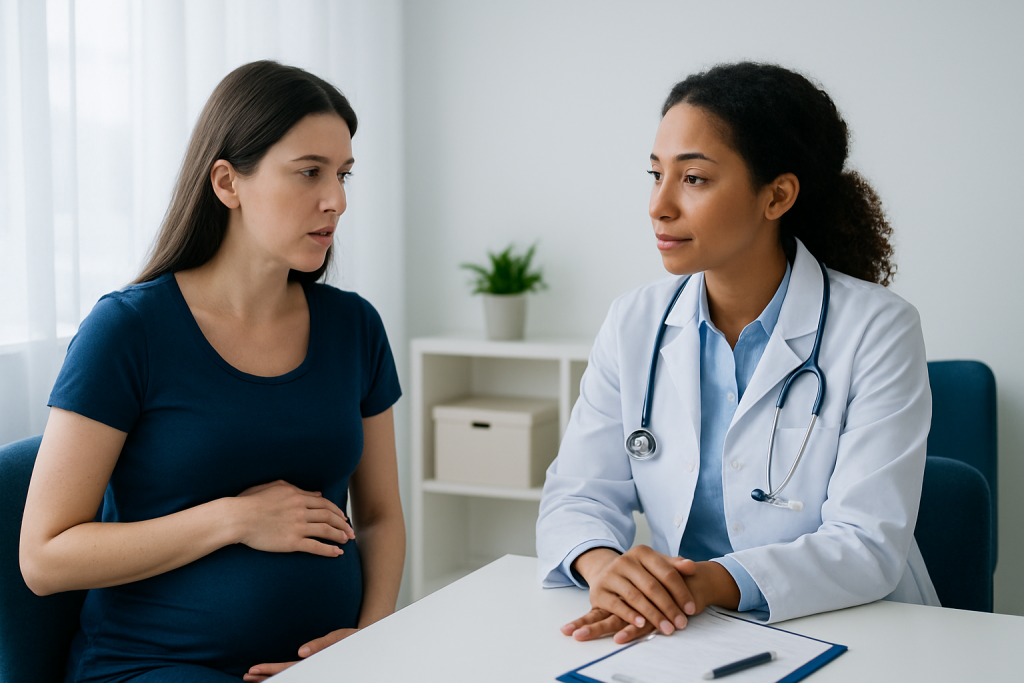
There are several reasons someone may bleed during pregnancy. One common cause in early pregnancy is implantation bleeding, which can happen when a fertilized egg attaches to the uterine lining. This type of bleeding is usually light and short-lived, though not everyone experiences it.
Other causes include changes to the cervix, which becomes more sensitive during pregnancy and may bleed after sex, a pelvic exam, or even no clear trigger. Hormonal shifts, vaginal infections, and irritation can also contribute. In some cases, bleeding may be related to conditions that need medical review, such as miscarriage, ectopic pregnancy, or placental complications later in pregnancy.
Risk can be higher in people with a history of miscarriage, ectopic pregnancy, fertility treatment, smoking, pelvic infection, or certain uterine or cervical conditions. Still, bleeding can happen even without any known risk factors, so the absence of a risk factor does not rule out pregnancy-related bleeding.
Diagnosis
When a person asks whether they are having a period or bleeding in pregnancy, clinicians usually start with a careful history. Timing matters: when the last normal period began, when bleeding started, how heavy it is, whether there is pain, and whether pregnancy tests have already been done. A pelvic exam may be needed in some cases, but not always.
A home pregnancy test can be helpful, but if bleeding is already happening, a blood test may provide a clearer answer. Blood tests can detect and measure pregnancy hormone levels more precisely, and they may be repeated to see whether levels are rising as expected. An ultrasound is often used to confirm the location and development of the pregnancy, especially if there is pain, heavy bleeding, or uncertainty about dates.
For Myomectomy Recovery for International Patients: The Usual Travel Timeline" class="ahp-ilk">international patients or those seeking care away from home, bringing the date of the last menstrual period, any home test results, and a brief note of symptoms can make the consultation smoother. That information helps the care team interpret the bleeding in the right context and decide which tests are most useful next.
Treatment Options
Treatment depends entirely on the cause of the bleeding. If the bleeding is from a benign reason such as cervical irritation or implantation, no specific treatment may be required beyond observation and follow-up. If an infection is involved, treatment may include medications chosen by a clinician based on safety in pregnancy.
When bleeding is linked to a threatened miscarriage, ectopic pregnancy, or placental issue, care becomes more specific and may involve close monitoring, repeat scans, laboratory testing, or hospital-based treatment. The goal is always to protect the person’s health first and, when possible, support a continuing pregnancy. A clinician may also recommend temporary activity modification, but rest alone is not a guaranteed solution and should not replace evaluation.
It is important not to self-treat vaginal bleeding in pregnancy with leftover medicines or herbal products. Over-the-counter pain relievers, supplements, and even seemingly harmless remedies can be unsuitable in pregnancy, so any medication plan should come from a qualified clinician who knows the full situation.
Prevention & Self-care
Not every cause of bleeding can be prevented, but a few practical steps can reduce uncertainty and support early care. If pregnancy is possible, taking a test when a period is late or unusually different is a sensible first step. Keeping a simple record of cycle dates, symptoms, and bleeding patterns can also make it easier to spot what is normal for that individual.
If a pregnancy has been confirmed, it helps to attend scheduled prenatal visits, avoid smoking and alcohol, and follow guidance on medications and supplements. People who are traveling should keep the name of their medications, any recent scan reports, and contact details for their regular clinician or fertility specialist, if applicable. That preparation can be useful if bleeding occurs unexpectedly while abroad.
- Use pads rather than tampons if bleeding is happening, unless a clinician advises otherwise.
- Note the color, amount, and timing of bleeding.
- Avoid sex until a clinician advises it is safe if bleeding is unexplained.
- Seek prompt advice if symptoms change quickly.
Self-care should be calm and practical, not delayed. The most helpful habit is to get checked early if pregnancy is even a possibility.
When to See a Doctor
Medical review is wise any time bleeding occurs with a positive pregnancy test, a missed period, or a strong possibility of pregnancy. It is also important if the bleeding is heavier than spotting, lasts longer than expected, or keeps returning. Even if symptoms seem mild, a clinician can help confirm whether this is menstrual bleeding, early pregnancy spotting, or something that needs follow-up.
Seek urgent care if bleeding is accompanied by severe abdominal or one-sided pelvic pain, shoulder pain, fainting, dizziness, fever, or passage of large clots or tissue. These symptoms do not automatically mean a serious problem, but they do deserve prompt evaluation because some pregnancy-related conditions require immediate treatment.
If someone is uncertain while away from home, a local emergency department, women’s health clinic, or obstetric service can be an appropriate first stop. For international patients, Acibadem Health Point’s multidisciplinary specialists and JCI-accredited hospitals can help diagnose and treat pregnancy-related bleeding with coordinated care.
Bottom line
A true period and pregnancy do not occur together, but bleeding during pregnancy can happen and may be mistaken for a period. Because the reasons range from harmless to urgent, the goal is not to guess but to confirm with testing and medical evaluation when needed.
If pregnancy is possible, a pregnancy test is the right first step. If bleeding is confirmed during pregnancy, a clinician can determine whether observation, testing, or treatment is appropriate, while also considering travel plans, access to follow-up, and overall safety.
Frequently asked questions
01Could you still have period and be pregnant?
A true period does not happen during pregnancy. However, some people do have vaginal bleeding in pregnancy, and it can look like a period at first.
02What is the difference between implantation bleeding and a period?
Implantation bleeding is usually lighter and shorter than a normal period. It often appears as spotting rather than a full flow, but it is not possible to confirm the cause by appearance alone.
03Can a home pregnancy test be positive if there is bleeding?
Yes. Bleeding does not cancel out a pregnancy test result. If the test is positive and there is bleeding, a clinician should evaluate the situation.
04Does bleeding always mean miscarriage?
No. Bleeding can happen for several reasons, and many are not miscarriage. Still, any bleeding in pregnancy should be assessed, especially if it is heavy or painful.
05When should someone seek urgent care for bleeding in pregnancy?
Urgent care is important if bleeding is heavy, there is severe pain, dizziness, fainting, fever, or one-sided pelvic pain. These symptoms can signal a problem that needs prompt attention.
06Can sex cause bleeding in pregnancy?
Yes, the cervix can be more sensitive during pregnancy and may bleed after sex. If bleeding happens, it is best to check with a clinician before assuming it is harmless.
This article is for general information only and is not a substitute for professional medical advice. Please consult a qualified doctor about your individual situation.
Persistent digestive symptoms? Get evaluated in Turkey
JCI-accredited · board-certified surgeons · reply within 24h
Add us as a Preferred Source to see more of our trusted health content across Google Search, AI Overviews and Discover.