Flying Home After a Hair Transplant in Turkey: Timing and Aftercare

Key Takeaways
- Many clinics advise waiting until after the first medical hair wash and a post-operative review before flying home — commonly two to three days, though the treating surgeon decides.
- Trips are usually planned as a short stay: consultation and planning, the procedure day, a rest day, then the first wash and travel.
- Packages vary widely; patients should ask in writing what is and is not included, including transfers, accommodation, medication and follow-up.
- Costs are best discussed as planning bands rather than fixed quotes, as graft numbers, technique and length of stay all affect the total.
- Accreditation such as JCI, and the individual surgeon's qualifications and experience, are more informative selection criteria than marketing claims.
- Aftercare continues for months at home; a patient coordinator can arrange remote reviews and liaise with the clinical team about any concerns.
Most people travelling from the UK for a hair restoration procedure plan the flight back from Turkey hair transplant surgery around two to three days afterwards, once the clinic has carried out the first wash and a post-operative check. This guide explains realistic travel timing, what packages usually cover, how to plan costs and accreditation checks, and how aftercare continues once a patient is home.
Answering the Main Question: How Soon Can Patients Travel Home?
For most people, the flight back from Turkey hair transplant surgery is scheduled around two to three days after the procedure — typically after the clinical team has performed the first medical wash of the recipient and donor areas and carried out a post-operative check. This is a general pattern rather than a rule: the operating surgeon makes the final decision based on the technique used, the size of the session, how the donor area is healing, and each patient’s overall health. Anyone taking blood-thinning medication or living with a heart, respiratory or clotting condition should have travel timing confirmed individually.
The reason for the short wait is practical. In the first 48 hours, the newly placed grafts are at their most vulnerable, mild swelling of the forehead is common, and the donor area may still be sensitive. Being seen once more before departure allows the team to review the dressing, teach the washing routine in person, and answer questions while the patient is still in the same city as the clinic.
Flying itself is not usually the difficulty. The greater risks are accidental knocks in crowded airports, pulling a suitcase overhead, or a headrest rubbing against the grafted area. Most of the advice below is about avoiding those small everyday hazards during the journey home.
A Typical Trip: What the Days in Turkey Look Like
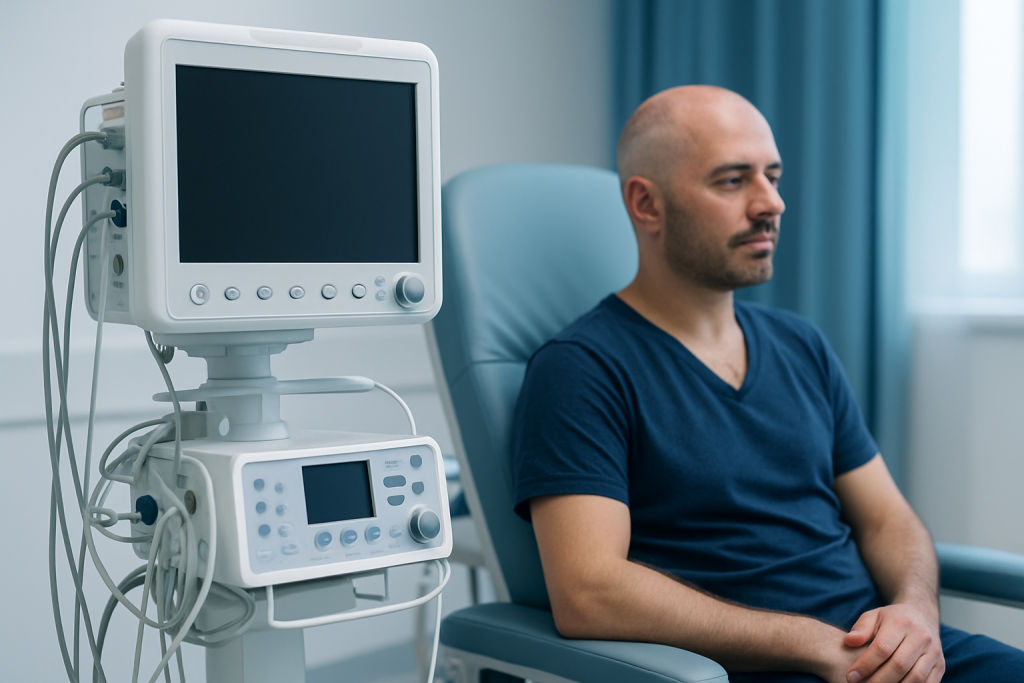
Hair restoration trips are usually built around a short, structured itinerary so that patients are not left guessing. A coordinated plan often looks like this: arrival and airport transfer, a face-to-face consultation with blood tests and hairline planning, the procedure day, a rest day, then the first wash and a final review before departure.
- Day of arrival: transfer to the hotel, rest, and confirmation of the next day’s appointment time.
- Consultation day: assessment of donor capacity, discussion of realistic density expectations, hairline design, pre-operative blood tests and consent.
- Procedure day: the session itself, usually under local anaesthetic, often lasting several hours with breaks.
- Recovery day: quiet rest, sleeping semi-upright, and following instructions on sprays or lotions.
- Wash and review day: the first medical wash, instructions for washing at home, medication guidance and a check of the donor area.
Video consultation before travelling is increasingly common and genuinely useful. It allows the patient to send photographs, discuss whether a transplant is appropriate at this stage of hair loss, and understand whether medical treatment for ongoing thinning should be considered alongside surgery. Some people discover at this stage that surgery is best postponed — an honest and valuable outcome.
Planning the Flight Back From Turkey Hair Transplant Surgery

Once travel is medically cleared, a few simple choices make the journey more comfortable. Booking an aisle seat reduces the need to climb past other passengers, and avoiding a window seat means no temptation to lean the head against the cabin wall. Grafted skin should not touch the headrest; many patients sit slightly forward or use a neck pillow positioned to support the chin and jaw rather than the back of the head.
Cabin air is dry, so drinking water regularly is sensible, as is walking the aisle on longer flights to keep circulation moving. Any prescribed medication, sprays, lotions and a spare clean pillow cover should travel in hand luggage rather than the hold. Patients should also carry a copy of the operation note and discharge instructions in English — this is helpful if a UK doctor or pharmacist needs to be involved later.
- Avoid hats or caps unless the clinic has supplied one designed for post-operative use and has said when it may be worn.
- Ask a travelling companion or airport staff for help with luggage; nothing should be lifted overhead.
- Keep the head protected from direct sun during transfers.
- Alcohol is best avoided around the time of travel, as it can worsen swelling and dehydration.
Swelling that migrates towards the forehead or around the eyes over the first few days is common and generally settles. It can look dramatic in the mirror; patients often find it reassuring to know in advance that it is expected rather than a sign that something has gone wrong.
What Treatment Packages Typically Include
Packages differ considerably between providers, so the most useful step is to ask for a written breakdown before committing. Many include the procedure itself, pre-operative blood tests, local anaesthetic, post-operative medication, the first medical wash, an aftercare kit of shampoo and lotion, hotel accommodation for a set number of nights, airport and clinic transfers, and interpreter support. Some also include follow-up reviews at intervals over the following year.
Items that are often not included, and worth clarifying, include flights, travel insurance, additional nights if plans change, PRP or other adjunctive treatments, medical therapy for ongoing hair loss, and any future touch-up session. Patients should also ask who performs each stage of the procedure, how many patients the surgeon oversees in a day, and what happens if the assessment on the day suggests a different graft number than estimated online.
It is equally important to understand what a transplant can and cannot do. Surgery redistributes existing donor hair; it does not stop the underlying process of pattern hair loss. Many patients are advised to continue medical treatment to help preserve the hair they still have. A clear conversation about this before travel avoids disappointment later.
Cost Planning: Bands Rather Than Quotes
Realistic financial planning is easier when costs are treated as bands. The total depends on the number of grafts, the technique, the length of stay, whether accommodation and transfers are bundled in, and whether additional treatments are recommended. Smaller, focused sessions sit at the lower end of the range; larger sessions, combined procedures or extended stays sit considerably higher. Prices quoted before an in-person assessment are always provisional.
UK patients should also budget for elements outside any package: flights, travel insurance that explicitly covers planned medical treatment abroad, time off work, and any medication or dermatology review once home. It is worth remembering that the NHS does not routinely fund treatment for pattern hair loss or the management of complications arising from elective surgery abroad, although urgent problems will of course be assessed.
A patient coordinator can set out an indicative cost range and explain what would change it, so there are no surprises at the clinic. Unusually low headline figures deserve careful questions rather than immediate booking — particularly about who performs the procedure and what follow-up is provided.
Choosing Safely: Accreditation and Surgeon Credentials
Marketing photographs are easy to produce; verifiable credentials are not. Two checks carry particular weight. The first is hospital or clinic accreditation — Joint Commission International (JCI) accreditation, for example, involves independent assessment of patient safety systems, infection control, medication management and emergency preparedness. The second is the individual practitioner: patients are entitled to know the name of the doctor performing the surgery, their medical registration in Turkey, their specialty training and their experience in hair restoration.
Other reasonable questions include whether the procedure takes place in a licensed medical facility, what sterilisation protocols are used, how emergencies are managed, and who to contact out of hours. Written consent documents in English, a clear complications policy and a named point of contact for follow-up all indicate an organised service.
Patients should be cautious of any provider promising a guaranteed density, a fixed final result or an exact date by which hair will have grown. Growth follows a biological timeline that varies between individuals, and reputable clinicians describe expected ranges rather than certainties.
Aftercare Once Home in the UK
Aftercare does not end at the airport. Patients are usually given a washing routine to follow at home for the first couple of weeks, with instructions on how gently to handle the recipient area and when scabs are expected to clear. Sleeping semi-upright for the first several nights, avoiding scratching, and keeping the scalp out of strong sun are common recommendations. Strenuous exercise, swimming, saunas, contact sports and hair dye are generally postponed until the clinical team advises otherwise.
Most people are surprised by shedding. It is normal for many transplanted hairs to fall out within the first weeks before new growth begins from the retained follicles, and visible change typically unfolds gradually over many months. Photographs taken at set intervals help patients track progress objectively rather than judging it day to day in the bathroom mirror.
Certain signs warrant prompt medical attention rather than watchful waiting: spreading redness or warmth, pus or increasing pain, fever, a donor wound that opens, or bleeding that does not settle with gentle pressure. In these situations patients should contact the treating clinic and also seek local medical advice — through their GP, NHS 111 or, for severe symptoms, urgent care. Sharing the operation note with UK clinicians makes assessment easier.
Acıbadem Health Point coordinates hair restoration journeys for international patients, with multidisciplinary specialists and JCI-accredited hospitals within the Acıbadem Healthcare Group, and can arrange video consultations, interpreter support, travel and accommodation planning, and remote follow-up after the return home.
When to Speak to a Patient Coordinator
A patient coordinator is the practical link between a patient in the UK and the clinical team in Turkey. It is worth making contact early — before flights are booked — so that the itinerary, the number of nights required and the likely travel date are based on medical advice rather than the cheapest fare. Coordinators can also arrange a pre-travel video consultation, explain what documentation to bring, and advise on visa and entry requirements.
Coordinators are equally useful after the flight home. They can arrange remote reviews at agreed intervals, pass on photographs to the surgeon, clarify aftercare instructions that seemed unclear at the time, and organise interpretation if language is a barrier. If a patient has a question at three weeks or six months, having a named contact avoids searching through online forums for reassurance.
Finally, coordinators help patients ask the right questions of themselves: is the hair loss stable enough for surgery, is the donor area adequate, and does the plan match realistic expectations? Anyone unsure should discuss the decision with their GP or a dermatologist in the UK before travelling. A well-planned trip, an appropriately timed flight home and consistent aftercare are the elements most within a patient’s own control.
Frequently asked questions
01How long should someone wait before flying home after a hair transplant in Turkey?
Many clinics plan departure around two to three days after the procedure, usually once the first medical wash and a post-operative check have been completed. The treating surgeon makes the final decision based on the size of the session, healing of the donor area and the patient's general health. Anyone with a medical condition affecting clotting, circulation or breathing should have travel timing confirmed individually.
02Is flying itself harmful to newly transplanted grafts?
Cabin pressure and altitude are not generally considered a problem for grafts. The practical risks are accidental knocks in busy airports, pressure from a headrest, lifting heavy luggage and dehydration. Choosing an aisle seat, avoiding leaning the head back, drinking water and asking for help with bags reduce these risks considerably.
03Can a hat be worn at the airport to cover the scalp?
Only if the clinic has provided or approved a loose post-operative cap and has said when it may be worn. Tight or ordinary hats can rub against grafts during the earliest days. Patients should follow the specific instructions given by their surgical team rather than general advice found online.
04What do hair transplant packages in Turkey usually include?
Packages commonly cover the procedure, pre-operative blood tests, medication, the first medical wash, an aftercare kit, hotel accommodation for a set number of nights, transfers and interpreter support. Flights, travel insurance, additional nights and any future touch-up session are often excluded. Requesting a written breakdown before booking is the simplest way to avoid misunderstandings.
05How should costs be planned for a trip of this kind?
Costs are best considered as bands rather than fixed figures, because graft numbers, technique and length of stay all influence the total, and any estimate given before an in-person assessment is provisional. Patients should also budget separately for flights, insurance that covers planned treatment abroad, and time off work. A patient coordinator can provide an indicative range and explain what would change it.
06Why does accreditation such as JCI matter when choosing a clinic?
Joint Commission International accreditation involves independent assessment of patient safety systems, infection control, medication management and emergency readiness. It does not guarantee any particular cosmetic outcome, but it does indicate that organisational standards have been externally reviewed. Checking the individual surgeon's medical registration and experience is an equally important step.
07What should a UK patient do if a problem develops after returning home?
Contact the treating clinic promptly and, in parallel, seek local medical advice through a GP or NHS 111. Spreading redness, warmth, pus, fever, worsening pain or a wound that opens should be assessed without delay. Carrying a copy of the operation note in English makes it much easier for UK clinicians to help.
This article is for general information only and is not a substitute for professional medical advice. Please consult a qualified doctor about your individual situation.
Hair transplant in Turkey — costs, graft counts & a free assessment
JCI-accredited · board-certified surgeons · reply within 24h
Add us as a Preferred Source to see more of our trusted health content across Google Search, AI Overviews and Discover.