Facet Arthropathy: Symptoms, Causes and Treatment

Key Takeaways
- Facet arthropathy affects the small facet joints that help the spine move and stay stable.
- Pain is often worse with twisting, bending backward, or standing for long periods.
- Diagnosis usually combines a physical exam with imaging when needed, since symptoms can overlap with other spine problems.
- Treatment often starts with conservative measures such as activity changes, physical therapy, and pain relief strategies.
- Persistent or worsening symptoms should be reviewed by a doctor, especially if pain spreads, weakness appears, or daily movement becomes difficult.
Facet arthropathy is a common form of wear-related change in the small joints that connect the bones of the spine. It may lead to stiffness, localized pain, and reduced movement, but many people improve with a combination of guided treatment and self-care.
Overview
Facet arthropathy refers to degenerative change in the facet joints, the paired joints on the back of each vertebra that help the spine bend, rotate, and stay aligned. When these joints become worn, irritated, or inflamed, they can become a source of neck or back pain.
This condition is often discussed alongside “arthritis of the spine,” although the experience can vary widely from person to person. Some people notice only mild stiffness after long sitting or travel, while others feel pain that limits walking, turning, or sleeping comfortably.
Because the spine is involved in nearly every movement, even a small joint problem can feel disruptive. For international patients deciding where to seek care, it is helpful to know that treatment usually begins with identifying the exact pain pattern and ruling out other causes such as disc problems, nerve compression, or muscle strain.
Symptoms
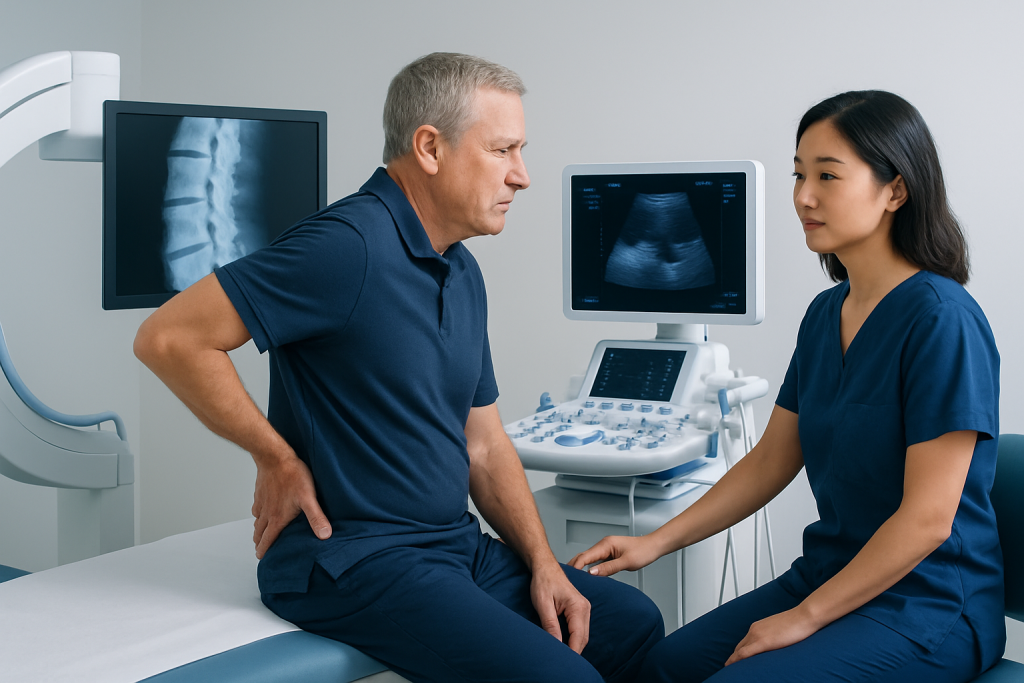
Facet arthropathy commonly causes pain that stays close to the affected area rather than traveling far down a limb. In the neck, discomfort may be felt at the base of the skull, behind the shoulder, or across the upper back. In the lower back, pain is often centered near the belt line or on one side of the spine.
People frequently describe the pain as worse when extending the back, twisting, or standing for a long time. Stiffness after rest is also common, and movement may feel easier after gentle walking or changing position.
Possible symptoms include:
- Localized neck or back pain
- Morning stiffness or stiffness after sitting
- Pain with twisting, leaning back, or looking over the shoulder
- Tenderness near the affected spinal area
- Occasional muscle tightness or spasm
Facet arthropathy does not always cause nerve symptoms. If numbness, tingling, or weakness develops, another spinal condition may also be present and should be assessed by a clinician.
Causes & Risk Factors
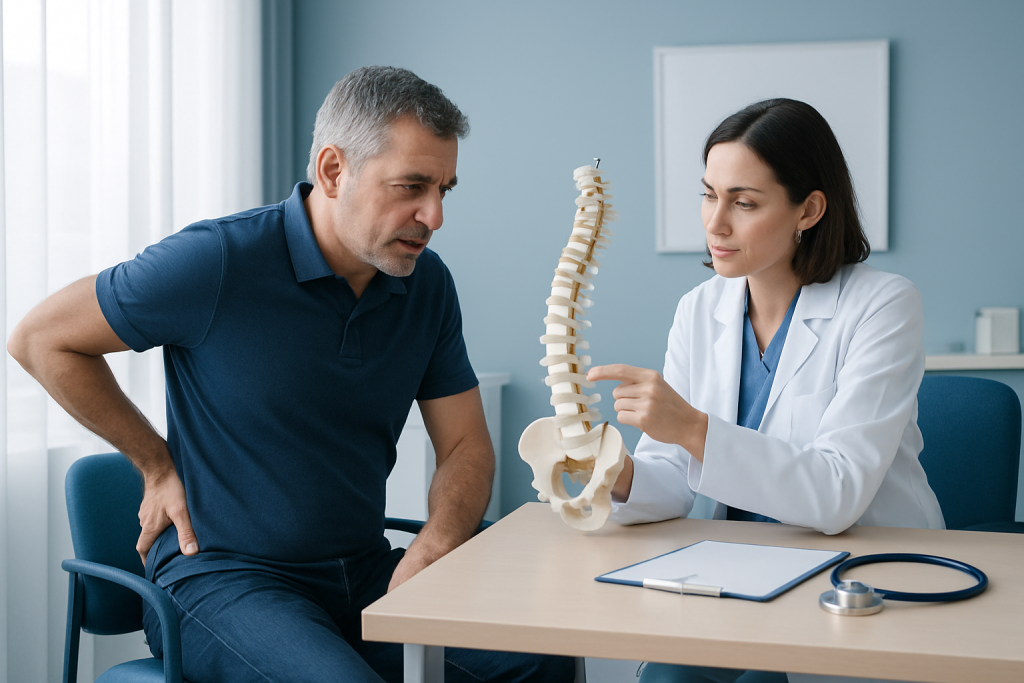
The most common cause is age-related wear. Over time, the cartilage that cushions the facet joints can thin, and the joints may become irritated as the spine continues to bear daily stress. This process can be gradual and may occur together with other degenerative changes, such as disc thinning.
Several factors can increase the likelihood of facet joint pain. These include previous spine injury, repeated heavy lifting, long-term poor posture, spinal alignment differences, and activities that place frequent extension and rotation stress on the back. Excess body weight can also add mechanical load to the spine.
Risk may be higher in people with:
- Prior back or neck injury
- Physically demanding work or sports
- Osteoarthritis elsewhere in the body
- Spinal curvature or alignment changes
- Reduced core and trunk muscle support
Facet arthropathy is not caused by one single mistake or movement. It usually develops through a combination of anatomy, long-term loading, and joint aging.
Diagnosis
Diagnosis starts with a careful history of where the pain is felt, what worsens it, and how it affects daily movement. A doctor will often examine posture, range of motion, tenderness, and whether certain motions reproduce the discomfort.
Imaging tests may be used when the diagnosis is unclear, when symptoms persist, or when another problem needs to be ruled out. X-rays can show joint narrowing or bone changes, while MRI may help assess nearby discs, nerves, and soft tissues. However, imaging findings do not always match pain severity, so the clinical picture matters greatly.
In some cases, a doctor may suggest diagnostic injections into a facet joint or nearby nerve supply to confirm the pain source. This is especially useful when planning more targeted treatment. For patients traveling from abroad, a structured evaluation can help avoid unnecessary procedures and focus care on the true source of symptoms.
Treatment Options
Treatment is usually stepwise, beginning with conservative measures. Many people benefit from temporary modification of activities that aggravate the joints, combined with movement that keeps the spine mobile without overloading it. A physical therapist may guide exercises to improve flexibility, core support, and posture.
Pain relief may include general measures recommended by a doctor, such as anti-inflammatory medicine or other symptom-control options, depending on the person’s medical history. Heat, careful pacing of activity, and ergonomic changes at work or home can also reduce strain. The goal is not to avoid movement altogether, but to find a safer pattern that the spine can tolerate.
When pain remains troublesome despite conservative care, additional procedures may be considered. These can include facet joint injections or medial branch blocks, and in selected cases, radiofrequency treatment to reduce pain signals from the joint. Surgery is not commonly needed for facet arthropathy alone and is usually considered only when another structural problem is also present.
Prevention & Self-care
While aging cannot be reversed, day-to-day habits can reduce unnecessary stress on the spine. Regular low-impact activity such as walking, swimming, or guided mobility work often helps maintain movement without overstraining the joints. A consistent routine is usually more useful than occasional intense exercise.
Posture and body mechanics matter, especially for people who sit for long periods or lift often. Supportive chairs, screen height adjustments, and using the legs rather than the back to lift can make a noticeable difference over time. Maintaining a healthy body weight may also reduce pressure on the facet joints.
Helpful self-care strategies may include:
- Gentle stretching approved by a clinician or therapist
- Regular position changes during travel or desk work
- Heat for short periods when muscles feel tight
- Balanced strengthening of the trunk and hips
- Avoiding repeated back-bending motions if they trigger pain
For patients recovering while abroad, it can be useful to leave with a written plan for exercise, medication review, and follow-up so that care continues smoothly after returning home.
When to See a Doctor
Medical evaluation is advisable when back or neck pain lasts more than a few weeks, keeps returning, or begins limiting normal activity. Persistent pain is worth assessing because facet arthropathy is only one possible explanation, and treatment works best when the cause is clearly identified.
Prompt medical attention is especially important if pain is accompanied by weakness, numbness, balance problems, fever, unexplained weight loss, or loss of bladder or bowel control. These symptoms may point to a different or more urgent condition and should not be ignored.
A doctor can help determine whether symptoms are coming mainly from the facet joints, another spinal structure, or a combination of issues. For international patients, Acibadem Health Point’s multidisciplinary specialists and JCI-accredited hospitals can help diagnose and treat facet arthropathy with coordinated care and follow-up planning.
Living With Facet Arthropathy
Many people live well with facet arthropathy once they understand what movements aggravate the joints and what supports them. The condition often improves when treatment is matched to the person’s lifestyle, work demands, and overall spine health rather than relying on a one-size-fits-all plan.
Progress is usually gradual. It may involve learning how to sit, stand, exercise, and travel in ways that protect the spine while still keeping it active. A clear rehabilitation plan can be especially valuable for patients who need to fly home, resume work, or continue therapy in another country.
With the right assessment and steady self-care, facet arthropathy is often manageable. The most useful next step is a qualified medical evaluation that can distinguish ordinary wear-and-tear from a problem needing targeted treatment.
Frequently asked questions
01What is facet arthropathy?
Facet arthropathy is wear and irritation in the small facet joints of the spine. These joints help the back and neck move smoothly, so when they become painful, twisting or bending can feel restricted.
02How is facet arthropathy different from a disc problem?
Facet arthropathy affects the small joints at the back of the spine, while disc problems involve the cushion between vertebrae. Symptoms can overlap, which is why a doctor often considers both possibilities during evaluation.
03Can facet arthropathy cause leg pain or arm pain?
Usually the pain stays close to the spine, but it can sometimes be felt in nearby areas. If pain travels far down an arm or leg, or if numbness and weakness are present, another spinal issue may be involved.
04Is exercise safe with facet arthropathy?
In many cases, yes, but the type and intensity matter. Gentle, guided movement is often helpful, while repeated movements that arch or twist the spine may need to be limited.
05Does facet arthropathy always require surgery?
No. Most people start with non-surgical care such as physical therapy, activity adjustment, and pain management. Procedures are considered only when simpler measures do not provide enough relief.
06Can facet arthropathy get better on its own?
Symptoms can improve, especially if muscle tightness and joint irritation settle with rest, movement changes, and rehabilitation. Because the underlying wear may remain, ongoing spine-friendly habits are often important.
This article is for general information only and is not a substitute for professional medical advice. Please consult a qualified doctor about your individual situation.
Joint and spine care in Turkey — expert assessment & treatment
JCI-accredited · board-certified surgeons · reply within 24h
Add us as a Preferred Source to see more of our trusted health content across Google Search, AI Overviews and Discover.