Eye Pain Can Be Surface Irritation or Something Deeper

Your eye hurts. Maybe it stings and feels gritty, like a grain of sand you can’t blink away. Maybe it’s a dull ache behind the eye that no amount of rubbing settles. Either way, the pain itself isn’t the diagnosis — it’s a clue.
Eye pain can be anything from mild irritation on the eye surface to deeper pain linked to inflammation, injury, or increased pressure inside the eye. Most causes are minor. But sudden severe pain, vision changes, or eye redness with light sensitivity should be assessed promptly.
Overview: what eye pain can mean
Eye pain is a common symptom that can happen for many reasons, from a dry or irritated surface to inflammation, infection, injury, or pressure building inside the eye. In many people, eye pain improves once the cause is identified and treated, but certain patterns deserve faster medical attention because they can affect vision.
Here’s a simple way to sort it out: is the discomfort on the surface of your eye, or deeper behind or within it? Surface irritation often feels scratchy, burning, or gritty. Deeper pain tends to ache, throb, stab, or press — and it may come with blurred vision, headache, nausea, or sensitivity to light.
The eyes are delicate, and their symptoms overlap a lot, so the same complaint can have very different explanations. A person may have simple dryness after screen use, or they may have a corneal abrasion, infection, inflammation, migraine-related symptoms, or a more urgent condition such as glaucoma. So if the pain is new, severe, or sticking around, let someone examine it rather than guessing at home.
How eye pain feels: common symptoms and patterns
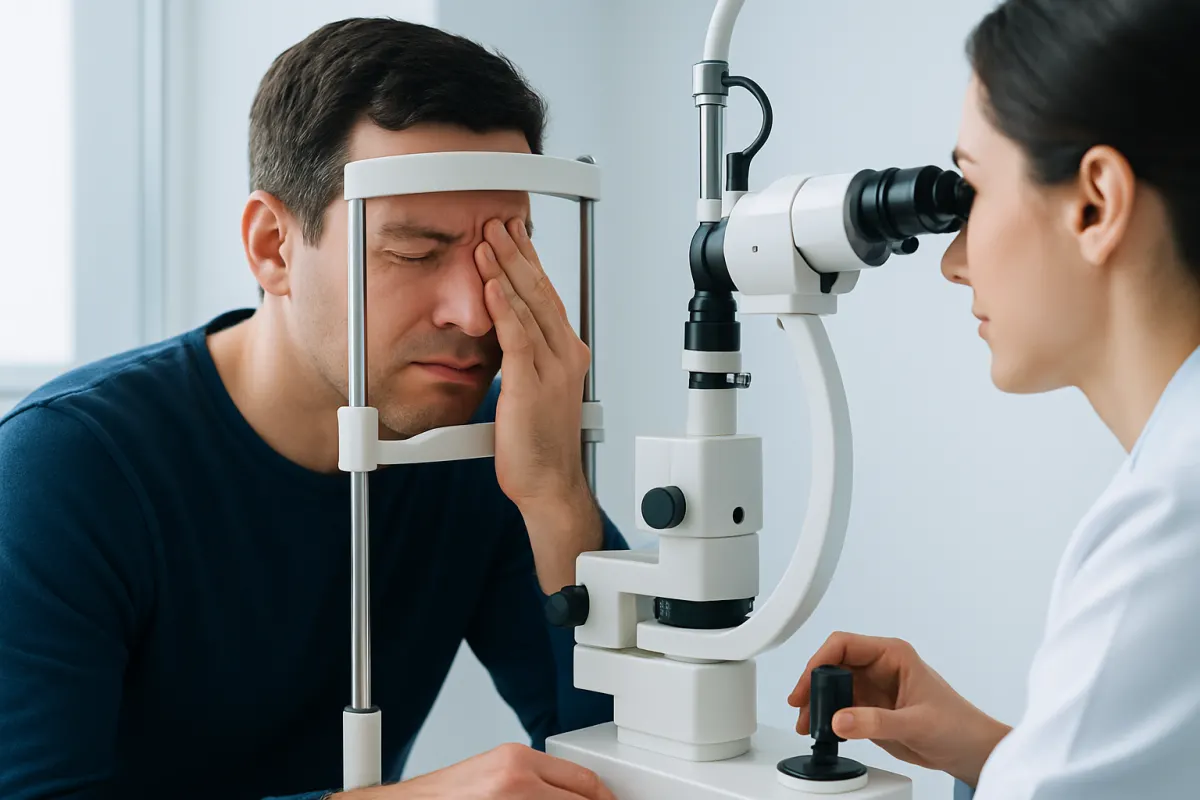
The way eye pain feels can offer clues. Burning, stinging, itching, or a gritty sensation often points to problems on the eye surface, such as dry eye, blepharitis, allergy, or irritation from wind, smoke, or screen time. A foreign-body sensation can happen even when nothing is visible, because tiny scratches on the cornea can feel surprisingly uncomfortable.
A deeper ache may suggest inflammation inside the eye, pressure changes, strain around the eye muscles, or pain referred from nearby areas such as the sinuses or head. Sharp pain may happen with corneal injury, a trapped eyelash, contact lens irritation, or some inflammatory conditions. Throbbing pain with headache can sometimes accompany migraine or sinus-related pain rather than a primary eye disorder.
Symptoms that matter alongside eye pain include:
- Redness
- Blurred or reduced vision
- Light sensitivity
- Watery eye or discharge
- Swelling of the eyelid
- Feeling that something is stuck in the eye
- Halos around lights
- Headache, nausea, or vomiting
Whether the pain affects one eye or both, starts suddenly or gradually, and worsens with blinking or eye movement can also help guide diagnosis. Sharing these details with a doctor can make the evaluation more accurate and efficient.
Common causes and risk factors

Many cases of eye pain come from irritation on the eye surface. Dry eye is a frequent cause, especially with prolonged screen use, air conditioning, low humidity, aging, or certain medications. Allergy can cause itching, redness, and burning. Blepharitis, which affects the eyelid margins, may lead to soreness, crusting, and watery eyes. Contact lenses can also trigger pain if they are worn too long, cleaned poorly, or fit badly.
Infection and inflammation are also important causes. Conjunctivitis may cause irritation and redness, while corneal infection or a corneal abrasion can cause stronger pain, tearing, and light sensitivity. Inflammation inside the eye, such as uveitis, tends to cause deeper discomfort and sensitivity to light. Some people with thyroid eye disease, sinus inflammation, or migraine can feel pain around or behind the eye even when the eye itself is not the main source of the problem.
Less common but more urgent causes include acute increases in eye pressure, significant injury, chemical exposure, or a foreign object embedded in the eye. People are at higher risk if they use contact lenses, have had recent eye surgery, work in dusty or hazardous environments, have autoimmune conditions, or have a history of eye disease. Those who already have retinal detachment symptoms such as flashes, floaters, or a curtain-like shadow need prompt evaluation even if pain is mild, because not all serious eye problems are painful.
Sometimes eye pain is related to treatment or recovery after an eye condition has been diagnosed. After surgery or procedures, doctors may give specific aftercare advice, and symptoms should be monitored carefully. If a person has been told they may need advanced care such as corneal transplant or vitrectomy, any new pain should be discussed with the treating team.
Red flags that should not be ignored
Some eye pain can wait for a routine appointment, but certain warning signs call for urgent or same-day care. The most important red flag is eye pain with a change in vision, including new blurring, loss of part of the visual field, or sudden trouble focusing. Pain that begins abruptly and becomes intense within hours is also more concerning than mild irritation that improves with rest or lubricating drops.
Other urgent warning signs include severe redness, marked sensitivity to light, halos around lights, headache with nausea or vomiting, and pain after trauma or chemical exposure. Contact lens wearers should be especially careful, because infections involving the cornea can worsen quickly. A painful red eye after sleeping in lenses or swimming in them should be checked promptly.
Get seen, too, if you have swelling around the eye with fever, difficulty moving the eye, double vision, or pain with eye movement. In children, unusual eye rubbing, refusal to open the eye, persistent tearing, or a suddenly red painful eye should not be overlooked. Getting checked quickly protects both your comfort and your vision, and rules out the causes that can’t wait.
How doctors diagnose the cause of eye pain
Diagnosis starts with a careful history. The doctor will usually ask when the pain started, whether it is constant or comes and goes, whether one or both eyes are affected, and whether there was recent trauma, illness, contact lens use, chemical exposure, or surgery. They will also ask about associated symptoms such as discharge, headache, sinus pressure, fever, blurred vision, flashes, floaters, or light sensitivity.
An eye examination may include checking visual acuity, eyelid position, the surface of the eye, pupil reactions, and eye movements. Doctors often use a slit-lamp microscope to look closely at the cornea, conjunctiva, and front of the eye. Fluorescein dye may be used to highlight scratches or ulcers on the cornea. Measuring eye pressure can help identify pressure-related problems such as glaucoma.
In some cases, additional testing is needed. This may include dilated retinal examination, imaging, or referral to an ophthalmologist or neuro-ophthalmology specialist if the symptoms suggest a deeper or more complex cause. When pain appears related to trauma, a hidden foreign body, or severe infection, timely specialist assessment is especially important.
Treatment options depend on the cause
Because eye pain is a symptom, treatment focuses on the underlying problem. Surface irritation from dryness may improve with preservative-free lubricating drops, breaks from screen use, better hydration, and management of environmental triggers. Allergy-related discomfort may improve with avoiding triggers and doctor-recommended allergy eye drops. Eyelid hygiene can help when blepharitis contributes to soreness and irritation.
If the cause is an infection, inflammation, injury, or increased eye pressure, treatment is more specific. Doctors may prescribe antibiotic, antiviral, anti-inflammatory, or pressure-lowering medicines depending on the diagnosis. A corneal abrasion may need protection and close follow-up. A foreign body should be removed by a qualified professional rather than rubbed or flushed repeatedly if it does not come out easily.
Some conditions require procedures or surgery rather than drops alone. For example, pressure-related disease may need glaucoma treatment, while lens-related causes of pain or visual disturbance may lead to evaluation for cataract surgery when appropriate. Treatment decisions depend on the exact diagnosis, exam findings, and the person’s overall health.
Some patients need coordinated specialist follow-up along the way. Acıbadem Health Point’s multidisciplinary specialists and JCI-accredited hospitals diagnose and treat eye conditions for international patients, especially when symptoms call for a full ophthalmic evaluation.
Self-care, prevention, and when to seek medical care
Practical self-care can reduce many common causes of eye pain. Taking regular breaks during screen use, blinking more often, using a humidifier when air is dry, and avoiding smoke or irritants may help. Contact lenses should be cleaned exactly as advised, never shared, and not worn longer than recommended. Protective eyewear is important during sports, home repairs, laboratory work, or any activity with flying particles or chemicals.
The basics matter too. Wash your hands before you touch your eyes or your lenses. Replace eye makeup and lens cases regularly. People with known dry eye, allergy, or eyelid inflammation often do better when they follow a consistent prevention plan rather than waiting for symptoms to flare.
Medical care should be sought promptly if eye pain is severe, if vision changes develop, if the eye becomes very red, or if symptoms follow injury or chemical exposure. The same applies to contact lens wearers with increasing pain, light sensitivity, or discharge. And if mild symptoms drag on past a day or two, keep coming back, or don’t budge with simple measures, see a qualified eye doctor to find out why.
Frequently asked questions
01Is eye pain always a sign of a serious problem?
No. Eye pain is often caused by common issues such as dryness, allergy, eyestrain, or mild surface irritation. However, pain becomes more concerning when it is sudden, severe, or linked with vision changes, marked redness, or light sensitivity.
02What is the difference between surface irritation and deeper eye pain?
Surface irritation usually feels burning, scratchy, gritty, or like something is in the eye. Deeper eye pain is more likely to feel aching, throbbing, or pressure-like and may suggest inflammation, pressure changes, or pain coming from nearby structures.
03Can dry eye cause real pain?
Yes. Dry eye can cause stinging, burning, soreness, and a gritty sensation that may become quite uncomfortable. Symptoms often worsen with screen use, air conditioning, wind, or long periods without blinking enough.
04When should a contact lens wearer worry about eye pain?
A contact lens wearer should seek prompt care if pain is increasing, the eye is red, vision is blurry, or light becomes uncomfortable. These symptoms can signal a corneal problem that needs early treatment to protect vision.
05Can headache or sinus problems cause eye pain?
Yes. Migraine, cluster headache, and sinus inflammation can all create pain around or behind the eye. In these cases, the eye itself may be normal, but an exam may still be needed to rule out an eye condition.
06Should someone rinse the eye at home if it hurts suddenly?
If the pain follows dust or a mild irritant, gentle rinsing with clean water or sterile saline may help. If there has been chemical exposure, prolonged irrigation and urgent medical care are important; if pain is severe or vision changes occur, medical evaluation should not be delayed.
This article is for general information only and is not a substitute for professional medical advice. Please consult a qualified doctor about your individual situation.
Persistent digestive symptoms? Get evaluated in Turkey
JCI-accredited · board-certified surgeons · reply within 24h
Add us as a Preferred Source to see more of our trusted health content across Google Search, AI Overviews and Discover.