Epigastric Hernia: Symptoms, Causes and Treatment

Key Takeaways
- An epigastric hernia develops when tissue pushes through a weak spot in the upper abdominal wall.
- Some people notice a small lump, tenderness, or discomfort that may be worse with coughing, lifting, or straining.
- Diagnosis is usually based on a physical examination, with imaging used when the diagnosis is unclear.
- Surgery is the main treatment when the hernia causes symptoms, enlarges, or cannot be comfortably managed.
- People with a new, painful, or hard abdominal bulge should seek medical assessment, especially if nausea, vomiting, or severe pain develops.
An epigastric hernia is a small bulge that forms in the upper middle part of the abdominal wall, between the breastbone and the belly button. It is often harmless at first, but it should be assessed by a doctor because symptoms can overlap with other abdominal problems and treatment may be needed if it becomes painful or grows.
Overview
An epigastric hernia forms in the line of tissue that runs down the middle of the upper abdomen, an area called the epigastrium. It happens when fat, and less commonly a small portion of abdominal tissue, pushes through a weak spot in the abdominal wall. The bulge often sits somewhere between the breastbone and the belly button, and it may be noticed only when a person stands, coughs, laughs, or strains.
Although the word “hernia” can sound alarming, many epigastric hernias are small and develop gradually. Some cause no symptoms at all, while others lead to a noticeable lump or mild pain. Because similar-looking lumps can come from other causes, a proper medical evaluation is useful even when the problem seems minor.
For international patients deciding whether to travel for care, the main practical question is usually not whether the bulge is visible, but whether it is causing discomfort, changing in size, or affecting daily activities. Those features often guide whether monitoring or repair is more appropriate.
Symptoms
The most common sign is a small, firm bump in the upper midline of the abdomen. It may become easier to see when standing or when the abdominal muscles are under pressure. Some hernias can be pressed back in, while others feel more fixed beneath the skin.
Symptoms vary widely. A person may have only mild tenderness, a pulling sensation, or intermittent aching, especially after exercise, heavy lifting, or a long day of physical work. In some cases, the hernia is discovered incidentally during a routine examination or when a person is being checked for another concern.
Less commonly, a hernia may become painful, red, or difficult to push back in. That does not always mean an emergency, but it does deserve prompt assessment. Any sudden change in the usual pattern of pain or the appearance of the lump should be taken seriously and reviewed by a clinician.
Causes & Risk Factors
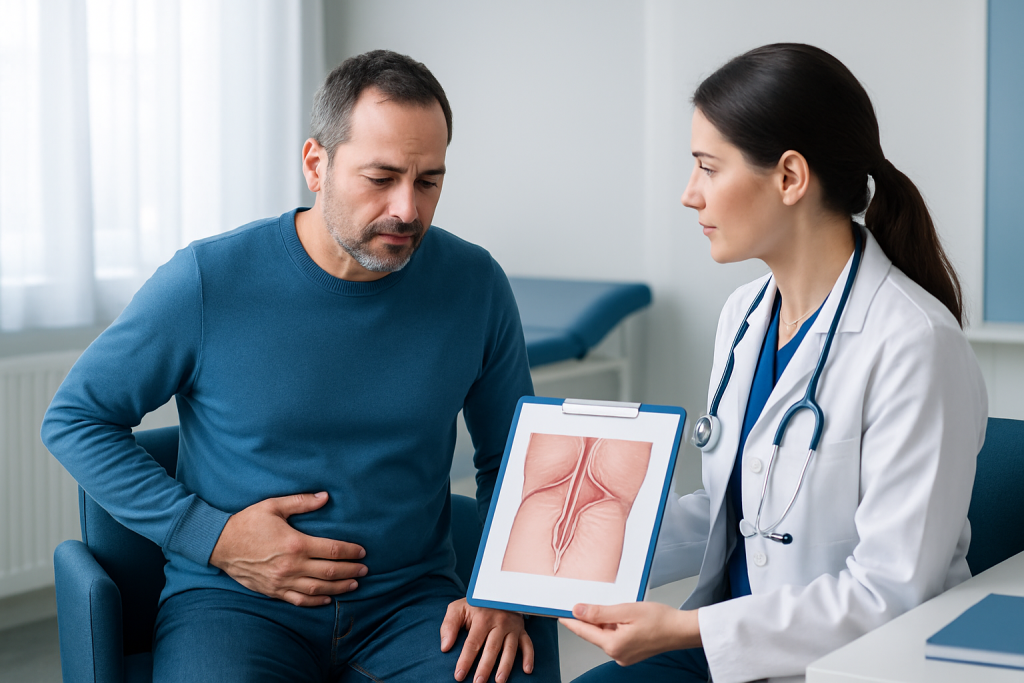
An epigastric hernia develops when the abdominal wall has a naturally weak area. Through that opening, preperitoneal fat or other tissue can protrude. In many people, the exact reason the weakness appears is not fully known, and the hernia may occur even without a clear trigger.
Pressure inside the abdomen can make a hernia more likely to appear or become more noticeable. Common contributing factors include repeated straining, persistent coughing, heavy lifting, constipation, obesity, pregnancy, and any activity that frequently increases pressure in the upper abdominal wall. Family tendency and the overall strength of connective tissue may also play a role.
It is helpful to understand that risk factors do not mean a person has done anything wrong. They simply describe circumstances that can place more load on the abdominal wall. This is especially relevant for patients who travel for treatment, as they may need advice about work, exercise, and lifting restrictions during the recovery period after repair.
Diagnosis
Diagnosis often begins with a careful physical examination. A doctor may ask the person to stand, cough, or gently tense the abdominal muscles so the bulge becomes easier to feel or see. The location of the lump and the way it behaves with pressure help distinguish an epigastric hernia from other abdominal wall problems.
Imaging is not always necessary, but it can be useful when the exam is unclear, the bulge is very small, or the doctor wants to rule out another condition. Ultrasound is commonly used, and in some situations a CT scan may provide a clearer view of the abdominal wall and surrounding tissue.
For patients coming from abroad, it is often practical to bring prior imaging reports, operative notes, and a list of symptoms with timing. Clear documentation can help the specialist decide whether the hernia is suitable for observation, office-based discussion, or surgical repair.
Treatment Options
Treatment depends on the size of the hernia, whether it causes symptoms, and whether it changes over time. Small, painless hernias may simply be watched, particularly if they do not interfere with daily life. Observation can be reasonable when the diagnosis is certain and the person understands which changes should prompt re-evaluation.
When the hernia is painful, enlarging, cosmetically bothersome, or causing repeated discomfort, surgery is the usual treatment. Repair is often performed by closing the defect in the abdominal wall, sometimes using mesh to strengthen the area when the opening is larger or the tissue is under more tension. The exact technique depends on the anatomy and the surgeon’s assessment.
Most repairs are elective, which means they can be planned in advance rather than done urgently. That planning can be useful for international patients, because it allows time to coordinate travel, preoperative testing, and postoperative follow-up before leaving the country. Acibadem Health Point’s multidisciplinary specialists and JCI-accredited hospitals diagnose and treat this condition for international patients, with care plans tailored to the individual case.
Prevention & Self-care
Not every epigastric hernia can be prevented, especially when there is an underlying weak point in the abdominal wall. Still, reducing repeated strain may help lower pressure on the area and make symptoms less troublesome. Good bowel habits, treatment of a chronic cough, and avoiding unnecessary heavy straining are practical steps.
People who already have a hernia are usually advised to avoid activities that clearly worsen pain or make the bulge more prominent. Supportive clothing may be comfortable for some, but it does not repair the hernia. Exercise plans should be individualized, especially after surgery, because returning too quickly to lifting or intense core exercise can slow recovery.
After repair, following the surgeon’s instructions is more important than pushing for a rapid return to normal activity. This may include wound care, gradual walking, limits on lifting, and scheduled follow-up appointments. For traveling patients, planning recovery time before flying home can make postoperative care safer and more comfortable.
When to See a Doctor
Any new upper abdominal bulge should be evaluated, even if it does not hurt. A doctor can confirm whether it is truly an epigastric hernia and discuss whether observation or repair makes the most sense. Early assessment is especially helpful when the lump is changing in size, becoming more noticeable, or interfering with work or exercise.
Prompt medical review is advisable if the area becomes painful, firm, red, or difficult to push back in. Nausea, vomiting, fever, or severe abdominal pain are also reasons to seek urgent care, because they can signal a complication that needs timely treatment.
People who are traveling for care should try to seek evaluation before symptoms become urgent. That approach gives more options, more time to organize records and travel, and a calmer path to treatment. A qualified doctor can explain whether the hernia can be monitored safely or whether surgery is the better next step.
Recovery and Follow-up
Recovery after epigastric hernia repair is usually straightforward, but it varies depending on the size of the hernia, the surgical method, and the person’s overall health. Mild soreness, tightness, and temporary activity limits are common. Walking is often encouraged early, while strenuous lifting and core-heavy exercise are usually restricted for a period set by the surgeon.
Follow-up matters because it allows the care team to check wound healing, review activity progression, and answer practical questions about travel, work, and exercise. This is particularly important for patients who return to another country after treatment. Good planning helps ensure that instructions are clear and that any concerns can be addressed in an orderly way.
Although recurrence is not common after a well-performed repair, no operation can remove every future risk. Watching for a returning bulge or persistent discomfort and reporting it early can help identify issues before they become harder to manage.
Frequently asked questions
01What is an epigastric hernia?
An epigastric hernia is a bulge that appears in the upper middle part of the abdominal wall when tissue pushes through a weak spot. It often contains fat rather than bowel, but it still deserves medical evaluation. Some people notice only a small lump, while others have discomfort or tenderness.
02Can an epigastric hernia go away on its own?
It usually does not disappear without treatment because the weak spot in the abdominal wall remains. Small hernias can sometimes be watched if they cause no symptoms, but they should still be assessed by a doctor. If the hernia grows or becomes painful, surgery is often considered.
03How is an epigastric hernia diagnosed?
A doctor usually diagnoses it by examining the abdominal wall and checking how the lump behaves with coughing or straining. If the findings are not clear, ultrasound or CT imaging may be used. The goal is to confirm the hernia and rule out other causes of a lump.
04Is epigastric hernia surgery major surgery?
It is commonly a planned procedure rather than an emergency one, and the extent of surgery depends on the size of the defect and the repair method. Some repairs are straightforward, while larger or more complex hernias may need mesh reinforcement. The surgeon will explain the expected recovery based on the individual case.
05When is an epigastric hernia an emergency?
Sudden severe pain, a hard or red bulge, vomiting, fever, or a lump that cannot be pushed back in should be checked promptly. These symptoms can suggest that the hernia has become trapped or irritated. Urgent assessment is the safest choice in that situation.
06Can I travel after being treated for an epigastric hernia?
Many patients can travel after recovery has started, but timing depends on the operation and how well healing is progressing. It is best to discuss flying, lifting, and follow-up plans with the surgeon before booking travel home. Clear instructions help make the trip safer and less stressful.
This article is for general information only and is not a substitute for professional medical advice. Please consult a qualified doctor about your individual situation.
Explore treatments in Turkey — costs, top hospitals & a free quote
JCI-accredited · board-certified surgeons · reply within 24h
Add us as a Preferred Source to see more of our trusted health content across Google Search, AI Overviews and Discover.